

Why I'm No Longer Talking to White People About Race
2,071-word summary 9 min read 272 pages in the book
- First published
- 2017
- Publisher
- Bloomsbury Circus
- Pages
- 272
- ISBN
- 9781408870556
Reading options
What's inside (9 sections)
The first thing to know about this book is that the title is not a stunt. Reni Eddo-Lodge wrote a blog post in 2014 explaining why conversations about race in Britain kept exhausting her, and the post went viral. The book grew out of that frustration. It is short, direct, and angry in a controlled way. It is also one of the clearest explanations of how racism works in Britain that I have read, and I say that as someone who does not live in Britain. The local details are specific, but the patterns travel.
Eddo-Lodge is a journalist, and the book is built like a series of essays rather than a single argument. Each chapter takes a topic that people think they already understand and shows how much of the common wisdom is wrong. The chapters cover black British history, the idea of a racist system, white privilege, immigration panic, feminism, class, and anti-racism. The order matters. She starts with history because she wants to show that the present is not an accident. Then she moves to structures, then to the ways people talk about those structures, and finally to what can be done.
The opening chapter on history is the one I would give to anyone who says Britain was never really racist. Eddo-Lodge traces black presence in Britain back centuries, through the slave trade, the empire, and the postwar arrival of Caribbean workers. She talks about the Bristol bus boycott, the New Cross fire, the Brixton uprising, and the murder of Stephen Lawrence. These are not obscure events in Britain, but they are often taught as isolated incidents rather than as a pattern. Her point is that the pattern is the story. Each event was followed by official inquiries, promises, and very little change. The repetition is not a failure of memory. It is a sign that the system is working as designed.
The system
The chapter called "The System" is the intellectual center of the book. Eddo-Lodge argues that racism is not primarily a matter of individual bad intentions. It is a set of structures that produce unequal outcomes whether or not the people inside them are prejudiced. She uses the Macpherson report into the Stephen Lawrence case, which famously described the Metropolitan Police as institutionally racist. The report did not say that every officer was a racist. It said that the organization's practices, culture, and priorities produced racist outcomes. That distinction is important, and Eddo-Lodge spends time explaining why it is not a loophole.
She applies the same logic to education, employment, housing, and the media. Black children are more likely to be excluded from school. Black workers are more likely to be passed over for promotion. Black people are more likely to be stopped by police. None of these outcomes requires a smoking gun. They require a system that treats some people as the default and others as a problem. The book is good at showing how ordinary decisions, made by ordinary people, can add up to a pattern that looks intentional from the outside. That is the hardest kind of racism to talk about, because there is no single villain to point at.
The chapter also deals with the way racism is discussed in public. Eddo-Lodge is critical of the idea that racism is a matter of opinion, or that both sides need to be heard. She argues that the debate is often framed so that white people's comfort becomes the priority. The question becomes "How do we talk about this without making anyone feel bad?" rather than "Why is this happening?" That framing is a way of protecting the status quo. It is also a way of making the person who raises the issue seem like the problem.
White privilege
The chapter on white privilege is probably the most quoted, and it is also the one that makes people defensive. Eddo-Lodge defines privilege as the absence of certain burdens. It does not mean that a white person has an easy life. It means that race is not one of the things making their life harder. A white person can be poor, sick, or unlucky. They can still walk into a shop without being followed, or apply for a job without worrying that their name will be screened out. The book gives concrete examples, and that is what makes it useful. It does not ask anyone to feel guilty. It asks them to notice what they do not have to think about.
The discussion of privilege is tied to the idea of the invisible norm. White people are rarely described as white. They are just people. Black people are described as black, and that description carries assumptions. Eddo-Lodge shows how this works in culture, in hiring, and in the way stories are told. The default is white, and everything else is a variation. Once you see that, you cannot unsee it. The book is not trying to make white readers feel bad. It is trying to make them aware of a set of advantages they did not choose and probably never noticed.
The chapter also addresses the objection that privilege is a luxury concept invented by academics. Eddo-Lodge points out that the language may be academic, but the experience is not. The examples are ordinary. A black woman being asked where she is really from. A black man being watched in a store. A black student being told she only got into university because of affirmative action. These are small moments, but they accumulate. The book argues that the accumulation is the point. One incident can be explained away. A lifetime of incidents cannot.
Fear of a black planet
The chapter on immigration and the far right is the most historically specific. Eddo-Lodge traces the language of invasion and swamping that has been used in British politics for decades. She discusses Enoch Powell's "rivers of blood" speech, the rise of UKIP, and the way immigration is treated as a threat to national identity. She is careful to show that this is not only a working-class phenomenon. Respectable politicians and newspapers have used the same language, and that language creates permission for worse things.
The chapter is also about the way black people are portrayed in the media. Crime reporting, poverty reporting, and even well-meaning coverage often reinforce stereotypes. Eddo-Lodge gives examples of headlines and comments that frame black people as a problem to be managed. The cumulative effect is a public conversation in which black people are talked about more than they are listened to. That is a subtle form of exclusion, and the book is good at making it visible.
Feminism and class
The chapter on feminism is a critique of white feminism, the version of the movement that focuses on gender and ignores race. Eddo-Lodge points out that the suffragettes were not all progressive on race, and that the history of feminism is full of moments when white women chose solidarity with white power over solidarity with black women. She is not saying that feminism is worthless. She is saying that a feminism that does not understand race will end up fighting for the freedom of white women while leaving black women behind.
The chapter on class is a similar critique from the other direction. Eddo-Lodge argues that class is often used as a way to avoid talking about race. The figure of the white working-class man becomes the symbol of economic hardship, while black poverty is treated as a cultural problem. She shows how this framing distorts both class and race. The book is not arguing that class does not matter. It is arguing that class analysis that ignores race is incomplete, and that race analysis that ignores class is incomplete too.
What the book does not do
The book is not a policy manual. Eddo-Lodge is better at diagnosis than prescription. The final chapter, "There's no justice, there's just us," talks about anti-racism as an ongoing practice rather than a set of demands. She says that white people need to do the work of educating themselves, that they need to listen, and that they need to accept discomfort. She does not offer a ten-point plan. Some readers will find that frustrating. I did, at first. But the book is not pretending that there is a simple solution. The problem is structural, and structural problems do not have quick fixes.
The book is also very British. Its examples, its history, and its political references are rooted in the UK. Readers from the United States will recognize the patterns, but they will need to translate. The book does not spend much time on the specific history of American racism, and it does not try to be a global account. That is a limitation, but it is also a strength. The focus gives the argument precision. It is better to explain one country well than to explain the whole world badly.
The tone is another issue. Eddo-Lodge is angry, and she does not hide it. Some readers will find that off-putting. The book is not interested in making the reader comfortable, and it does not pretend that the anger is unreasonable. I think the anger is part of the argument. It is a response to being asked, over and over, to explain the same thing politely. The book is a refusal of that demand. It says: here is the evidence, here is the history, here is the pattern. Take it or leave it.
The reception
The book was published in 2017 and became a bestseller. It won the Jhalak Prize and the British Book Awards non-fiction narrative prize, and it was widely discussed in schools, universities, and book clubs. That success is a little surprising when you consider how direct the book is. It does not flatter its readers, and it does not offer easy consolation. Part of the reason it connected is timing. The book arrived during a period when British public life was being forced to talk about race, empire, and immigration in new ways. It gave people a vocabulary for arguments that were already happening.
The reception also produced a predictable backlash. Some critics accused Eddo-Lodge of being divisive, of oversimplifying, or of ignoring class. Others said the book was too focused on London and the media. Those criticisms are worth taking seriously, even if some of them were made in bad faith. The book is not a complete account of racism in Britain. It is a starting point, and it is honest about being a starting point. The fact that it provoked so much argument is evidence that it did its job.
Who should read it
I would recommend this book to anyone who wants to understand how racism operates in a country that thinks of itself as fair. It is especially useful for readers who believe that racism is a matter of individual prejudice and that the solution is to be nice to everyone. Eddo-Lodge shows why that is not enough. She also shows why the conversation is so difficult. The difficulty is not a sign that the topic is impossible. It is a sign that the topic is important.
The book is short enough to read in a few sittings, and it is written in plain language. The chapters can be read out of order, though the cumulative effect is stronger if you read them in sequence. The history chapter is a good place to start if you are new to the subject. The system chapter is the one to return to if you want to understand the argument. The final chapter is the one to sit with if you are wondering what to do next.
What stays with me is the title. It is a statement of exhaustion, but it is also an invitation. Eddo-Lodge is not saying that conversation is impossible. She is saying that the conversation has to change. It has to start with history, it has to take structure seriously, and it has to stop asking the people who are harmed to do the emotional work of explaining the harm. That is a reasonable demand. The book makes it hard to argue otherwise.
FAQ
Why is the book titled Why I'm No Longer Talking to White People About Race?
It grew from a 2014 blog post in which Eddo-Lodge explained her exhaustion with conversations about race that centered white feelings instead of racism itself.
Is the book about Britain or the United States?
It is mainly about Britain, with British history, politics, and media as its core examples, though readers elsewhere will recognize the patterns.
Does the book offer a practical plan for fighting racism?
It offers principles rather than a step-by-step program, emphasizing self-education, listening, structural thinking, and sustained action.
Similar books
How to Be an Antiracist
Kendi blends memoir and history to argue that fair policy, not self fixing, creates an equal society.
2,513-word summary · 11 min read
White Fragility: Why It's So Hard for White People to Talk About Racism
DiAngelo's 2018 bestseller on why cross-racial talk about racism stalls, and what white readers can practice instead.
2,904-word summary · 13 min read
Nudge: Improving Decisions About Health, Wealth, and Happiness
Thaler and Sunstein show how defaults, framing, and social cues steer choices, and argue for choice architecture with an opt-out.
3,146-word summary · 14 min read

Long Walk to Freedom
Mandela's account of a Thembu childhood, a law practice, a banned movement, twenty-seven years in prison, and the negotiation that ended apartheid.
2,454-word summary · 11 min read
Nothing to Envy
Barbara Demick follows six defectors from Chongjin through the North Korean famine, showing how ordinary people lived, believed, and finally left.
2,068-word summary · 9 min read

Infidel
Ayaan Hirsi Ali's memoir of a Somali childhood, a forced marriage, a Dutch asylum claim, and the political fight that followed the murder of Theo van Gogh.
2,041-word summary · 9 min read
All About Love: New Visions
bell hooks borrows a definition of love as an action rather than a feeling, then spends thirteen chapters showing how hard it is to practice.
2,385-word summary · 11 min read
The New Jim Crow: Mass Incarceration in the Age of Colorblindness
How mass incarceration became a racial caste system after civil rights.
2,413-word summary · 11 min read
So You Want to Talk About Race
Oluo gives plain rules for talking about race at work and home.
2,597-word summary · 12 min read
Invisible Women: Data Bias in a World Designed for Men
Data treating men as default harms women in medicine, work, transit, and design, with fixes from studies worldwide.
2,316-word summary · 10 min read
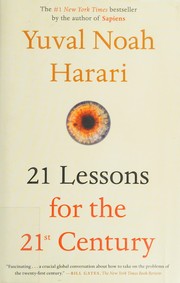
21 Lessons for the 21st Century
Twenty one essays on work, liberty, truth, and meaning when algorithms flood the world with noise.
2,101-word summary · 9 min read
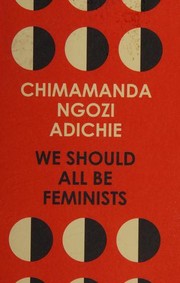
We Should All Be Feminists
Adichie turns her 2012 TEDx talk into a short sharp essay on gender, using stories from Lagos and America to argue equality helps everyone.
2,625-word summary · 12 min read
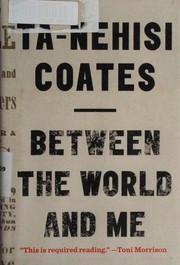
Between the World and Me
Coates writes to his son about the Black body in America, from Howard to the loss of Prince Jones.
2,234-word summary · 10 min read
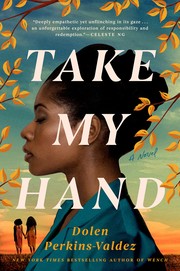
Take My Hand
In 1973 Montgomery, a young nurse discovers that two sisters were sterilized without consent, and spends the rest of her life living with what she could not…
2,126-word summary · 9 min read
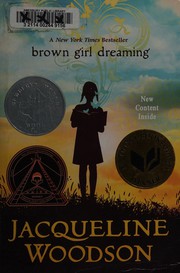
Brown Girl Dreaming
Jacqueline Woodson retells her childhood in verse, moving from Ohio to South Carolina to Brooklyn while the civil rights movement reshapes the world around her.
2,727-word summary · 12 min read

In Order to Live: A North Korean Girl's Journey to Freedom
A young North Korean girl crosses the Yalu, survives trafficking in China, and rebuilds her life in Seoul in this unsparing memoir.
2,027-word summary · 9 min read

Too Much and Never Enough: How My Family Created the World's Most Dangerous Man
Mary L. Trump's 2020 memoir traces how a cold, zero-sum Queens household shaped her uncle, and uses family tax documents to challenge his self-made story.
2,059-word summary · 9 min read
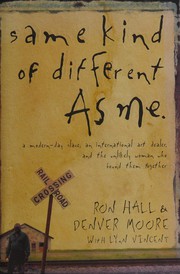
Same Kind of Different as Me
An art dealer and a formerly homeless sharecropper tell the story of the friendship that began at a Fort Worth mission and the woman who insisted on it.
2,023-word summary · 9 min read

Down and Out in Paris and London
Orwell's account of washing dishes in Paris hotels and tramping through London does not ask for pity, only for a clear look at how poverty actually works.
2,282-word summary · 10 min read

The Girl with Seven Names: A North Korean Defector's Story
Hyeonseo Lee crossed the frozen Yalu River at seventeen, spent years hidden in China, escaped to South Korea, and later returned to rescue her family.
2,404-word summary · 11 min read

Dear Girls: Intimate Tales, Untold Secrets & Advice for Living Your Best Life
Ali Wong's debut collects fourteen letters to her daughters, covering sex, money, work, marriage, Vietnam, and being a working Asian American mother.
2,266-word summary · 10 min read
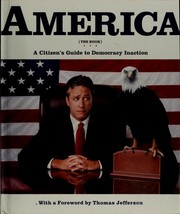
America (The Book): A Citizen's Guide to Democracy Inaction
Jon Stewart and the Daily Show writers turn a high school civics textbook inside out, with a foreword from beyond the grave.
2,511-word summary · 11 min read

Wide Sargasso Sea
Jean Rhys gives the first Mrs. Rochester a Caribbean childhood, a marriage built on money and suspicion, and a voice that Charlotte Bronte left in the attic.
2,021-word summary · 9 min read
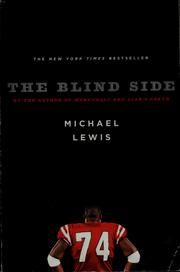
The Blind Side: Evolution of a Game
Michael Lewis traces how the left tackle became a premium position and tells the story of Michael Oher, a homeless Memphis teenager whose size and speed made…
2,038-word summary · 9 min read
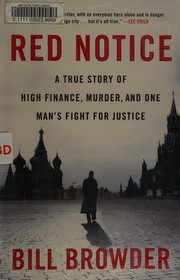
Red Notice
An American financier in Moscow exposes a $230 million tax fraud, watches his lawyer die in prison, and turns the case into an international human rights law.
2,008-word summary · 9 min read
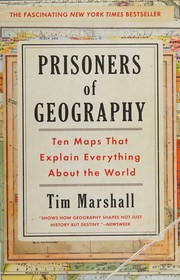
Prisoners of Geography: Ten Maps That Tell You Everything You Need to Know About Global Politics
Tim Marshall explains how mountains, rivers, coasts, and resources shape the choices of nations, from Russia's flat borders to the chokepoints of the South…
2,328-word summary · 10 min read
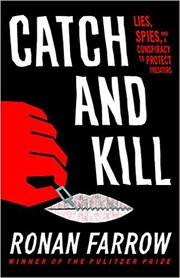
Catch and Kill: Lies, Spies, and a Conspiracy to Protect Predators
Ronan Farrow recounts how NBC killed his Harvey Weinstein reporting, then how The New Yorker published it and helped ignite #MeToo.
2,057-word summary · 9 min read
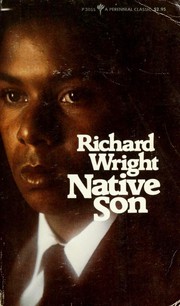
Native Son
Richard Wright's landmark novel follows Bigger Thomas through one panicked night in Chicago and the manhunt, trial and reckonings that follow, exposing the…
2,265-word summary · 10 min read
The World Is Flat: A Brief History of the Twenty-first Century
Thomas L. Friedman's 2005 bestseller argues that technology, trade, and open borders leveled the global playing field, and it names the ten forces that did it.
2,369-word summary · 11 min read
The Warmth of Other Suns
Three migrants ride north out of Jim Crow toward Chicago and LA.
2,561-word summary · 11 min read