
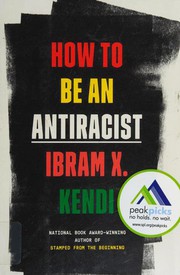
How to Be an Antiracist
2,513-word summary 11 min read 320 pages in the book
- First published
- 2019
- Publisher
- One World
- Pages
- 320
- ISBN
- 9780525509288
Reading options
What's inside (8 sections)
I came to this book after hearing it mentioned in three separate conversations in one month. A coworker raised it at lunch, a cousin posted about it, and a podcast host kept quoting the line about policy. I finally picked up the One World edition from 2019, the 320 page printing most stores carried that fall, and read it over two weekends with a pencil in hand.
What surprised me was the tone. I expected a cool manual full of rules. Instead the opening pages read like a confession. Kendi says he once held racist ideas himself, even while studying racism for a living. That admission sets the terms: part argument, part memoir, part public self correction.
He was born Ibram Henry Rogers in Queens in 1982, raised first in New York and later in Manassas, Virginia, the child of parents shaped by the Black student movement and church life. He took the surname Kendi when he married Sadiqa Kendi, a physician. By the time this book appeared he was a historian known for Stamped from the Beginning. This one is shorter and more personal.
What racist and antiracist actually mean here
Kendi starts with definitions, and he means them to be strict.
In his use, racist and antiracist are not permanent labels stamped on a person. They describe what someone says or does in a given moment, and what a policy does in the world. A racist idea is any idea that treats one racial group as inferior or superior to another in any way. An antiracist idea treats racial groups as equals, with gaps in outcome explained by policy rather than by people.
The bite comes from what he refuses to allow between those poles.
There is, he argues, no neutral ground. Claims of color blindness, of being “not racist,” strike him as a mask. Either an idea or a policy pushes toward equality or it permits inequality to continue. If a school rule, hiring practice, or zoning law produces unequal results by race, he calls that rule racist in effect, whatever the intent was. If an idea explains that result by pointing at culture or behavior or biology, he calls that idea racist too.
I sat with that for a while.
It clears away fog. Many of us were taught to picture “racist” as a slur for a distant villain. Kendi moves the word from character to outcome. Did this action widen fairness or narrow it? That is easier to test than what lay in someone’s heart. It also lets him judge his younger self. He can say he once told Black youth to act better to earn respect, call that argument racist by his own rule, and still claim room to change.
The either or frame can still feel tight. A teacher who favors more funding for all schools but has never considered assignment zones may be startled to hear her silence described as racist rather than passive. Kendi would reply that passivity in an unequal system holds the inequality in place. I follow the logic. I also wondered whether the sharpness that makes the line memorable leads some readers to close the book early.
He adds a pair that returns throughout: segregationist versus assimilationist. A segregationist says groups should live apart because one is inferior. An assimilationist says a marginalized group should remake itself to meet the dominant standard. Kendi places both in the racist camp. His younger self, he admits, often lived in that second camp.
Power, policy, and why ideas follow rules
The second move concerns cause and effect.
Most public talk assumes bad ideas produce bad rules. Teach kindness, change hearts, and fair policy will follow. Kendi reverses the order. In his account, people with economic and political power create unequal policy first, then fund or repeat ideas that make that policy seem natural.
He sketches the sequence through American history. Slavery in Virginia became highly profitable, so writers and ministers supplied claims about African inferiority to defend it. After emancipation threatened plantation profits, new laws on voting, labor, and housing arrived, followed by fresh claims that Black people were unfit for citizenship or culturally broken. In his phrasing, the printer did not lead the plantation. The plantation called for the printer.
If policy makes ideas, scolding individuals about prejudice will never suffice. You have to ask who gains from a rule and change the rule. Kendi applies that test across schools, blocks, and courts: funding formulas and tests in education, redlining maps and mortgage rules in housing, drug laws with sharply different effects by race and place.
That yields his working definition of racism as a joining of policy and story. A racist policy is any rule that produces or sustains unequal outcomes between racial groups. A racist idea is any claim that hides that work by blaming the harmed. Put plainly: look at results, find the rule that shaped them, notice which tale excuses the rule.
Testing offers a clear case from his teaching life. He watched students of varied backgrounds sit for the same exam while score gaps were read as proof of merit. He asks what the test gauges apart from prior schooling, family wealth, and ease with the format. If those inputs differ by race because of older housing and school decisions, then calling the output a fair rank, he says, is itself a racist idea.
A life told in reversals: memoir threads
Kendi braids argument with scenes from his own life. The memoir is not decoration. It shows how a bright, driven person can absorb ideas he later rejects.
He writes about boyhood split between Queens and northern Virginia. In Queens he felt held inside extended family and church networks. After the move to Manassas in middle school, he felt exposed in a mostly white suburb where Confederate symbols and jokes were routine. He learned fast which clothes, sports talk, and speech drew praise and which drew suspicion.
One thread follows his teens. He recalls a high school oratorical contest where he lectured Black youth for prizing sport over study, to warm applause from a largely white room. Years later he reads that speech with shame. At the time he thought he was brave. In retrospect he sees a boy repeating an assimilationist script: fix ourselves and racism will fade. He sets that memory beside college at Florida A and M University, where he first felt large scale academic pride, and doctoral work at American University, where archives taught him how claims about inferiority were built and paid for.
Another thread follows fear and failure. He describes being watched in stores, warned by his parents about police stops, and taught the practiced calm many Black parents pass to sons. He writes about parties and fights, about early contempt for single mothers and queer classmates that he now names as sexist and homophobic, about weak test scores and rejections before a door opened.
The most personal passages concern his wife and illness. He met Sadiqa in the Washington area, courted her while broke and overworked, and built a shared life around study and medicine. In 2018, while drafting this book, he received a stage four colon cancer diagnosis at thirty five. He writes about surgery and chemotherapy, fear of leaving his young daughter, and notes kept in waiting rooms between bouts of nausea.
The jumps in time can confuse. A chapter may open in a hospital hall and cut to a high school hall fifteen years earlier. I flipped back twice to check dates. The design has a purpose, though. By showing the boy who gave that speech, the student who argued about responsibility, and the professor who wrote this book as one man at different stages, he offers his own change as proof that change is possible.
Biology, culture, behavior, and color
The middle chapters each take a familiar excuse for inequality and pull it apart.
On biology, he is blunt. No gene sorts humans into the racial groups our laws use. Skin tone varies, ancestry can be traced, some health risks cluster, but Black, white, Asian, Latinx, and Native do not mark distinct biological types. He recalls skull measuring and blood ranking by earlier doctors, then notes that modern genetics keeps finding more variation inside groups than between them.
On ethnicity and culture, he separates love of heritage from ranking it. He writes warmly about cookouts, church programs, hip hop debates, and his father’s crowded bookshelves. What he rejects is the step from description to judgment, the notion that some cultures parent or work better and thus earn their standing.
Behavior was his own snare, so it gets the longest stay. For years he believed respectability could shield Black people: speak a set way, dress a set way, stay clear of trouble, and doors would open. He now calls that belief a trap. It asks the harmed to audition for fairness and lets rule makers off easy. He remembers urging friends to pull up their pants and code switch in interviews, sure he was helping. He now reads that counsel as surrender posed as strategy.
Color adds a further twist. He discusses colorism across and inside groups, the edge lighter skin can bring in hiring, casting, and even sentencing. He remembers talk of “good hair” in his own circles and cites work where darker skinned defendants drew harsher terms for similar charges. His rule holds steady: any scale that sets human worth by shade is racist, whether enforced by white offices or inside Black rooms.
Brief chapters on white and Black then flip the lens. He holds there is nothing wrong with white people or Black people as people, but there is something wrong with whiteness as a perch built by policy, and something strong in Blackness as an identity forged under pressure. People vary and can shift. Positions in a system can be gauged by who owns, who decides, and who is punished.
Class, gender, sexuality, and space
Later chapters widen the view while keeping race central.
On class, Kendi holds that capitalism and racism grew up together in the Atlantic world and still feed each other. Plantation slavery was a business plan before it was a string of slurs. He doubts that class uplift alone will end racism, pointing to affluent Black buyers still steered by agents and handed low appraisals. He equally doubts antiracist talk that skips money, pointing to poor white towns where plants closed and clinics thinned.
He sketches no full budget here, which invites pushback. He favors moves that narrow wealth gaps: baby bonds, tenant protections, school funding apart from zip code, strict enforcement on hiring bias. Readers hunting for a bill number will leave empty handed. What remains is a test: does a plan shrink racial gaps in wealth, health, and freedom, or leave them whole while praising growth in general?
Gender and sexuality receive frank, self accusing chapters. Kendi admits he entered college with sexist habits. He spoke over women in seminars, judged single mothers, and laughed at jokes he should have stopped. Study with women scholars and life with his wife taught him to see patriarchy as rules, not manners. Pay scales, promotion ladders, and childcare access create gender gaps much as housing rules create racial ones. He tells a parallel story on sexuality. He once treated homophobia as normal noise. Friendship with queer peers led him to name it plainly.
Space may be the most vivid late chapter. He writes about maps: 1930s redlining sheets that painted Black blocks red for risky, highways driven through Black business rows, deeds that barred sale to Black buyers, and current lines where a train stop or school edge fixes fate. He walks a gentrifying block where a new cafe and rising appraisal land together, rents climb, and longtime residents are praised for “culture” while being priced out.
I valued how these chapters stack. A Black woman aide faces race, class, and gender rules in one shift. A queer Black teen faces race, sexuality, and place at once. Kendi does not grade oppressions. He asks readers to watch rules pile up, and to see how talk of merit makes the pile look earned.
Where the book persuades and where it strains
Three parts won me over in ways I had not planned.
First, the policy first claim altered how I read local news. During a school budget row in my county last spring, I caught myself asking his question about results before motives. Which blocks gain art teachers and which lose nurses? The habit proved useful even where I questioned his cases.
Second, the memoir kept the abstractions honest. Stating that people can change is easy. Printing your own teen speech and explaining why that applause felt sweet at seventeen carries a price. I trusted the case more because he paid it.
Third, the pages on behavior named a split I had felt without words. Counsel to “act right” can sound kind one to one and still serve as dodge at scale. Once seen, that split appeared in hiring panels, parent nights, and my own pep talks to younger kin.
Criticism still belongs on the page.
The binary can flatten. If each policy rates as racist or antiracist with nothing between, words run short for partial or bridging steps. A principal who adds one advanced course while tracking stays intact has done something real and something short of fair at once. To call the whole push racist may match Kendi’s rule yet sap the staff whose aid the next step needs. He answers that crunch time cares more for clarity than comfort. I grasp the reply. Movements still need speech for “better but not yet fair,” which his frame scarcely grants.
The economics can sound asserted rather than shown. The claim that racism and capitalism are twins crosses the class chapter in bold strokes, from plantations to prisons in a few pages. A reader versed in labor or housing may want figures and counter cases where markets cut gaps. The book points at those queries without staying.
Practical aid can feel thin. For a title that starts with “How to Be,” stepwise counsel is sparse. Much counsel comes down to: spot policy, own your past notions, back rules that equalize outcomes. Those are weighty pledges, yet they leave a teacher or landlord asking what to do Monday. Kendi would likely say towns differ too much for one list. I take the point. Two full stories of a drive from complaint to rule change would still have helped.
None of that undid the book for me. I shut the 2019 One World printing, 320 pages, with marked margins and a sour, useful aftertaste. Sour, since the mirror shows no mercy. Useful, since the query travels past the last page. When a gap gets chalked to effort or tradition, I now ask what rule stands behind the tale, who wrote it, and what an equal result would take instead. That habit alone repaid the reading.
FAQ
What is Kendi's basic definition of racist and antiracist?
A racist idea or policy creates or defends unequal outcomes by race, while an antiracist one supports equality through policy change.
Is How to Be an Antiracist a memoir or a policy book?
It is both. Chapters pair memoir scenes from school, graduate study, marriage, and cancer treatment with arguments about power, biology, culture, class, gender, and space.
When was the book published and how long is it?
It was published in 2019 by One World and runs 320 pages in the standard edition.
Similar books

Nothing to Envy
Barbara Demick follows six defectors from Chongjin through the North Korean famine, showing how ordinary people lived, believed, and finally left.
2,068-word summary · 9 min read

Why I'm No Longer Talking to White People About Race
Reni Eddo-Lodge traces black British history and shows how institutions, culture, and everyday assumptions keep producing racial inequality.
2,071-word summary · 9 min read
The New Jim Crow: Mass Incarceration in the Age of Colorblindness
How mass incarceration became a racial caste system after civil rights.
2,413-word summary · 11 min read
Between the World and Me
Coates writes to his son about the Black body in America, from Howard to the loss of Prince Jones.
2,234-word summary · 10 min read
Nudge: Improving Decisions About Health, Wealth, and Happiness
Thaler and Sunstein show how defaults, framing, and social cues steer choices, and argue for choice architecture with an opt-out.
3,146-word summary · 14 min read

Long Walk to Freedom
Mandela's account of a Thembu childhood, a law practice, a banned movement, twenty-seven years in prison, and the negotiation that ended apartheid.
2,454-word summary · 11 min read

Down and Out in Paris and London
Orwell's account of washing dishes in Paris hotels and tramping through London does not ask for pity, only for a clear look at how poverty actually works.
2,282-word summary · 10 min read
Prisoners of Geography: Ten Maps That Tell You Everything You Need to Know About Global Politics
Tim Marshall explains how mountains, rivers, coasts, and resources shape the choices of nations, from Russia's flat borders to the chokepoints of the South…
2,328-word summary · 10 min read
The World Is Flat: A Brief History of the Twenty-first Century
Thomas L. Friedman's 2005 bestseller argues that technology, trade, and open borders leveled the global playing field, and it names the ten forces that did it.
2,369-word summary · 11 min read
The Warmth of Other Suns
Three migrants ride north out of Jim Crow toward Chicago and LA.
2,561-word summary · 11 min read
Hidden Figures
Black women computers at Langley launch rockets past Jim Crow.
2,385-word summary · 11 min read
Empire of Pain: The Secret History of the Sackler Dynasty
How the Sackler family sold OxyContin and shaped an overdose crisis while giving to museums.
2,048-word summary · 9 min read
Say Nothing
Patrick Radden Keefe traces Jean McConville's 1972 disappearance through the Price sisters, Brendan Hughes, and Gerry Adams, using Boston College tapes to…
2,846-word summary · 13 min read

Cleopatra: A Life
Pulitzer winner Schiff restores Cleopatra as a capable ruler, from Ptolemy debts and Caesar to Antony, Actium, and her death in 30 BC, built from coins and…
3,586-word summary · 16 min read
Caste: The Origins of Our Discontents
Wilkerson argues America runs on a hidden caste system, tracing eight pillars across the US, India, and Nazi Germany.
2,629-word summary · 12 min read
21 Lessons for the 21st Century
Twenty one essays on work, liberty, truth, and meaning when algorithms flood the world with noise.
2,101-word summary · 9 min read
White Fragility: Why It's So Hard for White People to Talk About Racism
DiAngelo's 2018 bestseller on why cross-racial talk about racism stalls, and what white readers can practice instead.
2,904-word summary · 13 min read
A Promised Land
First-volume memoir from Iowa 2008 through the 2011 bin Laden raid, crisis management and doubt.
2,243-word summary · 10 min read
A People's History of the United States
A bottom-up history of the United States from Columbus to Clinton, told through workers, women, Native nations and Black voices against elite rule.
2,398-word summary · 11 min read

The Prince
Machiavelli advises Lorenzo on rule through fear and love, fortune, cruelty and mercy.
2,204-word summary · 10 min read

The Zookeeper's Wife: A War Story
The directors of the Warsaw Zoo hid roughly three hundred Jews in empty cages and outbuildings after the German invasion, while Jan worked for the resistance.
2,065-word summary · 9 min read
1491: New Revelations of the Americas Before Columbus
Charles C. Mann gathers archaeology, ecology, and demography to argue that the Americas before Columbus were older, fuller, and more deliberately shaped than…
2,712-word summary · 12 min read
The DaVinci Code: A Quest for Answers
A short 2006 dialogue in which three friends test Dan Brown's claims about Jesus, Mary Magdalene, Nicaea, and the canon.
2,088-word summary · 9 min read

In Order to Live: A North Korean Girl's Journey to Freedom
A young North Korean girl crosses the Yalu, survives trafficking in China, and rebuilds her life in Seoul in this unsparing memoir.
2,027-word summary · 9 min read

Too Much and Never Enough: How My Family Created the World's Most Dangerous Man
Mary L. Trump's 2020 memoir traces how a cold, zero-sum Queens household shaped her uncle, and uses family tax documents to challenge his self-made story.
2,059-word summary · 9 min read

Infidel
Ayaan Hirsi Ali's memoir of a Somali childhood, a forced marriage, a Dutch asylum claim, and the political fight that followed the murder of Theo van Gogh.
2,041-word summary · 9 min read
The Girl with Seven Names: A North Korean Defector's Story
Hyeonseo Lee crossed the frozen Yalu River at seventeen, spent years hidden in China, escaped to South Korea, and later returned to rescue her family.
2,404-word summary · 11 min read
The Wright Brothers
David McCullough tells the story of two self-taught Ohio brothers, working largely alone and out of a bicycle shop, who solved the problem of flight before…
2,027-word summary · 9 min read
Lone Survivor: The Eyewitness Account of Operation Redwing and the Lost Heroes of SEAL Team 10
Marcus Luttrell's account of the 2005 SEAL mission in Afghanistan that killed three of his team and left him alone.
2,144-word summary · 10 min read

Bury My Heart at Wounded Knee: An Indian History of the American West
Dee Brown's 1970 retelling of the American West from the point of view of the people it destroyed.
2,233-word summary · 10 min read