
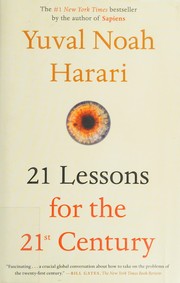
21 Lessons for the 21st Century
2,101-word summary 9 min read 372 pages in the book
- First published
- 2018
- Publisher
- Spiegel & Grau
- Pages
- 372
- ISBN
- 9780525512172
Reading options
What's inside (11 sections)
I read 21 Lessons for the 21st Century because Sapiens rewired how I see the past. Yuval Noah Harari published it in 2018 with Spiegel and Grau in the US and Jonathan Cape in the UK. My reading follows the 372 page hardcover. Twenty one essays in five parts tackle work, liberty, truth, and meaning in an age of algorithms and noise. It is provocative, uneven, and useful as a conversation starter rather than manual.
Harari's premise is blunt. Sapiens covered the past. Homo Deus imagined the future. This book is about the present, when liberal democracy wobbles, technology outruns understanding, and irrelevant information floods every feed. Clarity is power, he argues, and schools, nations, and religions struggle to provide it. His answer mixes history, biology, and his own Vipassana meditation practice. Breathe, question stories, and prepare children for jobs that do not exist yet.
Work, liberty, and the tech challenge
The opening part on technology hits hardest. Automation and AI will devour jobs from truck driving to radiology, Harari argues, leaving a useless class of people the economy can not employ or easily retrain. Big Data will know us better than we know ourselves, letting corporations and governments hack humans with targeted feeds. Those claims, familiar from Homo Deus, gain urgency here through examples. Hiring algorithms. Health trackers. Social credit pilots. You do not need to buy every prediction to feel the draft. Something is changing in who decides.
Liberty and equality chapters follow with equal punch. Data colonialism, his phrase for harvesting attention in poor countries to enrich distant platforms, reframes phones as plantations. That metaphor overreaches and provokes, which is the point. Nationalism can not solve climate or code, he insists, because neither respects borders. Readers across politics will argue with these pages, which is healthier than nodding. The book wants debate, not disciples.
Education gets the most practical advice and the sharpest criticism. Schools teach facts machines retrieve instantly while neglecting the four Cs Harari favors, critical thinking, communication, collaboration, creativity. He urges teaching change itself, mental flexibility over static skills. Teachers I know nodded and sighed. True, and hard with forty kids and one period. The chapter works better as direction than lesson plan. Aim here. Build roads yourself.
What I appreciated is his candor about his own limits. He is a historian, not engineer, and some technical claims simplify. Self driving timelines. Brain hacking ease. Those simplifications drew expert fire. Read them as provocations with footnotes, which the book provides through references, rather than lab results. The questions outlast the forecasts. Who owns your attention. What work means when jobs vanish. Those stay even if dates slip.
Community, nation, and religion
The middle parts on community and belonging sparked my most arguing in margins. Harari treats nationalism, religion, and culture as stories humans tell to cooperate at scale. Useful fictions, not lies. Nations united millions who never meet. Religions bound strangers through shared rites. That framing comforts secular readers and irritates believers, which Harari knows. His chapter on God distinguishes universe mysteries from lawgiver gods with brisk logic that believers will find thin. His chapter on secularism tries to return balance, praising doubt and compassion as secular virtues. Both chapters read better as invitations than verdicts.
Immigration, terrorism, and war chapters ground abstraction in policy. Terrorism works through theater, he argues, and states should refuse the show by keeping proportion. Do not overreact. Protect openness precisely because fear wants it closed. Immigration needs honest middle paths between open doors and walls, with assimilation as two way negotiation. War between great powers grows irrational when nukes and cyber ensure mutual ruin, yet Putin style strongmen gamble anyway. These essays, written in 2018, read eerily well after later elections and invasions. Some details date. The frameworks hold.
The community chapters on friendship and meaning feel thinnest to me. Harari warns online tribes simulate belonging while harvesting outrage. True. His remedy, offline rituals plus meditation, feels private for a book about collective crises. A chapter praising his sixty day silent retreats sits oddly beside chapters on displaced workers. Both matter. The scale jump jars. Still, his honesty about practice, two hours daily, grounds abstract resilience talk in something he actually does. Few pundits show their homework. He does.
Critics split predictably. Gates called parts banal self help. The Guardian called it mind expanding. Both have a point. When Harari synthesizes research on fake news or automation, he dazzles. When he prescribes humility or meditation, he drifts toward guru. Read accordingly. Take frameworks. Leave sermons that do not fit. The book survives selective use because essays stand alone. Skip what bores. Argue where it provokes.
Truth, science fiction, and school
The truth section is the most urgent now. Post truth, Harari argues, is not new. Humans always preferred myth to fact. What is new is algorithmic amplification that floods zones with noise until clarity drowns. Censorship by flood beats censorship by block. His remedy blends old and new. Pay for journalism. Read science. Admit ignorance. His ignorance chapter, praising knowing what you do not know, should be posted in every classroom. Humility scales. Certainty crashes.
Science fiction as policy tool is my favorite late essay. We need stories to imagine AI futures before living them, he says, and most blockbusters mislead with killer robots instead of bureaucratic nudges. Better fiction would show slow hacks, nudged votes, and quiet dependencies. Writers should take note. So should readers choosing what to watch. The movies you enjoy train your fears. Choose ones that train useful fears.
Education and meaning close the book with the meditation finale. Teach children to reinvent, Harari urges, because the job ladder they climb will be pulled up mid climb. Find meaning in present attention rather than grand narratives that crack. Then he describes watching breath for days until self thins. Skeptics will smile. Practitioners will nod. I split the difference. The advice to sample stillness in noisy decades is sound even if enlightenment talk is not your idiom. Try ten minutes before dismissing sixty days.
What holds across parts is Harari's gift for compression. Complex histories in pages. Vivid phrases that stick. Data colonialism. Hackable humans. Censorship by flood. Those coinages do real work, letting readers name forces they felt but could not label. What wobbles is depth per topic. Each lesson skims what whole shelves cover. Experts in labor economics or theology will find summaries thin. Generalists will find maps useful. Know which reader you are and adjust expectations. This is field guide, not monograph.
Work, data, and the useless class
The automation chapters merit closer reading because they anchor the book's urgency. Harari cites studies of truck driving, radiology, and customer service as jobs ripe for machine replacement, then extrapolates to law and medicine. Critics note he overstates timelines and understates new job creation, and they have a point about specifics. But the direction holds. When algorithms read scans and draft briefs, credentials protect fewer workers. His concept of a useless class, people unemployable at prevailing wages through no fault, stings precisely because welfare systems assume temporary dislocation. What if it is permanent for millions. That question alone justifies the chapter even if dates slip.
Data colonialism extends the argument from jobs to selves. Platforms harvest attention in countries that see none of the profits, training models on behavior they then sell back as ads and nudges. Harari compares this to historical resource grabs, which offends economists who note users get free services. The analogy overreaches and illuminates at once. Free search in exchange for behavioral futures is trade, but asymmetric one where sellers can not price their goods. Readers should argue with the metaphor while keeping its warning. Your clicks train masters you will never meet. Price accordingly by limiting exhaust.
His liberty essays follow with the book's bleakest claim. Free will, already shaky in neuroscience, becomes hackable when Big Data predicts choices better than introspection. Elections, purchases, and partners get nudged by systems that know your buttons. Harari's remedy blends old and new. Regulate data ownership. Teach philosophical skepticism about inner selves. Practice meditation to observe manipulations as they arise. That trio, law plus doubt plus breath, feels eclectic and honest. No single fix suffices when the hack targets desire itself. Layer defenses. He practices what he preaches with retreats, which critics mock as privilege. Time to sit is indeed unequal. The advice still beats doomscrolling.
Stories we live by
The nationalism and religion essays deserve paired reading because they make the same move. Humans cooperate through shared fictions, nations and gods, that outlive their uses. Harari respects their power while denying their literal truth, which angers partisans on all sides. Nationalists hear their anthems called myths. Believers hear scriptures filed beside constitutions as useful stories. His tone stays even, curious rather than contemptuous, but the filing stings. Expect to argue in margins. That arguing is the pedagogy. A story examined loosens its grip enough to choose.
His secularism chapter tries to offer replacement creed. Doubt, compassion, and responsibility without divine command. Critics call it thin gruel beside traditions with music and food. Fair. Yet his description of secular rituals, courts, clinics, and classrooms, reminds that shared practices already bind nonbelievers. The question is whether they bind enough under stress. Harari admits doubt without surrendering the project. Keep the best stories. Test the rest. That editorial stance toward culture suits an age drowning in content. Curate or be curated.
Meditation, meaning, and the last lesson
The closing meditation chapter polarizes readers and deserves direct engagement. Harari describes long silent retreats observing breath and sensation until self thins into process. Skeptics read privilege and escape. Practitioners read method and relief. Both reactions fit the same pages, which is rare. The chapter works best as report rather than prescription. This is what I do. This is what I notice. Take what helps. That modesty, unusual in a book of big claims, invites experiment without demanding conversion. Try ten minutes of watching breath before dismissing sixty days. Data beats derision.
Meaning gets similar even handed treatment worth noting. Harari argues stories provide purpose, then shows stories cracking under data pressure. Jobs end. Nations wobble. Gods divide. What remains is present attention and compassion for suffering beings. Critics call that thin gruel next to symphonies of faith. He accepts the charge and offers thin as honest. Better clear broth than poisoned feast. Readers will divide by temperament here. System builders want architecture. Harari offers breathing room. Both needs are real. The book closes by choosing breath, which feels right after noise chapters. Inhale. Notice. Begin again.
Science fiction as rehearsal
Harari's late essay on science fiction deserves emphasis as method, not digression. Societies rehearse futures through stories before living them, and most blockbusters rehearse wrong threats. Killer robots distract from bureaucratic nudges. Alien invasions distract from data grabs. Better fiction would stage slow hacks, attention markets, and quiet dependencies where drama lives now. That argument gives readers homework beyond the book. Choose films that train useful fears. Write stories that model resistance to flood. The chapter flatters SF fans while challenging them to earn it. Imagine precisely or be imagined by platforms.
Schools for changing minds
Harari's education chapter deserves practical gloss for teachers and parents reading. Facts expire. Frameworks bend. What lasts is learning how to learn under pressure without panic. He suggests less content coverage and more source triage. Which feed lies. Which study replicates. Which expert profits. Those skills fit one lesson weekly in any subject. History classes can compare two accounts of one event. Science can replicate one small experiment. That practice builds immunity to flood better than any lecture on media literacy. Practice beats hearing about it.
Who should enroll
Give 21 Lessons to nonfiction readers who liked Sapiens and want present tense, to students of politics and tech who need frameworks fast, to book clubs that enjoy arguing across divides. It suits readers comfortable with big claims and footnotes. Do not give it to readers who need deep single topic dives or who bristle at meditation talk. Pair it with Factfulness for numbers and with a news fast for sanity.
At 372 pages I read it across a week, arguing aloud. Harari starts deluged and ends breathing, urging attention as resistance in a century that monetizes distraction. That arc, from noise to breath, is why the book lasts past its dated forecasts. Stories will keep hacking us. Clarity remains possible. Practice it daily. That is lesson twenty two, unwritten but everywhere.
FAQ
When was 21 Lessons published?
Spiegel and Grau published it in September 2018. The hardcover runs 372 pages and the ISBN is 9780525512172.
Is it part of a series?
No. It stands alone after Sapiens on the past and Homo Deus on the future, focused on the present.
What phrases does it coin?
Data colonialism for attention harvesting, hackable humans for prediction, and censorship by flood for noise.
Similar books
Homo Deus
After ruling the world, humans chase upgrades and delegate feeling to systems that know patterns.
2,013-word summary · 9 min read
Nudge: Improving Decisions About Health, Wealth, and Happiness
Thaler and Sunstein show how defaults, framing, and social cues steer choices, and argue for choice architecture with an opt-out.
3,146-word summary · 14 min read
Nothing to Envy
Barbara Demick follows six defectors from Chongjin through the North Korean famine, showing how ordinary people lived, believed, and finally left.
2,068-word summary · 9 min read

Why I'm No Longer Talking to White People About Race
Reni Eddo-Lodge traces black British history and shows how institutions, culture, and everyday assumptions keep producing racial inequality.
2,071-word summary · 9 min read
The World Is Flat: A Brief History of the Twenty-first Century
Thomas L. Friedman's 2005 bestseller argues that technology, trade, and open borders leveled the global playing field, and it names the ten forces that did it.
2,369-word summary · 11 min read

How to Be an Antiracist
Kendi blends memoir and history to argue that fair policy, not self fixing, creates an equal society.
2,513-word summary · 11 min read
The Dispossessed: An Ambiguous Utopia
Physicist Shevek leaves anarchist Anarres for capitalist Urras to share time theory, finding walls both places.
2,288-word summary · 10 min read
Zen and the Art of Motorcycle Maintenance
Father and son ride west while lectures on Quality and past madness intrude.
2,180-word summary · 10 min read

The Prince
Machiavelli advises Lorenzo on rule through fear and love, fortune, cruelty and mercy.
2,204-word summary · 10 min read
Sapiens: A Brief History of Humankind
Harari's Sapiens from cover to cover: the cognitive revolution, the agricultural bargain, shared fictions like money and nations, and the scientific centuries…
2,145-word summary · 10 min read

Long Walk to Freedom
Mandela's account of a Thembu childhood, a law practice, a banned movement, twenty-seven years in prison, and the negotiation that ended apartheid.
2,454-word summary · 11 min read
The Courage to Be Disliked: The Japanese Phenomenon That Shows You How to Change Your Life and Achieve Real Happiness
A philosopher and an angry young man argue over five nights about Adlerian psychology, trauma, approval, and the freedom to be disliked.
2,054-word summary · 9 min read

In Order to Live: A North Korean Girl's Journey to Freedom
A young North Korean girl crosses the Yalu, survives trafficking in China, and rebuilds her life in Seoul in this unsparing memoir.
2,027-word summary · 9 min read

Too Much and Never Enough: How My Family Created the World's Most Dangerous Man
Mary L. Trump's 2020 memoir traces how a cold, zero-sum Queens household shaped her uncle, and uses family tax documents to challenge his self-made story.
2,059-word summary · 9 min read

Infidel
Ayaan Hirsi Ali's memoir of a Somali childhood, a forced marriage, a Dutch asylum claim, and the political fight that followed the murder of Theo van Gogh.
2,041-word summary · 9 min read
Foundation's Edge
Exiled councilman Golan Trevize hunts for the Second Foundation and the lost world of Earth, and finds a planet with one mind waiting to change the galaxy.
2,335-word summary · 10 min read

Fathers and Sons
Arkady brings the nihilist Bazarov home to his father's estate, and a generational argument turns into love, a duel, and an early death.
2,192-word summary · 10 min read

Down and Out in Paris and London
Orwell's account of washing dishes in Paris hotels and tramping through London does not ask for pity, only for a clear look at how poverty actually works.
2,282-word summary · 10 min read

The Girl with Seven Names: A North Korean Defector's Story
Hyeonseo Lee crossed the frozen Yalu River at seventeen, spent years hidden in China, escaped to South Korea, and later returned to rescue her family.
2,404-word summary · 11 min read
The Wright Brothers
David McCullough tells the story of two self-taught Ohio brothers, working largely alone and out of a bicycle shop, who solved the problem of flight before…
2,027-word summary · 9 min read
Four Thousand Weeks: Time Management for Mortals
Oliver Burkeman turns the whole productivity project on its head, arguing that a human lifespan of roughly four thousand weeks is not a problem to optimize…
2,447-word summary · 11 min read
America (The Book): A Citizen's Guide to Democracy Inaction
Jon Stewart and the Daily Show writers turn a high school civics textbook inside out, with a foreword from beyond the grave.
2,511-word summary · 11 min read
The Road Less Traveled: A New Psychology of Love, Traditional Values and Spiritual Growth
M. Scott Peck argues that maturity begins with accepting difficulty, then builds discipline, love, and spiritual growth through honest, often painful work.
2,200-word summary · 10 min read
The Elegant Universe: Superstrings, Hidden Dimensions, and the Quest for the Ultimate Theory
Brian Greene explains relativity, quantum mechanics, and the promise of string theory without requiring a physics degree.
2,110-word summary · 9 min read
Red Notice
An American financier in Moscow exposes a $230 million tax fraud, watches his lawyer die in prison, and turns the case into an international human rights law.
2,008-word summary · 9 min read
Prisoners of Geography: Ten Maps That Tell You Everything You Need to Know About Global Politics
Tim Marshall explains how mountains, rivers, coasts, and resources shape the choices of nations, from Russia's flat borders to the chokepoints of the South…
2,328-word summary · 10 min read
Ishmael: An Adventure of the Mind and Spirit
A gorilla named Ishmael teaches a disillusioned man that civilization is a story, and that humans may compete but must not wage war on other species.
2,015-word summary · 9 min read
Exhalation
Ted Chiang's second collection contains nine stories about time, memory, free will, and artificial minds, told with clarity and moral seriousness.
2,075-word summary · 9 min read
Catch and Kill: Lies, Spies, and a Conspiracy to Protect Predators
Ronan Farrow recounts how NBC killed his Harvey Weinstein reporting, then how The New Yorker published it and helped ignite #MeToo.
2,057-word summary · 9 min read
Letters to a Young Poet
Rilke's ten letters to a young officer cadet refuse easy criticism and ask whether he must write, offering patience and solitude as a way of life.
2,530-word summary · 11 min read