
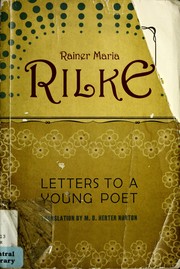
Letters to a Young Poet
2,530-word summary 11 min read 96 pages in the book
- First published
- 1929
- Publisher
- W. W. Norton & Company
- Pages
- 96
- ISBN
- 9780393310399
- Original title
- Briefe an einen jungen Dichter
Reading options
What's inside (7 sections)
A friend gave me this book when I was trying to write and failing at it, and I expected a slim manual with rules about sentences. What I got was ten letters from Rainer Maria Rilke to a nineteen-year-old officer cadet named Franz Xaver Kappus, and almost no practical advice at all. The copy I read is the W. W. Norton edition, 96 pages, translated by M. D. Herter Norton. It is small enough to carry in a coat pocket. The letters first appeared in 1929, three years after Rilke's death, from Insel Verlag in Leipzig under the title Briefe an einen jungen Dichter. Kappus had written to Rilke between 1902 and 1908, asking about his poems and about whether he should pursue literature or the army. Rilke had attended the lower school of the same military academy in Sankt Pölten in the 1890s, so the young man was not writing to a stranger who knew nothing of that world. The first letter is dated Paris, 17 February 1903.
I think the book survives because it refuses the thing most writing advice promises. It does not tell you how to get published, how to plot a novel, or how to make a sentence lean. It asks a harder question, and then it leaves you alone with it. That is either generous or maddening, depending on the day you read it.
The first letter
Kappus sent Rilke some poems and asked for an honest opinion. Rilke declined to give one. He said nobody can advise or help a young poet, and that criticism of the kind Kappus wanted was useless. The only way forward was for Kappus to go into himself and ask whether he must write. If he could live without writing, Rilke said, then he should not write at all. If the answer was yes, if he could not imagine a life without it, then he should build his life around that necessity.
That sounds like a door closing, but it is really a door being pointed out. Kappus wanted Rilke to tell him whether he was good. Rilke tells him that the question of good is secondary, and that the first question is whether the work is necessary. A young writer can spend years looking for a teacher who will validate him. Rilke refuses the role. He will not be the judge, and he will not pretend that a few comments on a poem can settle a vocation.
The advice is frightening because it offers no fallback. It says that if you can be happy doing something else, you should do that instead. Most people can, and most people do, and there is no shame in it. The book is aimed at the people who cannot stop, the ones who need to organize their lives around the fact, rather than at everyone who might enjoy making art. That is a different kind of instruction, and it is why the letter has lasted. It treats writing as a need before it treats it as a career.
Rilke also says that the young poet should not be afraid of the questions he cannot answer. That idea comes back later in the collection, but it is already present in the first letter. Kappus wants a verdict. Rilke gives him a method: live the question, pay attention, and let the answer arrive when it is ready. The tone is serious, almost stern, but it is not cruel. He is taking the young man seriously enough to refuse him a shortcut.
The man in the letters
It helps to know where Rilke was when he wrote. He was a Bohemian-Austrian poet who lived from 1875 to 1926. During the years of the correspondence he moved between Paris, Viareggio, Rome, Worpswede, and Sweden, and he was in his late twenties and early thirties. He had published Das Stunden-Buch and Das Buch der Bilder, and he was working on the New Poems and The Notebooks of Malte Laurids Brigge. He knew the sculptor Auguste Rodin, and he was married to the sculptor Clara Westhoff. They had a daughter named Ruth.
None of that made him a settled man. The letters come from someone who was often short of money, often restless, and often uncertain about his own work. He writes about Paris, Rome, the weather, his rooms, his walks, and the difficulty of finding quiet. That texture matters. If the letters were only aphorisms, they would be easy to dismiss. Because they are attached to a life that was messy, they feel like reports from the road rather than pronouncements from a mountaintop.
Rilke is also a writer who changed his mind and his style. The early books are lush and musical. The New Poems are hard and objective, shaped by his contact with Rodin. The Notebooks of Malte Laurids Brigge is fragmented and inward. The letters sit between those phases, which may be why they are so open. He is working out what art costs while he writes, rather than defending a finished system.
The collection is one-sided, and that shapes the reading. We have Rilke's answers but not Kappus's questions, except as they are implied. In 2017 Kappus's letters to Rilke were discovered, and they were published in German in 2019, with an English translation in 2020. That discovery is valuable for scholars, because it shows how much Rilke was responding to a particular young man. But the book most readers know is still the 1929 selection, a monologue that feels like a conversation because Rilke was good at imagining the person on the other side.
Patience and the questions
The most famous idea in the book is patience. Rilke tells Kappus that art cannot be forced, that it ripens like a tree, and that the young poet should trust the slow work of time. He does not mean that you should sit still and wait for inspiration. He means that the roots are doing something you cannot see. The image is gentle, and it can be abused. Some people use patience as an excuse for never finishing anything. Rilke's version is more demanding than that, because he pairs it with daily attention. The tree ripens because it is alive and rooted, not because it is waiting for a miracle.
Then there is the line about loving the questions themselves. Rilke advises the young poet to be patient toward everything unresolved in his heart, and to love the questions as if they were locked rooms or books written in a foreign language. The point is to live inside the uncertainty long enough for it to become fertile, rather than solving your life before you begin. That is a difficult practice, especially for a young person who wants a map. It is also a useful correction to the idea that art begins with a thesis.
The dragons line is the one people quote on posters. Rilke suggests that the dragons in our lives may be princesses who are only waiting to see us act once with beauty and courage. It is a romantic image, and it can sound like a promise that every fear hides a gift. I do not think Rilke means that literally. He means that the things we avoid often lose their monstrous shape when we turn toward them. The sentence is less interesting as a slogan than as a description of the moment before a difficult choice.
Solitude is everywhere in the letters. Rilke treats it as a working condition, not a personality trait. The artist needs room to hear his own thoughts, and that room can be lonely. He does not pretend the loneliness is pleasant. He also does not recommend cutting yourself off from everyone. The letters are full of friends, cities, books, and conversations. Solitude, for Rilke, is a place you return to so that you have something to bring back. It is not a cave you stay in forever.
He also warns against irony. Irony is a defense, a way of making sure you are never caught caring about something. For a young writer, that defense can be fatal, because it keeps the work at arm's length. Rilke wants the poems to be vulnerable. He wants the writer to mean it. That does not mean every poem has to be sincere in a simple way. It means the intelligence should not be used only to protect the writer from being seen.
The letters recommend reading the Bible and the Danish writer Jens Peter Jacobsen. The Bible matters to Rilke as a source of stories and a record of human extremity, not as a doctrine to be accepted. Jacobsen matters because his prose is attentive to inner life and to the natural world. Rilke is telling Kappus to feed himself on serious work, not on the opinions of the moment. The advice is less about a canon than about a habit of attention.
Love and sexuality take up a lot of space, and this is where the book can feel most dated. Rilke talks about the difficulty of love, the need to let another person remain separate, and the mistake of using love to fill a hole in yourself. He is wary of marriage as a refuge, and he is wary of desire that wants to possess. Some of his language about women and creativity now sounds old-fashioned. The underlying question is still alive: how do you love someone without turning them into a supporting character in your own story?
Rome, childhood, sadness, and God are the other recurring subjects. Rome impresses him with its age and its weight. Childhood is a source of wonder, but not a place to live. Sadness is not a disease to be cured as quickly as possible. God is less a person than a direction, a horizon against which the artist measures his work. These are not arguments that build to a conclusion. They are themes that return in different keys, which is why the book feels less like a treatise and more like a correspondence.
What Kappus did with it
Kappus did not become a major poet. He stayed in the military for fifteen years, then became a journalist and a writer. That outcome is worth keeping in view. The letters are often read as a guide for geniuses, but the person who received them had an ordinary career. He preserved the letters, and that act of preservation is the reason we have the book. He may not have written the poems Rilke hoped for, but he recognized that the letters were worth keeping.
The ten letters were published in 1929, three years after Rilke's death. Kappus was in his forties by then. The book appeared from Insel Verlag in Leipzig as Briefe an einen jungen Dichter, and it became a small classic in German. The W. W. Norton edition I read runs 96 pages and uses the Herter Norton translation, which is the version many English-speaking readers still associate with the text. The translation matters because Rilke's prose depends on rhythm and on the slight formality of his address. A flat translation can make him sound like a fortune cookie. A good one keeps the gravity and the warmth together.
The discovery of Kappus's own letters in 2017 changed the scholarly picture. We can now see how often he wrote, what he asked, and how Rilke's answers fit the questions. But it did not change the experience of the book for most readers. The book is still Rilke's side of the conversation, and its power comes from the way it addresses anyone who opens it. Kappus is almost transparent. He becomes the young poet in general, which is why the title has lasted.
There is something poignant about the fact that Kappus is remembered mainly as the recipient. He wanted to be a poet, and the book that made him famous is a book of letters written to him. That is a different kind of literary life, not a failure. He kept the correspondence, he published it at the right moment, and he gave generations of writers a text that talks them out of cheap certainties.
The limits of the advice
The criticism of the book is fair. Rilke can be vague. He tells Kappus to trust his own depths, but he does not say much about how to recognize a good poem or how to revise a bad one. He says little about politics, money, family obligations, or the ordinary compromises of a writing life. A reader looking for craft will be disappointed. The book is about the conditions of art, not the techniques of it.
There is also the risk of glamorizing suffering and withdrawal. Rilke's own life was difficult, and some of his advice can be read as a defense of his choices. If you are lonely, the book can tell you that your loneliness is a sign of depth. If you are avoiding people, it can tell you that solitude is sacred. That is a dangerous reading, and the book does not do enough to guard against it. Suffering can feed work, but it can also just make you miserable and stop you from writing.
The advice about love and sexuality feels dated in places. Rilke's ideas about women, marriage, and desire belong to his time, and some readers will find his tone patronizing. The translation can also soften or sharpen him in ways that matter. Herter Norton is the classic choice, but other translations exist, and they make different choices about how formal or how modern Rilke should sound. That is true of all translated poetry, and it is especially true of a book whose appeal depends on voice.
The book can also encourage a kind of paralysis. If you are always waiting for the work to ripen, you may never finish anything. If you are always loving the questions, you may never risk an answer. Rilke's patience is supposed to be active, but it is easy to turn it into an excuse. The letters do not give you a schedule, a deadline, or a test. They give you a standard, and the standard is demanding enough to be misused.
And yet I understand why people keep handing this book to young writers. It treats creative work as a whole way of living rather than a hobby or a career move. It says that the important question is whether you must write, not whether you are talented. That is a strange question, and it is not always helpful. On a bad day it can feel like a burden. On a good day it can feel like permission.
The first letter is dated 17 February 1903, and Rilke does not know how much of his advice he will fail to follow. That is part of what makes the book moving. The voice is that of a man still working, writing to someone just beginning, and trying to say something true before the moment passes. I closed the book with the question still open, which is probably what Rilke wanted.
FAQ
Who was Franz Xaver Kappus?
He was a nineteen-year-old officer cadet at the Theresian Military Academy in Wiener Neustadt when he first wrote to Rilke in 1902. He later became a journalist and writer.
When were the letters published?
They appeared in 1929, three years after Rilke's death, as Briefe an einen jungen Dichter from Insel Verlag in Leipzig.
Is Letters to a Young Poet mainly advice about craft?
Not much. Rilke says little about technique and instead treats writing as a necessity that should shape a whole life.
Similar books
Art & Fear: Observations on the Perils (and Rewards) of Artmaking
Two working photographers write a short, blunt book about why people stop making art, and how to keep going when the work is going badly.
1,994-word summary · 9 min read
Creativity, Inc.: Overcoming the Unseen Forces That Stand in the Way of True Inspiration
Pixar's president on why the studio that made Toy Story nearly broke itself, and the daily habits that kept the creativity coming.
2,179-word summary · 10 min read
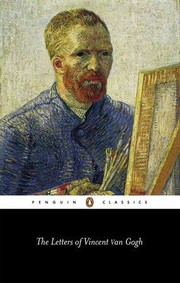
The Letters of Vincent van Gogh
Vincent van Gogh's letters to his brother Theo, in a Penguin Classics selection edited by Ronald de Leeuw, trace a decade of work, faith, and obsession.
2,611-word summary · 12 min read
Bird by Bird
Anne Lamott's 1994 book on writing and life: shitty first drafts, the one-inch picture frame, and quieting the inner critic so you can take it bird by bird.
2,592-word summary · 12 min read
The War of Art
Pressfield names Resistance and urges daily professional work.
2,565-word summary · 11 min read
The Artist's Way: A Spiritual Path to Higher Creativity
A twelve week course with morning pages and artist dates to recover creativity.
2,345-word summary · 10 min read
Understanding Comics
McCloud explains comics in comics form, from icons to closure between panels.
2,091-word summary · 9 min read
Drawing on the Right Side of the Brain
Edwards teaches seeing edges spaces to draw via right brain exercises.
2,229-word summary · 10 min read

The Courage to Be Disliked: The Japanese Phenomenon That Shows You How to Change Your Life and Achieve Real Happiness
A philosopher and an angry young man argue over five nights about Adlerian psychology, trauma, approval, and the freedom to be disliked.
2,054-word summary · 9 min read
Four Thousand Weeks: Time Management for Mortals
Oliver Burkeman turns the whole productivity project on its head, arguing that a human lifespan of roughly four thousand weeks is not a problem to optimize…
2,447-word summary · 11 min read
The Road Less Traveled: A New Psychology of Love, Traditional Values and Spiritual Growth
M. Scott Peck argues that maturity begins with accepting difficulty, then builds discipline, love, and spiritual growth through honest, often painful work.
2,200-word summary · 10 min read
Beyond Good and Evil: Prelude to a Philosophy of the Future
A guide to Friedrich Nietzsche's Beyond Good and Evil: its attack on moral prejudice, the will to power, master and slave morality, and the philosopher of the…
2,597-word summary · 12 min read
The History of the Hobbit, Part One: Mr. Baggins
Rateliff traces every draft of Bilbo from 1930 notes to print.
2,410-word summary · 11 min read
Leaves of Grass
Free verse songs of self, America, bodies and democracy.
2,240-word summary · 10 min read
God Is Not Great
Hitchens argues religion poisons life across history and texts.
2,545-word summary · 11 min read
Eats, Shoots & Leaves
Truss defends commas with jokes about pandas and posters.
2,423-word summary · 11 min read
The Black Swan
Taleb argues rare shocks shape history more than models admit, and urges safer exposure over prediction.
2,588-word summary · 12 min read
On the Origin of Species
Darwin's 1859 case for evolution by natural selection, from Beagle finches and breeding pigeons to fossils and anatomy.
2,589-word summary · 12 min read
In Defense of Food
Pollan argues we stopped eating food and started eating nutrients, and offers a plain way back.
2,320-word summary · 10 min read
The Untethered Soul
Singer names the noisy inner voice and shows how watching thoughts, loosening old hurt, and keeping the heart open through surrender can ease daily suffering…
2,752-word summary · 12 min read
The Surgeon of Crowthorne
James Murray built the Oxford dictionary with Broadmoor inmate William Minor, whose thousands of slips shaped this 1998 HarperCollins story of murder, madness…
2,775-word summary · 12 min read
The Art of Happiness
The Dalai Lama and psychiatrist Howard Cutler link lasting happiness to training the mind, human warmth, compassion, and basic spiritual values for daily life.
3,394-word summary · 15 min read
The Tao of Pooh
Hoff explains Taoism through Pooh, Piglet, and Eeyore in gentle chats.
2,006-word summary · 9 min read

PostSecret
Warren curates anonymous postcard secrets into art about love and shame.
2,001-word summary · 9 min read
A World Appears
Pollan traces consciousness from plant sentience to AI feeling and the self, with gardens, labs, trips and hard questions along the way.
3,108-word summary · 14 min read
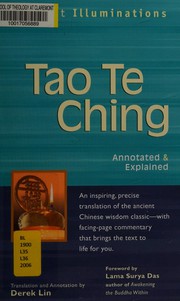
Tao Te Ching: Annotated & Explained
Eighty one brief verses on the Way and effortless action, with Lin's translation and facing notes.
2,140-word summary · 10 min read
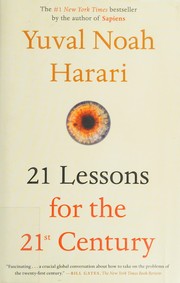
21 Lessons for the 21st Century
Twenty one essays on work, liberty, truth, and meaning when algorithms flood the world with noise.
2,101-word summary · 9 min read
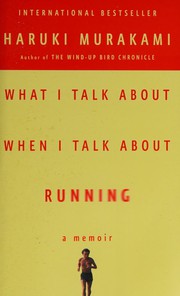
What I Talk About When I Talk About Running
Murakami connects daily running to writing novels, from his jazz club years to marathons and a 62-mile ultramarathon, with frank notes on aging. A quiet memoir…
3,100-word summary · 14 min read
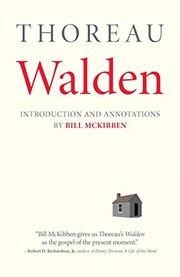
Walden
Thoreau builds a cabin at Walden Pond and spends two years testing what a person really needs to live well.
2,986-word summary · 13 min read
Inferno
Dante, lost at thirty-five, follows Virgil down through nine circles of Hell, from Limbo to the ice, and climbs back toward the stars.
3,131-word summary · 14 min read