
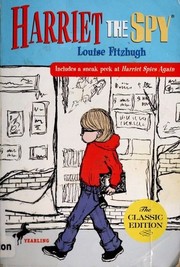
Harriet the Spy
2,510-word summary 11 min read 300 pages in the book
- First published
- 1964
- Publisher
- Yearling
- Pages
- 300
- ISBN
- 9780440416791
Reading options
What's inside (8 sections)
I came to Harriet the Spy late, as an adult, and expected a cozy artifact from the children's shelf. What I found was a sharp little novel with a mean streak and a steady heart. Louise Fitzhugh's novel appeared in 1964, and the Yearling paperback I read runs 300 pages. Harriet M. Welsch is eleven, lives on the Upper East Side of New York, and wants to be a writer. The book takes that ambition seriously. It also takes seriously the damage a clever child can do when she confuses honesty with permission.
The Notebook and the Route
Harriet's closest companion is Ole Golly, the family nanny. Ole Golly is not soft or sentimental. She tells Harriet to observe people and to write down everything she sees. She encourages the notebook, and the notebook becomes a route. Every afternoon Harriet walks the same streets, stops at the same windows, watches the same neighbors, and records them. She is not gathering evidence for a case. She is collecting people and reducing them to sentences. A woman alone at a window, a couple arguing over dinner, a man who talks to himself on a bench: each becomes a paragraph in Harriet's private catalog. The notebook is where she is most alive and least kind.
Some of the entries are funny, in the way that a merciless imitation can be funny. Harriet notices the gap between how people present themselves and how they actually live. She has an eye for the small hypocrisy, the remark that does not match the life behind it. Her gift is real. So is her contempt. She writes as if the world has been waiting for her verdict, and the reader laughs before realizing how much it would hurt to be on the page.
Ole Golly's advice has a philosophy behind it. She believes children should look at the world instead of being protected from it. She does not tell Harriet to be nice. She tells her to be accurate. That is a strange thing to give an eleven year old, and the novel knows it. Harriet takes the instruction literally. She writes down the flaws she sees, and she sees plenty. The notebook becomes a place where politeness does not apply. In a house where her parents speak in cheerful generalities, the notebook is the only room with a lock.
Sport, Janie, and the Politics of School
At school she has two friends who matter. Simon Rocque, called Sport, is serious in a way that makes the adults around him look frivolous. His father is a writer who is always struggling, and Sport runs the household. He counts the money, cooks the meals, and worries about rent while his father works. Sport is a child who has been forced to become the adult, and he does it without much complaint. Janie Gibbs wants to be a scientist. She likes explosions and experiments, and she has no patience for the performance of being a nice girl. Harriet, Sport, and Janie fit together because none of them is easy. They are odd in different directions, and they do not ask each other to soften.
Then there is Marion Hawthorne, the teacher's pet, the girl who knows how to please and how to rule. Marion has a friend named Rachel Hennessy, and together they preside over the classroom's small politics. Harriet sees through Marion, and writes her contempt in the notebook. That is the first mistake, though it does not feel like one at the time. The notebook is private. Harriet assumes privacy the way children assume weather.
Ole Golly leaves. A man named Mr. Waldenstein proposes, and she accepts, and she goes off to be married. Harriet is devastated. The adults treat this as a practical change, a new arrangement, but for Harriet it is the loss of the one person who sees her without flinching. Her parents are well meaning and distant. They provide the house, the school, the nanny, and the routine, but they do not know what is happening inside their daughter. When Harriet is in pain, they notice the noise, not the cause. Fitzhugh is careful about this. The parents are not villains. They are busy, confident, and a little blank. Their neglect is the kind that comes with comfort.
The novel never gives the Welsches a scene of real understanding. They are present as furniture, loving in the abstract and absent in the particular. When Harriet's behavior changes, they reach for a doctor and a rule. They do not sit down and ask what Ole Golly meant to her. That absence is the quiet engine of the book. Harriet is not neglected in the dramatic sense. She is fed, clothed, and enrolled. She is simply not known, and Fitzhugh shows how lonely that can be for a child who notices everything.
The Notebook Goes Public
The notebook goes missing during a game of tag. Harriet is running, the book falls, someone picks it up, and the class reads it. What they find is not a diary of feelings. It is a series of verdicts. Harriet has written what she thinks of her classmates, and she has not been generous. The children are wounded, and they are also delighted to have a weapon. They form the Spy Catcher Club, with Marion and Rachel at the center, and they set out to make Harriet pay. They steal her lunch. They pass notes. They exclude her from games and conversations. The cruelty is ordinary and therefore believable. It has the rhythm of school, where a grudge can become a group activity by lunchtime.
Harriet does not apologize. She retaliates. She spies on the Spy Catcher Club, takes notes on their meetings, and plots revenge. This is where the book becomes uncomfortable, because Harriet is good at it. Her intelligence, which was charming when it was aimed at strangers, becomes frightening when it is aimed at children who have hurt her. She watches them the way she watches the neighbors. She writes them down. She plans. The adults see a discipline problem. The reader sees a war between children who have all learned the same lesson: information is power.
The club's methods are small, which is what makes them believable. A stolen lunch is not a tragedy, but it tells a child that she does not get to eat with the group. A note passed behind her back is not a wound, but it turns the classroom into a place where she has to watch her belongings and her back. Being left out of a game is not violence, but it is a daily reminder that the group has decided who counts. Harriet's revenge is equally small and equally serious. She follows them. She writes about them. She turns their private lives into material, and the reader sees that she has become the spy they accused her of being. The difference is that she was already one. The notebook did not make her cruel. It gave her cruelty a place to live.
The Letter and the Compromise
Her grades fall. Her parents take away the notebook. This is the worst thing they could do, and they do it with the confidence of people who think they are being responsible. Harriet without a notebook is not a reformed child. She is a child with no outlet and no privacy. They send her to a child psychiatrist, who listens and then suggests they contact Ole Golly. The letter comes. Ole Golly tells Harriet that if someone reads her notebook, she has to do two things she will not like: apologize and lie, or she will lose a friend. It is not a gentle lesson. It is a working compromise, and Harriet hates it.
I found that letter the most adult passage in the book. Ole Golly is not telling Harriet to stop seeing. She is telling her that seeing is not the same as saying. A writer can know a thing and choose not to publish it. A friend can be honest and still be careful. Harriet has been treating truth as a moral absolute, partly because she is eleven and partly because no one has taught her otherwise. The letter gives her a rule she can use, even if she resents it. The rule is not pretty. It asks her to lie, which is exactly what the school handbook would forbid. But it keeps the friendship, and the book is honest about the trade.
Harriet's first response is fury. She has been told that the truth is valuable, and now she is told that the truth must be managed. The letter does not offer her a comfortable lesson about kindness. It offers a practical one about consequences. If she wants to keep Sport and Janie, she has to give up the purity of her position. She has to say she is sorry for writing what she actually thought, and she has to pretend that the words were not true. That is a compromise many adults make every day, and Fitzhugh does not dress it up. The book's moral center is not honesty. It is the recognition that other people have feelings that count as much as your own.
The Club Collapses, the Paper Begins
The Spy Catcher Club falls apart on its own. Marion and Rachel become too bossy, and Sport and Janie quit. The alliance was built on a shared enemy, and when the enemy is down, the leaders start ordering people around. It is a small, accurate portrait of how school politics decay. Then the adults arrange something unexpected. Harriet becomes editor of the class newspaper, replacing Marion. The newspaper is a success. It runs stories about Harriet's spy route and about the students' parents, and for the first time her observation is useful to other people. She is watching, and she is reporting, and the class wants to read it.
That turn is clever and a little too easy. The same girl who was punished for spying is now rewarded for journalism, and the novel does not spend much time asking whether the parents who appear in the newspaper consented to being material. It treats the paper as a happy ending because the stories are charming and the class enjoys them. The logic is clear: Harriet's gift has found a legitimate outlet. The problem is just as clear: the gift is the same one that hurt her friends, and the institution that punished her now gives it a license. The book wants to have it both ways, and most readers let it, because Harriet is eleven and the paper is funny.
Harriet prints a retraction of the things she wrote in the notebook. It is not quite an apology, but it is public, and it costs her something. Sport and Janie forgive her. The ending is tidy, and some readers resist it for good reason. The children who were hurt do not get a full reckoning. Marion is displaced but not really examined. The parents remain thin. Harriet's cruelty is easier to forgive because she is the protagonist, and the book knows this even if it does not solve it.
What the Book Is Really About
What stays with me is the notebook itself. It is a tool for a writer and a weapon for a child, and Fitzhugh refuses to separate the two. The novel asks whether observation is a form of love or a form of theft. Harriet watches people who did not invite her. She turns them into material. That is what writers do, and it is also what spies do, and the book is honest about the overlap. The ethics are not spelled out in a lesson. They are felt in the scenes where a private sentence becomes public property.
There is also the matter of class. Harriet's freedom depends on money. She has a nanny, a townhouse, and time to walk a route. Sport's family is struggling, and he is the one who counts the bills. Janie's experiments are tolerated because her family can afford the mess. The book notices these differences without turning them into a lecture. New York is not a background here. It is a set of rooms and streets that belong to some children more than others. Harriet can afford to be strange. Sport cannot afford much of anything. The friendship works because the book does not pretend the gap is not there.
Later critics have found queer subtext in Harriet's refusal of girlish convention, in the intensity of her attachments, and in the way the three friends form a world apart from the adults. That reading is available without being forced. Fitzhugh writes Harriet as a girl who does not fit the shape expected of her, and the book never punishes her for that. It punishes her for cruelty, which is a different thing. The distinction matters, because it keeps the novel from becoming a story about a girl who needs to be corrected into femininity.
The adults in the book are not much better than the children, and that is part of its honesty. The teacher favors Marion. The psychiatrist listens and sends for Ole Golly. The parents love Harriet in the abstract. Ole Golly is the only adult who treats her as a mind, and Ole Golly leaves. The book does not suggest that a child can solve the problem of being unseen by being good. Harriet solves it by finding work she can do in public, which is a very adult solution. She becomes a writer because writing is the one place where her observation is welcome.
The novel was controversial when it appeared. Some schools banned it for teaching children to lie, to spy, and to talk back. That reaction now looks like a compliment. Harriet is not a role model. She is a person, and the book trusts readers to handle her. It was a milestone in children's literature because it refused to make childhood sweet, and Harriet's voice is the reason it lasts. The protagonist is unsentimental, the adults are imperfect, and the ending does not erase the damage.
Fitzhugh wrote two sequels, The Long Secret in 1965 and Sport in 1979. The book has been adapted into a 1996 film with Michelle Trachtenberg, a 2010 television movie, and a 2021 animated series for Apple TV+. Each version has to decide how much of Harriet's unpleasantness to keep. The novel keeps all of it.
I finished the book thinking about the difference between a secret and a story. Harriet's notebook is both. She writes to understand, and she writes to judge, and the two impulses are tangled. Ole Golly's letter does not untangle them. It gives Harriet a way to live with the tangle. That seems right for a book about an eleven year old who wants to be a writer. The world does not become kind. The child learns when to keep her mouth shut, and the reader learns how much that costs.
FAQ
Is Harriet the Spy only for children?
No. The novel is written for middle grade readers, but its treatment of honesty, privacy, and classroom cruelty gives adults plenty to notice.
Why was Harriet the Spy banned in some schools?
Some schools objected that Harriet lies, spies on neighbors, and talks back to adults. The book was controversial for refusing to present childhood as sweet.
Does Harriet apologize for what she wrote in her notebook?
She prints a retraction in the class newspaper rather than offering a full apology. Sport and Janie forgive her, though the classmates she insulted receive less attention.
Similar books
Hard Luck
Rowley has a girlfriend, so Greg turns to a Magic 8 Ball, a family Easter hunt and the school yearbook for answers.
2,586-word summary · 11 min read
The Third Wheel
Greg tries to find a date for the Valentine's dance, ends up the third wheel in his own plan, and watches Rowley get the girl.
2,019-word summary · 9 min read
Maniac Magee
Orphaned Jeffrey Magee runs to Two Mills, becomes a playground legend, and tests a town split by race while hunting for a real home.
2,219-word summary · 10 min read
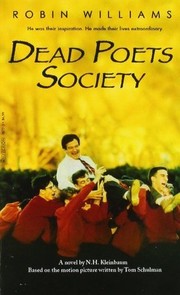
Dead Poets Society
Keating tells Welton boys to seize the day and his secret club costs more than grades.
2,031-word summary · 9 min read
Anne of the Island
Anne leaves Avonlea for Redmond College, shares Patty's Place with friends, and learns to tell admiration apart from love.
2,766-word summary · 12 min read
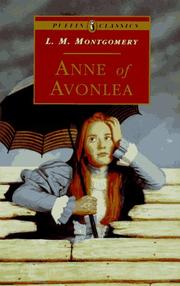
Anne of Avonlea
Anne teaches at sixteen, adopts twins, and learns that fixing Avonlea takes patience.
1,909-word summary · 8 min read

Little Town on the Prairie
In the spring after the Long Winter, fifteen-year-old Laura sews shirts, studies for a teaching certificate, and helps send her blind sister Mary to college.
2,071-word summary · 9 min read
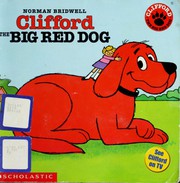
Clifford the Big Red Dog
Emily Elizabeth picks the smallest puppy in the litter, loves him as hard as she can, and wakes up to a dog the size of a house.
2,092-word summary · 9 min read
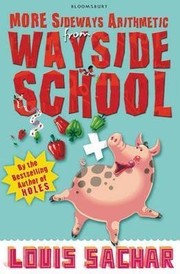
Sideways Stories from Wayside School
Thirty stories, one class per floor, and a teacher who turns students into apples: Louis Sachar's absurd school classic.
2,045-word summary · 9 min read
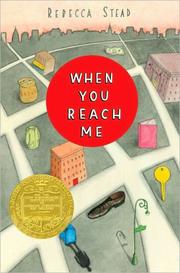
When You Reach Me
A sixth grader in 1970s New York gets strange notes that seem to predict the future.
2,456-word summary · 11 min read
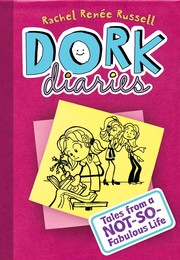
Tales from a Not-So-Fabulous Life
Nikki starts private school and writes mean-girl survival in her diary.
2,587-word summary · 11 min read
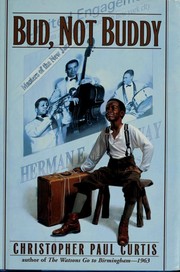
Bud, Not Buddy
A ten year old orphan in the Depression walks to find a jazzman he thinks is his father.
2,568-word summary · 11 min read
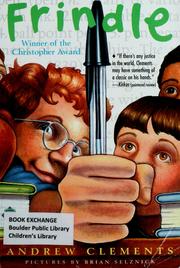
Frindle
Nick Allen calls a pen frindle, defies Mrs. Granger and a school ban, and watches the joke grow into news, trademarks, and a dictionary entry.
2,405-word summary · 11 min read
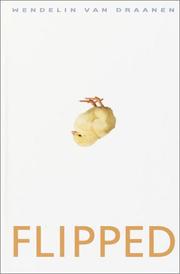
Flipped
Juli Baker and Bryce Loski retell second grade to eighth grade from opposite sides, through a sycamore sit, trashed eggs, a yard fix-up, and one tense family…
2,689-word summary · 12 min read
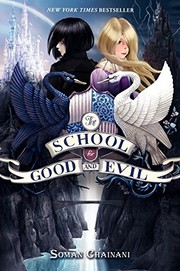
The School for Good and Evil
Best friends Sophie and Agatha are taken to fairy tale school and sorted to wrong sides.
2,042-word summary · 9 min read
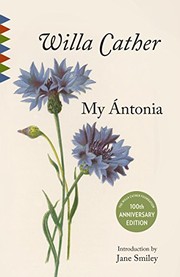
My Ántonia
Jim Burden recalls his Nebraska boyhood beside Bohemian friend Antonia Shimerda, from prairie farms to town work and a late return.
2,918-word summary · 13 min read
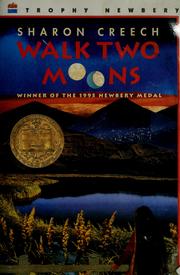
Walk Two Moons
Sal rides west with her grandparents telling Phoebe's story while facing her own mother's absence in Idaho.
2,554-word summary · 11 min read
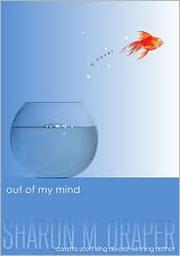
Out of My Mind
Eleven-year-old Melody Brooks has cerebral palsy and cannot speak, but she remembers everything and fights to be heard in fifth grade.
2,298-word summary · 10 min read
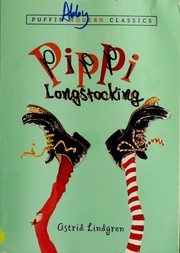
Pippi Longstocking
A super-strong nine-year-old lives alone in Villa Villekulla, upending school, circus and town rules with neighbors Tommy and Annika.
3,115-word summary · 14 min read
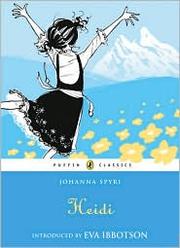
Heidi
Orphan Heidi blooms with her grandfather in the Swiss Alps, wilts in Frankfurt as a companion, then helps Klara walk.
2,952-word summary · 13 min read
Stargirl
Leo Borlock likes blending in until homeschooled Stargirl Caraway arrives at Mica High with a ukulele, a pet rat, and kindness that tests them both.
2,980-word summary · 13 min read
A Little Princess
Rich Sara Crewe loses her father and fortune at boarding school, survives the attic on stories and kindness, and is rescued from next door.
2,867-word summary · 13 min read
Bridge to Terabithia
Katherine Paterson's Bridge to Terabithia retold: Jess Aarons and Leslie Burke build an imagined kingdom and face sudden loss.
2,673-word summary · 12 min read
Winnie-the-Pooh
Edward Bear comes downstairs bump-bump-bump and into the Hundred Acre Wood for honey, hunneys, and heffalumps.
2,068-word summary · 9 min read
The House at Pooh Corner
Tigger bounces into the Hundred Acre Wood while Pooh builds Eeyore a house and Piglet does a grand thing.
2,022-word summary · 9 min read
The Secret Garden
Sour Mary Lennox lands at Misselthwaite Moor from India, finds a locked garden with Dickon, and pulls sickly Colin to his feet.
2,036-word summary · 9 min read
Matilda
Brilliant Matilda Wormwood teaches herself to read, faces her crooked parents and the fearsome Miss Trunchbull, and finds Miss Honey.
2,296-word summary · 10 min read
Anne of Green Gables
L. M. Montgomery brings talkative Anne Shirley to Green Gables on Prince Edward Island, where mistakes, school rivalries, and fierce friendship slowly turn…
2,182-word summary · 10 min read
The Outsiders
Outsiders retold: Ponyboy and greasers vs Socs, church fire, rumble, stay gold ache.
2,067-word summary · 9 min read
Make Way for Ducklings
A pair of mallards raise eight ducklings on the Charles River and lead them across Boston to the Public Garden, with a little help from a friendly policeman.
2,044-word summary · 9 min read