
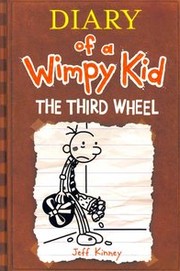
The Third Wheel
2,019-word summary 9 min read 217 pages in the book
- First published
- 2012
- Publisher
- Amulet Books
- Pages
- 217
- ISBN
- 9781419705847
- Series
- Diary of a Wimpy Kid (#7)
Reading options
What's inside (8 sections)
The seventh Diary of a Wimpy Kid book arrived in 2012 from Amulet Books, 217 illustrated pages, and it is the one where Greg Heffley finally learns that a plan can be perfectly executed and still leave you alone at the end of the night. Jeff Kinney's series had already sent Greg through middle school, a summer, a family vacation, and the indignities of being a younger brother. The Third Wheel turns the lens on romance, which for Greg means the Valentine's Day dance, and on the peculiar horror of being the third person in a room built for two.
The book opens before the plot does, with Greg narrating his own birth and infancy in the comic, self-important style that defines the series. His parents kissed, his mother read to him, he was late to walk, and the household now treats his little brother Manny with a set of child-rearing methods that Greg regards as suspiciously soft. He introduces Family Night and the restaurant Corny's, which will matter later. None of this is essential, but it establishes the book's real subject: Greg is a boy trying to figure out where he fits in a family and a school, and he does not yet understand that other people are doing the same thing.
Uncle Gary on the Couch
The plot starts with a knock at the door. Uncle Gary, Frank Heffley's brother, has arrived with nowhere to go. He borrowed money from Frank to buy a T-shirt stand in Boston, then discovered the shirts were misprinted with "Botson" instead of "Boston." Broke, he moves into the living room, sleeps on the couch, has nightmares, drives everyone crazy, and spends his days looking for work and buying lottery tickets. Manny loves him. Greg finds him exhausting. Frank finds him expensive. The adults are all trying to be decent about it while counting the days until he leaves.
At school, two things happen that set up the dance. First, Greg's gym class begins a ballroom dancing unit. There are more boys than girls, so Greg is paired with another boy, which he treats as a catastrophe of social ranking. Second, the student council election arrives. Greg cannot run because he has three detentions, so he manages Rowley Jefferson's campaign for social chairperson. Rowley wins unopposed. Eugene Ellis wins the presidency promising soft toilet paper, which leads to a schoolwide bathroom crisis, a five-square limit, and Greg hoarding rolls in a stall. It is a very Wimpy Kid sequence: a small rule change becomes a black market, and Greg immediately becomes the worst person in it.
The council chooses a Valentine's Day dance as the school fundraiser, themed Midnight in Paris. Greg spends weeks trying to find a date and fails. Then he learns that Abigail Brown's boyfriend, Michael Sampson, has canceled on her because of a supposed family obligation. Greg has Rowley suggest that the three of them attend as a group of friends. His plan is to use Rowley as a wingman and then romance Abigail himself. It is not a good plan, and Kinney lets the reader see every weak joint in it before Greg does.
The "Chickenpox" Problem
Rowley has acne spots, and Greg, in his infinite medical wisdom, decides they might be chickenpox. He makes Rowley cover them up. At dinner at Corny's, Greg insists on paying to impress Abigail, orders expansively, and ends up broke. Rowley and Abigail talk and grow closer while Greg is busy performing the role of a generous host. That is the whole tragedy of the evening, played for laughs: the harder Greg tries to be the main character, the more clearly he is the third wheel in his own plan.
The dance itself is a small masterpiece of middle-school chaos. The gym has been split because a group of senior citizens has claimed the space. The lights are dimmed and the music curtailed. Uncle Gary turns up selling his misprinted shirts. Michael Sampson arrives with another girl, Cherie Bellanger, which proves his family obligation was a lie and devastates Abigail. Greg comforts her and dances with her. Then he sees red spots on her face and panics, convinced she has chickenpox. The spots are pimples from crying. Abigail is hurt by his reaction. Rowley consoles her. Greg goes home alone.
The Ending
The subplots resolve in the final pages. Uncle Gary wins forty thousand dollars on a lottery ticket, repays Frank, and moves out. Rowley and Abigail become a couple. Greg, who has spent the book terrified of chickenpox, actually comes down with it. The last bathtub scene, where his towel disappears, is a standard Wimpy Kid gag rather than a twist. The joke is not that Greg is unlucky. The joke is that he was so busy managing other people's impressions that he missed what was happening in front of him.
There is a common misremembering that Greg ends up with Abigail or that Rowley is the third wheel. It is the other way around. Greg is the odd man out, Rowley gets the girl, and the spots on Rowley and Abigail are acne while Greg is the one who gets chickenpox. The title is not a riddle. It is a verdict.
What makes the ending sting is that Greg is not punished for being cruel. He is punished for being oblivious. He genuinely thinks he is being generous by including Rowley in the plan, and he genuinely thinks he is being romantic by paying for dinner. The reader can see the selfishness underneath, but Greg cannot, and that gap is where the comedy lives. Rowley, meanwhile, does the simple thing: he talks to Abigail like a person. The book does not say that is a better strategy. It just shows the result.
There is also a small, honest observation about friendship in the way Greg treats Rowley throughout. Greg uses him as a wingman, hides his acne, and assumes he will go along with the plan. Rowley does, mostly, because that is who Rowley is. The book never asks whether Greg deserves him. It just lets the friendship survive another installment, which is both funny and a little sad.
The Wimpy Kid Formula
By the seventh book, Kinney had a formula, and the formula is part of the pleasure. Greg narrates in short, self-justifying entries. The cartoons undercut him. A small social problem expands into a schoolwide crisis. An adult is either oblivious or exhausted. A friend is loyal in a way Greg does not deserve. The book ends with a humiliation that is also a punchline.
The Third Wheel follows that formula closely, which is why some readers rank it in the middle of the series. The fresh element is the romance plot, and Kinney uses it to expose a new kind of Greg insecurity. In earlier books, Greg wants popularity, money, or a break from his family. Here he wants to be chosen by a girl, and he has no idea how to be interesting without a scheme. The dance is the first social event in the series where Greg cannot win by manipulating a system. He has to be a person, and he is not ready.
The book is also unusually interested in the mechanics of school. The election, the toilet paper shortage, the five-square limit, the dance committee, and the gym schedule all get detailed treatment. Kinney knows that middle school is a bureaucracy with lockers, and the comedy comes from watching Greg try to game a system that is already absurd. The senior citizens who take half the gym for the dance are a perfect example. No villain planned it. It is just the way institutions collide.
Uncle Gary and the Heffley Household
The Uncle Gary plot is the warmest thing in the book. Gary is a failure by the standards of the family, but he is not a villain. He is a man who made a bad bet on a T-shirt stand and is now sleeping on his brother's couch. Frank clearly wants him gone. Susan, Greg's mother, keeps trying to make the household pleasant. Manny adores him. Greg mostly wants his living room back.
The lottery ticket ending is a fairy tale, and the book knows it. Gary wins forty thousand dollars, repays Frank, and moves out, which solves the family problem without anyone having to grow. It is the kind of ending Wimpy Kid uses often: the adults get a reprieve, and Greg learns nothing. The difference here is that Gary's presence has made Greg think, briefly, about what it means to be a man who cannot provide. It is not a deep thought. It is a seventh grader's thought. But it is there.
The family material also gives the book its best running gag. The "Botson" shirts are a visual joke that keeps paying off, and the image of Uncle Gary trying to sell them at the dance is the kind of absurd detail Kinney draws better than he writes. The book is not subtle about family embarrassment, and that is why kids trust it.
What Makes This One Work
The series has a reliable engine: Greg narrates his life as if he is a reasonable person surrounded by idiots, and Kinney's cartoons show the reader the truth. The Third Wheel runs that engine on a new fuel source, which is romantic aspiration. Greg wants to be seen as a man of the world, and he has no idea how to do it. His attempts to impress Abigail are drawn with the same self-incriminating confidence as his earlier schemes, and the reader knows before he does that he is going to pay for dinner and end up with the check and nothing else.
Kinney's cartoon style does a lot of work here. Greg's diagrams of the dance, his mental maps of who is talking to whom, and the visual running gag of Uncle Gary's shirts all land harder because the book refuses to be a prose novel. The diary format is not a gimmick. It lets Greg be a bad narrator in a way the reader can see at a glance.
The weakness is that the middle sags. The campaign detour with the toilet paper is funny, but it is a long way from the dance and it does not connect to Abigail or to Greg's growth. The family material with Uncle Gary is warmer than the school material, and the book sometimes feels like two stories with a shared cast. Readers who come for the romance may find the first hundred pages slow.
It is also worth saying what the book is not. It is not a romance. Abigail is a device that lets Greg learn something about attention, and the lesson is small and slightly mean. Rowley is the one who does the emotional work, and Greg mostly observes it from the outside. If you want a Wimpy Kid book where Greg becomes a better person, this is not it. If you want one where he is funny, unlucky, and exactly himself, it is.
For parents and teachers, the book is appropriate for the middle-grade crowd it was written for. It has mild gross-out humor, a lot of social anxiety, and no real content concerns. The reading level is easy, the illustrations give struggling readers a way in, and the jokes about school bureaucracy will land with anyone who has ever lined up for a bathroom pass. Hand it to a kid who has read the earlier books, and do not expect them to stop at one. The series is designed to be read in order, but The Third Wheel can stand alone, because the only thing a new reader needs to know is that Greg is a boy who thinks he is smarter than he is. That premise has carried seven books and will carry more. The Third Wheel is not the best of them, but it is one of the most honest about the ordinary cruelty of being thirteen.
FAQ
When was The Third Wheel published?
Amulet Books published it in November 2012. The first hardcover runs 217 pages, and it is the seventh Diary of a Wimpy Kid book.
Does Greg end up with Abigail?
No. Rowley and Abigail become a couple, and Greg goes home alone, then comes down with chickenpox. Greg is the third wheel, not Rowley.
Who is Uncle Gary?
Uncle Gary, Frank Heffley's brother, moves onto the couch after his Boston T-shirt stand fails because the shirts are misprinted "Botson." He wins forty thousand dollars on a lottery ticket and moves out.
Similar books
More from Diary of a Wimpy Kid first, then related titles.
Diary of a Wimpy Kid
Greg Heffley records middle school survival in his journal, dodging the Cheese Touch and Rowley's popularity.
1,912-word summary · 8 min read
Rodrick Rules
Greg Heffley starts a new school year hiding a summer secret with Rodrick, whose party, photos, and talent show chaos threaten to expose everything.
2,971-word summary · 13 min read
The Last Straw
Frank wants Greg toughened through sports while Greg dodges everything and military school looms.
2,020-word summary · 9 min read
Dog Days
Greg wastes summer perfectly through pools, dogs and dad fishing trips.
2,127-word summary · 9 min read
The Ugly Truth
Greg faces puberty, a school lock-in and Uncle Gary's wedding while Mom returns to college in Wimpy Kid book five.
2,766-word summary · 12 min read
Cabin Fever
Greg Heffley gets snowed in with his family before Christmas while dodging blame for school property damage.
2,221-word summary · 10 min read

Hard Luck
Rowley has a girlfriend, so Greg turns to a Magic 8 Ball, a family Easter hunt and the school yearbook for answers.
2,586-word summary · 11 min read
Tales from a Not-So-Fabulous Life
Nikki starts private school and writes mean-girl survival in her diary.
2,587-word summary · 11 min read
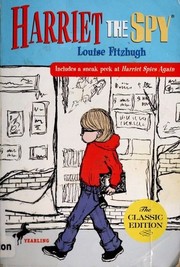
Harriet the Spy
Eleven year old Harriet Welsch fills notebooks with honest, often cruel observations about her neighbors, until her classmates read one and turn her spy route…
2,510-word summary · 11 min read
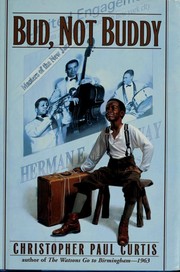
Bud, Not Buddy
A ten year old orphan in the Depression walks to find a jazzman he thinks is his father.
2,568-word summary · 11 min read
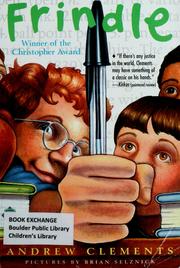
Frindle
Nick Allen calls a pen frindle, defies Mrs. Granger and a school ban, and watches the joke grow into news, trademarks, and a dictionary entry.
2,405-word summary · 11 min read
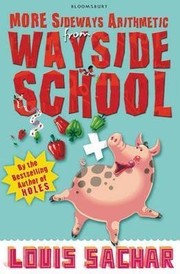
Sideways Stories from Wayside School
Thirty stories, one class per floor, and a teacher who turns students into apples: Louis Sachar's absurd school classic.
2,045-word summary · 9 min read
Beezus and Ramona
Nine year old Beezus tries to be a good older sister while four year old Ramona turns every ordinary day into a disaster, until a tenth birthday forces honesty.
2,062-word summary · 9 min read
When You Reach Me
A sixth grader in 1970s New York gets strange notes that seem to predict the future.
2,456-word summary · 11 min read
The Penultimate Peril
Baudelaires as concierges in a hotel sort friends from foes before the end.
2,234-word summary · 10 min read
The End
Baudelaires wash on an island where others decide what safe means.
2,320-word summary · 10 min read
Miss Nelson Is Missing!
Room 207 gets kind Miss Nelson, then terrible Viola Swamp instead.
2,597-word summary · 12 min read
Hoot
Roy tracks a shoeless boy to save burrowing owls from a pancake house.
2,290-word summary · 10 min read
Flipped
Juli Baker and Bryce Loski retell second grade to eighth grade from opposite sides, through a sycamore sit, trashed eggs, a yard fix-up, and one tense family…
2,689-word summary · 12 min read
The School for Good and Evil
Best friends Sophie and Agatha are taken to fairy tale school and sorted to wrong sides.
2,042-word summary · 9 min read
The Carnivorous Carnival
Baudelaires hide as carnival freaks to find V.F.D. clues, facing lions, Olaf, and a fateful cliff split.
2,027-word summary · 9 min read
Maniac Magee
Orphaned Jeffrey Magee runs to Two Mills, becomes a playground legend, and tests a town split by race while hunting for a real home.
2,219-word summary · 10 min read
Tales of a Fourth Grade Nothing
Nine-year-old Peter Hatcher tries to get through fourth grade while his toddler brother Fudge steals every scene.
2,469-word summary · 11 min read
The Austere Academy
The Baudelaires endure Prufrock Prep, meet the Quagmires, and face Olaf as Coach Genghis in book five.
2,175-word summary · 10 min read
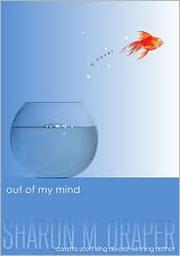
Out of My Mind
Eleven-year-old Melody Brooks has cerebral palsy and cannot speak, but she remembers everything and fights to be heard in fifth grade.
2,298-word summary · 10 min read
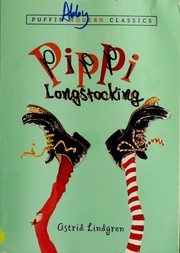
Pippi Longstocking
A super-strong nine-year-old lives alone in Villa Villekulla, upending school, circus and town rules with neighbors Tommy and Annika.
3,115-word summary · 14 min read
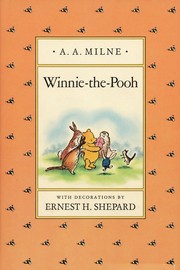
Winnie-the-Pooh
Edward Bear comes downstairs bump-bump-bump and into the Hundred Acre Wood for honey, hunneys, and heffalumps.
2,068-word summary · 9 min read
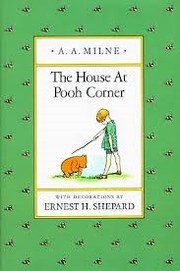
The House at Pooh Corner
Tigger bounces into the Hundred Acre Wood while Pooh builds Eeyore a house and Piglet does a grand thing.
2,022-word summary · 9 min read
Matilda
Brilliant Matilda Wormwood teaches herself to read, faces her crooked parents and the fearsome Miss Trunchbull, and finds Miss Honey.
2,296-word summary · 10 min read

Bone, Vol. 1: Out from Boneville
Three cartoon cousins are run out of Boneville, separated by locusts, and dropped into a valley where rat creatures and an old grudge are waiting.
2,155-word summary · 10 min read