
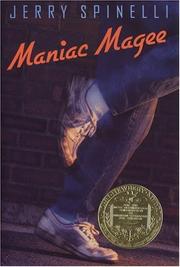
Maniac Magee
2,219-word summary 10 min read 184 pages in the book
- First published
- 1990
- Publisher
- Little, Brown and Company
- Pages
- 184
- ISBN
- 9780316807227
Reading options
What's inside (9 sections)
I first met Maniac Magee the way a lot of kids do, as a battered classroom copy with the Newbery seal on the front, and I remember thinking a book that old could not possibly be funny. It is funny, often out loud, and then it turns serious in a way that caught me off guard. Jerry Spinelli published it in 1990 with Little, Brown and Company, and the first edition runs 184 pages with the hardcover ISBN 9780316807227. It won the Newbery Medal in 1991, and three decades later it still moves through schools because the voice carries it: part tall tale, part town history, part plea for kids to be kinder than the adults around them.
The hero is Jeffrey Lionel Magee, orphaned at age three when his parents die in a trolley crash, then raised for eight years by his aunt Dot and uncle Dan, two grownups who despise each other so thoroughly that they keep separate everything, down to two toasters and separate chairs. One day Jeffrey has had enough of the silent war, starts running, and does not stop until he reaches Two Mills, Pennsylvania, a mill town split by race and habit. What follows is the story of how he becomes a local legend, loses every home he finds, and keeps trying anyway.
A legend on foot
Spinelli tells the story the way towns tell stories, with exaggeration stacked on fact until you cannot separate them. Jeffrey gets the nickname Maniac honestly. He outruns a pack of dogs. He punts a football impossibly far. He catches a frog with his bare hands in a contest nobody else wants to win. The narrator warns you straight out that a kid's history is part fact and part snowball, and the book leans into that, letting each feat grow as it passes from porch to playground.
The running matters more than the tricks. Jeffrey runs when he is angry, when he is lonely, and when thinking gets too heavy. He runs from the house with two toasters all the way out of town, and later he runs a long penance loop after he messes up badly. Spinelli, who ran as a kid himself, writes the motion well: the slap of sneakers, the way breath settles, the strange calm that arrives around mile two. For a boy with no parents and no plan, running is the one thing that never argues back.
Under the tall tale sits a plain sad fact. Jeffrey is elevenish, small for his age, white, chatty, and completely alone. He wants what every kid in the book wants: a bed that stays his, food without a fight attached, and somebody who asks where he has been. The feats win him applause. They do not win him a home. That gap drives the whole novel.
Two Mills and the line on Hector Street
Two Mills is the book's second main character. Hector Street divides it, East End Black and West End white, and everybody knows which side they belong on. Spinelli draws the split through kid-level details: which playground, which store, which shortcut you do or do not take. Adults enforce the line with stares and rules. Kids enforce it with dares and rumor.
Jeffrey crashes through the line because nobody told him it was there, or because grief burned that lesson out of him. He talks to whoever talks back. He drinks from whatever hose is running. When he unties the famous Cobble's Knot, a giant tangled ball of string outside Cobble's grocery that nobody has ever undone, both sides cheer, because a good trick belongs to everybody. When he catches the attention of the town's toughest teenagers, the cheering gets thinner. Crossing lines is fun until it costs something.
The sports set pieces do real work here. Jeffrey faces John McNab, the local pitching terror, and does the unthinkable: he bunts, fouls, waits, and finally connects for a home run off a kid who strikes out high schoolers. He fields punts against high school star Brian Denehy and holds his own. These scenes read fast and physical, and they establish why the town cannot ignore him. But Spinelli keeps cutting from the applause to the quiet after, when the older kids drift back to their corners and Jeffrey stands alone in the middle of the street again.
Amanda Beale and the book that starts everything
Jeffrey's first real home comes from Amanda Beale, a Black girl his age who marches to school hugging her books, including A Cricket in Times Square, and refuses to let anyone borrow them. Jeffrey tries anyway. She refuses. He follows her home arguing. Her parents, Mars and Belle Beale, watch this scrawny white kid debate their daughter on their own steps and do something remarkable: they invite him to stay.
The Beale chapters are warm in a book that often runs cool and mythic. There is supper, teasing, rules about homework, a little brother and sister who climb on him. Amanda lends him the book at last, and he guards it like treasure. For the first time since his parents died, somebody expects him at the table. Spinelli writes these domestic scenes with care, small jokes and small frictions, and you understand why Jeffrey starts to believe the search is over.
It ends because the town will not allow it. Neighbors stare. A stranger writes a slur on the Beale house. Amanda's parents, who genuinely love the boy, decide the pressure will crush all of them, and they send him away for his own good. Jeffrey leaves the book behind on purpose, or forgets it in his rush, depending how you read the scene, and the loss guts him more than any insult. This stretch is the moral center of the novel: kindness is real, prejudice is real, and sometimes kindness blinks first because the cost of holding out falls on children.
I found this the strongest and bravest part of the book. Spinelli does not pretend racism is a misunderstanding that one home run can fix. He shows decent people making a painful call under ugly pressure, and he lets Jeffrey feel abandoned even though he was, in a strict sense, protected. Kids reading today will recognize the shape of it even if the surface details look dated.
Grayson and the stopball summer
Homeless again, Jeffrey ends up at the zoo and then in the equipment room of the park with Earl Grayson, an old groundskeeper and former minor league pitcher who drinks too much and talks too little. This is the book's gentlest long movement, and my favorite to reread. Two strays keep each other company. Grayson feeds Jeffrey, finds him a mattress among the rakes, and starts telling stories about his one great pitch, the stopball, a fastball with impossible late life that struck out a famous hitter exactly once.
Jeffrey returns the favor by teaching Grayson to read. The old man never learned properly, and he hides it with jokes until Jeffrey brings early readers and sits with him letter by letter. Their lessons alternate with baseball practice in the empty park, Grayson showing Jeffrey how to throw the stopball grip, Jeffrey showing Grayson how to sound out a sentence without shame. It is a simple trade, food and shelter for literacy and company, and Spinelli lets it breathe without rushing toward meaning. My favorite small beat is Grayson reading a whole page aloud for the first time and pretending it was no big deal while Jeffrey grins like he just won a pennant.
Grayson dies. There is no way around that sentence, and no way the book works without it. The old man passes in his sleep after a day that felt like a small victory, and Jeffrey, who has now lost parents, an aunt and uncle household, and the Beales, digs a grave marker with his own hands and runs. He runs all the way to Valley Forge and back, a loop of grief with blisters, because running is the only funeral rite he trusts. If this sounds heavy for a book aimed at ages nine to thirteen, it is, but Spinelli earns it. The Grayson chapters teach that love does not guarantee keeping, only having had.
The McNabs, the knot, and the worst address in town
After Grayson, Jeffrey lands in the worst possible house on purpose, or from sheer exhaustion: the McNabs, a big white family on the West End whose yard looks like a junkyard and whose sons, especially quarterback-sized John and little Piper, talk constantly about the coming race war their father predicts. The McNabs feed him piles of food and hand him a pistol of belonging loaded with hate. For a kid starved of any address at all, even this one tempts.
Spinelli handles this stretch with surprising bite. The McNab house is filthy, loud, and weirdly generous, and Jeffrey can see both at once. He eats, wrestles, and sleeps there while refusing, quietly and then openly, to repeat what they say about the East End. The climax of this thread is not a fight but a party trick. At Piper's birthday, with the yard full of kids, Jeffrey finally unties the rest of Cobble's Knot in public, or rather finishes what he started, and the crowd goes wild. Then John McNab's gang pushes him to prove loyalty by going after the East End, and Jeffrey understands the price of the bed.
He walks out. It takes several tries, because leaving is harder than arriving, and Piper, the youngest, genuinely likes him. But Jeffrey will not be a mascot for people who hate his friends. The McNab section works as the book's test of the legend: feats mean nothing if you spend them defending the wrong line. I liked that Spinelli lets Jeffrey fail socially here for a while, sulking and showing off, before he does the right thing badly and late, the way real kids do.
Mars Bar and the long walk home
The last movement belongs to Mars Bar Thompson, the East End teenager who has hated Jeffrey on sight for most of the book. Mars Bar is big, cool, never without a Mars Bar candy that he peels with ceremony, and he sees Jeffrey clearly: a white kid collecting applause for crossing lines that Black kids cross every day without applause. Their confrontations build from glares to a famous race, or rather a series of humiliations where Jeffrey's speed meets Mars Bar's pride, until the rivalry curdles into something like respect.
The turning scene is small and perfect. Mars Bar gets knocked down in traffic or stranded with a younger kid, accounts vary because Spinelli lets the legend blur, and Jeffrey stops running long enough to help instead of show off. No crowd. No record. Mars Bar shares his candy, which in this book is a peace treaty with chocolate. From there the town's fever breaks slightly, not into harmony but into tired sense. People start waving instead of staring. The Beales open their door again.
The ending lands softly. Jeffrey comes back to the Beale house, address and all, and the final pages suggest he stays, not as a guest or a symbol but as family. Amanda's book waits. The knot stays untied. Mars Bar nods from across the street. It is not a victory over racism, and Spinelli deserves credit for refusing that lie. It is one boy finding one home while the larger map stays divided. For a middle grade novel from 1990, that restraint feels honest rather than timid.
The parts that creak a little
No honest account should skip the dated edges. Some language and shorthand around race read flat now, and a few secondary characters are types rather than people: the shouting McNab father, the saintly Beale parents, the endlessly patient Amanda. The tall tale voice, so good at feats and sprints, keeps real pain at a little distance. Grief arrives, then a joke arrives, then a race starts, and the rhythm can feel evasive when you want it to sit still.
The structure also leans on coincidence. Jeffrey keeps stumbling into exactly the household the theme needs next, and Two Mills sometimes feels smaller than a town and more like a stage with five sets. Grayson's death, though moving, follows the old pattern where the kind elder dies to teach the kid a lesson. Adult readers may wince. Kid readers mostly will not, because the scenes themselves are so alive.
Still, the core holds. The sentences bounce, the sports writing crackles, the friendship with Amanda feels true, and the Grayson summer earns its tears. As an introduction to talking about segregation with young readers, it beats many newer books that lecture where Spinelli plays. Pair it with a real history of redlining or school segregation and it opens up beautifully.
If you are choosing it for a child, aim at ages eight to twelve, strong readers of chapter books who like sports stories and can handle death and slurs in context. Read the Beale eviction and the Grayson chapters together and ask who paid for the town's rules. The book never quite answers that question. It just keeps one kid running until somebody finally leaves the porch light on.
FAQ
When was Maniac Magee published and by whom?
Little, Brown and Company published it in 1990. The first edition runs 184 pages and its hardcover ISBN-13 is 9780316807227.
Did Maniac Magee win the Newbery Medal?
Yes, it won the Newbery Medal in 1991, plus the Boston Globe-Horn Book Award in 1990. It is aimed at readers ages 8 to 12.
Is Maniac Magee part of a series?
No. It is a standalone novel, though Spinelli has written many other middle grade books set in similar small towns.
Similar books
Harriet the Spy
Eleven year old Harriet Welsch fills notebooks with honest, often cruel observations about her neighbors, until her classmates read one and turn her spy route…
2,510-word summary · 11 min read
The Power of One
A boy in apartheid South Africa decides to become welterweight champion of the world, and the novel follows every mentor, fight, and loss that gets him there.
2,145-word summary · 10 min read
Hard Luck
Rowley has a girlfriend, so Greg turns to a Magic 8 Ball, a family Easter hunt and the school yearbook for answers.
2,586-word summary · 11 min read
The Third Wheel
Greg tries to find a date for the Valentine's dance, ends up the third wheel in his own plan, and watches Rowley get the girl.
2,019-word summary · 9 min read
The Thief Lord
Orphaned brothers join a gang of Venice street kids and a masked Thief Lord, chasing a magic merry-go-round that can change a person's age.
2,040-word summary · 9 min read
When You Reach Me
A sixth grader in 1970s New York gets strange notes that seem to predict the future.
2,456-word summary · 11 min read
Bud, Not Buddy
A ten year old orphan in the Depression walks to find a jazzman he thinks is his father.
2,568-word summary · 11 min read
Anne of the Island
Anne leaves Avonlea for Redmond College, shares Patty's Place with friends, and learns to tell admiration apart from love.
2,766-word summary · 12 min read
Anne of Green Gables
L. M. Montgomery brings talkative Anne Shirley to Green Gables on Prince Edward Island, where mistakes, school rivalries, and fierce friendship slowly turn…
2,182-word summary · 10 min read
Stargirl
Leo Borlock likes blending in until homeschooled Stargirl Caraway arrives at Mica High with a ukulele, a pet rat, and kindness that tests them both.
2,980-word summary · 13 min read
Brown Girl Dreaming
Jacqueline Woodson retells her childhood in verse, moving from Ohio to South Carolina to Brooklyn while the civil rights movement reshapes the world around her.
2,727-word summary · 12 min read
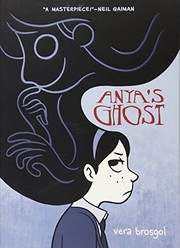
Anya's Ghost
A lonely Russian immigrant falls into a well, befriends the ghost trapped there, and discovers that the ghost's help comes with a dangerous price.
2,001-word summary · 9 min read
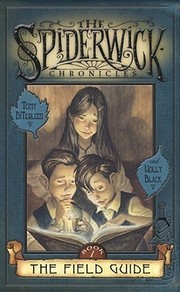
The Field Guide
Three siblings move into a creepy Maine estate, anger a brownie, and find a forbidden guide to the fairy world in the first Spiderwick book.
2,033-word summary · 9 min read

Little Town on the Prairie
In the spring after the Long Winter, fifteen-year-old Laura sews shirts, studies for a teaching certificate, and helps send her blind sister Mary to college.
2,071-word summary · 9 min read

Dumplin'
Willowdean Dickson enters her town's beauty pageant as a protest and discovers that confidence is harder to keep once she lets someone close.
1,922-word summary · 9 min read
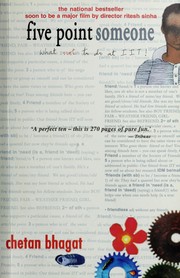
Five Point Someone: What Not to Do at IIT
Three friends at IIT drift to a five-point GPA, mock the system, and break into a professor's office for an exam paper.
2,458-word summary · 11 min read
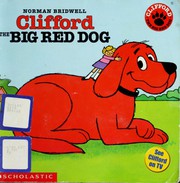
Clifford the Big Red Dog
Emily Elizabeth picks the smallest puppy in the litter, loves him as hard as she can, and wakes up to a dog the size of a house.
2,092-word summary · 9 min read
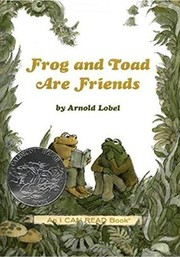
Frog and Toad Are Friends
Five short stories about a cheerful frog and a grumpy toad who need each other for waking up, swimming, and waiting for the mail.
1,969-word summary · 9 min read
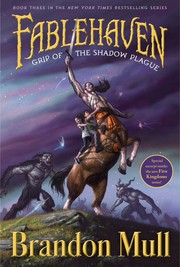
Grip of the Shadow Plague
A plague turns Fablehaven's creatures of light into shadows while Kendra hunts an artifact in Arizona and Seth races to find the cause.
2,131-word summary · 9 min read

The Second Summer of the Sisterhood
Four friends share the traveling pants through a summer of grandmothers, first loves, and mothers who are learning to let go.
2,209-word summary · 10 min read
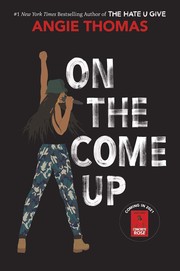
On the Come Up
Bri Jackson, a sixteen-year-old rapper in Garden Heights, chases a record deal while a viral song turns her into a symbol she never wanted to be.
2,034-word summary · 9 min read

Aristotle and Dante Dive into the Waters of the World
Ari and Dante return for senior year in El Paso, navigating first love, AIDS, family grief, and the cost of being openly gay in 1987 Texas.
2,188-word summary · 10 min read
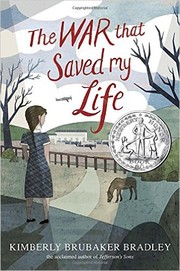
The War That Saved My Life
Ten-year-old Ada has never left her London flat, hidden away because of her clubfoot. Wartime evacuation sends her to Kent, where a reluctant guardian and a…
2,252-word summary · 10 min read
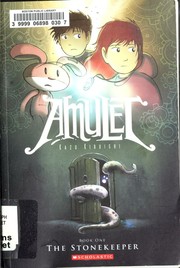
The Stonekeeper
After their father's death, Emily and Navin chase a monster into a hidden world to save their mother, and Emily's great-grandfather's amulet offers power at a…
2,753-word summary · 12 min read

Someone Like You
Halley and her best friend Scarlett face a summer of grief, a surprise pregnancy, and Halley's dangerous first romance in Sarah Dessen's 1998 young adult novel.
2,218-word summary · 10 min read
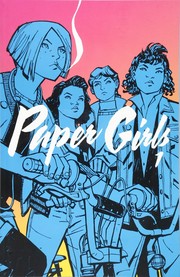
Paper Girls, Volume 1
Four paper girls in 1988 Ohio chase a stolen walkie-talkie into a basement and stumble into a time war, flying dinosaurs, and an older version of themselves.
2,235-word summary · 10 min read
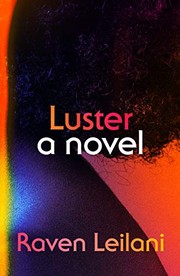
Luster
Edie, twenty-three and adrift in New York, falls into an affair with an older white archivist in an open marriage, and into the orbit of his wife and adopted…
2,049-word summary · 9 min read
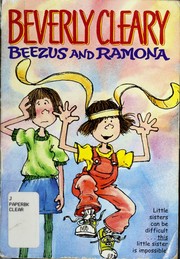
Beezus and Ramona
Nine year old Beezus tries to be a good older sister while four year old Ramona turns every ordinary day into a disaster, until a tenth birthday forces honesty.
2,062-word summary · 9 min read
The Penultimate Peril
Baudelaires as concierges in a hotel sort friends from foes before the end.
2,234-word summary · 10 min read
The Indian in the Cupboard
Omri learns a key turns plastic Little Bear into a live Iroquois man.
2,228-word summary · 10 min read