
Reading options
What's inside (8 sections)
The first thing to know about Five Point Someone is that it is not 3 Idiots. I saw the film years before I read the book, and I went in expecting the cheerful genius who fixes everyone's life and the cartoon dean with the funny nickname. What I found instead was a shorter, darker, messier novel about three boys who do one stupid thing and then have to live with it. Bhagat's first book aims at the same target as the film, the Indian Institutes of Technology and the way they sort teenagers by a number, but it has none of the film's tidiness. Nobody sings. Nobody gives a speech that reforms the system. The ending is small and a little sad, which is exactly why I recommend it to people who loved the movie.
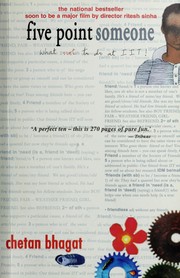
Rupa and Co. published it in 2004. The edition I read runs 270 pages and carries the ISBN 9788129104595. It was Bhagat's debut, written while he was still working in a bank, and it became the kind of bestseller that changes a publisher's year. You can feel the debut in it. The prose is plain, the jokes sometimes land on the wrong beat, and the plot leans on convenience near the end. You can also feel why it connected. It took seriously the ordinary anxiety of a middle-class student who has been told his whole life that one exam will decide his worth, and it did it in a voice that sounded like a friend in the hostel corridor rather than a novelist.
Three boys and a corridor
Hari, Ryan Oberoi and Alok Gupta meet as freshmen and become friends for the usual reason: they are in the same place at the same time and nobody else has volunteered. Hari narrates. He is middle in every sense, not rich, not poor, not brilliant, not hopeless, and he knows it. Ryan is the opposite of middle. He is wealthy, loud, quick, and openly contemptuous of the institute's rules, with the confidence of a boy who knows his family could arrange a different life if this one collapses. Alok is the anxious one. His family is poor, his father is sick, and every mark he loses feels like something his mother will have to do without.
The three of them eat together, complain together, and develop a shared vocabulary for what is wrong with the place. The teaching is often rote. The assignments can feel like busywork. A professor reads from yellowed notes and expects the same notes back on the exam. Ryan says so out loud, in class, and the room enjoys it until the marks come back. Alok says it only in the mess, and only after checking who is at the next table. Hari watches both of them and does not choose a side for a long time, which is his defining habit.
Ryan's rebellion is not political. He is not trying to reform engineering education in India. He is bored and proud, and he has decided that the system cannot touch him, which is easy to decide when your father has money. That detail matters, and Bhagat does not hide it. The boy who tells everyone to stop chasing marks is the boy who can afford to lose a few. Alok cannot. Hari, in the middle, can afford a little and not much, which is why he ends up doing most of the book's quiet damage.
The friendship is convincing in the small ways. They know each other's habits. They cover for each other. They also say cruel things to each other and then sit at the same canteen table the next day because the alternative is eating alone. Bhagat is good at this texture. Whatever else is clumsy in the book, the trio feels like three actual boys rather than a theme with legs.
Learning to hate the number
Their grade point averages settle around five out of ten, which gives the book its title. A five point someone is not a failure and not a success. He is the middle of the curve, the person the placement office has no story for. The novel spends a lot of energy on what that number does to a person's head.
At IIT, as Bhagat describes it, the number follows you into every conversation. It decides which companies will even look at your resume. It decides who gets the good hostel room, the scholarship, the sympathetic professor. It also decides how your parents talk about you to relatives. Hari's parents are not monsters. They are proud and frightened, and their fear comes out as pressure.
Ryan's response is contempt. He treats the number as a joke, and for a while the joke is freeing. Then it becomes a way of avoiding work. Alok's response is the opposite. He studies constantly, sometimes badly, because studying is the only thing he can do about his fear. Hari drifts between them. He wants the grade, he wants to be the kind of person who does not care about the grade, and he wants Neha, and those three wants do not fit together.
This is the strongest idea in the book. The system does more than rank students. It teaches them to rank themselves, and then it makes any resistance feel like laziness. Ryan can resist because he has a cushion. Alok cannot resist because his family is the absence of one. Hari can see both positions and belongs fully to neither, which is the most common position of all and the hardest to write about without sounding wet.
A lesser book would make Ryan a hero for saying the obvious things. Bhagat mostly avoids that. Ryan is right about the waste and wrong about the cost, and the novel keeps showing the cost on Alok's face.
Neha and the legend on a bicycle
Professor Cherian is the head of the mechanical engineering department and an institute legend. He was a ten point student, the kind of record the place puts on a plaque, and he turned down lucrative jobs abroad to teach. He rides a bicycle around campus. He expects discipline, punctuality and excellence, and he does not soften his voice for anyone.
Hari falls for Neha Cherian, the professor's daughter. She is grieving and conflicted, and she is also the one person on campus who can talk about her father as a man rather than a monument. Through her, Hari learns about Samir, her brother, who failed the entrance exam three times and killed himself. That fact sits under every scene with Cherian afterward. The professor who terrorizes a classroom is also a father who could not save his son, and the novel is careful, for a while, to let both things be true.
The relationship has to be secret, which gives it a furtive energy that suits Hari. He is not brave enough to knock on the professor's door and announce himself, so he sneaks around instead, and the sneaking feels like romance to him. Neha is more clear-eyed about the risk. She knows what her father will do if he finds out, and she knows what the institute will say about the professor's daughter dating a five point student.
Cherian himself is the book's best character. The bicycle is a small, perfect detail: a man of enormous status choosing the least impressive transport on campus. It suggests thrift, principle and a certain vanity about both. He believes in the system because the system worked for him, and he has no language for the people it breaks, including his own son. When Hari decides to get an A in his course, it is partly to impress Neha and partly to prove that he can beat the old man at his own game.
That is a very teenage reason to study, and the book knows it. Hari's ambition is not intellectual curiosity. It is a mixture of lust, pride and the desire to be seen. Bhagat writes that mixture honestly, even when it makes his narrator look small.
Forty-seven out of fifty
The exam becomes the hinge of the plot. Hari works out that he needs forty-seven out of fifty on Cherian's final to get the grade he wants. It is an almost impossible target, and the impossibility is the point. He has spent the semester chasing a girl and a reputation, and now he needs the kind of performance he has never given.
He studies. He studies more than he has ever studied. And it is not enough, or at least he does not believe it will be enough, which is the same thing for a boy in that state. Ryan proposes the solution that any bright, reckless friend would propose: steal the paper. The plan is stupid in the way that plans made at two in the morning are stupid, with each step seeming reasonable until you look at the whole thing.
Hari gets a duplicate key to Cherian's office through Neha without telling her what it is for. That is the betrayal at the center of the book, and it is worse than the theft. He uses the girl he loves to rob her father, and he tells himself it is for her, or for them, or for the future. The novel does not let him off, exactly, but it also does not stage a big confrontation about it, which is one of its more interesting choices. The deception just sits there, doing damage in the background.
There is a version of this story where the boys get away with it and learn a lesson. Bhagat does not write that version.
The office, the phone, the committee
The three of them enter Cherian's office at night. Ryan takes the paper. He is resealing the envelope when Alok picks up the phone to call home. His father is sick, and Alok cannot stop being a son just because he is in the middle of a crime. A night operator sees a call originating from a professor's office at that hour, thinks it is strange, and raises the alarm.
They are caught.
The disciplinary committee suspends them for a semester. Because it is their final year, the suspension means they will not graduate on time, which in the logic of the place means their job prospects are damaged before they have started. The scene is not dramatic. It is bureaucratic, which makes it worse. Nobody shouts. Somebody reads out a decision.
Alok, overwhelmed by family pressure, jumps from the roof of the institute. He survives, with multiple broken bones. The fall is the moment the book stops being a campus comedy, and it is also the moment where Bhagat's plain style works in his favor. He does not write a purple paragraph about despair. He writes what happened, and the flatness is more frightening than any metaphor.
What follows is the part people forget when they remember the book as a lark. A sympathetic professor named Veera helps them turn an idea of Ryan's into a research project during the suspension. The work is real, and it counts for enough credits that they can graduate on time after all. It is a generous plot turn, and a convenient one. The academic crisis is solved by an adult who likes them.
Their grades still limit their options. Hari and Alok take software jobs in different cities. Ryan stays at IIT as a research assistant with Veera. Hari and Neha keep a long-distance relationship that the book leaves unresolved in the way that real relationships at that age are unresolved. Nobody gets everything. Nobody gets nothing.
At convocation, Cherian gives a speech about the limits of grades. He has read Samir's suicide letter, which Hari gave him. The speech is the closest the novel comes to a thesis, and it is more moving because it is small. The old man does not renounce his life's work. He just admits, in front of a hall of students, that the number was never the whole person.
What survives, and what does not
The prose is plain, and sometimes it is clumsy. Bhagat repeats himself. He explains jokes. He has a habit of telling us how a character feels instead of letting a scene carry it. If you come to this book from literary fiction, the sentences will feel thin.
The female characters are thinner. Neha has grief and nerve, but she exists mostly to be loved and to provide access to her father. The other women in the book barely register. For a novel about a boy learning that people are more than their rankings, it does not extend the same curiosity to the girls.
The comedy can undercut the serious parts. Bhagat is funny about hostel life, about professors, about the indignities of being nineteen. He is less reliable about when to stop. A scene about a suicide or a broken family will sometimes end with a gag, and the gag lands before the sadness does. That is a real flaw, and it is also the reason the book is readable. The two things are connected.
The ending resolves the academic crisis more easily than the emotional one. A professor appears, a project works, the credits add up. The friendships are left in a more honest place: Hari and Alok in different cities, Ryan still on campus, Neha at the other end of a phone line. Bhagat does not pretend that the system has changed or that the boys have become wise. They have survived, which is a smaller and more believable ending.
And then there is the film. 3 Idiots took the premise and rebuilt it: different characters, different plot, a much sunnier view of what friendship can accomplish. The novel is darker. Its professor is not a villain, its hero does not fix anyone's life, and its narrator is complicit in the worst thing that happens. If you loved the film, read the book for the parts the film could not use: Alok's fear, the phone call, the fall, the small speech at the end.
The book's subject is the human cost of a hypercompetitive education system. It is also about friendship under pressure, class and family obligation, first love, and the difference between intelligence and conformity. It does not solve any of that. It just puts three boys in a room and lets the number do its work.
I still think about Alok on the phone in that office. He had one chance to be a good son and he took it at the worst possible moment. That is the whole novel in a single gesture.
FAQ
Is Five Point Someone the book behind 3 Idiots?
Yes, though loosely. The 2009 film 3 Idiots took the premise of three friends at an Indian engineering college and rebuilt the characters and plot, giving it a much sunnier ending than the novel.
What does the title Five Point Someone mean?
It refers to the grade point average of the three main characters, which sits around five out of ten. Bhagat uses it to describe students in the middle of the ranking system, neither failing nor excelling.
Is Five Point Someone suitable for younger readers?
It was written for adults and older teenagers. It deals with suicide, family pressure and student relationships more bluntly than the film adaptation does.
Similar books

The Idiot
A Turkish-American freshman at Harvard falls in love through email with a Hungarian math student and spends a summer in Hungary trying to turn correspondence…
2,019-word summary · 9 min read

Me and Earl and the Dying Girl
A self-protective Pittsburgh senior is pushed to befriend a classmate with leukemia, and a clumsy film with Earl changes all three.
2,773-word summary · 12 min read
2 States: The Story of My Marriage
A Punjabi boy from Delhi and a Tamil Brahmin girl from Chennai meet at IIM Ahmedabad, and turn a love marriage into a campaign to convince two families.
2,634-word summary · 12 min read

Anya's Ghost
A lonely Russian immigrant falls into a well, befriends the ghost trapped there, and discovers that the ghost's help comes with a dangerous price.
2,001-word summary · 9 min read
The Power of One
A boy in apartheid South Africa decides to become welterweight champion of the world, and the novel follows every mentor, fight, and loss that gets him there.
2,145-word summary · 10 min read

Dumplin'
Willowdean Dickson enters her town's beauty pageant as a protest and discovers that confidence is harder to keep once she lets someone close.
1,922-word summary · 9 min read

The Diamond Age: Or, A Young Lady's Illustrated Primer
A stolen nanotech primer raises a poor girl in 22nd-century Shanghai, and Neal Stephenson turns her education into an argument about class, freedom, and who…
2,055-word summary · 9 min read

Hard Luck
Rowley has a girlfriend, so Greg turns to a Magic 8 Ball, a family Easter hunt and the school yearbook for answers.
2,586-word summary · 11 min read

Heist Society
A teenage art thief gets expelled from boarding school, then has two weeks to steal five paintings back from a London museum and clear her father.
2,781-word summary · 12 min read

Bet Me
A sharp actuary agrees to dinner with a charming serial bettor, then spends the next month pretending the wager does not matter.
2,710-word summary · 12 min read

Big Swiss
A transcriptionist for a sex coach falls for one of his clients, the tall Swiss gynecologist she calls Big Swiss, in a funny novel about work and secrets.
2,523-word summary · 11 min read
The Third Wheel
Greg tries to find a date for the Valentine's dance, ends up the third wheel in his own plan, and watches Rowley get the girl.
2,019-word summary · 9 min read

The Second Summer of the Sisterhood
Four friends share the traveling pants through a summer of grandmothers, first loves, and mothers who are learning to let go.
2,209-word summary · 10 min read

Aristotle and Dante Dive into the Waters of the World
Ari and Dante return for senior year in El Paso, navigating first love, AIDS, family grief, and the cost of being openly gay in 1987 Texas.
2,188-word summary · 10 min read
Harriet the Spy
Eleven year old Harriet Welsch fills notebooks with honest, often cruel observations about her neighbors, until her classmates read one and turn her spy route…
2,510-word summary · 11 min read
The Road Trip
Two exes squeeze into one small car for the drive to a Scottish wedding, with four years of history and one photograph between them.
2,418-word summary · 11 min read

Someone Like You
Halley and her best friend Scarlett face a summer of grief, a surprise pregnancy, and Halley's dangerous first romance in Sarah Dessen's 1998 young adult novel.
2,218-word summary · 10 min read

Paper Girls, Volume 1
Four paper girls in 1988 Ohio chase a stolen walkie-talkie into a basement and stumble into a time war, flying dinosaurs, and an older version of themselves.
2,235-word summary · 10 min read

Cold Sassy Tree
In 1906 Georgia, fourteen-year-old Will Tweedy watches his widowed grandfather marry a much younger woman three weeks after his grandmother's funeral.
2,154-word summary · 10 min read

Loveless
Georgia starts university sure she wants love, then learns she is aro-ace.
2,539-word summary · 11 min read
I Capture the Castle
Cassandra journals six months of love and money trouble in a castle.
2,402-word summary · 11 min read

Bud, Not Buddy
A ten year old orphan in the Depression walks to find a jazzman he thinks is his father.
2,568-word summary · 11 min read

Since You've Been Gone
Shy Emily spends summer finishing her vanished best friend Sloane list of thirteen dares, finding Frank, Dawn, and courage.
2,566-word summary · 11 min read

The Interestings
Meg Wolitzer follows Jules Jacobson from 1974 arts camp into middle age, as friendship with Ethan and Ash turns into envy, money gaps, marriage strain, and…
2,990-word summary · 13 min read

The Bromance Book Club
A Nashville pitcher joins a secret romance book club to save his marriage after his wife Thea asks for divorce. He trades pride for listening, chores, and…
2,932-word summary · 13 min read

Summer Sisters
Vix and Caitlin share Martha's Vineyard summers from age twelve into adulthood, through first love, grief, marriage, and a disappearance that still haunts Vix.
3,633-word summary · 16 min read

Ghosts
At 32, food writer Nina Dean faces ghosting by Max and her father's dementia in London.
2,677-word summary · 12 min read

My Best Friend's Exorcism
Abby fights to save possessed best friend Gretchen in 1988 Charleston Satanic Panic horror.
2,115-word summary · 9 min read

Maniac Magee
Orphaned Jeffrey Magee runs to Two Mills, becomes a playground legend, and tests a town split by race while hunting for a real home.
2,219-word summary · 10 min read

Dead Poets Society
Keating tells Welton boys to seize the day and his secret club costs more than grades.
2,031-word summary · 9 min read