
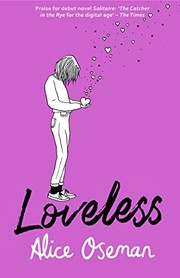
Loveless
2,539-word summary 11 min read 448 pages in the book
- First published
- 2020
- Publisher
- HarperCollins
- Pages
- 448
- ISBN
- 9780008244125
Reading options
What's inside (8 sections)
I picked up Loveless because I had read Heartstopper and Radio Silence and wanted to see what Alice Oseman would do with a university story about someone who does not fall in love. Alice Oseman published it in 2020 with HarperCollins. The UK hardback runs 448 pages. It follows Georgia Warr from the summer after school through her first year at Durham University as she figures out that she is aromantic and asexual. I read it slowly across three evenings, and the last eighty pages made me rethink a lot of earlier chapters.
Georgia is eighteen at the start, loud on paper and shy in person. She loves fanfiction, costume drama marathons, and planning romantic set pieces for other people. She has never had a crush that lasted, never wanted a kiss, and she has built a whole theory around why. She tells herself the right person has not arrived yet. She tells her friends she is waiting for a big love story. Inside she keeps a running list of things she has faked, laughed along with, or avoided, because everyone else seems to get something she does not.
Her two closest friends are Pip and Jason. They grew up together. Pip is sharp, funny, out as a lesbian, already comfortable naming what she wants. Jason is kind, steady, a little closed off, the boy Georgia has decided she must love because he fits the script. Before Durham, Georgia makes a plan. She will go to university, fall properly in love, lose the weird feeling of being behind. She packs that plan like an extra suitcase.
Durham is cold, old, beautiful, full of societies and pubs and centuries of stone. Georgia shares a house with Pip and Rooney, a confident older student who studies Shakespeare and speaks her mind fast. Jason is nearby at a different college. Georgia joins the Shakespeare Society partly for fun and partly because Rooney drags her along. Rehearsals, socials, afterparty crushes, group chats that never sleep. Oseman writes student life with a lot of true small detail. Cold kitchens. Shared milk wars. Flyers for auditions taped crooked on doors. Nights out that cost too much and end with chips. Mornings where lectures feel far away.
The Jason plan
The first third turns on Jason. Georgia has loved him in theory for years, and now she tries to make it real. She watches him across rooms. She counts touches. She agrees to date him, or almost date him, and waits for fireworks. Oseman handles this with patience. Georgia is not cruel and Jason is not a prop. They try holding hands. They try kissing. Georgia feels awkward, detached, a little panicky, then guilty for feeling detached. Jason feels confused because he cares for her and can tell something is off.
What I liked here is how Oseman refuses a simple villain. Jason does not pressure her in a creepy way. He asks what she wants. He listens. He has his own tangle to work through, which becomes clearer later, and he behaves like a real eighteen year old who does not have language for everything yet. Georgia, meanwhile, keeps rewriting the experience in her head. Maybe she was nervous. Maybe she needs another try. Maybe everyone feels blank the first time. That loop felt honest to me. When you want a story to be true, you will run the same scene five ways before you admit it did not work.
Pip sees more than Georgia wants her to see. Pip has done her own coming out work and she knows the difference between nerves and absence. She does not lecture. She makes jokes, changes the subject when Georgia goes stiff, then circles back gently days later.
University, Shakespeare, and bad advice
The middle of the book is very university. Auditions. Rehearsals for chaotic student Shakespeare. Flyers. Mishaps with props. Late night kebabs. Society drinking games Georgia hates. Study sessions that turn into gossip sessions. Oseman captures how first year friendships form fast and intense because everyone is homesick and pretending not to be.
Georgia gets a lot of bad advice, mostly kindly meant. Friends tell her she needs more experience. That she should keep kissing people until it clicks. That she is probably just picky, or stressed, or too focused on fiction. One friend suggests a type. Another suggests alcohol. Another suggests waiting for uni to work its magic. None of it is written as malice. It is what young people say when they have only their own experience to offer. But it piles up. Georgia starts to feel broken. She uses that word in her head. Broken. Behind. Late. Cold. She googles in secret. She deletes her history. She reads fan comments about love scenes and wonders if she is wired wrong.
I found these chapters both warm and tiring, in a way that felt deliberate. Warm because the friend group is funny and specific. Rooney arguing about Shakespeare staging. Pip sending memes during boring lectures. Jason showing up with food when Georgia is low. Tiring because Georgia repeats the same worry with small changes for a long stretch. Am I doing this wrong. Should I try again. Why did that kiss feel like nothing. Oseman stays inside that loop because that is what it feels like to question your orientation at eighteen. Still, around page two hundred I wanted someone to hand Georgia a useful word sooner. That impatience is probably the point, but it slows the read.
The Shakespeare Society plot helps balance it. Georgia is good backstage. She remembers cues. She fixes hems. She calms nervous first years. Sunil notices and gives her more responsibility, which gives her a place where she is competent while her romantic life feels messy. Rehearsal scenes have the best comedy in the book. Forgotten lines. A wobbly set. A party after the show where Georgia drinks too much and tells half truths she regrets. The society gives the story forward motion while Georgia circles inside.
Naming aro ace
The turn comes not in one flash but in pieces. Georgia hears the words aromantic and asexual more than once before they stick. A conversation at a party. A post online. A quiet chat with Sunil, who is older and calmer and does not treat it like gossip. He talks about attraction as different threads. Romantic pull. Sexual pull. Aesthetic pull. Platonic closeness. He does not diagnose her. He offers language and steps back.
Georgia resists at first, which rang true. She worries she is stealing a label. She worries she has not tried enough people to earn it. She worries she will change her mind and embarrass herself. She worries her love of fanfiction romance disqualifies her. Oseman handles each worry with care. Loving love stories does not mean you want one for yourself. Having kissed someone does not lock you into an orientation. Labels are tools, not contracts. You can try one on, see if it eases the ache, keep it or adjust it.
The scenes where Georgia tests the words are quiet and strong. She says aromantic asexual in her head while brushing her teeth. She writes it and deletes it. She tells Pip first in a rush, then takes it back, then says it again more steadily. Pip cries a little, hugs her, says she is still Georgia. Jason reacts in a more tangled way because their almost romance is part of the story, and his own identity is shifting too. I will not spoil his arc beyond saying Oseman gives him space and does not make him a lesson for Georgia. He gets his own truth, separate from hers.
Rooney and the wider group react in mixed ways that felt real. Some get it fast. Some ask clumsy questions. Is it a medical thing. Did someone hurt you. Are you sure. Georgia learns to answer without apologizing, though some days she still apologizes. She finds online aro ace spaces where strangers describe exactly her blank feeling during kisses and her fierce love for friends. That recognition scene, late at night with a laptop glowing, is one of the best in the book. Not dramatic. Just relief. Oh. Other people feel this.
Oseman is careful to show aromanticism and asexuality as a spectrum. Georgia lands where she lands, but the book notes that others feel differently. Some aro ace people date. Some feel some attraction rarely. Some do not. Georgia wants deep friendship, shared home life, loyalty, jokes, comfort. She does not want romance or sex. Naming that lets her stop performing and start asking for what she actually wants.
Friendship as the love story
Once Georgia names herself, the book shifts from who will she kiss to how will she keep her people. That is the stronger half. Pip and Georgia have a fight that hurts because both are right in part. Pip feels Georgia centered boys and sidelined her. Georgia feels Pip knew and waited too long to say. They shout, go cold, miss each other at parties, then repair slowly through small acts. Pip saves Georgia a seat. Georgia brings Pip tea without asking. They talk properly on a walk, not in a big speech but in stops and starts. I believed it.
Jason and Georgia have to rebuild too. Their friendship cannot go back to pretend dating, but they do not want to lose years of closeness. Oseman writes awkwardness well. Texts left on read. Group hangs where they sit too far apart. A joint apology that does not fix everything at once. What helps is honesty about what each wants now. Jason steps back where needed. Georgia stops using him as proof she is normal. They find a new shape, less intense, still warm.
Rooney becomes important in a different way. She is prickly, funny, dealing with her own family pressure and academic stress. She and Georgia clash over partying, over boundaries, over how much Georgia drinks to fit in. Then Rooney shows up when it counts, helping Georgia leave a bad party, sitting with her after a rough night, defending her when someone calls aro ace identity made up. Their bond grows into sisterly teasing with real trust under it. The house dynamic, Pip plus Rooney plus Georgia, gives the book its home base. Cooking bad pasta. Watching plays. Arguing about washing up. Planning a Shakespeare afterparty. Small domestic scenes do a lot of work to show what Georgia does love. Friends. Shared jokes. Being known.
Sunil functions as a steady older friend rather than a love interest, which matters. He models a calm adult queer life, busy with work he likes, kind without being perfect. He tells Georgia that friendship can be central, not secondary, and that chosen family counts. For a girl raised on stories where romance fixes everything, hearing an adult say friendship can anchor a life lands hard.
The final university show brings the threads together without forcing a neat bow. Georgia helps backstage, solves a costume crisis, watches friends perform. She does not get a kiss in the wings. She gets something better for this book. People who know her name for herself and stay. A group photo where she stands in the middle, laughing for real. Plans for next term that do not include finding a boyfriend to prove something.
What works and what drags
What works best is voice. Georgia narrates in first person, funny, self lacerating, obsessed with stories. She compares real life to fanfiction tropes, imagines grand confessions, then trips over bins. Oseman writes teen thought spirals well. Lists. Reruns. What ifs. Georgia overthinks kisses the way I overthink emails. That makes her easy to root for even when she makes frustrating choices. The friend dialogue snaps. Pip especially sounds like a real clever eighteen year old, not an adult writing down to teens.
Representation matters here and Oseman does it with care. In 2020 there were few mainstream young adult novels centered on an aromantic asexual heroine who keeps the label and keeps her friends. Georgia is not cured by the right boy. She learns a true name and builds a life around it. For aro ace readers who have only seen themselves as jokes or puzzles, that steadiness counts.
Now fair criticism, because the book is long and not every part earns its pages. At 448 pages it repeats. Georgia circles the same fear about being broken for many chapters with only small new info each time. I understood why, but I skimmed some party scenes where the beats matched earlier parties. Drink. Game. Awkward kiss or near kiss. Guilt. Text Pip. Sleep badly. Repeat. A tighter middle would have kept the emotional punch without fatigue.
Tone can swing. One chapter is broad comedy about costumes and hangovers. The next is raw about feeling alien during a kissing game. Both work alone, but the shifts can jar. Georgia also drinks a lot to cope in the middle third, and the book treats it lightly until late. A firmer early note about that pattern would have helped, though older teens will recognize it as avoidance.
Still, the ending won me over. Georgia does not solve everything. She still gets intrusive questions from relatives. She still sometimes wonders if she should try once more to be sure. But she has words, friends who use them, and plans that fit her. She tells her parents in a scene that is awkward and loving and incomplete in a true way. They do not instantly become experts. They listen, ask clumsy questions, keep loving her. That felt right.
Who should read it
Read Loveless if you like Oseman's other books but want something slower and more inward than Heartstopper. Read it if you are questioning aromantic or asexual identity and want a companion, not a manual. Read it if you love university novels about friendship, Shakespeare societies, shared houses, and group chats. Do not read it expecting a love triangle payoff. The triangle dissolves on purpose. The payoff is Georgia keeping Pip and Jason and Rooney on new terms.
I closed it thinking about how many stories treat friendship as a waiting room for romance. Loveless argues, gently and firmly, that friendship can be the main room. Georgia loves fiercely. She loves Pip with loyalty that survives fights. She loves Jason with history that survives change. She loves Rooney with new trust built in kitchens and wings. She loves stories, costumes, backstage calm. None of that needs a kiss to count. For a 2020 HarperCollins young adult novel that many teens found through Heartstopper fame, that message still feels fresh. It made me kinder in how I ask friends about dating, and slower to assume everyone wants the same ending.
If you try it, give it to page three hundred before you judge. The early dating plot is supposed to feel off. The repetition is supposed to itch. When Georgia finally says the words plainly to herself and then out loud, the earlier circling clicks into place. You see a girl who was not broken or late, just unnamed. That recognition is quiet, not flashy, and it stays with you after the last society poster comes down.
FAQ
When was Loveless published?
HarperCollins published Loveless in 2020. The UK hardback runs 448 pages with ISBN 9780008244125.
Who are Georgia, Pip and Jason?
Georgia Warr is eighteen and obsessed with romance stories but never felt a crush. Pip is her sharp lesbian best friend. Jason is their kind childhood friend she tries to date.
Is Loveless part of a series?
No. It is a standalone novel set at Durham University, separate from the Heartstopper graphic novels and Radio Silence.
Similar books

Aristotle and Dante Dive into the Waters of the World
Ari and Dante return for senior year in El Paso, navigating first love, AIDS, family grief, and the cost of being openly gay in 1987 Texas.
2,188-word summary · 10 min read

Will Grayson, Will Grayson
Two Chicago teens with one name collide, with Tiny Cooper's musical stealing every scene.
2,742-word summary · 12 min read
Heartstopper: Volume Three
Nick and Charlie test honesty on a Paris trip while friends face exams, outings, and eating-disorder strain.
2,355-word summary · 10 min read

Dumplin'
Willowdean Dickson enters her town's beauty pageant as a protest and discovers that confidence is harder to keep once she lets someone close.
1,922-word summary · 9 min read
The First to Die at the End
On the night Death-Cast launches, a boy with a bad heart meets a model with everything ahead of him, and one of them gets the call.
2,908-word summary · 13 min read

The Second Summer of the Sisterhood
Four friends share the traveling pants through a summer of grandmothers, first loves, and mothers who are learning to let go.
2,209-word summary · 10 min read

Someone Like You
Halley and her best friend Scarlett face a summer of grief, a surprise pregnancy, and Halley's dangerous first romance in Sarah Dessen's 1998 young adult novel.
2,218-word summary · 10 min read
Wayward Son
Simon and Baz road trip America after the war to decide what normal means.
2,505-word summary · 11 min read

Since You've Been Gone
Shy Emily spends summer finishing her vanished best friend Sloane list of thirteen dares, finding Frank, Dawn, and courage.
2,566-word summary · 11 min read
What If It's Us
Two teens meet by chance at a New York post office and try to turn missed connection into first love.
2,033-word summary · 9 min read

Stargirl
Leo Borlock likes blending in until homeschooled Stargirl Caraway arrives at Mica High with a ukulele, a pet rat, and kindness that tests them both.
2,980-word summary · 13 min read
Simon vs. the Homo Sapiens Agenda
Closeted Simon Spier trades emails with Blue while Martin blackmails him over Abby and the school musical nears.
2,952-word summary · 13 min read
If He Had Been with Me
Childhood friends Autumn and Finn drift apart in high school until one August night changes everything.
2,785-word summary · 12 min read
They Both Die at the End
Two teens called as dying meet through an app and share one full day.
1,968-word summary · 9 min read

Aristotle and Dante Discover the Secrets of the Universe
Two Mexican American boys in 1987 El Paso become inseparable and learn what love asks of family.
2,093-word summary · 9 min read
Radio Silence
Head girl Frances loves a secret podcast made by shy Aled, and both crack under A-levels in Oseman's warm 2016 story of friendship, fandom, family and choosing…
2,778-word summary · 12 min read
Nick and Charlie: A Heartstopper Novella
Nick is off to university and Charlie is staying behind. One last summer to decide if first love can survive distance.
2,329-word summary · 10 min read
Heartstopper: Volume Five
Nick and Charlie face exams and university distance while holding on.
2,057-word summary · 9 min read
Heartstopper: Volume Four
Nick and Charlie face eating disorders, coming out, and first love in Oseman's tender fourth volume.
2,393-word summary · 11 min read
Heartstopper: Volume Two
Nick and Charlie test dating in Heartstopper Volume Two: coming out to family, a Paris trip, and Tao's doubts.
2,212-word summary · 10 min read

Heartstopper: Volume One
Charlie and Nick go from rugby mates to something tender and true.
1,940-word summary · 9 min read

What Happened to Goodbye
Mclean has reinvented herself in four towns since her parents divorced. In Lakeview she uses her real name, and for the first time staying put becomes a choice.
2,796-word summary · 12 min read

Anya's Ghost
A lonely Russian immigrant falls into a well, befriends the ghost trapped there, and discovers that the ghost's help comes with a dangerous price.
2,001-word summary · 9 min read
Wilder Girls
At a quarantined boarding school off Maine, three girls with strange mutations search for a missing friend and learn what the adults have hidden.
2,594-word summary · 12 min read
I Kissed Shara Wheeler
Shara Wheeler kisses her rival Chloe Green at prom and disappears, leaving a scavenger hunt that forces Chloe to rethink everything she knew about her.
2,083-word summary · 9 min read

We Are Okay
Marin fled San Francisco after her grandfather vanished and stopped answering anyone. When Mabel visits her college dorm, she has to say what happened.
2,253-word summary · 10 min read

Last Night at the Telegraph Club
The 2021 National Book Award winner follows Lily Hu, a Chinese American teenager in 1954 San Francisco, as she falls for Kath and learns what it costs to be…
2,336-word summary · 10 min read

Big Swiss
A transcriptionist for a sex coach falls for one of his clients, the tall Swiss gynecologist she calls Big Swiss, in a funny novel about work and secrets.
2,523-word summary · 11 min read
Cemetery Boys
A trans brujo in East Los Angeles summons the ghost of a boy who refuses to move on, and together they uncover a murder hidden beneath Día de los Muertos.
1,997-word summary · 9 min read

Every Last Word
A girl with OCD finds poetry and friends who know her secrets.
2,434-word summary · 11 min read