
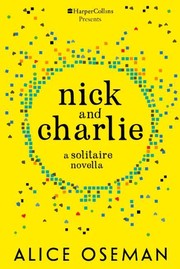
Nick and Charlie: A Heartstopper Novella
2,329-word summary 10 min read 176 pages in the book
- First published
- 2015
- Publisher
- HarperTeen
- Pages
- 176
- ISBN
- 9780008147877
Reading options
What's inside (8 sections)
I came to this one backwards. I had already read the Heartstopper graphic novels, watched the show like everyone else, and filed Nick Nelson and Charlie Spring away in my head as a finished story. Then a friend told me there was a prose novella from 2015, written before any of the Netflix glow, back when these two were just side characters in Oseman's debut novel Solitaire. That got me. I wanted to see what Nick and Charlie looked like before the world decided they were icons.
The answer is: shorter, scratchier, and more anxious than I expected. This is a 176-page book you can finish in an afternoon, and almost all of it is about one problem. Nick is leaving for university at the end of the summer. Charlie, a year younger, is staying behind for his last year of school. Everyone they know keeps asking the same question with the same tilted head: are you two going to stay together? At first Nick and Charlie laugh it off. Of course they are. They are Nick and Charlie. Then the summer starts running out, and the laughing stops.
A novella from before the hype
Some context helps. Alice Oseman published Solitaire in 2014 at nineteen. That book belongs to Tori Spring, Charlie's older sister, and Nick and Charlie drift through it as supporting players, already a couple, already sweet. Readers wanted more of them, so Oseman wrote this short companion piece and put it out in 2015 through HarperCollins. The Heartstopper webcomic had barely begun. The graphic novels did not exist yet. Nobody was selling Nick and Charlie lunchboxes.
You can feel that early status on every page. The prose is plain and quick. There are no big set pieces, no sprawling cast arcs, no message plotting. It reads like Oseman sat down and asked one honest question about a teenage couple she loved: what happens when the first real obstacle shows up? Then she answered it in the most direct way possible. That directness is the whole appeal. It is also, in places, the whole problem, and I will get to that.
If you are coming here straight from the show, one adjustment. This is not the polished Netflix version of these boys. They swear more, they misunderstand each other more, and the story trusts you to sit inside their discomfort without cutting away to a cute montage. I liked that. Your mileage may vary if what you loved was the soft lighting.
Two voices, one countdown
The book alternates first-person chapters between Nick and Charlie, and the opening pages do more work than anything else in it. Charlie starts by listing the things Nick likes: rugby, Formula 1, dogs, the Marvel films, rain, drawing on shoes. And Charlie, listed last like a shy afterthought. Then Nick answers with his own list of things the two of them do together: watch films, sit in the same room on different laptops, text each other from different rooms, make food, get drunk, argue, laugh. He admits they might look boring from the outside. He does not care.
I love this device. In about three pages Oseman tells you everything about the relationship's texture. These are not grand-gesture romantics. They are domestic before they have any right to be, two boys who have settled into each other's daily rhythms like an old married couple. The lists are funny and specific in a way the rest of the book sometimes struggles to match. Rain and felt-tip sounds and shoes with doodles on them. That is the good stuff, the observed detail that makes a fictional couple feel like people you actually sat near in a school canteen.
The countdown structure does the rest of the heavy lifting. Every chapter sits under the same shadow: Nick's departure date. Summer plans that should feel golden keep getting interrupted by logistics. Who visits whom. How often they can call. Whether saying "we'll be fine" out loud enough times makes it true. Oseman is smart about how teenagers handle this kind of dread. They joke about it. They pick small fights about nothing so they do not have to have the big fight about everything. They perform certainty for their friends and then lie awake doubting it. Anyone who has been eighteen and in love in August will recognize the pattern.
What the alternating voices give you is dramatic irony on nearly every page. Charlie is convinced he is a burden holding Nick back from a shiny new university life. Nick is convinced Charlie has gone quiet and strange and might be slipping away from him. Both of them are wrong in the exact way the other could fix in one honest conversation, and neither of them starts that conversation for most of the book. It is frustrating by design. A couple of times I wanted to shake them. That is probably the correct response.
The question nobody stops asking
The engine of the novella is other people. Friends, parents, teachers, party acquaintances: everyone wants to know the plan. Are you staying together? Isn't long distance impossible? Don't first loves always burn out? The question starts as background noise and slowly becomes the plot, because Nick and Charlie absorb it. Doubt they never had gets planted by repetition.
The worst offender, affectionately, is Tori. Charlie's sister is the driest person in any Oseman book, and here she plays the resident skeptic. She loves Charlie in her own prickly way, but she does not believe in forever, and she says so. Her scenes are short and they sting. She tells Charlie some version of what the whole world is telling him: first loves rarely last, wanting it to work does not mean it will. Tori is not cruel about it. She thinks she is being kind, vaccinating her little brother against heartbreak with a dose of realism. Watching Charlie try to laugh her off while clearly keeping every word is painful in the way only sibling scenes can be.
I kept thinking about how true this is to life. Couples rarely fall apart in a vacuum. They fall apart inside a crowd of opinions, and the crowd in this book is loud. One friend treats the breakup as already scheduled. Another treats staying together as a fairy tale. Nick's mum is warm but careful. The effect piles up until the boys start policing themselves: is this argument evidence we are doomed? Is this quiet evening proof we are boring? Normal relationship weather starts looking like a forecast. Oseman captures that spiral well. My complaint is only that she captures it several times. Whole chapters restate the same worry with new examples, and around the middle I started skimming the anxiety loops. A novella this short cannot afford Wheel-spinning, and there is some here.
Still, the good version of the theme lands. There is a sharp observation buried in all the fretting, which is that "are you staying together" is a strange question to keep asking two people who are happy. Nobody asks it about friendships. Nobody asks it about families. It reveals what the asker believes about young love, not what is true about Nick and Charlie. The book never states this outright. It lets you notice it. I appreciated the restraint.
The party where it breaks
Every story like this needs a night where everything spills, and here it is a gathering with their wider group of friends, the kind of warm chaotic evening with music and drinking and nowhere to hide. Charlie drinks too much. Nick spends the evening pulled between his boyfriend and his mates. Small frictions stack up: a careless comment, a jealous glance, Charlie feeling younger and out of place among soon-to-be university students, Nick feeling guilty for having a good time.
Then the fight. It is ugly in the specific way real fights are ugly, not dramatic-movie ugly. Charlie, drunk and raw, says the thing he has been holding for weeks: that Nick would be freer without him, that he knows he is a weight, that maybe everyone else is right. Nick, hurt and blindsided, hears rejection where Charlie meant self-loathing, and he walks out. No slammed-door speech. Just a boy leaving a room because staying means saying something worse.
I thought this was the best-written stretch in the book. Drunk dialogue is hard to write without tipping into comedy or melodrama, and Oseman keeps it wobbly and sad. Charlie repeats himself. Nick goes quiet in the way that means he is furious. Friends hover at the edges pretending not to listen. Anyone who has watched a couple crack open at a party will feel the secondhand embarrassment. It earns its place because the book spent eighty pages loading the gun. Every insecurity from the earlier chapters shows up here wearing its true face.
What follows is the cold part. They avoid each other. Charlie replays the night with the special horror that only alcohol regret produces, remembering flashes and dreading the parts he cannot remember. Nick throws himself into departure preparations with forced cheer. Their friends, to their credit, refuse to pick a side and instead do the unglamorous work of telling both boys they are being idiots. I liked that the friend group gets this function. It would have been easy to make the story a sealed bubble of two, but love at seventeen happens inside a friend group, and the friend group here acts like a real one: nosy, loyal, blunt.
The quiet thread underneath
Under the relationship plot runs a quieter one about Charlie himself, and it is the part of the book I am most careful describing, because Oseman handles it with care and so should I. Charlie has a history with food and with his mental health. Readers of Solitaire and Heartstopper already know this. In this novella it surfaces in small moments: skipped meals at a barbecue, a too-casual "I'm not hungry," Nick noticing and not knowing what to say.
This thread never becomes the headline, and I think that is deliberate and right. It is not a problem to be solved by the end of summer. It is a condition of Charlie's life that stress makes worse, and long-distance dread is stress. What matters is how Nick responds. He worries. He watches. Sometimes he gets it wrong, pressing when he should back off or going quiet when he should ask. The book lets him be clumsy about it without making him a villain. Loving someone with a fragile history means living with things you cannot fix, and Nick starts learning that here.
There is one scene I kept returning to after I finished. Nothing dramatic happens in it. The two of them are just together on an ordinary day, and Charlie eats without comment, and Nick notices and says nothing, and the moment passes. No lesson underlined. No meaningful look held for the camera. It is the kind of small victory that actually sustains people, and Oseman slips it in without fanfare. More of this, I kept thinking. Fewer anxiety spirals, more observed days. The book is best when it trusts the ordinary.
I should add a note for readers who need one. This thread is handled gently, but it is present, and if depictions of disordered eating are difficult for you, go in knowing that. The book never turns it into spectacle. It stays in the background where, for Charlie, it mostly lives. That felt honest to me.
Goodbye, and whether the ending earns it
The last stretch is the goodbye itself, and Oseman plays it straight. No last-minute plot twist, no surprise betrayal, no sudden arrival with a boom box. Just two boys running out of summer. They talk, finally, the real talk they have been dodging: about fear, about holding on too tight, about the difference between choosing someone and clinging to them. Charlie says the unflattering truth about his own behavior. Nick says his own. They cry. It is not elegant. Breakup-adjacent conversations never are, even when they end in staying.
And staying is what they choose. They decide to try: the distance, the phone calls, the visits, the whole fragile apparatus. The final pages give them a tender, hopeful send-off rather than a guarantee. Nobody pretends it will be easy. The book's last gesture is closer to a promise than a proof, and I found that satisfying. A story this small should not end with certainty. It should end with intent.
So does it earn it? Mostly. The reconciliation talk is well written, specific where it needs to be, and it grows directly out of the party fight rather than descending from above. My reservation is structural. Because the middle repeats its worries, the ending can feel like relief that the looping stopped rather than the payoff of a tightening coil. A longer book could have varied the pressure. This one turns the same dial for a while and then resolves it. It works. It does not soar.
Here is my honest verdict, friend to friend. If you love Nick and Charlie already, this is required reading, and you will forgive its thinness because the boys are themselves on every page. The lists, the banter, Tori's deadpan grenades, the small domestic details: all present and correct. If you are new to Oseman, start elsewhere. Solitaire gives you more story. The Heartstopper volumes give you more heart per page. This novella gives you one summer, one problem, and two teenagers doing their best, and it asks you to find that enough. On the right afternoon, with tea going cold beside you, it is enough. Just know what you are picking up: a footnote that learned to talk, slight and sincere, better at moments than at momentum.
Absence makes the heart grow fonder, right?
FAQ
When was Nick and Charlie published?
Alice Oseman published it in 2015 through HarperCollins, as a companion to Solitaire written before the Heartstopper graphic novels and the Netflix series.
Is Nick and Charlie part of the Heartstopper series?
No. It is a standalone prose novella starring Nick and Charlie, not a numbered Heartstopper volume. Read it after Solitaire or alongside the comics.
How long is Nick and Charlie?
About 176 pages, a single-afternoon read told in alternating chapters from Nick's and Charlie's points of view.
Similar books
Heartstopper: Volume Five
Nick and Charlie face exams and university distance while holding on.
2,057-word summary · 9 min read
Heartstopper: Volume Two
Nick and Charlie test dating in Heartstopper Volume Two: coming out to family, a Paris trip, and Tao's doubts.
2,212-word summary · 10 min read
Heartstopper: Volume One
Charlie and Nick go from rugby mates to something tender and true.
1,940-word summary · 9 min read

I Kissed Shara Wheeler
Shara Wheeler kisses her rival Chloe Green at prom and disappears, leaving a scavenger hunt that forces Chloe to rethink everything she knew about her.
2,083-word summary · 9 min read
Isla and the Happily Ever After
Shy Isla Martin finally dates longtime crush Josh Wasserstein after a Manhattan summer and senior year at SOAP Paris, then learns love needs honesty to last.
2,293-word summary · 10 min read
Loveless
Georgia starts university sure she wants love, then learns she is aro-ace.
2,539-word summary · 11 min read
Radio Silence
Head girl Frances loves a secret podcast made by shy Aled, and both crack under A-levels in Oseman's warm 2016 story of friendship, fandom, family and choosing…
2,778-word summary · 12 min read
Solitaire
Gloomy Tori Spring hunts school prank group Solitaire with odd Michael Holden while brother Charlie heals.
2,068-word summary · 9 min read
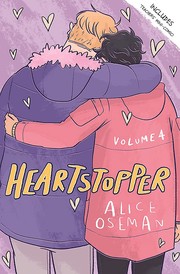
Heartstopper: Volume Four
Nick and Charlie face eating disorders, coming out, and first love in Oseman's tender fourth volume.
2,393-word summary · 11 min read
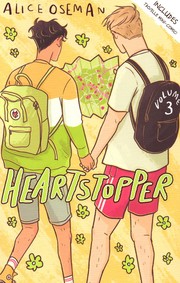
Heartstopper: Volume Three
Nick and Charlie test honesty on a Paris trip while friends face exams, outings, and eating-disorder strain.
2,355-word summary · 10 min read

What Happened to Goodbye
Mclean has reinvented herself in four towns since her parents divorced. In Lakeview she uses her real name, and for the first time staying put becomes a choice.
2,796-word summary · 12 min read

Dumplin'
Willowdean Dickson enters her town's beauty pageant as a protest and discovers that confidence is harder to keep once she lets someone close.
1,922-word summary · 9 min read

Amy & Roger's Epic Detour
Amy Curry has not driven since the crash that killed her father. With Roger at the wheel and a box of maps between them, a cross-country trip becomes a slow…
3,034-word summary · 13 min read
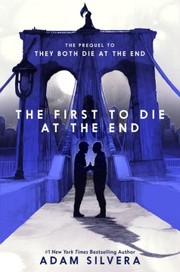
The First to Die at the End
On the night Death-Cast launches, a boy with a bad heart meets a model with everything ahead of him, and one of them gets the call.
2,908-word summary · 13 min read
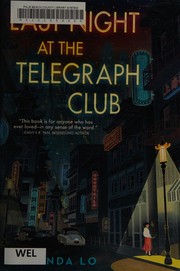
Last Night at the Telegraph Club
The 2021 National Book Award winner follows Lily Hu, a Chinese American teenager in 1954 San Francisco, as she falls for Kath and learns what it costs to be…
2,336-word summary · 10 min read

Big Swiss
A transcriptionist for a sex coach falls for one of his clients, the tall Swiss gynecologist she calls Big Swiss, in a funny novel about work and secrets.
2,523-word summary · 11 min read
Dash & Lily's Book of Dares
Two lonely New York teenagers trade dares in a red notebook left at the Strand, falling for each other on the page before they meet.
2,228-word summary · 10 min read
Cemetery Boys
A trans brujo in East Los Angeles summons the ghost of a boy who refuses to move on, and together they uncover a murder hidden beneath Día de los Muertos.
1,997-word summary · 9 min read

Aristotle and Dante Dive into the Waters of the World
Ari and Dante return for senior year in El Paso, navigating first love, AIDS, family grief, and the cost of being openly gay in 1987 Texas.
2,188-word summary · 10 min read
Wayward Son
Simon and Baz road trip America after the war to decide what normal means.
2,505-word summary · 11 min read
Every Last Word
A girl with OCD finds poetry and friends who know her secrets.
2,434-word summary · 11 min read
The Upside of Falling
Two teens fake-date for a summer dare and end up facing grief, family secrets, and first love.
2,274-word summary · 10 min read

Since You've Been Gone
Shy Emily spends summer finishing her vanished best friend Sloane list of thirteen dares, finding Frank, Dawn, and courage.
2,566-word summary · 11 min read
Queen of Air and Darkness
Emma and Julian face the Cohort, Thule, and the parabatai curse in Cassandra Clare's 880-page Dark Artifices finale of love, Faerie bargains, battle, weddings,…
2,653-word summary · 12 min read
The Statistical Probability of Love at First Sight
Hadley misses a flight, meets Oliver to London, and faces her father wedding in one day.
2,002-word summary · 9 min read
The Do-Over
Emilie relives awful Valentine Day with cheating boyfriend until Nick helps fix it.
2,071-word summary · 9 min read
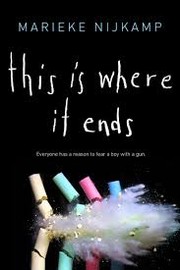
This Is Where It Ends
Four seniors face 54 minutes of terror when a gunman locks their Alabama high school. A minute by minute story of fear, loyalty, and loss.
2,510-word summary · 11 min read

The Gentleman's Guide to Vice and Virtue
Bisexual heir Monty flees across Europe with his crush Percy and sister Felicity after stealing a dangerous box.
2,724-word summary · 12 min read
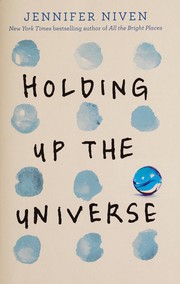
Holding Up the Universe
Libby Strout reclaims high school after loss while Jack Masselin hides face blindness, until a cruel prank forces them to see each other.
2,979-word summary · 13 min read
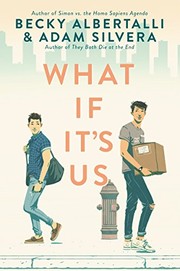
What If It's Us
Two teens meet by chance at a New York post office and try to turn missed connection into first love.
2,033-word summary · 9 min read