
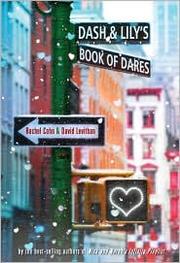
Dash & Lily's Book of Dares
2,228-word summary 10 min read 260 pages in the book
- First published
- 2010
- Publisher
- Alfred A. Knopf
- Pages
- 260
- ISBN
- 9780375866593
- Series
- Dash & Lily (#1)
Reading options
What's inside (10 sections)
There is a particular kind of loneliness that comes from being a teenager in New York City at Christmas. Everyone else seems to be going somewhere, or hosting something, or falling in love. You are old enough to be left alone and young enough to be frightened by it. Dash & Lily's Book of Dares is built on that feeling. It is a romantic comedy about two people who spend most of the book apart, communicating through a notebook, and it works because the distance is the point. They fall for the versions of each other they invent on the page before they have to deal with the real people holding the pen.
Rachel Cohn and David Levithan published the novel in 2010. Alfred A. Knopf brought it out on October 26. The hardcover runs 260 pages and carries the ISBN 9780375866593. It is the first book in the Dash & Lily series, followed by The Twelve Days of Dash & Lily and Mind the Gap, Dash & Lily. Cohn writes Lily's chapters and Levithan writes Dash's, which gives the alternating narration a genuine difference in voice. The book was adapted into a Netflix series in 2020. The series is charming, but it changes a lot, and the book is worth reading on its own terms.
The notebook in the Strand
The novel begins in the Strand, the famous bookstore on Broadway in Manhattan. Dash is browsing a few days before Christmas when he finds a red notebook wedged between books. On the cover, or on the first page, there is a dare. The notebook invites whoever finds it to follow a set of clues. If the person is clever enough, and brave enough, the clues will lead to the girl who wrote them. Dash is clever and bored and alone, so he plays along. He solves the clues, writes a reply, and leaves the notebook where Lily will find it.
Lily is the one who left it. Her parents have gone away for Christmas, and her older brother Langston has come up with the notebook scheme to give her something to do. Lily is a romantic. She likes Christmas, she likes rituals, and she wants to be seen. The notebook is a way of putting herself out into the world without having to stand in front of it. When Dash responds, she is surprised and delighted. The game begins.
The plot is a series of dares. Dash sends Lily to a movie. Lily sends Dash to Macy's to steal a Santa's hat. They leave the notebook in stores, diners, and landmarks around the city. Each dare is a small test of nerve, and each response reveals something about the person who wrote it. Dash is sarcastic, bookish, and guarded. Lily is earnest, funny, and a little reckless. They tease each other. They flirt. They argue about whether it is acceptable to like Christmas.
The notebook is a brilliant device because it makes intimacy plausible. These two teenagers are not falling in love over a series of perfect dates. They are falling in love through writing, which is slower and more revealing. They have time to choose their words. They can be braver on the page than they are in person. The reader knows that the fantasy cannot last, and that is what creates the suspense.
Dash and Lily
Dash is a self-conscious intellectual. He likes words, old books, and being alone. His parents are divorced, and his father is away for Christmas, so Dash has the apartment to himself. He is Jewish, or half-Jewish, and he has a complicated relationship with the holiday season. He is the kind of boy who would rather stay home with a dictionary than go to a party. He is also lonely, and the notebook gives him a way to be connected without having to admit that he wants to be connected.
Lily is the opposite in almost every way. She loves Christmas. She loves her family. She is close to her brother Langston, who is gay, and to her great-aunt, a wealthy and eccentric woman who lives in a apartment full of memories. Lily is not naive, but she is hopeful, and hope makes her vulnerable. She has never had a boyfriend. She wants one. The notebook is her attempt to make something happen instead of waiting for it.
The alternating chapters let each character misunderstand the other in ways the reader can see. Dash reads Lily's enthusiasm as childish. Lily reads Dash's irony as coldness. They are both wrong, and they are both right. The book is good at showing how a person's voice on the page can be both a revelation and a disguise. Dash can be tender in writing and rude in person. Lily can be brave in a dare and frightened in a crowded room.
The city as a playground
New York is not just a setting. It is the engine of the plot. The dares work because the city is full of places to hide and discover. The Strand, Macy's, the subway, the parks, the diners, the apartments. Each location has its own texture, and the book is good at capturing the particular romance of a city at Christmas. The lights, the crowds, the cold, the feeling that something is happening just around the corner.
The novel also uses the city to explore class and family. Lily's great-aunt lives in a grand apartment. Dash's family is comfortable but broken. The city is a place where people from different worlds can meet by accident, and the notebook makes the meeting feel fated. The book is not interested in social realism. It is interested in the possibility of connection, and New York is the backdrop that makes that possibility feel larger than it is.
The dares are also a way of testing character. Lily asks Dash to do something silly in public. Dash asks Lily to be honest about something she would rather hide. The tasks are not dangerous, but they require vulnerability. That is the book's real subject. The notebook is a game, but the feelings it produces are not.
The party and the misunderstanding
The middle of the novel introduces other people. Dash has an ex-girlfriend named Sofia, who is back in the city. Lily has a friend, or a date, named Edgar, who is not what she hoped. There is a party. Dash and Lily both end up there, and the fantasy collides with reality. Lily gets drunk, which is embarrassing and sad. Dash sees her at her worst and does not know what to do. He takes her home, leaves the notebook, and retreats into his own disappointment.
The misunderstanding is not a contrivance. It is the natural result of two people who have built a relationship on projection. Dash has fallen for the idea of Lily, and the real Lily is messy and frightened and sometimes drunk. Lily has fallen for the idea of Dash, and the real Dash is awkward and withholding. The book does not punish them for this. It shows that the gap between the idea and the person is where love either becomes real or falls apart.
The aftermath is the best part of the novel. Dash writes postcards to Lily, or to the idea of Lily, and does not send them. Lily tries to move on. They both circle the question of whether the notebook was a beginning or an escape. The book is honest about the fact that a connection can be real even if the people involved are not ready for it. The question is whether they will choose to be ready.
The ending
The ending brings them back together. Dash and Lily meet at the Strand, the place where the notebook began. They talk. They admit things. They stop performing. The book ends with a kiss and a sense of possibility. It is a romantic comedy ending, and it is earned because the characters have been forced to see each other clearly. They are not perfect. They are not fixed. They are two people who have decided to try.
The sequel, The Twelve Days of Dash & Lily, continues the relationship and tests it. The first book stands on its own, but the ending is open enough to invite more. The Netflix adaptation takes the premise and stretches it over eight episodes, adding characters and subplots. The book is tighter. It has a single idea, and it executes it well.
The collaboration
Cohn and Levithan had worked together before, on Nick & Norah's Infinite Playlist and Naomi & Ely's No Kiss List, and the partnership shows. They are not trying to write one voice split in two. They are writing two voices that respond to each other, and the seams are part of the pleasure. Dash's chapters are more guarded and more verbal. Lily's chapters are warmer and more associative. When they read each other's entries, they are also reading each other's writing, and the book lets the reader feel the attraction of style as well as the attraction of personality.
The collaboration also solves a problem that many dual-narrative romances have. In a single-author book, the two lovers often sound like the same person with different hobbies. Here, the voices are distinct enough that you can tell who is speaking without looking at the chapter heading. That sounds like a small thing. It is actually the foundation of the whole novel. If Dash and Lily sounded alike, the notebook would be a gimmick. Because they sound different, the notebook becomes a real correspondence.
The authors are also good at the specific texture of teenage life. The parties, the parents, the friends, the awkward conversations, the way a small embarrassment can feel like the end of the world. The book does not condescend to its characters. It lets them be smart and foolish at the same time, which is what teenagers are. The adults are mostly background figures, but they are not villains. Lily's brother and great-aunt are given enough space to feel like people.
The Netflix adaptation is a useful comparison. It keeps the notebook, the Strand, and the central romance, but it adds subplots and stretches the timeline. The book is more focused. It has one story to tell, and it tells it in a few days. The adaptation has eight episodes to fill, so it adds characters and complications. Neither approach is wrong. The book is the better version of the core idea, and the show is a pleasant expansion of it.
What works and what does not
The best thing about the novel is the voice. Cohn and Levithan are both experienced writers, and they make Dash and Lily sound like different people. The chapters are short, the dialogue is sharp, and the pacing is quick. The book is funny without trying too hard. It is sentimental without drowning in syrup. It captures the particular intensity of teenage romance, when a single conversation can feel like the most important event in the world.
The weakest thing is the plot. The dares are fun, but they are not always meaningful. The middle section with the party and the misunderstanding is a standard romantic comedy beat, and some of the supporting characters are thin. Sofia and Edgar exist mostly to create obstacles. Langston is more vivid than either of them. The book is also very white and very affluent, even for a New York story. It notices the city's diversity only in passing.
The novel's attitude toward drinking is a little uncomfortable. Lily gets drunk, and the scene is played for embarrassment and vulnerability, but the book does not really deal with why she drank or what it means. It is a plot device, and it works, but it leaves a sour note. The same is true of the way the characters treat the notebook as a kind of magic object. It is a charming device, but it can also be an excuse to avoid direct communication.
Why it lasts
Dash & Lily's Book of Dares is not a great novel. It is a very good young adult romance, and it knows exactly what it is doing. It is about the thrill of being understood by someone you have not met, and the fear of being seen by someone you have. It is about Christmas in New York, which is a mood as much as a setting. It is about two lonely people who find each other through a game and then have to decide whether the game was the point or the beginning.
I read it in an afternoon, and it made me want to walk through the Strand and leave a notebook on a shelf. That is the test of a book like this. It does not need to be realistic. It needs to make the world feel a little more possible. Dash and Lily are not perfect, and their romance is not a model for anything. But the book believes in the idea that a stranger can become important, and that a small act of courage can change a life. That is a good thing to believe at Christmas, and it is a good thing to believe in a novel.
FAQ
Is Dash & Lily's Book of Dares the first book in a series?
Yes. It is the first book in the Dash & Lily series, followed by The Twelve Days of Dash & Lily and Mind the Gap, Dash & Lily.
Who wrote Dash and who wrote Lily?
David Levithan wrote Dash's chapters and Rachel Cohn wrote Lily's chapters.
Is the Netflix series based on the book?
Yes. Netflix adapted the novel into an eight-episode series in 2020, though the show adds characters and subplots.
Similar books
More from Dash & Lily first, then related titles.
The Do-Over
Emilie relives awful Valentine Day with cheating boyfriend until Nick helps fix it.
2,071-word summary · 9 min read

Better than the Movies
A rom com obsessed senior hires her annoying next door neighbor to win her crush, then finds real love is messier and kinder than any movie plot.
2,438-word summary · 11 min read

What Happened to Goodbye
Mclean has reinvented herself in four towns since her parents divorced. In Lakeview she uses her real name, and for the first time staying put becomes a choice.
2,796-word summary · 12 min read

Size 12 Is Not Fat
Former teen pop star Heather Wells investigates two dorm elevator deaths while juggling her ex, her crush, and a size-12 wardrobe.
2,805-word summary · 12 min read

Dumplin'
Willowdean Dickson enters her town's beauty pageant as a protest and discovers that confidence is harder to keep once she lets someone close.
1,922-word summary · 9 min read
Mr. Maybe
Libby Mason wants a rich husband, but the wealthy man who proposes is dull and the broke writer she cannot forget is not offering forever.
2,322-word summary · 10 min read
I Kissed Shara Wheeler
Shara Wheeler kisses her rival Chloe Green at prom and disappears, leaving a scavenger hunt that forces Chloe to rethink everything she knew about her.
2,083-word summary · 9 min read

Amy & Roger's Epic Detour
Amy Curry has not driven since the crash that killed her father. With Roger at the wheel and a box of maps between them, a cross-country trip becomes a slow…
3,034-word summary · 13 min read
Eligible
Austen's Bennet sisters move to modern Cincinnati, where marriage is a reality show and the house is losing its value.
2,293-word summary · 10 min read

Big Swiss
A transcriptionist for a sex coach falls for one of his clients, the tall Swiss gynecologist she calls Big Swiss, in a funny novel about work and secrets.
2,523-word summary · 11 min read
Wedding Night
Lottie marries an old flame days after a breakup, then flies to a Greek island while her sister quietly works to sabotage the honeymoon. A farce about memory,…
2,213-word summary · 10 min read
Dial A for Aunties
A wedding photographer accidentally kills her blind date, and her mother and three aunties help her hide the body during the biggest wedding of their careers.
2,076-word summary · 9 min read

Warm Bodies
Zombie R eats Perry, spares Julie, and starts turning human again.
2,366-word summary · 11 min read
The Bookish Life of Nina Hill
Bookstore Nina gains a family and pub-quiz love in Los Angeles.
2,399-word summary · 11 min read
Every Last Word
A girl with OCD finds poetry and friends who know her secrets.
2,434-word summary · 11 min read

Bridget Jones: The Edge of Reason
Bridget doubts Mark, takes a job with Daniel, and lands in trouble in Thailand.
2,198-word summary · 10 min read
The Upside of Falling
Two teens fake-date for a summer dare and end up facing grief, family secrets, and first love.
2,274-word summary · 10 min read

Since You've Been Gone
Shy Emily spends summer finishing her vanished best friend Sloane list of thirteen dares, finding Frank, Dawn, and courage.
2,566-word summary · 11 min read
You Deserve Each Other
Engaged and miserable, Naomi and Nicholas wage a prank war to force a breakup, then face money, mothers, and truth in Sarah Hogle's funny romance with a tender…
2,415-word summary · 11 min read
The Bromance Book Club
A Nashville pitcher joins a secret romance book club to save his marriage after his wife Thea asks for divorce. He trades pride for listening, chores, and…
2,932-word summary · 13 min read

Tangled
Told by a cocky businessman, a bet to win the new associate who rejects him turns into real pursuit, strict rules, a painful reveal and a wedding-level happy…
2,868-word summary · 13 min read
Jemima J
Overweight London journalist Jemima Jones invents a slim online self for a California lover, starves to match the photo, then faces betrayal and learns to…
2,883-word summary · 13 min read
Isla and the Happily Ever After
Shy Isla Martin finally dates longtime crush Josh Wasserstein after a Manhattan summer and senior year at SOAP Paris, then learns love needs honesty to last.
2,293-word summary · 10 min read
Ghosts
At 32, food writer Nina Dean faces ghosting by Max and her father's dementia in London.
2,677-word summary · 12 min read
The Statistical Probability of Love at First Sight
Hadley misses a flight, meets Oliver to London, and faces her father wedding in one day.
2,002-word summary · 9 min read
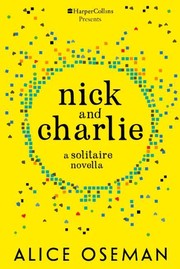
Nick and Charlie: A Heartstopper Novella
Nick is off to university and Charlie is staying behind. One last summer to decide if first love can survive distance.
2,329-word summary · 10 min read
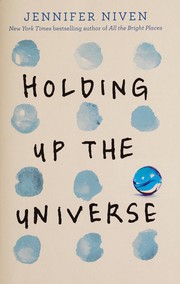
Holding Up the Universe
Libby Strout reclaims high school after loss while Jack Masselin hides face blindness, until a cruel prank forces them to see each other.
2,979-word summary · 13 min read

Boyfriend Material
A tabloid-haunted charity worker fakes a romance with a straitlaced barrister in this funny 2020 London rom-com.
2,325-word summary · 10 min read
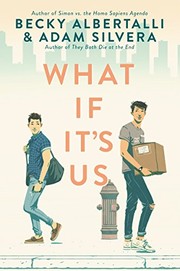
What If It's Us
Two teens meet by chance at a New York post office and try to turn missed connection into first love.
2,033-word summary · 9 min read
Lola and the Boy Next Door
Costume maker Lola must choose between older Max and inventor Cricket while her two dads hold home steady.
2,045-word summary · 9 min read