
Reading options
What's inside (8 sections)
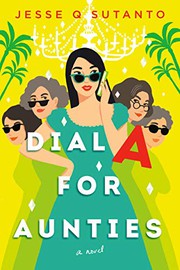
The pitch for this novel is that it is Crazy Rich Asians meets Weekend at Bernie's, which is the kind of comparison publishers make when a book is too strange to summarize. It also undersells it. Jesse Q. Sutanto wrote a comedy about a family of Chinese Indonesian women in Southern California who accidentally kill a man and then have to hide the body during the biggest wedding of their professional lives, and the book works because the aunties are not props. They are the engine, the obstacle, and the heart, in roughly that order, often within the same page.
Meddelin Chan, called Meddy, is twenty six and the photographer in her family's wedding business. Her mother, Ma, does the flowers. Big Aunt is the pastry chef and the family matriarch, whose disapproving Voice can settle any argument. Second Aunt handles hair and makeup and performs spontaneous tai chi when the stress gets to be too much. Fourth Aunt, Mimi, is the wedding singer, with nails long enough to be a weapon and a talent for enthusiasm at the worst possible moments. Ma is the third of the four sisters, which means every family decision is a negotiation between four women who have been negotiating since childhood.
The curse
The book opens eight years earlier with the family's founding myth: the Chan women believe the men in their lives always leave, and the women have organized their entire existence around each other in response. Meddy had one great love, Nathan Chan, a British student she met at UCLA, and she blew it up on purpose by pretending to cheat on him rather than move across the country and leave her mother alone. She also tore up an acceptance to Columbia for the same reason. The aunties, who know all of this and approve of the sacrifice, nevertheless think it is time for Meddy to find a man.
The curse is where the book's satire runs at full strength and its sentiment runs just behind it. The Chan women took a family story about abandonment and built a company, a support system and a set of expectations on top of it, and Sutanto writes the arrangement as shelter and cage at the same time. Meddy is talented, funny and quietly exhausted by a life in which every ambition has been converted into a family errand. The book never lectures about this. It shows you the torn up Columbia acceptance early, lets the aunties take credit for a sacrifice Meddy made alone, and trusts you to do the arithmetic on how many of her decisions were actually hers.
So Ma creates a dating profile without telling her. The date is Jake, supposedly a hotelier, and he is well dressed and confident and exactly as fake as that story sounds. Dinner goes badly. He drinks too much, and when Meddy lets him drive her car because she has had more than he has, he attacks her. She tases him, and the car crashes. When she comes to, he is not moving. Meddy drives home with a body in the trunk and confesses to her mother, who does the only thing a Chan woman can do in a crisis. She calls her sisters.
The cooler
The aunties arrive, convene like a parliament, and vote not to involve the police. The body goes into a cooler, and the cooler goes into the refrigerator of Big Aunt's bakery, because it is late and the problem can wait until morning. Except the morning brings the biggest job the family has ever booked: the wedding of Tom Cruise Sutopo, a billionaire, and Jacqueline Wijaya, at a resort on the island of Santa Lucia. And an assistant, following the supply manifest, ships the cooler to the island with the rest of the bakery delivery.
At the island, the wedding is already collapsing in the usual ways. The bride's mother is feuding with the groom's mother. The vendors are late. And the resort, it turns out, is owned by Nathan Chan, Meddy's college ex, who is very much alive and not a ghost, though Ma and the aunties spend an entire afternoon insisting he must be one. Then they open the cooler and learn the worst fact of the entire weekend: Jake was alive when they sealed him in. He suffocated. Since he was not actually Jake, the family's problems compound, because Ma eventually recognizes the dead man as Ah Guan, her lily supplier, the man who had set up the dating profile and engineered her daughter's date.
The corpse, in other words, is a person with a plan, and the plan had a partner still working the wedding.
The heist under the heist
That partner is Maureen, the maid of honor, who has been conspiring with Ah Guan to steal the tea ceremony gifts, a haul worth around two million dollars. Meddy discovers this the way she discovers everything, by accident, when she answers Ah Guan's phone and finds people expecting obligations the dead man can no longer meet. From there the book becomes a machine of false positions. Meddy hides the gifts, moves them, hides them again, plants them in Maureen's room, and briefly gets Maureen escorted off the island, all while avoiding Maureen's phone calls and keeping Nathan from noticing that his resort is hosting a body.
This stretch runs on the novel's real engine, which is neither the corpse nor the romance but logistics. The gifts have to be somewhere, and every somewhere creates a witness. The aunties divide the labor without being asked: lookouts, alibis, decoys, catering. Sutanto keeps the camera tight on Meddy's escalating panic while the aunties calmly reorganize the plan around each new catastrophe, and the comedy comes from the gap between the danger and the competence. It is a farce about project management with a two million dollar bonus, and the machine never once stops to explain itself.
Nathan notices anyway, because he is observant and because Meddy is a terrible liar. He sees the corpse in her room and draws the obvious conclusion, which is that she has moved on with a man her family smuggled to a wedding. The romance between them is threaded through all of this at low volume, mostly in stolen conversations between disasters, and it works because Sutanto never stops the plot for it. By the time Meddy confesses to Ma, and Ma responds with a tenderness that surprised me, the reader has earned the sentiment.
The finale
The climax is gloriously stupid in the best way. The aunties need the body out of the room and into the world as a person, so they drug a group of groomsmen with a combination of cannabis and alcohol and dress Ah Guan in a stolen tux. The groomsmen, being extremely intoxicated, carry him to the ceremony they believe he belongs at, and the altar receives a corpse. The wedding explodes. Jacqueline ends up in the pool. The sheriff, who has no patience for the Chans, arrests Nathan for murder, because Nathan is the most convenient suspect and the most visible one.
At the police station, Meddy pretends to be Nathan's lawyer to get a private word, and confesses everything, and Nathan, who had already worked it out, refuses to let her carry it alone. Back at the resort, Maureen, who is holding the aunties at gunpoint for the missing gifts, turns out to have a motive bigger than money. She loves Jacqueline. She wanted the wedding stopped because the groom is dreadful, and the bride, it turns out, loves her back. The two of them join the cover up, which is what everyone in this book eventually does, and the sheriff is fed a story about Ah Guan hiding in the cooler while trying to steal the gifts. Nathan walks free. Tom Cruise Sutopo marries someone else in the epilogue, and Maureen and Jacqueline marry each other, with Meddy as the photographer.
The Maureen and Jacqueline reversal is the book's biggest narrative gamble, and it pays because the groundwork was laid quietly. Maureen's peculiar fury about the wedding lands differently on a second read, once you know what she was actually protecting, and Sutanto earns the emotional swerve without slowing the farce down. A lesser book would have made her a simple thief. This one gives her a motive that rhymes with the aunties' own, which is the theme arriving right on time, wearing a borrowed dress.
What works and what strains
What works is the comedy of systems. The Chans operate like a small government: voting, forming subcommittees, escalating to the Voice. The farce compounds logically, which is the hardest thing about farce, and the aunties get distinct rhythms instead of one entertainingly interchangeable blur. The corpse logistics, the gift shuffling, and the wedding disasters all click together in the last hundred pages, and the solution, a cover story built from the villain's own greed, is satisfying.
What also works is the specificity of the family. Each aunt has a function, a voice and at least one moment where she is right when everyone else is wrong. Big Aunt's Voice is a running joke until the book needs it to be a weapon. Fourth Aunt's enthusiasm, Second Aunt's tai chi, Ma's quiet fury disguised as hospitality, all of it is character work doing comedy work. The sisters bicker in the exact rhythm of people who have been bickering for sixty years and would be lost without it, and the book's warmth comes from how completely it takes their side, including the times they are being impossible. The aunties are not comic relief. They are the plot, and the book knows it.
The setting pulls its weight as well. Santa Lucia gives the book its color: the heat, the ornate programs, the staff who see everything and say nothing, and the kind of luxury where somebody else's family is cooking at four in the morning. The Chans are vendors here, inside the wedding industry rather than its audience, and the novel's sharpest observations come out of that position, because they know weddings from the invoice up. Hiding a body inside that machinery is the book's best joke about how hospitality absorbs everything, corpses included, and the plot knows that too.
What strains is the mystery underneath the comedy, which is thin, and the romance, which is lovely but underfed. Publishers Weekly said there is plenty of light entertainment in it but not anything with bite, and that is the fairest summary of its limits. Some readers will find the slapstick goes on a beat too long, and the sheriff character is drawn with a broad brush. There is also a tonal question the book raises and mostly wins: the dead man suffocated alive, and the novel asks you to laugh at the cooler anyway. It earns that laugh by making Ah Guan a manipulator who put Meddy in danger first, but if you cannot make the turn, the farce will chafe.
The reception and who it is for
The book won the Comedy Women in Print Prize in 2021, beating a lot of better known comedies, and was a Goodreads Choice nominee for best fiction. It was also a New York Times bestseller, which for a debut comedic mystery was a strong signal that an audience for this exact flavor of chaos had been waiting. Kirkus wrote that readers would die for the delightfully absurd hijinks in this dark comedy, and Sarah Weinman in the Times praised Meddy as endearing and capable. Netflix bought the film rights in 2020, pre publication, after a bidding war, with Nahnatchka Khan, the creator of Fresh Off the Boat, attached to direct.
The sequels followed in 2022 and 2024, and they keep the formula and the family. Four Aunties and a Wedding hands Meddy and Nathan their own wedding to wreck, and The Good, the Bad, and the Aunties takes the Chans to Jakarta, because the only thing harder than hiding a body from your aunties is hiding one with them. Read this one first. Content notes: an attempted sexual assault in the opening act, a body, suffocation in backstory, drugging, a gun held on characters briefly, and relentless family commentary, which is the realest hazard in the book. Read it if you like your crime fiction with jokes, and if you have aunties, call them between chapters.
FAQ
Is Dial A for Aunties part of a series?
Yes. It is the first of the Aunties trilogy, followed by Four Aunties and a Wedding and The Good, the Bad, and the Aunties.
Is Dial A for Aunties a mystery novel?
It is a comic caper first, built around a corpse and a gift heist, with a lighter mystery than the farce around it.
Will Dial A for Aunties be made into a movie?
Netflix bought the film rights in 2020 with Nahnatchka Khan attached to direct, but no release has been announced.
Similar books
More from Aunties first, then related titles.

Size 12 Is Not Fat
Former teen pop star Heather Wells investigates two dorm elevator deaths while juggling her ex, her crush, and a size-12 wardrobe.
2,805-word summary · 12 min read
Get a Life, Chloe Brown
A chronically ill woman recruits her gruff handyman neighbor to help her finish a bold Get a Life list.
2,147-word summary · 10 min read
The Kiss Quotient
Stella Lane hires escort Michael Phan to practice dating and learns logic fails where touch and family press in.
2,716-word summary · 12 min read
Vera Wong's Unsolicited Advice for Murderers
A widowed teashop owner pockets a flash drive from a dead man and mothers her suspects into confessing.
2,564-word summary · 11 min read

What Happened to Goodbye
Mclean has reinvented herself in four towns since her parents divorced. In Lakeview she uses her real name, and for the first time staying put becomes a choice.
2,796-word summary · 12 min read
First Grave on the Right
Charley Davidson is a private investigator in Albuquerque and the grim reaper. When three murdered lawyers come back as ghosts, her two jobs collide.
2,770-word summary · 12 min read

Sam's Letters to Jennifer
A grieving journalist reads her grandmother's letters and finds a decades-long love affair that changes how she sees her family.
2,310-word summary · 10 min read
Mr. Maybe
Libby Mason wants a rich husband, but the wealthy man who proposes is dull and the broke writer she cannot forget is not offering forever.
2,322-word summary · 10 min read

I Kissed Shara Wheeler
Shara Wheeler kisses her rival Chloe Green at prom and disappears, leaving a scavenger hunt that forces Chloe to rethink everything she knew about her.
2,083-word summary · 9 min read

Act Your Age, Eve Brown
Eve Brown crashes into a Lake District bed and breakfast, breaks the owner's arm, and talks her way into his kitchen. A grumpy-sunshine romance about work,…
2,474-word summary · 11 min read
Between Sisters
Estranged sisters Meghann and Claire reunite in Washington when Claire announces a rushed wedding, then face their mother's desertion and a medical crisis.
2,467-word summary · 11 min read
Fearless Fourteen
Bounty hunter Stephanie Plum babysits a teenager, guards a fading singer, and hunts nine stolen million dollars under her boyfriend's basement.
2,466-word summary · 11 min read
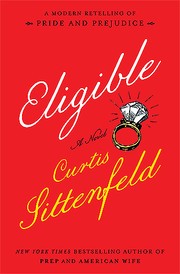
Eligible
Austen's Bennet sisters move to modern Cincinnati, where marriage is a reality show and the house is losing its value.
2,293-word summary · 10 min read

Big Swiss
A transcriptionist for a sex coach falls for one of his clients, the tall Swiss gynecologist she calls Big Swiss, in a funny novel about work and secrets.
2,523-word summary · 11 min read
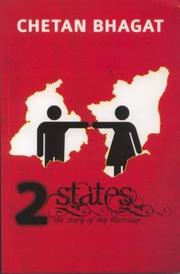
2 States: The Story of My Marriage
A Punjabi boy from Delhi and a Tamil Brahmin girl from Chennai meet at IIM Ahmedabad, and turn a love marriage into a campaign to convince two families.
2,634-word summary · 12 min read
Wedding Night
Lottie marries an old flame days after a breakup, then flies to a Greek island while her sister quietly works to sabotage the honeymoon. A farce about memory,…
2,213-word summary · 10 min read
Lean Mean Thirteen
Stephanie Plum's ex-husband disappears after she attacks him, leaving her suspected of murder and chasing a forty-million-dollar secret through Trenton.
2,100-word summary · 9 min read
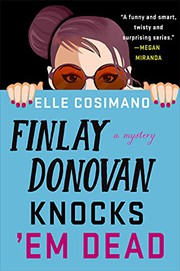
Finlay Donovan Knocks 'Em Dead
Someone has put a contract on Finlay Donovan's ex-husband, and the novelist and her nanny have to find the hitman before the school pickup.
1,990-word summary · 9 min read
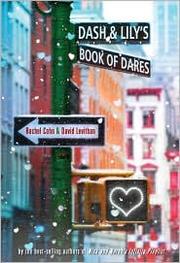
Dash & Lily's Book of Dares
Two lonely New York teenagers trade dares in a red notebook left at the Strand, falling for each other on the page before they meet.
2,228-word summary · 10 min read
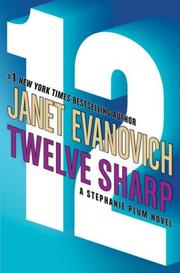
Twelve Sharp
Stephanie Plum is stalked by a woman claiming to be Ranger's wife, and when Ranger's daughter is kidnapped, Stephanie becomes both bait and target.
2,064-word summary · 9 min read
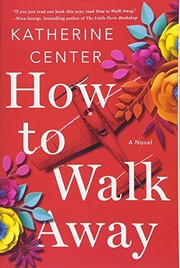
How to Walk Away
Margaret Jacobsen has the job, the fiance, and the future mapped out, until a small-plane crash on Valentine's Day takes almost all of it in one afternoon.
2,012-word summary · 9 min read
True Colors
Three Grey sisters split over love and duty after their father judges them.
2,596-word summary · 12 min read
The Identicals
Twin sisters swap Nantucket and Martha Vineyard lives for a summer.
2,556-word summary · 11 min read
The Bookish Life of Nina Hill
Bookstore Nina gains a family and pub-quiz love in Los Angeles.
2,399-word summary · 11 min read
Bridget Jones: The Edge of Reason
Bridget doubts Mark, takes a job with Daniel, and lands in trouble in Thailand.
2,198-word summary · 10 min read
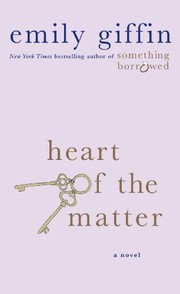
Heart of the Matter
Two Boston mothers collide after a burn injury puts a single mom in the orbit of another woman's surgeon husband.
2,585-word summary · 11 min read
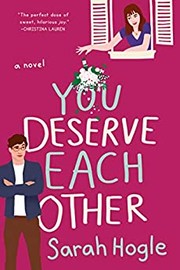
You Deserve Each Other
Engaged and miserable, Naomi and Nicholas wage a prank war to force a breakup, then face money, mothers, and truth in Sarah Hogle's funny romance with a tender…
2,415-word summary · 11 min read
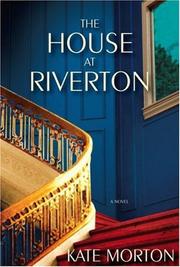
The House at Riverton
In 1999, ninety eight year old maid Grace Bradley tapes the truth about a 1924 shooting at Riverton Manor, poet Robbie Hunter, two sisters and a lie held for…
2,433-word summary · 11 min read
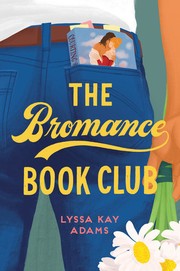
The Bromance Book Club
A Nashville pitcher joins a secret romance book club to save his marriage after his wife Thea asks for divorce. He trades pride for listening, chores, and…
2,932-word summary · 13 min read
Tangled
Told by a cocky businessman, a bet to win the new associate who rejects him turns into real pursuit, strict rules, a painful reveal and a wedding-level happy…
2,868-word summary · 13 min read