
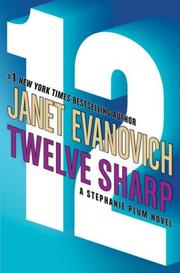
Twelve Sharp
2,064-word summary 9 min read 320 pages in the book
- First published
- 2006
- Publisher
- St. Martin's Press
- Pages
- 320
- ISBN
- 9780312349486
- Series
- Stephanie Plum (#12)
Reading options
What's inside (8 sections)
There are two kinds of Stephanie Plum readers: the ones who have read all thirty odd books and the ones who are about to, and Twelve Sharp is the book I hand to both. It is the twelfth numbered novel, published in June 2006, and by then Evanovich had the machine running perfectly. Vinnie's bail bonds office, the doughnuts, the spandex, Grandma Mazur, the two men, all of it is here and none of it is tired. What makes this one special is that it finally puts Ranger in danger, and a Ranger who can be hurt is a different character entirely.
The setup is a stalker. A woman in black with a Glock corners Stephanie outside her apartment and announces that she is Carmen Manoso, the wife of Carlos Manoso, known to everyone as Ranger, and that Stephanie needs to stay away from him. Stephanie, who has spent eleven books being told by Ranger that he does not do relationships, finds the claim either hilarious or alarming depending on the hour. Then a kidnapping report lands: Ranger's ten year old daughter Julie has been taken in Miami, and the prime suspect is Ranger himself. He is off the grid on what the series calls bad business, and now he is a hunted man with a missing child.
The machine
Before the plot takes over, the book does its usual rounds. Stephanie is still a mediocre bounty hunter with excellent instincts and terrible luck, chasing skips she cannot quite bring herself to tackle. Vinnie's office is still run by Connie, who knows everything, and staffed by Lula, former file clerk and current force of nature. Grandma Mazur is still attending viewings at the funeral home the way other people attend church, and there are still cars blowing up, though Evanovich finds a twist for one of them that made me laugh out loud on public transportation.
The template deserves respect before we poke at it, because Evanovich invented a structure that hundreds of cozy adjacent series have since copied. A Trenton bail bond office supplies a fresh skip every book. A skip supplies a reason for Stephanie to leave the house, get hurt, lose a vehicle and learn something she did not want to know. Around that revolve the fixed stars: the funeral home, the gun under the pillow, the dinner at the Plum family table. Twelve Sharp is proof the template can still generate surprise this late, because it keeps every piece in place and then puts one of them, Ranger, inside the machinery instead of on top of it.
The failure to appear that runs through the book belongs to a man named Melvin Pickle, who is a small walking joke with a real sad streak, and the skip chase gives the comic plot its skeleton while the thriller plot runs underneath. Then there is the love triangle, which by book twelve has been refined into a science. Joe Morelli, the cop, is stability with history and a grandmother who wants Stephanie married. Ranger is danger with a code and a body that the prose refuses to describe in less than two paragraphs. Neither man is ever allowed to win outright, and the series will still be running this race long after this book, but Twelve Sharp is the volume where the balance tips because Ranger needs something.
Stephanie herself is the easiest piece to underrate. She is not a detective and the series is not pretending otherwise. Her gift is that people talk to her, which is why every skip chase turns into a small psychological portrait, and her flaw is that she cannot say no to anyone, which is why her life is a controlled crash. This book gives her a reason to be brave that has nothing to do with the bounty business, and the change in her is visible on the page. For a few hundred pages she stops being a woman waiting for two men to settle her future and becomes someone with a job to do, which is more character development than the series usually permits.
Ranger in the apartment
Ranger comes back to Trenton and disappears into Stephanie's apartment, which is both a tactical decision and the book's best running gag. He sleeps in her bed while she sleeps beside him, and nothing happens, and the restraint is played so deadpan that the sexual tension becomes a third character. He commandeers her kitchen, her routine, and eventually her body as bait: the kidnapper wants Stephanie, so Ranger wires her for tracking and lets her be taken. It is a betrayal and a vote of confidence at the same time, which is the only kind of gesture Ranger knows how to make.
Ranger lore is handled with restraint here, and the book is better for it. His business, his money and his history stay largely off screen, as they have since he first appeared in the series, and the aura of competence that usually wraps him is gone because Scrog has taken it. What is left is a man who cannot fix this alone, occupying Stephanie's apartment, giving orders like they are favors, and doing nothing at all about the tension in the center of the room. She watches him the way he has always watched her, which is the only way these two guarded people have ever managed to say anything true.
The bait plan works, in the sense that Stephanie gets abducted. What she learns while captive is the book's real engine, the story of Edward Scrog, a mentally ill man who once watched Ranger arrest a skip at the store where Scrog worked and concluded that he was meant to be Ranger. Carmen was not Ranger's wife. She was Scrog's, and the claim was her attempt to warn Stephanie off a fantasy that had consumed her husband. Scrog killed Carmen when she became inconvenient, took Julie to assemble the family he believed he deserved, and then took Stephanie to complete it. To keep her cooperative, he straps a bomb to her leg.
Bombs and bait
The middle stretch is the series at its most efficient. Stephanie, wearing an explosive and running on adrenaline, tries to rob one of her own skips to raise the money Scrog demands, which is the kind of plan that only makes sense in Trenton. Joyce Barnhardt, the nemesis who has haunted Stephanie since high school, shows up hunting the same skip, because of course she does, and snatches the capture while Stephanie is busy tearing the bomb off her own leg and throwing it into the road. It detonates. Nobody dies. The book is allowed exactly one of these escapes per volume, and it spends it well.
Meanwhile, the filler subplot is Sally Sweet, the cross dressing rocker from earlier books, who has a band now, and Grandma Mazur and Lula have joined it. If you have ever wanted Grandma Mazur on backing vocals, this is your book. Evanovich keeps the comedy and the kidnapping running in parallel until the last act, when they collide at Stephanie's apartment.
The collision is worth describing, because it is the structural move that makes the book feel faster than its page count. The band subplot has been idling for chapters, and when the kidnapping plot needs a crowd, the band is the crowd: the same comic cast, already assembled, available to be confused, threatened and spectacularly dressed in the same room as the villain. Evanovich has been running this trick since the first book, where the comic plot and the criminal plot are two gears driving one axle, and here the mesh is perfect. Nothing about the finale is realistic. Everything about it is earned.
The finale
Scrog gets the drop on Stephanie with a stun gun, ties her up, and waits for Ranger to arrive so he can kill the man whose life he has decided to inherit. Julie is there, drugged but stirring. Ranger walks in with his hands up, taking the shot Scrog fires at him, and Julie, whose sedation is finally wearing off, shoots Scrog. Ranger is rushed to the hospital badly wounded and survives, and the series' invincible man gets a rare chapter of weakness, which is worth the price of the book by itself. It is the only time in twelve books that the Ranger legend is allowed to cost him anything, and the series spends years afterward walking that cost back, which makes this chapter feel like a door that briefly opened.
The ending is quietly the most important page. In the ambulance, Stephanie finally tells Morelli that she loves him, and she does not mention Ranger, and the book closes with the reader understanding that the omission is doing as much work as the sentence. Kirkus said Evanovich wisely soft pedals the mystery and finds the right tone of danger laden farce, spiced with a million one liners, and that is the most accurate review the series ever received.
What works and what strains
What works is the formula at its peak, and one deviation from it. The comic set pieces, the funeral home scene that Publishers Weekly singled out, the skip chases, the family dinners, all of it lands. The deviation is Ranger. Turning the most competent character in the series into a man who is framed, hunted, shot and out of options resets the chemistry between the leads and gives Stephanie something to do beyond reacting. For one book, she protects him, and it changes both of them.
What strains is everything the formula cannot reach. The mystery is thin on suspects and wraps quickly once Scrog is understood. The supporting cast resets at the end of every book by design, so nothing that happens to Lula or Grandma or the love triangle carries consequence. A reviewer around the time called the series a writer going through the motions, and twelve books in, that accusation was fair in the aggregate even if this entry dodges it. The stakes are real only for the length of the book, and the series' longevity depends on readers accepting that.
A second, subtler strain is how the series handles Ranger's wounds. He heals between books the way sitcom characters do, and the reader who started here will notice that later volumes charge him no interest on what happened. The book itself is honest about the cost, at least for its own span, and the hospital chapter pays the bill in full. Whether that is enough depends on why you came. For the mystery, no. For the characters, yes, and the characters have always been the point.
The reception and who it is for
Twelve Sharp had a first printing of 1.25 million copies and debuted at number one on the New York Times bestseller list, and it won the 2006 Quill Award for mystery and suspense. It also held the series' audience at the volume where most long running series begin to fade. It is not the place to start. One for the Money is the starting line, and the first eleven books build the relationships this one spends. If you drifted away from the series years ago, this is the volume worth coming back for, because it tests the formula's most durable assumption, which is that Ranger cannot be touched. If you are already reading the series, Twelve Sharp is usually named among the best of the middle stretch, and for good reason: it is the book where the series slows down long enough to worry about its own hero. One more reason it endures: it is the series' best demonstration of its own generosity. Nobody in these books is humiliated for being ordinary, not Stephanie, not Lula, not even Melvin Pickle, whose sad little skip chase gets the same attention as the kidnapping. There is a floor of kindness under the comedy, which is rarer in comic crime fiction than the jokes themselves, and twelve books in, that floor is what keeps readers loyal. Read it as comedy, read it as romance, read it as a thriller about a stalker. It holds all three weights without dropping any of them. Content notes: kidnapping, a child in peril, a bomb on the page, stun guns, and the series' usual dead bodies, all played for laughs more often than not.
FAQ
Do I need to read the earlier Stephanie Plum books first?
Yes. Twelve Sharp is book twelve and depends on the series' love triangle and large cast, so One for the Money is the correct starting point.
Which of the two men does Stephanie end up with in Twelve Sharp?
Neither conclusively. She tells Joe Morelli she loves him in the ambulance, and the book pointedly leaves her feelings about Ranger unspoken.
Is Twelve Sharp a good mystery?
It is a light one. The plot is more kidnapping thriller than whodunit, and the culprit is identified well before the climax.
Similar books
More from Stephanie Plum first, then related titles.

One for the Money
Janet Evanovich's One for the Money fully retold: Stephanie Plum's first bounty hunt, Morelli on a murder charge, Ranger, Lula, Ramirez, and why Trenton still…
2,339-word summary · 10 min read
Two for the Dough
Janet Evanovich's Two for the Dough retold: Stephanie Plum's second hunt, a missing gun dealer, Morelli and Ranger, and why Trenton still charms.
3,677-word summary · 16 min read
Three to Get Deadly
Stephanie hunts a beloved candy man holding army money everyone wants.
1,981-word summary · 9 min read
Four to Score
Stephanie hunts waitress Maxine Nowicki through coded clues, firebombs, and counterfeit cash while living with Morelli in Trenton.
2,870-word summary · 13 min read
High Five
Stephanie hunts missing Fred with Ranger's help while Morelli sulks and Grandma shops for funerals and husbands.
2,228-word summary · 10 min read
Hot Six
Stephanie Plum hunts a missing bail jumper tied to Ranger's mentor while Morelli, Lula, and Grandma Mazur stir Trenton chaos.
2,035-word summary · 9 min read
Seven Up
Stephanie hunts old mobster Eddie DeChooch, finds a body, a missing heart, and trouble from Morelli to Ranger.
2,798-word summary · 12 min read
Hard Eight
Janet Evanovich's Hard Eight fully retold: a missing mother and child, Abruzzi's medal hunt, Valerie's rescue, and Ranger crossing a line.
2,961-word summary · 13 min read
To the Nines
Janet Evanovich's ninth Stephanie Plum case retold: a missing skip, threats in Trenton, and a rescue run to Las Vegas.
2,839-word summary · 13 min read

Ten Big Ones
Stephanie witnesses a gang robbery dressed as a devil, and the Comstock Street Slayers put her on a list of people to kill.
2,062-word summary · 9 min read
Eleven on Top
Stephanie quits bounty hunting for normal jobs, but a killer and a wedding keep pulling her back.
2,508-word summary · 11 min read
Lean Mean Thirteen
Stephanie Plum's ex-husband disappears after she attacks him, leaving her suspected of murder and chasing a forty-million-dollar secret through Trenton.
2,100-word summary · 9 min read
Fearless Fourteen
Bounty hunter Stephanie Plum babysits a teenager, guards a fading singer, and hunts nine stolen million dollars under her boyfriend's basement.
2,466-word summary · 11 min read
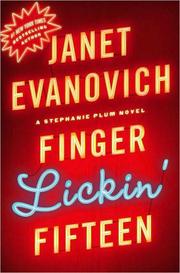
Finger Lickin' Fifteen
Lula sees a celebrity chef decapitated and talks Stephanie into entering a barbecue contest to lure the killers, while Ranger hires her to find a security leak…
2,248-word summary · 10 min read
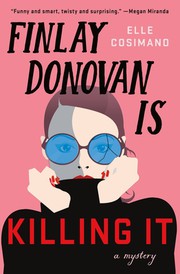
Finlay Donovan Is Killing It
A broke single mom novelist is mistaken for a hitwoman over lunch and takes the job. Funny crime caper, first in the series.
2,538-word summary · 11 min read

Size 12 Is Not Fat
Former teen pop star Heather Wells investigates two dorm elevator deaths while juggling her ex, her crush, and a size-12 wardrobe.
2,805-word summary · 12 min read

First Grave on the Right
Charley Davidson is a private investigator in Albuquerque and the grim reaper. When three murdered lawyers come back as ghosts, her two jobs collide.
2,770-word summary · 12 min read

Say You're Sorry
A widowed prosecutor defends the teenager accused of killing her babysitter, uncovering a small town's secrets and a killer hiding in plain sight.
2,116-word summary · 9 min read
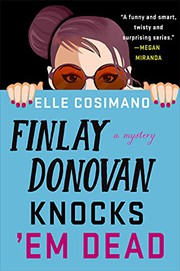
Finlay Donovan Knocks 'Em Dead
Someone has put a contract on Finlay Donovan's ex-husband, and the novelist and her nanny have to find the hitman before the school pickup.
1,990-word summary · 9 min read
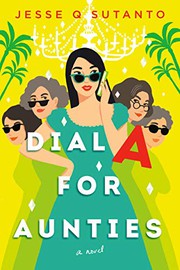
Dial A for Aunties
A wedding photographer accidentally kills her blind date, and her mother and three aunties help her hide the body during the biggest wedding of their careers.
2,076-word summary · 9 min read
My Killer Vacation
A teacher and a bounty hunter share a Cape Cod rental with a corpse and a growing attraction.
2,625-word summary · 12 min read
Naked in Death
In 2058 New York, Lt. Eve Dallas hunts the killer of a senator's granddaughter and collides with suspect Roarke.
2,470-word summary · 11 min read

What She Knew
Rachel lets her eight-year-old son run ahead in a Bristol park, and the nine-day search turns her into a suspect in the public eye.
2,952-word summary · 13 min read

The Beach House
A young valet is beaten to death at a Hamptons party, and his law-student brother spends a year building a case against the family that covered it up.
2,049-word summary · 9 min read
The Art Forger
A disgraced Boston painter agrees to copy a Degas stolen from the Gardner Museum, then begins to suspect the original she is copying is itself a forgery.
2,117-word summary · 9 min read

Six Years
A professor who promised to forget the woman he loved sees her husband's obituary and discovers that the wedding, the marriage, and the woman herself may never…
2,076-word summary · 9 min read
How the Light Gets In
Gamache investigates the murder of the last Ouellet quintuplet while the Sûreté he served is dismantled from inside by the man who took his protégé.
2,279-word summary · 10 min read
Bury Your Dead
Recovering from a failed raid that killed his officers, Gamache investigates a murder in a Quebec City library while Beauvoir reopens a case in Three Pines.
2,022-word summary · 9 min read

Austenland
A New York graphic designer obsessed with Mr. Darcy inherits a trip to a Jane Austen theme park, where the fantasy of Regency romance collides with the men…
2,030-word summary · 9 min read

Anatomy: A Love Story
In 1817 Edinburgh, a noblewoman who wants to be a surgeon disguises herself to study anatomy and falls for the grave robber who supplies her with bodies.
2,031-word summary · 9 min read