
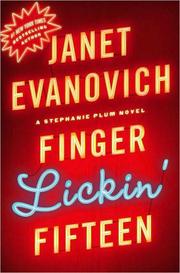
Finger Lickin' Fifteen
2,248-word summary 10 min read 308 pages in the book
- First published
- 2009
- Publisher
- St. Martin's Press
- Pages
- 308
- ISBN
- 9780312383282
- Series
- Stephanie Plum (#15)
Reading options
What's inside (8 sections)
I read most of Finger Lickin' Fifteen standing at my kitchen counter, which feels like the correct posture for a book that opens with a decapitation and ends with a hot dog costume, a hostage, and a punch to the throat. I had just finished three grim crime novels in a row and wanted something that would not follow me to bed. This did not. It is the fifteenth Stephanie Plum novel, published by St. Martin's Press in 2009, 308 pages in the hardcover, and it reached number one on the New York Times hardcover fiction list. Janet Evanovich had been running this series for fifteen years by then. You can see the machinery, but the pleasure is still real.
The head on Ramsey Street
The book begins on a Monday morning at Vincent Plum Bail Bonds, where Lula slides her red Firebird to the curb and comes through the door needing a doughnut and a breakfast sandwich with extra grease. She has just seen two men take a meat cleaver to a man in a nice suit outside the Sunshine Hotel on Ramsey Street. The head came off and bounced down the street. Lula, being Lula, describes the eyes looking at her and maybe the head smiling. Connie, the office manager, calls Joe Morelli because Lula will only talk to him. Stephanie would rather eat glass. She and Morelli are off again, this time after an argument about peanut butter that turned into an argument about everything else.
That opening is the whole book in miniature: a horrible thing happens, and everyone reacts like it happened in a cartoon version of Trenton. Stephanie follows Morelli to the scene with Lula in the passenger seat, looks at the bloodstain, and throws up on the sidewalk. Morelli tells her he feels like throwing up a lot on this job. It is a good line because it is both a joke and an admission. He has been doing this work long enough to know that the horror does not stay funny, and long enough to know that Stephanie will keep walking into it anyway.
The dead man turns out to be Stanley Chipotle, a celebrity chef in town for a barbecue cook-off sponsored by Fire in the Hole Red Hot Barbecue Sauce. The company puts up a million-dollar reward for information leading to the killers. Lula, who has never met a bad idea she did not want to take home, decides the killers must be rival cooks, and that the smart move is to enter the contest herself. She cannot cook. That is not going to stop her.
Ranger's fifteen minutes
While Lula is turning the murder into a cooking project, Ranger has his own problem. Three of his clients have been robbed in two months, all with state-of-the-art systems that were shut down for exactly fifteen minutes and then turned back on. No forced entry, no tampering, and the codes were changed after every job. Ranger does not believe in coincidences, and he does not trust anyone inside Rangeman enough to investigate quietly. He wants Stephanie to come back to work in the fifth-floor control room and snoop.
He asks her the way he asks for everything, which is to say he appears in her apartment while she is in a towel and makes it sound like a reasonable favor. He also offers to help with her bail skips, which is the part that actually sells her. Stephanie is not a good bounty hunter. She is brave, stubborn, and chronically unable to stop a fugitive from walking out of a kitchen while she is being polite. Ranger is very good at the job, and his help is the difference between a paycheck and another week of eating peanut butter out of the jar.
The Rangeman chapters are my favorite parts of the book. The building is a fortress in center city, all key fobs and cameras and men in black who treat Stephanie like Ranger's personal property. Tank, Ranger's second-in-command, is a wall of a man who watches everything and says little. The running joke is that Stephanie is supposed to be invisible while she investigates, except everyone already knows she is Ranger's, so nobody talks freely around her. She ends up doing computer searches and control-room work while trying to look like she is not listening. The place feels lived in, which is strange for a building that is essentially a bunker.
The skips are a different matter. There is Junior Turley, a serial flasher who is known to every housewife in his neighborhood, and Myron Kaplan, a retired pharmacist who robbed his dentist at gunpoint because his new dentures hurt. There are five skips in all, and Stephanie's attempts to bring them in go wrong in the usual ways. She knocks on doors, explains the situation, and then watches people climb out windows. Evanovich plays this for comedy, and some of it lands, but the joke depends on Stephanie being bad at her job in a way that starts to feel less like bad luck and more like a decision.
Lula's cooking school
The middle of the book belongs to Lula and Grandma Mazur. They set up a test kitchen in Stephanie's apartment, which means the kitchen becomes a hazard zone. Sauce ends up on the ceiling. Pans scorch. Something catches fire. Stephanie's apartment is damaged badly enough that she has to move out for a while, and Lula ends up staying with her, then with the Plum family, while the killers keep looking for her. The Firebird is destroyed by a car bomb, which is a sentence I can write casually because this series has been blowing up cars since 1994.
Lula also starts dating a fireman who wears a dress on the side and moonlights as Mr. Cluckey, the Cluck-in-a-Bucket mascot. He is handy, and he fixes Stephanie's kitchen. He also becomes part of the book's running gag about how many people in Trenton are living double lives, and how few of them are any good at it.
The food gets worse before it gets better. Lula's cooking ends up at a Morelli family dinner and makes everyone sick, which is one of the funniest and most mean-spirited scenes in the book. Grandma Mazur carries a gun in her purse and needs almost no excuse to bring it out. Stephanie's mother keeps trying to set her up with eligible men who turn out to be unemployed and strange. These domestic scenes are the warmest thing in the novel, and they are also where the book takes its biggest risk, because the humor is broad and the characters are cartoons. If you do not find Lula funny, this is going to be a long 308 pages.
Two cases, one bad week
The plot runs on two tracks that rarely touch. On one track, the killers keep trying to eliminate Lula. They are astonishingly bad at it. They plant a bomb that destroys her car but not her. They try again, and the attempts go wrong in ways that are played for laughs. Each attempt raises the stakes a little and reminds you that the men who killed Stanley Chipotle are still out there, even if they are incompetent. On the other track, Stephanie digs through Rangeman's records, looking for the person who knows the codes.
The solution to the Rangeman case is clever and small. The thieves are two teenagers who were turned down for jobs at the company. They did not hack the system. They planted hidden cameras above the keypads in clients' homes and watched the codes being entered. Then they set up their own little company, robbed the houses, rented an office with the cash, and stored the loot in it because they had no idea how to sell any of it. Ranger, who has spent the book being implacable, admits he is embarrassed to have been nearly ruined by two goofy kids. It is a good joke at his expense, and it gives Stephanie a win that feels earned.
The Joyce Barnhardt material is less successful. Joyce, Stephanie's old rival and the woman she once caught with her ex-husband, decides that Morelli is available now that he and Stephanie are off. She throws herself at him with a determination that is supposed to be funny and mostly makes everyone tired. Morelli spends most of the book trying to avoid her. Stephanie spends most of the book pretending she does not care. The triangle has been running for fifteen books, and this installment does not move it forward so much as park it in the driveway with the engine running.
The cook-off
The climax takes place at the barbecue contest, and the book finally commits to its own silliness. Stephanie has to wear a hot dog costume. Joyce is there, circling Morelli. Lula and Grandma are there with a sauce that may or may not be edible. The killers are there, which is the point of the plan.
Marco the Maniac, one of the two men from the street, tries to leave the country and gets caught at the airport. He gives up his partner: Zito Dudley, the contest emcee and a vice president at the sauce company. Dudley does not run. He grabs Lula, puts a gun to her, and confesses to the crowd. Stanley Chipotle was having an affair with the company president's wife. She was going to divorce her husband and take half his assets to a new company with Chipotle. The murder was supposed to solve two problems at once, getting rid of Chipotle and generating publicity for the sauce. The million-dollar reward was part of the publicity plan.
Lula gets out of it the way Lula would, by sucker punching Dudley in the throat. He drops the gun, and Morelli is on him. It is a ridiculous, satisfying finish, and it gives her the best moment in the book. Toward the end, Joyce catches a bullet in the chaos and survives with a minor injury, which the novel treats as an inconvenience rather than a tragedy. Marco and Dudley go to jail. Lula does not get the reward. Stephanie decides she and Morelli are on again. That is the last page.
What holds up and what thins out
The best thing about the book is Lula. She has been the comic sidekick for years, and Evanovich gives her the center of the story without softening her. She is vain and loud, she is loyal to the people she loves, and her relationship with the cross-dressing fireman is a small, sweet thread in a book that otherwise runs on noise. Grandma Mazur is used well, too, especially in the kitchen scenes, where her willingness to try anything makes Lula look cautious.
The Rangeman case is the stronger mystery. It has a real clue, a real method, and a solution that makes sense of the fifteen-minute window. The Chipotle case does not. It is solved by a confession at gunpoint, not by detective work. Stephanie does not figure out who killed the chef. She figures out who robbed Ranger's clients, and the other case resolves itself when the killers make a series of terrible decisions. Publishers Weekly called the plot lackluster at the time, and that is fair. Kirkus was harsher, saying not to invest too much in the crime wave because the book is more interested in the jokes. Both reviews are right about the proportions.
The bigger problem is the formula. Two cases, one romantic stalemate, several destroyed vehicles, a climax where the villain explains everything while holding someone hostage. If you have read a Plum novel before, you can see the gears. The pleasure is in the voice and the company, not the puzzle. The love triangle is the clearest example. Stephanie and Morelli break up over nothing, Joyce circles, Ranger offers his apartment and his usual low-key pressure, and by the last page they are back where they started. Fifteen books in, that is a choice, and it is one that will frustrate readers who want the characters to grow.
Some of the humor has also aged poorly. The cross-dressing fireman is treated as a punchline more than a person. There are jokes about bodies and bathrooms that belong to a different era of comedy. The book is not mean, exactly, but it is broad, and it assumes you are along for the ride. If you want a mystery with a fair-play solution, a detective who learns something, or a romance that resolves, this is the wrong book. If you want to spend a few hours with people who make terrible decisions in a recognizable New Jersey, it works.
I closed the book thinking about the hot dog suit, which is not a sentence I expected to write. Stephanie spends a chunk of the finale dressed as a giant frankfurter, trying to keep her dignity while the contest collapses around her. That image is the book. It is silly and a little humiliating, and it works anyway. Fifteen is not the place to start the series, and it is not the best one. It is the one you read when you already know the people and want to watch them survive another week. For that, it does the job.
FAQ
Is Finger Lickin' Fifteen a standalone or part of a series?
It is the fifteenth numbered Stephanie Plum novel and assumes readers know the regular cast, so it works better as a series entry than as a starting point.
Who killed Stanley Chipotle?
The killers are Marco the Maniac and Zito Dudley, the contest emcee and a sauce company vice president. The murder was staged as publicity tied to Chipotle's affair with the company president's wife.
Does Stephanie end up with Morelli or Ranger?
She decides to resume her relationship with Morelli at the end, while the tension with Ranger remains unresolved.
Similar books
More from Stephanie Plum first, then related titles.

One for the Money
Janet Evanovich's One for the Money fully retold: Stephanie Plum's first bounty hunt, Morelli on a murder charge, Ranger, Lula, Ramirez, and why Trenton still…
2,339-word summary · 10 min read
Two for the Dough
Janet Evanovich's Two for the Dough retold: Stephanie Plum's second hunt, a missing gun dealer, Morelli and Ranger, and why Trenton still charms.
3,677-word summary · 16 min read
Three to Get Deadly
Stephanie hunts a beloved candy man holding army money everyone wants.
1,981-word summary · 9 min read
Four to Score
Stephanie hunts waitress Maxine Nowicki through coded clues, firebombs, and counterfeit cash while living with Morelli in Trenton.
2,870-word summary · 13 min read
High Five
Stephanie hunts missing Fred with Ranger's help while Morelli sulks and Grandma shops for funerals and husbands.
2,228-word summary · 10 min read
Hot Six
Stephanie Plum hunts a missing bail jumper tied to Ranger's mentor while Morelli, Lula, and Grandma Mazur stir Trenton chaos.
2,035-word summary · 9 min read
Seven Up
Stephanie hunts old mobster Eddie DeChooch, finds a body, a missing heart, and trouble from Morelli to Ranger.
2,798-word summary · 12 min read
Hard Eight
Janet Evanovich's Hard Eight fully retold: a missing mother and child, Abruzzi's medal hunt, Valerie's rescue, and Ranger crossing a line.
2,961-word summary · 13 min read
To the Nines
Janet Evanovich's ninth Stephanie Plum case retold: a missing skip, threats in Trenton, and a rescue run to Las Vegas.
2,839-word summary · 13 min read

Ten Big Ones
Stephanie witnesses a gang robbery dressed as a devil, and the Comstock Street Slayers put her on a list of people to kill.
2,062-word summary · 9 min read
Eleven on Top
Stephanie quits bounty hunting for normal jobs, but a killer and a wedding keep pulling her back.
2,508-word summary · 11 min read
Twelve Sharp
Stephanie Plum is stalked by a woman claiming to be Ranger's wife, and when Ranger's daughter is kidnapped, Stephanie becomes both bait and target.
2,064-word summary · 9 min read
Lean Mean Thirteen
Stephanie Plum's ex-husband disappears after she attacks him, leaving her suspected of murder and chasing a forty-million-dollar secret through Trenton.
2,100-word summary · 9 min read
Fearless Fourteen
Bounty hunter Stephanie Plum babysits a teenager, guards a fading singer, and hunts nine stolen million dollars under her boyfriend's basement.
2,466-word summary · 11 min read

How the Light Gets In
Gamache investigates the murder of the last Ouellet quintuplet while the Sûreté he served is dismantled from inside by the man who took his protégé.
2,279-word summary · 10 min read

Bury Your Dead
Recovering from a failed raid that killed his officers, Gamache investigates a murder in a Quebec City library while Beauvoir reopens a case in Three Pines.
2,022-word summary · 9 min read

The Trespasser
A Dublin Murder Squad detective investigates a staged dinner-party killing and finds a cover-up that reaches into her own department.
2,051-word summary · 9 min read

Rules of Prey
Minneapolis detective Lucas Davenport hunts a killer who leaves a new rule at every scene and treats murder as a game of wits.
1,914-word summary · 9 min read

The Late Show
Exiled to the LAPD night shift after accusing her supervisor, Renée Ballard keeps two cases that were meant to be handed off at dawn: a brutal assault and a…
2,563-word summary · 11 min read

3rd Degree
The third Women's Murder Club novel follows a San Francisco terror cell and a three-day killing schedule, and it costs the club a member.
2,685-word summary · 12 min read
Finlay Donovan Knocks 'Em Dead
Someone has put a contract on Finlay Donovan's ex-husband, and the novelist and her nanny have to find the hitman before the school pickup.
1,990-word summary · 9 min read

The Memoirs of Sherlock Holmes
Doyle's second Holmes collection gathers twelve Strand stories, including the early case of the Gloria Scott and the confrontation with Moriarty at Reichenbach…
2,390-word summary · 11 min read

The Redbreast
Harry Hole chases an ageing sniper through modern Oslo while two Norwegian volunteers on the Eastern Front carry a fifty-year-old betrayal toward a royal…
2,453-word summary · 11 min read
The Murder on the Links
Poirot arrives in France too late to save his client, who is found stabbed in a grave and was not the man he claimed to be. Christie's second Poirot novel.
2,055-word summary · 9 min read
Broken Harbor
A family is found slaughtered in a half-built Dublin estate where no one broke in, and star detective Scorcher Kennedy must explain the holes in the walls.
2,308-word summary · 10 min read
The Maltese Falcon
Sam Spade hunts a jeweled bird through lies after his partner is killed.
2,529-word summary · 11 min read

One, Two, Buckle My Shoe
Poirot links a dentist murder to a missing banker and stolen millions.
2,549-word summary · 11 min read
Cruel & Unusual
Scarpetta links an execution to a boy's murder while someone steals bodies.
2,533-word summary · 11 min read
Case Histories
A Cambridge PI takes three cold cases that tangle with his own loss.
2,465-word summary · 11 min read
At Bertram's Hotel
Miss Marple finds a luxury hotel fronting robbery and murder.
2,550-word summary · 11 min read