
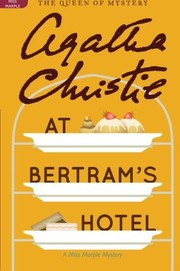
At Bertram's Hotel
2,550-word summary 11 min read 272 pages in the book
- First published
- 1965
- Publisher
- Collins
- Pages
- 272
- ISBN
- 9780062073693
- Series
- Miss Marple (#11)
Reading options
What's inside (7 sections)
I booked this one in my head as a holiday read, which turned out to be exactly right, because it is a book about a holiday that curdles. A friend who loves old London hotels lent it to me after I complained that modern lobbies all look like phone shops. She said Christie built the perfect one and then showed the wires behind the panels. Agatha Christie first published it with Collins Crime Club on 15 November 1965, a 256 page first hardback, with the American edition following from Dodd, Mead in 1966. This post cites the 272 page HarperCollins paperback with ISBN 9780062073693. It is listed here as book 11 in the Miss Marple series, after A Caribbean Mystery and before Nemesis, though readers should know Miss Marple herself takes a back seat and Chief Inspector Fred Davy, called Father, carries the police story. If you have not read it, this retelling gives away the gang and the shooting, because the hotel secret is the point.
Jane Marple comes up from St Mary Mead for a fortnight in London, a gift arranged by her nephew Raymond West, and Bertram's Hotel receives her like a memory made solid. It sits in Pond Street, all polished wood and chintz and cake stands, with porters who remember how things were done and a dining room that serves the food people claim they ate in 1910. Mr Humfries manages it with smooth courtesy. Miss Gorringe rules the reception desk and misses nothing about arrivals. Rose Sheldon, the chambermaid, was once an actress and still moves like one. Tea comes at the right hour. Muffins come hot. The other guests look like they stepped out of an older England that somehow accepts cheques. Marple, who trusts her eyes more than any brochure, settles in with her knitting and her friend Lady Selina Hazy, and begins to notice that the perfection is a fraction too exact. The staff are too helpful. The familiar faces are a shade too familiar. It feels, she thinks, like a stage where everyone knows the play except the audience.
The guest list matters, so take it slowly. Elvira Blake is young, beautiful, just back from finishing school in Italy, traveling with a chaperone called Mrs Carpenter and watched from a distance by her guardian Colonel Derek Luscombe. She is an heiress on a large scale, with three trustees guarding the money, and she has the restless manners of a girl who has been told no all her life and is done listening. Bess Sedgwick is about forty, famous, scarred, glamorous in the way of women who have flown planes and raced cars and married badly more than once. She barely knows Elvira, though she is Elvira mother, having left the child at two years old out of a belief, sincere or convenient, that she herself is dangerous to be near and the girl is safer apart. Ladislaus Malinowski is a racing driver in his thirties, Bess occasional lover, and Elvira has fallen hard for him in the helpless way of nineteen. Canon Pennyfather, a scholarly clergyman with his head full of old manuscripts and conference papers, drifts through the lounge arguing gently about trains and dates. Miss Marple watches Elvira watch Malinowski, and Bess watch them both, and thinks village thoughts about mothers and daughters that London has not changed.
Money, mothers, and a trip to Ireland
Elvira has a plan, and Christie writes the young with unusual care here. With her school friend Bridget, a girl unknown to Luscombe and the trustees, Elvira works out how to get cash for a flight to Ireland. The reason for Ireland stays cloudy for a long while, which is deliberate. What is clear is that Elvira feels watched and measured, a fortune with a girl attached, and she wants movement of her own choosing. She goes to see Richard Egerton, the lawyer who is one of her three trustees, and asks blunt questions. How much is the money. What are the conditions. Who takes it if she dies. Egerton answers with professional caution, and Elvira hears what she needs between the lines. The fortune is real. The conditions bite. If her birth carries a flaw, the money could slip away. That visit sits in my memory because Christie lets Elvira be both naive and shrewd in the same sentence, a girl playing at intrigue who understands stakes better than the men around her admit.
Bess brings the past into the lobby without meaning to. She recognizes the commissionaire at the door, Michael Gorman, called Micky, an Irishman with a soldier bearing. They share Ballygowlan in their history, a place neither has buried. Their talk is short and guarded, but Miss Marple and Elvira both overhear fragments. Gorman now opens doors and touches his cap. Bess orders champagne and laughs too loud. Elvira listens with particular stillness. Anything about her mother history holds her. Christie does not underline the moment, which makes it stranger.
There are smaller figures who keep the hotel breathing. Mr Bollard owns a Bond Street jewellery shop and drifts in with gossip about stones and settings. Henry, the maitre d hotel, glides between tables and seems to know every guest preference before it is spoken. Lady Selina provides Marple with cover and commentary, the perfect old friend for comparing notes about who looks like whom. Colonel Luscombe brought Elvira to Bertram without knowing Bess would also be there, and his discomfort shows in small stiff courtesies. He is a decent man out of his depth, guarding a girl who no longer wants guarding, in a hotel that keeps smiling at him. I liked Luscombe more on reflection than during reading. He is the only adult near Elvira trying to do the plain right thing, and the book barely thanks him for it.
The canon who caught the wrong day
Canon Pennyfather supplies the hinge the whole plot swings on, and he does it by being gloriously absent minded. He is meant to fly to Lucerne for a scholarly conference. He prepares, muddles his dates, sets out on the wrong day, and finds when he reaches the airport that there is no conference party and no plane in the sense he expected. Fog thickens the whole business. Instead of admitting defeat cleanly he wanders, doubles back, and returns to Bertram late at night to find strangers in his bedroom. There is a struggle, half seen. Then he drops out of the story for a stretch, which in a Marple book feels wrong in a pointed way. The elderly clergyman has walked into something larger than missed connections.
Hours after that disturbed night, the Irish Mail train is robbed in a daring snatch, and witnesses report an extraordinary thing. They saw Canon Pennyfather on or near the train. Men describe his face, his collar, his bewildered manner. The police take the sightings seriously because there are too many to dismiss, yet the idea of a doddering canon helping to rob a mail train is absurd on its face. Inspector Campbell and Chief Inspector Davy come to Bertram to look at the other end of the thread. A string of big robberies has been troubling the Yard, all clean, all bold, all oddly well informed. Davy, a heavy deliberate man with a tired smile, begins to suspect the hotel itself may be the common factor. Not the guests. The building. The staff. The way people can arrive and leave and be vouched for.
Davy meets Miss Marple, and their scenes together are the quiet heart of the book. She tells him she saw Canon Pennyfather at Bertram after he had supposedly left for Lucerne, sitting where he should not have been, looking like himself and yet not himself. She cannot yet say what was off. Davy does not laugh. He has learned that old ladies who knit in lobbies see more than constables at doors. Meanwhile the Canon is found alive, taken in and nursed by Good Samaritans after being discovered unconscious, with no memory of anything after setting out for his plane. Doctors speak of concussion and shock. Davy speaks of timing. A man who remembers nothing is either lucky or useful to someone, and Davy wants to know which.
Tea, doubles, and fast cars
What Marple saw was a double, and the book takes its time letting that land. A younger man made up to resemble Pennyfather closely enough to pass at a glance in a hotel corridor or a railway carriage sat in the Canon chair, walked his walk, and borrowed his collar. The real Canon, returning unexpectedly to his own room, surprised the intruders and saw something no man expects. He saw himself sitting there. The shock of that image, on top of a blow to the head, buried itself until Marple description of the false Pennyfather dragged it back up. The gang had counted on the Canon being in Lucerne. They had a stand in ready to be seen in useful places while the train job went down, so witnesses would tie themselves in knots. Pennyfather muddled dates spoiled the schedule, and from that small human error the whole machine starts to show.
Davy builds the rest with Marple help and a great deal of legwork that Christie mostly keeps offstage. Bertram's is the base of a large and well run gang that stages major thefts while wearing the faces of respectable guests. Doubles check in, or are glimpsed, as distinguished visitors. Cars wait where fast cars need to wait, with Malinowski available when speed matters. The staff cooperate, some from fear and some from profit. Henry watches and signals. Rose Sheldon knowledge of acting and faces proves handy in a house of impersonation. Behind the front, real money moves through real owners. Wilhelm and Robert Hoffman, the wealthy Swiss brothers who own Bertram, handle the financial side, washing the proceeds through respectable channels. Mr Robinson, the financier who turns up with dry good humor, touches the money world at the edges. Even the tea and muffins belong to the scheme. A hotel that feels perfectly safe is the best possible place to be unsafe, because nobody questions the bill.
I admired this idea more than its mechanics. The notion of nostalgia as camouflage is sharp. People want Bertram to be real, so they overlook the modern engines underneath. But the doubling plot asks for generous belief. Doubles must pass repeatedly, witnesses must be certain and wrong in exactly useful ways, and the gang must be both huge and silent. Reviewers in 1965 called the ending far fetched, and I see why, even as I kept turning pages. The hotel atmosphere does so much work that you forgive the strain.
The shot in the doorway
On Marple last day the circling violence lands in the open. Gorman is shot dead with Malinowski pistol, and Elvira says he died shielding her from an unknown gunman. Someone aimed at her. Gorman stepped in. Half the hotel believes it on the spot. Davy does not arrest on the spot, which tells you what he thinks of simple stories. He separates people and asks the same questions twice. Elvira holds her line.
The arrests, when they come, fall on Bess as the director of the robberies alongside Henry and Malinowski, with the Hoffman money behind them. Bess history with Gorman supplies the personal knot. The two were married long ago, and that marriage was never properly undone, which means Bess later marriages were void in law. For most of the book that reads like sad gossip. Then it turns into motive and inheritance arithmetic. If Elvira is the child of a union that was never lawful, or if Gorman can talk about who married whom and when, Elvira claim to her father money could be attacked. Elvira has already asked Egerton who inherits if she dies. Now the questions reverse. Who inherits if she lives but her birth is tainted. Gorman knew Ballygowlan. Gorman knew Bess. Gorman could talk, and talk in this book is priced in thousands.
Bess confesses to Davy, to the robberies and to shooting Gorman, and then she does the Bess thing to the end. She takes a fast car and drives it hard and dies in the crash, whether by choice or speed nobody can cleanly separate. It is a loud exit for a loud life, and Christie lets it feel both stage managed and sincere. Marple does not buy the confession, and her doubt is the coldest passage in the book. She believes Bess is covering for Elvira, taking a murder onto a name already heavy with scandal so her daughter can walk free. Elvira, convinced her inheritance and her pride would die with Gorman talk, shot him herself and let the shielding story stand. Davy hears Marple out, respects her, and makes clear he will not let a young murderess pass because her mother drove fast into a wall. The law will have the girl. Pity will not rewrite the shot.
That ending divides readers, and it divided me for a day. Bess gets the romantic death, the wheel in her hands, the past burning behind her. Elvira gets the chillier fate, exposure and reckoning, though Christie softens it with hints about youth and Malinowski glamour and a mother who never mothered. Some will feel the book punishes the girl to spare the gang story its loose ends. I read it as Christie refusing a cozy exit in a book dressed in cozy clothes. Bertram promises that nothing truly bad happens to nice people in nice rooms. Marple knows better. Nice rooms only hide the bad longer.
A late Christie to argue with
Fair criticism belongs here. Marple fans should know she is mostly an observer, present in a few chapters and passive in the investigation. Marketed as a Marple novel, it reads more like a Davy novel with Marple as visiting conscience. The coincidence load is heavy: Elvira, Bess, Gorman, and Malinowski all under one roof, the Canon muddle arriving exactly when doubles are needed. Brigid Brophy complained readers get too few signposts to solve ahead of the police, and the gang reveal leans on held back information. The pace sags in the middle while Pennyfather is missing.
Set against that, the hotel itself is beautifully done, one of Christie best single settings, and Elvira is one of her best observed late young people, vain and frightened and calculating by turns, never a mere type. The reflections on age, on how the elderly look to the young and how the young misread stillness for approval, cut deeper than the robbery plot. The writing has the late Christie looseness, talky in spots, but also a sharp eye for money talk, for trustees and guardians and girls asking lawyers what their lives are worth. I would press it on readers who like atmosphere and character over fair play puzzles, and warn strict locked room fans that this is a sprawling London web, not a neat village knot. Read it for Bertram first, for Elvira second, for the gang third. Marple, knitting through it all, sees what nostalgia hides, and leaves you checking the faces in your own hotel corridor.
FAQ
When was At Bertram's Hotel published?
It was first published on 15 November 1965 by Collins Crime Club in a 256-page first edition. This post cites the 272-page HarperCollins paperback with ISBN 9780062073693.
Is At Bertram's Hotel part of a series?
Yes, it is listed here as book 11 in the Miss Marple series, after A Caribbean Mystery and before Nemesis. Chief Inspector Davy carries most of the police work.
Is Bertram's Hotel really just a hotel?
No. In the story it fronts a gang that impersonates guests to commit robberies, with doubles, fast cars, and staff help moving money through the owners.
Similar books
More from Miss Marple first, then related titles.
The Murder at the Vicarage
Vicar Leonard Clement narrates the shooting of Colonel Protheroe while Miss Marple watches St Mary Mead.
2,926-word summary · 13 min read
The Body in the Library
A strange girl found dead in a library pulls Miss Marple into lies about dance halls and film.
2,017-word summary · 9 min read

One, Two, Buckle My Shoe
Poirot links a dentist murder to a missing banker and stolen millions.
2,549-word summary · 11 min read
A Fatal Grace
Gamache returns to Three Pines for Christmas where hated CC de Poitiers is electrocuted on a frozen lake.
2,339-word summary · 10 min read
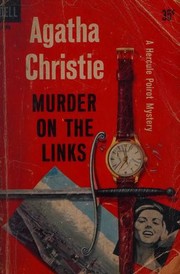
The Murder on the Links
Poirot arrives in France too late to save his client, who is found stabbed in a grave and was not the man he claimed to be. Christie's second Poirot novel.
2,055-word summary · 9 min read

The Man in the Brown Suit
Anne Beddingfeld sees a Tube death in London and chases a paper clue to South Africa, diamonds, and the hidden Colonel.
2,292-word summary · 10 min read
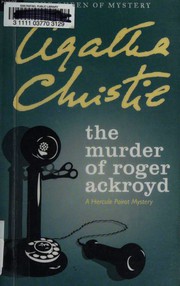
The Murder of Roger Ackroyd
Retired Poirot probes a locked study murder in King's Abbot, told by the village doctor.
3,582-word summary · 16 min read
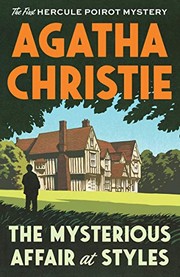
The Mysterious Affair at Styles
Hastings reunites with refugee Poirot at Styles Court after Emily Inglethorp is poisoned in her locked room.
2,856-word summary · 13 min read
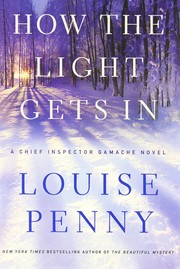
How the Light Gets In
Gamache investigates the murder of the last Ouellet quintuplet while the Sûreté he served is dismantled from inside by the man who took his protégé.
2,279-word summary · 10 min read

Bury Your Dead
Recovering from a failed raid that killed his officers, Gamache investigates a murder in a Quebec City library while Beauvoir reopens a case in Three Pines.
2,022-word summary · 9 min read

The Trespasser
A Dublin Murder Squad detective investigates a staged dinner-party killing and finds a cover-up that reaches into her own department.
2,051-word summary · 9 min read

Rules of Prey
Minneapolis detective Lucas Davenport hunts a killer who leaves a new rule at every scene and treats murder as a game of wits.
1,914-word summary · 9 min read

The Late Show
Exiled to the LAPD night shift after accusing her supervisor, Renée Ballard keeps two cases that were meant to be handed off at dawn: a brutal assault and a…
2,563-word summary · 11 min read

Finger Lickin' Fifteen
Lula sees a celebrity chef decapitated and talks Stephanie into entering a barbecue contest to lure the killers, while Ranger hires her to find a security leak…
2,248-word summary · 10 min read

Fearless Fourteen
Bounty hunter Stephanie Plum babysits a teenager, guards a fading singer, and hunts nine stolen million dollars under her boyfriend's basement.
2,466-word summary · 11 min read

3rd Degree
The third Women's Murder Club novel follows a San Francisco terror cell and a three-day killing schedule, and it costs the club a member.
2,685-word summary · 12 min read

Lean Mean Thirteen
Stephanie Plum's ex-husband disappears after she attacks him, leaving her suspected of murder and chasing a forty-million-dollar secret through Trenton.
2,100-word summary · 9 min read
A Rule Against Murder
Gamache's anniversary at a remote lodge turns into a closed-circle murder when the family statue kills Julia, and everyone at the Manoir had a reason.
2,201-word summary · 10 min read
The Memoirs of Sherlock Holmes
Doyle's second Holmes collection gathers twelve Strand stories, including the early case of the Gloria Scott and the confrontation with Moriarty at Reichenbach…
2,390-word summary · 11 min read

The Redbreast
Harry Hole chases an ageing sniper through modern Oslo while two Norwegian volunteers on the Eastern Front carry a fifty-year-old betrayal toward a royal…
2,453-word summary · 11 min read

Broken Harbor
A family is found slaughtered in a half-built Dublin estate where no one broke in, and star detective Scorcher Kennedy must explain the holes in the walls.
2,308-word summary · 10 min read
The Maltese Falcon
Sam Spade hunts a jeweled bird through lies after his partner is killed.
2,529-word summary · 11 min read
The Cruelest Month
Gamache returns to Three Pines where a seance ends in murder.
2,529-word summary · 11 min read
Cruel & Unusual
Scarpetta links an execution to a boy's murder while someone steals bodies.
2,533-word summary · 11 min read
Case Histories
A Cambridge PI takes three cold cases that tangle with his own loss.
2,465-word summary · 11 min read

Maisie Dobbs
A maid turned war nurse opens a London inquiry agency in 1929 and traces a quiet case to a refuge for shattered soldiers.
2,382-word summary · 11 min read

2nd Chance
Lindsay Boxer and the Women's Murder Club hunt the Chimera killer after a church shooting in San Francisco.
2,572-word summary · 11 min read

To the Nines
Janet Evanovich's ninth Stephanie Plum case retold: a missing skip, threats in Trenton, and a rescue run to Las Vegas.
2,839-word summary · 13 min read
The Bat
Oslo detective Harry Hole aids Sydney police after a young Norwegian woman is murdered and finds a wider pattern. Grief, drink, and a lost partner shape the…
2,766-word summary · 12 min read
Troubled Blood
Strike and Robin take a year long cold case: doctor Margot Bamborough vanished in 1974, with a nurse hiding more.
2,211-word summary · 10 min read