
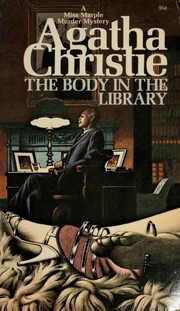
The Body in the Library
2,017-word summary 9 min read 224 pages in the book
- First published
- 1942
- Publisher
- William Morrow Paperbacks
- Pages
- 224
- ISBN
- 9780063214019
- Series
- Miss Marple (#2)
Reading options
What's inside (8 sections)
I came to this Miss Marple case after the darker Poirot books and found it lighter on the surface and sharp underneath. A body in a genteel library, a village full of talk, and an old lady who listens better than police. First published in 1942, in the US by Dodd, Mead and Company in February and in the UK by Collins Crime Club in May, it is second in Miss Marple after The Murder at the Vicarage. The William Morrow paperback runs 224 pages and reads fast despite wartime shadows.
The Bantrys wake to horror. Colonel Arthur Bantry and his wife Dolly find a young blonde girl dead in their library, dressed in cheap finery with dyed hair and heavy makeup. They do not know her. Police come with questions that sound like accusations. Dolly, quick and loyal, calls her old friend Jane Marple in St. Mary Mead. Miss Marple arrives with knitting and calm, which annoys young officers and steadies frightened households.
The girl is later named as Ruby Keene, a dance hostess at a nearby hotel. A second girl, a schoolgirl guide, goes missing the same night. Film people, dancers, and squires mix in ways that village gossip cannot sort. Miss Marple sorts by watching who performs grief and who hides it.
The Bantrys and the shock
The opening does its work well. A respectable couple, a room meant for books, and a body that does not belong. Arthur blusters about scandal. Dolly moves from shock to action fast, which I like. She does not faint for chapters. She phones, makes tea too strong, and tells the truth about what she does not know. That honesty helps police even when it feeds talk.
St. Mary Mead reacts as villages do. Phones ring, maids carry tales, and shopkeepers connect dots that are not dots. The Bantrys face pity and suspicion at once. Friends visit with food and questions. Strangers slow cars outside the gate. Arthur wants to shout. Dolly wants to clean the library and cannot. Those small domestic blocks feel true. Horror lives in chores stopped mid way.
Miss Marple enters without fuss. She notices the girl's bitten nails, cheap dress, and dyed roots, and thinks of other girls who wanted shine. She asks about dance halls, wages, and who pays for teeth. Young men smile at the knitting. Older women recognize the questions as work. Christie lets her be underestimated, which is the engine of the series.
Police procedure gets respect here. Inspector Slack is brisk, not stupid. He checks trains, hotels, and times. He dislikes interference but uses good tips. Miss Marple does not solve by magic. She offers village parallels that point to motive. A girl who borrows finery. A man who pays for silence. A wife who smiles too hard. Each parallel nudges files, not replaces them.
The wartime setting sits light but present. Petrol limits travel. Hotels host mixed crowds. Young women work for cash in new ways. Blackouts shape alibis. Christie does not lecture about war. She lets shortages explain why people walk, share rooms, and notice strangers. That texture dates the book in a good way, like a photo with edges curled.
Ruby Keene and the hotel world
Ruby Keene, the dead girl, worked as a dance hostess at the Majestic Hotel in Danemouth. She was eighteen, pretty in a tired way, and eager to be kept by someone rich. She danced with old men for tickets, smiled for photos, and told stories about film tests that were mostly air. People used her and she used them back as best she could.
The hotel staff remember her in pieces. A chambermaid recalls borrowed lipstick. A waiter recalls a late night argument. The manager recalls bills paid in cash by a man who did not give names. Each memory is small and self serving. Together they draw a girl hustling for a better life with few tools beyond looks and nerve. Christie gives her sympathy without making her a saint, which feels honest.
Basil Blake, a young film man with a loud house and fast car, becomes a focus. He lives near the Bantrys with a partner he calls his wife when it suits. He is rude to police, which reads as guilt to some and as youth to Miss Marple. His parties mix film folk and locals in ways that breed rumor. He knows Ruby slightly, which in a village means he knows her entirely according to talk.
Josie, Ruby's cousin and fellow hostess, adds grief and calculation. She identifies the body, cries in bursts, and asks about wages owed. She helps police while protecting her own plans. Miss Marple watches Josie kindly and closely. Cousins know things sisters hide. That bond, frayed by work rivalry, holds a clue about who Ruby met last.
The film angle lets Christie poke at glamour. Producers promise tests. Young men promise introductions. Girls pay with time and hope. None of this is new now, but in 1942 it carried a charge. The book treats show business as a machine that eats village girls who dream of light. That moral sits under the puzzle without preaching.
The missing schoolgirl
A second disappearance sharpens fear. Pamela Reeves, a schoolgirl guide, vanishes after a midnight outing tied to a prank. Her scouts, her parents, and her school spin stories that do not fit. Searchers find her burned body in a car, which shifts the case from sordid to cruel. Two dead girls in one night cannot be chance.
Miss Marple connects the cases by age and use rather than by place. Both girls were dressed to seem older. Both were moved after death. Both were seen with people who claim foggy memories. The killer relied on darkness and on adults dismissing teen talk. Guides who giggled about cars become witnesses who must be heard precisely. Miss Marple hears them.
Pamela's family grief is written with restraint. A mother who irons a uniform that will not be worn. A father who walks lanes calling a name. Friends who argue about who suggested the outing. Christie avoids melodrama here, which makes it hit harder. War already steals children. Murder at home feels obscene against that backdrop.
School and guide leaders close ranks, which hinders and helps. They protect reputations while handing over lists. Times, bus routes, and torch batteries matter more than motives for pages. That procedural stretch may test readers who want drawing room talks. Stick with it. Timetables are the trap the killer set, and timetables will spring it.
The two bodies force police to rethink Ruby. If the same hands moved both, then the library was stage, not scene. Why choose the Bantrys. To shock, to delay, or to point. Each theory favors different suspects. Miss Marple favors the one that explains kindness as well as cruelty, because killers in villages often feed cats while starving girls.
Miss Marple at work
Jane Marple solves by analogy to village life, a method some mock and I enjoy. She recalls a girl who dyed hair to look older for work, a man who paid for dances to feel important, a wife who cleaned too much before police arrived. Each memory is not proof. It is a lens. Look through it at hotel facts and patterns show.
She walks, knits, and asks small questions that sound like gossip. Who did Ruby's nails. Who lent the dress. Who drove which car when petrol is short. Who telephoned the hotel at what hour. People answer because she seems harmless. They correct themselves because she remembers. Those corrections are the case.
Her talks with Dolly anchor the book. Dolly is warm, quick, and scared for her husband's name. Miss Marple calms without lying. She says scandal passes and truth matters more than shine. She also tells Dolly to stop tidying the library, which is both practical and funny. Friendship here feels lived, not plotted for clues.
With police she is careful. She offers ideas as questions. Might it help to ask the film driver about tires. Could the dress have been borrowed. She never claims rank. Slack takes what works and ignores the rest. That mutual use, without love, reads as professional. Christie respects work even when workers clash.
A late interview scene shows her steel. She faces a suspect with tea and plain talk about girls who lie for money and men who lie for pride. No threats, just attention that does not blink. The suspect fills silence with extra detail that breaks alibi. It is a masterclass in soft pressure that modern procedurals still use.
Solution and sense
I will not name the killer, but the solution reuses early details about clothes, teeth, and cars that careful readers can catch. The library was chosen for effect and for time. Bodies were dressed to mislead about age and trade. A wartime world of lifts, blackouts, and borrowed petrol made movement easier than it should have been. Motive mixes money, vanity, and fear of exposure rather than grand evil.
The reveal lands in talk rather than chase, which suits Marple. People gather, facts line up, and a small inconsistency about a nail or a shoe undoes months of planning. Christie plays fair. The clue about bitten nails sits in chapter one. The car timing sits in plain lists. Rereading those pages after knowing feels like being winked at.
Justice feels tidy, perhaps too tidy after two deaths. The Bantrys are cleared with apologies that do not quite pay for sleepless nights. Hotel folk return to business. Village talk finds new topics. Miss Marple goes home to garden. That return to order comforts some and chills others. Two girls are still dead while life resumes. Christie knows it and lets quiet sit after arrests.
Modern readers will note dated language about hostesses, blondes, and fast girls. The book judges women for seeking money through charm while judging men less for buying it. Miss Marple herself is kinder than the narration at times, seeing need where others see shame. Read with that lens. The puzzle holds even when morals creak.
As second in Miss Marple after The Murder at the Vicarage, with that first on this site under Agatha Christie, this entry is lighter and more social. At 224 pages in paperback it moves quick for Christie, with hotel sparkle balancing village shade. If you want Poirot intensity, choose Orient Express here instead. If you want tea, talk, and two timelines that meet in a library, stay with Dolly and Jane until the last light goes out.
Village talk and wartime limits
One thread that rewards a second look is how gossip works as both clue and fog. St. Mary Mead trades news fast because phones are shared and maids overlap houses. A dress seen on a bus becomes a fact by tea. Miss Marple knows to discount half of what she hears while keeping the half that repeats with small changes. Those changes point to truth.
Wartime limits shape who could move bodies at night. Petrol rationing means cars need coupons or favors. Blackouts mean torches and curfews. A lift offered after dark matters more than in peacetime. When police list who drove where, those lists hold because few could joyride. Readers today may miss how tight travel was. Keep that frame and timetables click.
Dolly and Arthur show marriage under scandal with warmth. Arthur blusters to hide fear. Dolly acts to hide shaking. They bicker about lawyers and then share tea in silence. Those beats make them more than a stage. You want them cleared not just for plot but for kindness. Christie gives decent people a hard week and lets them keep decency.
If you enjoy this village web, follow with The Murder at the Vicarage for more Marple method and with later Marple books where hotels and theaters return. The pattern of kind old lady against bright young lies holds across decades because flattery changes little. Listen for bitten nails and borrowed dresses. They tell more than alibis.
FAQ
When was The Body in the Library published?
Dodd, Mead and Company published The Body in the Library in 1942 in the US, Collins Crime Club in May in the UK. The Morrow paperback runs 224 pages and is second in Miss Marple.
Is it part of a series?
Yes. It follows The Murder at the Vicarage. Miss Marple helps the Bantrys when a body appears in their library.
Similar books
More from Miss Marple first, then related titles.
The Murder at the Vicarage
Vicar Leonard Clement narrates the shooting of Colonel Protheroe while Miss Marple watches St Mary Mead.
2,926-word summary · 13 min read
At Bertram's Hotel
Miss Marple finds a luxury hotel fronting robbery and murder.
2,550-word summary · 11 min read
The Murder on the Links
Poirot arrives in France too late to save his client, who is found stabbed in a grave and was not the man he claimed to be. Christie's second Poirot novel.
2,055-word summary · 9 min read
The Murder of Roger Ackroyd
Retired Poirot probes a locked study murder in King's Abbot, told by the village doctor.
3,582-word summary · 16 min read
The Mysterious Affair at Styles
Hastings reunites with refugee Poirot at Styles Court after Emily Inglethorp is poisoned in her locked room.
2,856-word summary · 13 min read

3rd Degree
The third Women's Murder Club novel follows a San Francisco terror cell and a three-day killing schedule, and it costs the club a member.
2,685-word summary · 12 min read
The Memoirs of Sherlock Holmes
Doyle's second Holmes collection gathers twelve Strand stories, including the early case of the Gloria Scott and the confrontation with Moriarty at Reichenbach…
2,390-word summary · 11 min read
The Maltese Falcon
Sam Spade hunts a jeweled bird through lies after his partner is killed.
2,529-word summary · 11 min read
The Sign of Four
Mary Morstan's pearls lead Holmes and Watson from foggy London to Agra treasure and a Thames chase.
2,114-word summary · 9 min read
The Adventures of Sherlock Holmes
Twelve Strand cases from Irene Adler to the Copper Beeches, with Holmes at his sharpest and strangest.
3,579-word summary · 16 min read
The Hound of the Baskervilles
Holmes Watson probe spectral hound killing Baskervilles on Dartmoor.
2,596-word summary · 12 min read
A Study in Scarlet
Watson meets Holmes in Baker Street, a Brixton body bears the word Rache, and a Utah revenge tale explains it.
2,208-word summary · 10 min read

One, Two, Buckle My Shoe
Poirot links a dentist murder to a missing banker and stolen millions.
2,549-word summary · 11 min read
The Man in the Brown Suit
Anne Beddingfeld sees a Tube death in London and chases a paper clue to South Africa, diamonds, and the hidden Colonel.
2,292-word summary · 10 min read
The ABC Murders
Poirot and Hastings chase a killer who leaves an ABC railway guide near victims in Andover, Bexhill, and Churston. A salesman looks guilty, but publicity hides…
3,302-word summary · 15 min read
Death on the Nile
Poirot takes a Nile cruise where a young heiress is shot dead in her cabin.
4,077-word summary · 18 min read
Murder on the Orient Express
Poirot is trapped by snow with thirteen strangers after an American is found stabbed in his berth.
2,004-word summary · 9 min read
And Then There Were None
And Then There Were None retold: ten to Soldier Island, rhyme deaths, no one left to tell.
2,137-word summary · 9 min read
How the Light Gets In
Gamache investigates the murder of the last Ouellet quintuplet while the Sûreté he served is dismantled from inside by the man who took his protégé.
2,279-word summary · 10 min read

Bury Your Dead
Recovering from a failed raid that killed his officers, Gamache investigates a murder in a Quebec City library while Beauvoir reopens a case in Three Pines.
2,022-word summary · 9 min read

The Trespasser
A Dublin Murder Squad detective investigates a staged dinner-party killing and finds a cover-up that reaches into her own department.
2,051-word summary · 9 min read

Rules of Prey
Minneapolis detective Lucas Davenport hunts a killer who leaves a new rule at every scene and treats murder as a game of wits.
1,914-word summary · 9 min read
The Late Show
Exiled to the LAPD night shift after accusing her supervisor, Renée Ballard keeps two cases that were meant to be handed off at dawn: a brutal assault and a…
2,563-word summary · 11 min read
Finger Lickin' Fifteen
Lula sees a celebrity chef decapitated and talks Stephanie into entering a barbecue contest to lure the killers, while Ranger hires her to find a security leak…
2,248-word summary · 10 min read
The Moonstone
A cursed yellow diamond vanishes on the night of a birthday party, and eight witnesses tell what they saw.
2,603-word summary · 12 min read
Fearless Fourteen
Bounty hunter Stephanie Plum babysits a teenager, guards a fading singer, and hunts nine stolen million dollars under her boyfriend's basement.
2,466-word summary · 11 min read
Lean Mean Thirteen
Stephanie Plum's ex-husband disappears after she attacks him, leaving her suspected of murder and chasing a forty-million-dollar secret through Trenton.
2,100-word summary · 9 min read
The Talented Mr. Ripley
A small-time con man is sent to bring a rich man's son home from Italy and decides to become him instead. Highsmith's amoral classic of the first antihero.
2,074-word summary · 9 min read
The Redbreast
Harry Hole chases an ageing sniper through modern Oslo while two Norwegian volunteers on the Eastern Front carry a fifty-year-old betrayal toward a royal…
2,453-word summary · 11 min read

The Caves of Steel
Detective Elijah Baley must solve a Spacer's murder in a domed New York, partnered with R. Daneel Olivaw, a humaniform robot built in the victim's image.
2,445-word summary · 11 min read