
Reading options
What's inside (8 sections)
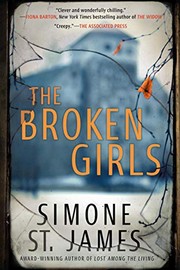
I picked up The Broken Girls because The Sun Down Motel had worked so well for me. Dual timelines, a cold case, a ghost that behaves like a witness. That formula can get tired fast. Here it does not, mostly because the 1950 timeline is so strong that it carries the 2014 one whenever Fiona starts going in circles.
The setup is simple and grim. Idlewild Hall is a boarding school near Barrons, Vermont, for girls nobody else wants to deal with. About 120 students at a time. The school closes in 1979 and sits rotting for decades. In 2014, a wealthy widow buys the ruin and announces she will restore it. That decision drags everything back up, including a murder from 1950 and another from 1994.
Vermont, 1950: four girls in room 3C
Room 3C holds four fifteen year olds who have almost nothing in common except that no one fought very hard to keep them home.
Katie Winthrop is the leader by force of personality. Pretty, sharp, angry in a way that reads as confidence. She was sent away after an assault by a neighborhood boy, handled badly by the adults around her.
Roberta Greene is the athlete, practical and loyal. She stopped speaking for months as a child after seeing her uncle, a war veteran, put a pistol in his mouth.
CeCe Frank is the illegitimate daughter of a rich banker. Her mother once tried to drown her as a small child. CeCe knows exactly what she costs her father, and she carries that without much self pity, which I liked about her.
Sonia Gallipeau is the quiet one, a French immigrant who survived Ravensbruck as a child after her mother was killed there. Her father died at Dachau in 1943. She came to America alone in 1947 and ended up at Idlewild because her relatives did not really want her. She draws constantly and startles at blood and sudden violence.
The four of them bond fast and total. They share food, cover for each other after lights out, trade stories about home. Katie bosses people around but also stands between her friends and trouble. Roberta pretends to be tougher than she is. CeCe jokes to cover nerves. Sonia says little but notices everything.
What makes Idlewild worse than ordinary loneliness is Mary Hand.
Mary is the school legend. Years before, back when the property was a farm, a girl named Mary got pregnant at sixteen, lost the baby, and was shut out of the house on a freezing night. She died in the cold near the old church ruins. Her body and the infant were buried where the school garden later went in. Students say she walks the grounds in a long dark dress with a veil over her face, calling girls to follow her outside. If you follow, you die.
Each girl sees something different when Mary comes. That is the frightening part. Mary shows you what you already fear most. The haunting scenes in the dorm and on the path to the sports field are the best written passages in the book. I read most of them with the bedroom light on.
One night in November 1950, Sonia leaves campus with her suitcase and never comes back. The headmistress decides she ran away. The other three girls do not believe it. They know Sonia would never leave her drawing notebooks behind. But they are fifteen, female, and disposable in the eyes of the school. Nobody listens.
Barrons, 2014: Fiona and the sister she cannot bury
Fiona Sheridan is thirty seven, a freelance journalist living near Barrons. Twenty years earlier, in 1994, her older sister Deb was found dead in the overgrown field by Idlewild. Deb's boyfriend, Tim Christopher, from a rich local family, was tried and convicted. Case closed, at least on paper.
Fiona has never accepted it. She parks on Old Barrons Road on Deb's birthday at three in the morning. She writes puff pieces for a local magazine to pay rent while avoiding the kind of serious reporting her father is famous for.
Her father is Malcolm Sheridan, a well known journalist now in his seventies. He was absent a lot when they were young, working big stories, and Fiona grew up half proud of him and half determined not to compete with him. I liked him more than I expected to.
Fiona's boyfriend is Jamie Creel, a Barrons police officer. His father Garrett and his grandfather both served as police chief. Jamie is decent, conflicted, trying to be a good cop in a department shaped by his father. Fiona is half in love with him and half afraid that loving him means accepting the official story about Deb.
When Fiona hears that Idlewild has been bought by a widow named Margaret Eden, through her son Anthony Eden who manages the project, she pitches a feature about the restoration. It is a smart excuse. It gets her onto the property with a notebook. It also puts her in contact with Anthony, who is polite and careful in a way that suggests he knows more than he says.
The restoration plot moves fast from there. A construction crew opens the old well and finds human remains. A teenage girl with a smashed skull. A name tag with Sonia Gallipeau's name. After sixty four years, the runaway story collapses in a day.
Jamie Creel and everything his father touched
Jamie starts as the supportive boyfriend who happens to be a cop. He helps Fiona get records. He warns her when she pushes too hard. Then she finds things he cannot explain away, and the relationship strains in a way that felt true to me. Admitting Garrett buried evidence means admitting his own career sits on rotten boards.
Garrett Creel ran the Deb investigation. Fiona learns the case was narrower than it should have been. A witness statement that gave Tim an alibi never surfaced properly at trial. Another assault tied to Tim, the beating of a girl named Helen Heyer in 1993 that left her unable to speak, was looked at once by police and then dropped.
Jamie's arc is him pulling those files himself, seeing the gaps, and understanding that his father protected the Christophers because powerful local families protect each other. Tim Christopher was a golden boy with money. Deb was not. It is an old story. St. James tells it without speeches, mostly through Jamie reading reports at his kitchen table and going quiet.
My criticism here is that Jamie and Fiona's romance follows familiar beats. Fight, breakup scare, reconciliation during danger. It is fine, but after the strangeness of Mary Hand, the love story feels ordinary. I skimmed a couple of their longer talks.
Still, the payoff works. When Jamie decides to cooperate against his own father, knowing it probably ends his policing career, it lands because St. James took the time to show what that career meant to him. It was not just a job. It was his name.
Margot, Sonia's notebook, and the teacher who kept everything
The middle of the book belongs to paperwork, and I mean that as praise. Fiona tracks down the past the way a real freelancer would, with phone calls and favors and long drives.
Sarah London taught at Idlewild for twenty nine years and never believed Sonia ran away. When the school closed, Sarah rescued boxes of student records that would otherwise have been thrown out. Those boxes give Fiona the headmistress's notes, the missing suitcase memo, and enrollment lists.
Fiona and Jamie haul the files out and go through them. The property history shows the Hand farm stood there before the school. A British historian named Ginette Harrison, who researches Ravensbruck, helps Fiona understand why Sonia was such an easy target. No parents, distant relatives, a school that wanted problems to leave quietly.
Then there is the notebook.
In 1950, after Sonia vanishes, Katie, Roberta, and CeCe steal Sonia's suitcase back from the headmistress's office. Inside are her drawings. Portraits, camp scenes, guards. The girls understand at once that Sonia would never have walked away and left those behind. That decision matters decades later. Evidence kept by teenage girls when the system fails them becomes the thread Fiona pulls.
Fiona's best scenes in this stretch are with Roberta, now an old woman and a retired lawyer living in New Hampshire. Roberta confirms what the reader suspects. They always knew Sonia was killed. I found Roberta's interview the emotional high point of the modern chapters. It made me wish St. James had given CeCe and older Katie equally long scenes earlier instead of saving so much for the end.
One more thread deserves mention. Sonia's relatives lived near a travel agency where a woman named Rose Albert worked. Rose had been tried in Burlington in 1973 on suspicion of being Rosa Berlitz, a guard at Ravensbruck, and was acquitted. When Sonia left her relatives early and went to change a bus ticket, Rose may have seen a former prisoner who could identify her. That possibility sits in the files for decades until someone connects the drawing in Sonia's notebook to Rose's face.
This is a lot of names and paper. Sometimes the book throws a new witness at you every thirty pages and I had to flip back to remember who was who. A little patience helps. The chain holds together.
Ghosts that point instead of just scaring
St. James writes two kinds of ghosts here, and the distinction matters.
Mary Hand is the old ghost. She is cold, repetitive, tied to place. Girls across generations report the same figure in black with a covered face, the same voice asking them to come outside. Fiona researches her the way you would research a local accident, and finds the farm history underneath the legend. Mary suffered something specific. Pregnancy, a dead infant, rejection by her parents, death by cold. She does not rest because nothing was ever put right. Not her burial, not her child's, not the ground they lie in.
Sonia is the newer ghost, quieter. She does not perform. She leads. When Fiona is in danger late in the book and runs onto the Idlewild grounds, it is Sonia who guides her to room 3C, the room the four girls shared, as if that room is the only safe place Sonia knows.
CeCe has the key insight back in 1950, and it reframes the whole haunting. Sonia saw her killer's real face behind Mary's veil on the road, ran toward the school for help, and was caught. The ghost story was used as a mask. After that, whenever Mary appears to the living girls, she is not only replaying her own death. She is pointing at Sonia's. Colds, sounds, shapes in the trees. Evidence in the form of fear.
Do the ghost rules make complete sense? Not entirely. Sometimes Mary seems able to read minds across time. Sometimes she seems stuck repeating one night. If you need hard magic rules, you will be annoyed. I decided to treat the ghosts the way the book treats them, as grief with a shape, and that worked better for me.
What I appreciated is that the ghosts never solve the case by themselves. Fiona still has to do the reporting. She still has to find Sarah's boxes, visit Roberta, read the camp research, confront Garrett. The dead can point. The living have to act. That balance keeps the mystery honest.
How it ends and what it costs
The last hundred pages move quickly, almost too quickly after the slow file work.
Fiona confronts what Garrett did. Lionel Charters, who lived across from Idlewild, tells her what he saw the night Deb died. Garrett distracted witnesses at the old drive-in while Tim sat in a cruiser, then Garrett helped move Deb's body and pressured people into silence. Before Fiona can take this anywhere, Garrett forces her into his car and admits he covered for Tim because the Christophers were useful allies. He plans to kill her. She escapes from the moving car, he chases her on foot, he tries to strangle her, she breaks away and runs for Idlewild. Sonia's presence steadies her toward room 3C, where she collapses. Malcolm, alerted by Lionel, calls Jamie and sends officers to the school. Garrett fires at police and is arrested.
It is violent and direct after so much patience. I believed Fiona's panic. I was less sure about Garrett confessing so fully in the car. Men like him, careful for decades, rarely explain themselves at length while driving. But thrillers need the confrontation, and St. James at least gives Garrett a motive that fits. Power protected power.
Then comes the reveal I half guessed and still enjoyed. Margaret Eden, the widow restoring Idlewild, is Katie Winthrop. She married CeCe's half brother Joseph Eden, heir to money on her roommate's father's side, and used that wealth for decades with a single purpose. She sent Roberta to law school and CeCe to college. She paid for investigation into Sonia's death. In 1973, CeCe recognized Rose Albert's face from Sonia's notebook portrait of camp guards. The three women confronted Rose, who admitted killing Sonia to protect her hidden identity, then died of a heart attack during the meeting. Katie bought Idlewild not to reopen it but to find Sonia's body and then tear the place down.
That recontextualizes everything. The restoration story was a cover for a search. Anthony Eden, managing the project, knew parts of this but not all of it. The well discovery was what Katie had been waiting for without saying so.
The closing movement is quiet. Sonia gets a proper burial with her three friends standing by. Fiona and Malcolm publish what they found about Garrett, prompting a state investigation. Jamie cooperates and understands his career as a local cop is finished. A crew digs in the school garden and finds a coffin with Mary Hand and her infant. Fiona sees Mary at the tree line holding the child, and then Mary is gone when the coffin is opened.
I liked that St. James ends with the two burials, sixty years apart, instead of with a courtroom speech. It fits a book about girls who were not listened to. Being found, being named, being put to rest with witnesses present, is the repair the story can offer. It cannot give them back their lives.
If I have a complaint about the ending, it is pacing. The Rose Albert confession happens offstage in the past and gets summarized. After hundreds of pages building toward who killed Sonia, hearing it secondhand in a hospital room felt thin. Similarly, Tim Christopher stays mostly a name in files. Deb deserved a few more scenes alive, even in memory, so her loss would sting the way Sonia's does.
Still, the final pages settled me. The wind in the field, the blank winter sky, Fiona watching Mary vanish. No big moral stated. Just silence where noise used to be.
I closed the book thinking about room 3C more than about any twist. Four girls with nowhere else to go deciding to protect each other. One of them lost. Three of them spending the rest of their lives trying to make that loss count for something. The ghosts are frightening, the investigation is solid, the romance is serviceable, but the friendship is what stays.
FAQ
When was The Broken Girls published?
Berkley published it in 2018. The edition cited runs 352 pages with ISBN 9780451489388.
Does the book split between two timelines?
Yes. Fiona investigates in 2014 while Katie, Roberta, CeCe, and Sonia share room 3C at Idlewild Hall in 1950.
Is it scary or more of a mystery?
Readers who like haunted houses and cold cases will feel at home, though some ghost rules stay loose and the romance runs familiar.
Similar books
The Sun Down Motel
In 1982 Viv vanishes from a Fell motel desk; in 2017 niece Carly takes the same shift to find her.
2,150-word summary · 10 min read
Later
Boy Jamie Conklin sees dead people who must answer truthfully, pulling him into NYPD cases and a drug crew's greed.
2,009-word summary · 9 min read
The Book of Cold Cases
A true crime blogger interviews Beth Greer, acquitted in the 1977 Claire Lake murders, as fresh violence and ghost sightings pull the old cold case into the…
2,631-word summary · 12 min read
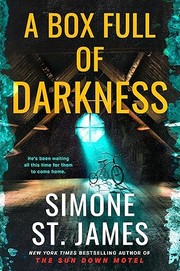
A Box Full of Darkness
After 18 years away, Violet, Vail and Dodie return to Fell when missing brother Ben calls them home to face Sister and old ghosts.
2,138-word summary · 10 min read

Night Film
A disgraced journalist investigates the death of a reclusive horror director's daughter, following a red coat through hospitals, secret clubs, and a family…
2,690-word summary · 12 min read
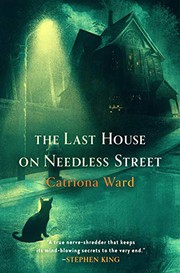
The Last House on Needless Street
A lonely man, a cat and a mysterious neighbor pull you into a house full of buried trauma.
2,627-word summary · 12 min read
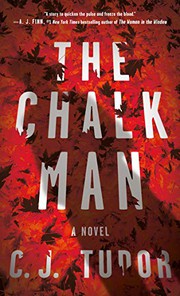
The Chalk Man
Childhood chalk codes lead to a murder that follows friends thirty years later.
2,350-word summary · 10 min read

Relic
A museum beast kills during an exhibition while an agent investigates.
2,066-word summary · 9 min read

Ask for Andrea
Three murdered women haunt their killer online dater to stop him from striking again.
2,118-word summary · 9 min read
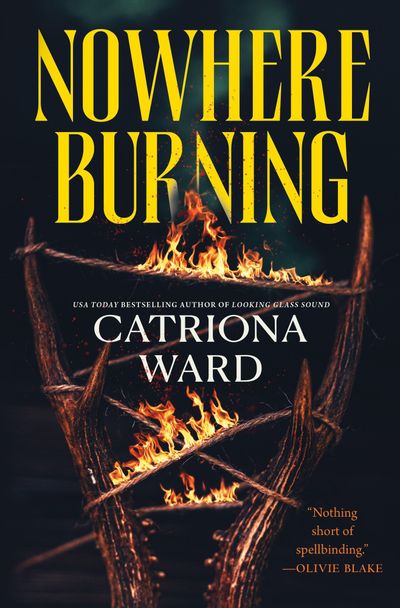
Nowhere Burning
Siblings flee to a burnt ranch commune in the Rockies where old fires still smolder.
2,232-word summary · 10 min read
The Turn of the Screw
A governess sees Quint and Jessel at Bly, or projects them; James never settles which, and Miles dies.
2,080-word summary · 9 min read

Final Girls
A survivor of a cabin massacre tries to live normally until another Final Girl dies and a second one shows up at her door.
2,176-word summary · 10 min read
Lock Every Door
Broke Jules apartment sits at the Bartholomew where another sitter vanished.
2,224-word summary · 10 min read
Home Before Dark
Maggie renovates haunted Baneberry Hall her father made famous.
2,017-word summary · 9 min read

Odd Thomas
A twenty year old fry cook who sees the dead tries to stop a mass shooting in his desert town.
3,797-word summary · 17 min read
The Outsider
Coach Terry Maitland's DNA and witnesses point to an impossible murder, until Ralph Anderson and Holly Gibney trace it to El Cuco.
2,586-word summary · 11 min read
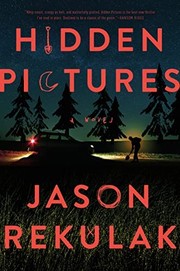
Hidden Pictures
Nanny Mallory sees Teddy drawings predict a murder in New Jersey.
2,332-word summary · 10 min read

What She Knew
Rachel lets her eight-year-old son run ahead in a Bristol park, and the nine-day search turns her into a suspect in the public eye.
2,952-word summary · 13 min read
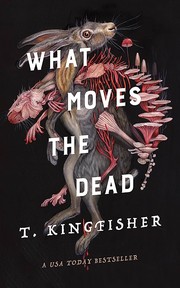
What Moves the Dead
Alex Easton arrives at the Usher house to find Madeline dying, the tarn full of fungus, and the local hares refusing to stay dead.
2,586-word summary · 11 min read

The Beach House
A young valet is beaten to death at a Hamptons party, and his law-student brother spends a year building a case against the family that covered it up.
2,049-word summary · 9 min read

Six Years
A professor who promised to forget the woman he loved sees her husband's obituary and discovers that the wedding, the marriage, and the woman herself may never…
2,076-word summary · 9 min read

The Trespasser
A Dublin Murder Squad detective investigates a staged dinner-party killing and finds a cover-up that reaches into her own department.
2,051-word summary · 9 min read

Rules of Prey
Minneapolis detective Lucas Davenport hunts a killer who leaves a new rule at every scene and treats murder as a game of wits.
1,914-word summary · 9 min read

Authority
The new director of the Southern Reach takes over an agency that is hiding the truth about Area X, and the building starts to change around him.
2,029-word summary · 9 min read

Ace of Spades
Two Black seniors at an elite academy are celebrated by day and hunted by an anonymous texter in this YA thriller about institutional racism.
2,066-word summary · 9 min read

The Late Show
Exiled to the LAPD night shift after accusing her supervisor, Renée Ballard keeps two cases that were meant to be handed off at dawn: a brutal assault and a…
2,563-word summary · 11 min read
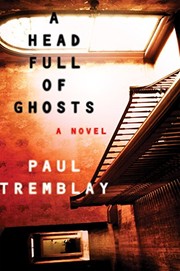
A Head Full of Ghosts
A broke Massachusetts family lets a reality TV crew film their daughter's exorcism, and fifteen years later the only survivor tries to explain what really…
2,588-word summary · 12 min read

4th of July
Lindsay Boxer shoots two armed teenagers in self-defense, faces a wrongful-death trial, and spends her leave chasing a string of throat-slashing murders in…
2,192-word summary · 10 min read

The Camel Club
Four Washington misfits witness a murder on Roosevelt Island and stumble into a conspiracy that reaches the Oval Office, with a hostage president and a nuclear…
2,354-word summary · 10 min read
Sleeping Giants
A girl falls into a field and lands in a giant metal hand. Years later a secret team assembles the rest of the machine, and it chooses its own pilots.
2,466-word summary · 11 min read