

Authority
2,029-word summary 9 min read 341 pages in the book
- First published
- 2014
- Publisher
- Farrar, Straus and Giroux
- Pages
- 341
- ISBN
- 9780374104108
- Series
- Southern Reach (#2)
Reading options
What's inside (8 sections)
Annihilation is a book about going into a strange place. Authority is a book about the people who send other people into that place, and it is much harder to love. It is the second novel in Jeff VanderMeer's Southern Reach series, published in 2014, and it swaps the haunted expedition for a haunted office building. There are no towering lighthouses or tunnel crawls for long stretches. There is a man reading files, interviewing a woman who may not be who she says she is, and slowly realizing that the building he runs is not on his side.
I read it right after Annihilation and spent the first hundred pages waiting for the weirdness to start. It is already there. It is just wearing a lanyard.
The New Director
John Rodriguez, who prefers to be called Control, arrives at the Southern Reach to take over as director. The agency is responsible for Area X, a coastal region that has been sealed off behind a border since an unexplained event. The public has been told there was an environmental disaster. The truth is stranger and less stable.
Control is not a field agent. He is a bureaucrat with a complicated family. His mother and grandfather are powerful figures in the intelligence world, and he has spent his career being measured against them. He reports to a handler known only as the Voice, who communicates by phone and email and seems to know more than he should. Control is used to being watched. He is not used to being the one in charge.
The Southern Reach is a building full of people who have been doing a job for too long. The assistant director, Grace Stevenson, runs the place in practice. She does not trust Control, and she does not hide it. She was close to the previous director, who disappeared into Area X with the twelfth expedition. Grace treats Control as an interloper, which he is.
The Southern Reach is a former military installation, and VanderMeer describes it the way you would describe a body. There are corridors that do not lead where they should. There are rooms that smell wrong. There is a cafeteria, a gym, and a lot of carpet that has been there too long. The building is not haunted in the traditional sense. It is occupied by an organization that has stopped noticing its own strangeness.
Control's office is the previous director's office. Her things are still in it. Her chair, her files, her habits. He sits in her seat and tries to become her, and the building does not cooperate. The lights flicker. The air is wrong. The staff watch him with expressions he cannot read. The Southern Reach is a place where the ordinary details of office life become ominous because of what the office is for.
VanderMeer is very good at this kind of atmosphere. He does not need a monster in the closet. He needs a hallway that is longer than it was yesterday. He needs a scientist who has been painting the same faces for years. He needs a wall that breathes. The horror is cumulative, and it works best when it is almost normal.
The Files and Ghost Bird
Control's first job is to understand what the Southern Reach has been doing. He reads reports, watches videos, and interviews returning personnel. The files are a mess. There are more expeditions than the public knows about, and the agency has been using a letter and number system to hide the true count.
The eleventh expedition is the key. It was all male, and it was run multiple times with slight variations, like a lab experiment. The twelfth expedition was all female, sent in to see how a different composition would interact with Area X. The psychologist on that expedition was the previous director. She did not tell the other members who she was.
That revelation changes how Control reads everything. The woman who was supposed to be observing the expedition was also running it. The agency was not just studying Area X. It was experimenting on its own people, and it was lying to itself about why.
The ethics of the program are never debated in a conference room. They are buried in the paperwork. The expedition members were not told what they were walking into, and the ones who came back were debriefed as if they were specimens. The Southern Reach has convinced itself that the stakes justify the deception, and the book lets you see how a group of intelligent people can arrive at that conclusion one memo at a time. That is the most frightening thing in it.
The biologist from the twelfth expedition reappears. She is found at a location that matters to her personally, and she is brought back to the Southern Reach for debriefing. She insists that she is not the biologist. She wants to be called Ghost Bird. She says there is a brightness inside her.
Control interviews her again and again. She is calm, intelligent, and uncooperative in a way that is not hostile. She answers questions with questions. She describes things that do not fit the agency's categories. She is not afraid of Control, which unsettles him more than aggression would.
The interrogations are the heart of the book. They are two people in a room, talking around a thing neither of them can name. Control wants information. Ghost Bird wants to be left alone, or to be understood, or to go back. The reader wants to know what happened in Area X, and the book refuses to give a clean answer. That refusal is the point.
Hypnosis, Whitby, and the Paintings
Control begins to suspect that he is being manipulated. He has gaps in his memory. He finds himself following suggestions he does not remember receiving. The Voice, his handler, has been using hypnosis to steer his investigation, and Control has been complying without knowing it.
When he throws off the hypnosis, he becomes more effective and more isolated. Central, the agency above the Southern Reach, stops trusting him. His mother intervenes to protect him. The politics of the book are petty and terrifying in equal measure. Everyone is playing a game, and the game is being played on people who do not know the rules.
The hypnosis thread is VanderMeer's way of making the reader question the narrator. Control is not reliable, but he is not lying. He is a man who has been edited. That is a different kind of unreliability, and it fits the series' obsession with contamination and control.
The book's most memorable scene is not an action scene. Control goes into a hidden room and finds Whitby, a scientist, surrounded by paintings. The paintings are of Southern Reach personnel, and they are nightmarish. Whitby has been making them for a long time. He seems to have lost his mind, or to have found something the others have not.
Then Control tries to go to the science division and finds a wall that should not exist. The wall is breathing. He runs upstairs and sees that the border of Area X is moving, encroaching on the facility. A monstrous version of the previous director is leading the way.
This is the moment the book becomes a horror novel. Until then, the horror has been bureaucratic: missing files, strange interviews, a building that feels wrong. Now it is physical. The Southern Reach is being absorbed by the thing it was built to contain, and most of the staff do not react. They have been expecting it, or they have been trained not to see it.
The Previous Director and the Pool
Control visits the previous director's house. He finds evidence of her personal connection to Area X, and he begins to understand that she was not just an administrator. She was part of the phenomenon. He also learns that the anthropologist and the surveyor, who were sent back to Central, left contamination at the sites where they were found. The quarantine has already been broken.
The most unsettling discovery is a photograph. Control realizes that the previous director was the little girl in a photo found at the lighthouse in Area X. The timeline does not make sense. The woman he knew and the girl in the photo cannot be the same person, and yet they are. The book does not explain how. It lets the impossibility sit there.
Control's mother fills in some of the gaps. She is not a warm presence. She is a strategist, and she has been protecting him for reasons that are not entirely maternal. The family dynamic gives the book an emotional through-line that the files cannot. Control is trying to become his own person, and the organization he works for keeps turning him into a tool.
Ghost Bird escapes from Central. Control tracks her to the site of an old field study, a place that mattered to the biologist before Area X. He finds her at a pool of water. At the bottom of the pool is a portal to Area X, a gateway she believes she created from the brightness inside her.
Central agents are closing in. Ghost Bird jumps into the pool. Control hears a voice in his head telling him to follow. He jumps.
The ending is abrupt. It is also the only ending the book could have. Control has spent the whole novel trying to understand Area X from the outside. The only way to understand it is to go in. The jump is an act of faith, or surrender, or both.
What the Book Gets Wrong
Authority is slow. It is a novel of interviews, files, and hallways, and readers who loved Annihilation for its momentum may find it frustrating. Control is not a dynamic protagonist. He is reactive, uncertain, and often a step behind. That is deliberate, but it does not make the middle sections easier.
The book is also opaque. VanderMeer withholds information, and some of the withholding feels like a technique rather than a mystery. The reader is given enough to be confused, not enough to solve. If you want answers, this is not the book that gives them.
The supporting characters are thin. Grace is a wall of resentment. Whitby is a weirdo with a paintbrush. The Voice is a voice. The novel is inside Control's head, and the other people never become fully real. That is partly the point of a bureaucracy, but it also limits the emotional range.
The ecological theme is quieter here than in Annihilation, but it is still present. Area X is not just a place with monsters. It is an ecosystem that is changing, and the Southern Reach keeps trying to classify it as a problem to be solved. The agency's categories are a form of control, and the book suggests that control is the wrong response to a living system. You cannot administrate a forest into submission.
Why It Works
Authority works because it makes the institution the monster. Area X is terrifying, but the Southern Reach is terrifying in a more familiar way. It is a workplace where people have learned not to ask questions, where procedures matter more than outcomes, and where the person in charge is always being managed by someone else. The horror is not just the strange thing outside. It is the ordinary thing inside.
It also works because it takes the question of control seriously. The book is about hypnosis, conditioning, and the stories organizations tell themselves. Control thinks he is investigating Area X. He is also being investigated, by his handler, his mother, and the building itself. The title is a joke and a threat.
I would not recommend Authority to someone who has not read Annihilation. It is a sequel that assumes you are already invested in the mystery. I would recommend it to readers who like institutional horror, unreliable narrators, and books that trust you to be uncomfortable. It is not as immediately gripping as the first book. It is stranger in a quieter way, and it stays with you longer.
FAQ
Do I need to read Annihilation before Authority?
Yes. Authority is the second Southern Reach book, and it continues the story of the twelfth expedition and Area X.
Who is Control in Authority?
Control is John Rodriguez, the new director of the Southern Reach. His mother and grandfather are powerful intelligence figures, and he reports to a handler called the Voice.
What happens at the end of Authority?
The border of Area X expands into the Southern Reach, Ghost Bird escapes and jumps into a pool that acts as a portal, and Control follows her.
Similar books
More from Southern Reach first, then related titles.

Annihilation
Four women enter Area X on the twelfth expedition to map a breathing tower that writes on its walls and a lighthouse full of lost journals.
2,265-word summary · 10 min read
Sleeping Giants
A girl falls into a field and lands in a giant metal hand. Years later a secret team assembles the rest of the machine, and it chooses its own pilots.
2,466-word summary · 11 min read

The Tommyknockers
A Maine town digs up a ship and gets brilliant, toothless and cruel.
1,977-word summary · 9 min read

What Moves the Dead
Alex Easton arrives at the Usher house to find Madeline dying, the tarn full of fungus, and the local hares refusing to stay dead.
2,586-word summary · 11 min read

The Crying of Lot 49
A California woman named executor of her ex-lover's estate follows a muted post horn into a possible centuries-old postal conspiracy, and Pynchon refuses to…
2,003-word summary · 9 min read

Six Years
A professor who promised to forget the woman he loved sees her husband's obituary and discovers that the wedding, the marriage, and the woman herself may never…
2,076-word summary · 9 min read

Lisey's Story
Two years after her novelist husband dies, Lisey Landon follows a trail of clues into his childhood and the other world that made him a writer.
1,998-word summary · 9 min read

Wilder Girls
At a quarantined boarding school off Maine, three girls with strange mutations search for a missing friend and learn what the adults have hidden.
2,594-word summary · 12 min read

The First Fifteen Lives of Harry August
Harry August dies and is born again into the same life, again and again, until a warning from a child tells him the world is ending faster with each pass.
2,189-word summary · 10 min read

Night Film
A disgraced journalist investigates the death of a reclusive horror director's daughter, following a red coat through hospitals, secret clubs, and a family…
2,690-word summary · 12 min read

A Head Full of Ghosts
A broke Massachusetts family lets a reality TV crew film their daughter's exorcism, and fifteen years later the only survivor tries to explain what really…
2,588-word summary · 12 min read

The Camel Club
Four Washington misfits witness a murder on Roosevelt Island and stumble into a conspiracy that reaches the Oval Office, with a hostage president and a nuclear…
2,354-word summary · 10 min read

Her Body and Other Parties: Stories
Eight stories where bodies, medicine and old fairy tales get taken apart, with a green ribbon running through the whole book.
2,997-word summary · 13 min read
Circus of the Damned
A rogue master vampire arrives in St. Louis and Anita Blake is caught in an undead turf war, with a science teacher in the crossfire.
2,757-word summary · 12 min read

Locke & Key, Vol. 1: Welcome to Lovecraft
After their father is murdered, the Locke children move into a haunted family estate where keys unlock doors to ghosts, other places, and dangerous secrets.
2,019-word summary · 9 min read
House of Salt and Sorrows
Annaleigh Thaumas investigates her sister's death in a cursed island manor where the balls are illusions and the sea god is always listening.
2,025-word summary · 9 min read

The Wasp Factory
Iain Banks's 1984 debut follows Frank Cauldhame, an isolated sixteen-year-old on a Scottish island, as his brother's escape and a family secret unravel his…
2,248-word summary · 10 min read
When No One Is Watching
Sydney Green watches her Brooklyn block's Black residents vanish one by one in Cole's Edgar-winning thriller about gentrification as a crime scene.
2,165-word summary · 10 min read

Nemesis Games
The Rocinante crew scatters across the solar system just as Marco Inaros and the Free Navy bombard Earth. The Expanse reaches its turning point.
2,506-word summary · 11 min read
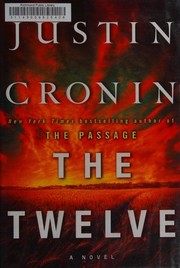
The Twelve
The middle volume of the Passage trilogy braids the year America died, a picnic massacre decades earlier, and the survivors' war against the twelve master…
2,089-word summary · 9 min read

The Caves of Steel
Detective Elijah Baley must solve a Spacer's murder in a domed New York, partnered with R. Daneel Olivaw, a humaniform robot built in the victim's image.
2,445-word summary · 11 min read

Paper Girls, Volume 1
Four paper girls in 1988 Ohio chase a stolen walkie-talkie into a basement and stumble into a time war, flying dinosaurs, and an older version of themselves.
2,235-word summary · 10 min read

A Scanner Darkly
Undercover narc Fred is ordered to surveil a drug user named Bob Arctor in near-future Orange County, not realizing the man on the screen is himself.
2,251-word summary · 10 min read

When You Reach Me
A sixth grader in 1970s New York gets strange notes that seem to predict the future.
2,456-word summary · 11 min read

Ubik
A psychic agency crew dies in a blast and reality decays unless a spray called Ubik saves them.
2,674-word summary · 12 min read

The Last House on Needless Street
A lonely man, a cat and a mysterious neighbor pull you into a house full of buried trauma.
2,627-word summary · 12 min read

The Day of the Triffids
Blinded survivors flee carnivorous plants after a meteor shower.
2,171-word summary · 10 min read
The Chalk Man
Childhood chalk codes lead to a murder that follows friends thirty years later.
2,350-word summary · 10 min read
Relic
A museum beast kills during an exhibition while an agent investigates.
2,066-word summary · 9 min read

Hannibal
Lecter hides in Florence while Starling and Verger close in from both sides.
2,590-word summary · 12 min read