
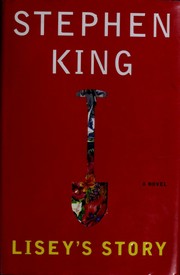
Lisey's Story
1,998-word summary 9 min read 528 pages in the book
- First published
- 2006
- Publisher
- Scribner
- Pages
- 528
- ISBN
- 9780743289412
Reading options
What's inside (9 sections)
Stephen King has said that Lisey's Story is his favorite of his own novels. That is a strange thing for a writer best known for killer clowns and haunted hotels to say about a book that is, at its heart, a love story about a widow cleaning out her dead husband's office. But read it and the claim makes sense. This is the book where King writes most directly about marriage, about the private language two people build together, and about what it costs to let that language go.
It was published by Scribner in 2006 and won the Bram Stoker Award for Best Novel. The hardcover is 528 pages. The idea came from a real experience: King was hospitalized with double pneumonia in 2003, and while he was ill his wife Tabitha redesigned his studio. When he came home and saw his books and belongings in boxes, he saw an image of what the room would look like after his death. That image became the opening of this book.
The empty studio
Lisey Landon is the widow of Scott Landon, a famous novelist who has been dead for two years. She has not finished cleaning out his studio. She has been putting it off, and she knows it. Academics keep coming to the house, hoping to find an unpublished manuscript or a lost notebook. Lisey sends them away. She is not ready, and she is also protecting something she cannot quite name.
Her sister Amanda comes to visit. Amanda is mentally fragile, and she has a habit of cutting pictures out of magazines and marking the ones where Lisey appears. While she is there, she learns that her ex-husband has remarried and is moving back to town. Amanda goes into the bathroom and slices open her hands. Then she stops speaking. She is catatonic, and the doctors want to put her in an institution.
Before Amanda is taken away, Lisey hears her sister speaking in Scott's voice. Amanda says that Scott has left her a bool hunt, and that there is a prize at the end. A bool hunt is a game Scott used to play with Lisey when they were first together, a treasure hunt made of clues and riddles. The fact that Amanda, who has never played the game, knows about it is the first sign that something supernatural is happening.
The bool hunt
The bool hunt is one of the best inventions in the book. It is a game, but it is also a language. Scott grew up in a violent household, and he learned to hide meaning inside jokes and stories and private words. A bool hunt is how he tells Lisey something he cannot say directly. The clues are not just directions to the next clue. They are pieces of his past, and following them means following him back into the places he spent his life trying to escape.
Lisey starts finding the clues. Some are in the studio. Some are in the house. Some are in her memory. As she follows them, she begins to remember things she had suppressed: the night she saved Scott from an insane fan who wanted to shoot him, the strange episodes when Scott would disappear for hours, the way he would come back with his hands dirty and his eyes somewhere else.
The book moves back and forth between the present and the past, and the structure is deliberately tangled. Lisey's memories arrive in fragments, and King does not always signal the transitions. This is a novel about a woman remembering a marriage, so the form fits the subject. It also makes the book demanding. If you are looking for a straightforward horror story, the first hundred pages may feel slow.
Zack McCool
The plot gets a villain when a man calling himself Zack McCool starts calling Lisey. He wants Scott's papers. He says that if she does not hand them over, he will hurt her. He sends a threatening letter. He leaves a dead cat in her mailbox. Lisey calls the police, but the most they can do is station a patrol car near her house, and the patrol car cannot be everywhere.
Zack is not a supernatural threat. He is a nasty, ordinary man who has decided that a widow's grief is an opportunity. That makes him more frightening than a monster, at least at first. He breaks into Lisey's house and attacks her with a can opener. The scene is brutal and intimate, and it forces Lisey to fight back in a way she has not had to do since Scott was alive.
The attack also pushes her toward the memories she has been avoiding. To survive Zack, she has to become the person she was when she was protecting Scott. That person was tougher than she remembers.
The Landon curse
Scott's childhood is the dark heart of the book. His family had a history of mental illness that took two forms: a violent mania and a deep catatonia. His brother Paul was thirteen when he started to show signs of the illness. Paul attacked Scott with a nail. Their father, who had been managing his own madness for years, decided that Paul had to be restrained. They tied him up in the barn for weeks. When it became clear that Paul could not be saved, their father took him to Boo'ya Moon, the other world where the Landon family could travel, and killed him there.
Scott witnessed it. Later, when his father's madness became unbearable, Scott killed him. The novel does not present this as a simple act of patricide. It is a boy doing the only thing he can to stop a man who is about to destroy what is left of the family. The diary that Lisey finds at the end of the bool hunt contains Scott's confession, written in his last days, and it is the piece of the story he could never tell her while he was alive.
The Landon curse is also a gift. The ability to cross into Boo'ya Moon is what made Scott a writer. He could go to a place where the ordinary rules did not apply, and he could bring back ideas and images that nobody else could see. But the place is dangerous. It has a forest, a lake, and a creature called the long boy, a beast that crosses between worlds and eats whatever it catches. Scott's creativity and his madness come from the same source, and he never fully controls either.
Boo'ya Moon
Boo'ya Moon is one of King's great creations. It is not a fantasy kingdom with rules and maps. It is a dream landscape, dark and wet and full of things that are almost recognizable. There is a lake, a hill, a tree that Scott used as a marker, and the long boy. The place feels like a memory of a place rather than a place itself, which is exactly right for a novel about grief.
Lisey has the ability to go there too, though she has repressed it for years. When Amanda is catatonic, Lisey follows her into Boo'ya Moon and brings her back. Later, when Zack McCool is hunting her, she lures him into the other world and lets the long boy take him. It is a revenge scene, but it is also a scene about Lisey accepting the part of herself she has been hiding. She is not just Scott's widow. She is a woman who can walk between worlds, and she has been pretending otherwise because the truth was too frightening.
The prose in these sections is some of King's best. He writes the other world with a kind of sensory overload, all damp earth and strange light and the sound of something moving in the trees. He also writes Lisey's fear with real precision. She is not a chosen one. She is a middle-aged woman who is tired and scared and does not know if she can do this, and that is what makes her heroic.
The prize
The bool hunt ends with a diary. It is Scott's account of his last days with his family, and it contains the confession about his father. Lisey reads it and finally understands the man she married. She also understands that he loved her enough to leave her a way through the grief, a game that would force her to remember him honestly instead of idealizing him.
The ending is quiet. Lisey packs up the studio. She gives away Scott's things. She finds that she keeps slipping back to Boo'ya Moon in her sleep, and sometimes while she is awake, and she has to work to stay grounded. The last scene is her saying goodbye to Scott in the empty study. It is not a dramatic farewell. It is a woman standing in a room that is finally just a room.
Marriage as a private language
What makes Lisey's Story more than a ghost story is the marriage. King writes about the private words couples invent for each other, the jokes nobody else understands, the shorthand that develops over years. Scott and Lisey have a whole vocabulary: bool, bool hunt, Boo'ya Moon, smucking, the bad-guy. Some of it is cute. Some of it is a way of talking about things that are too painful to say plainly.
King is also honest about the limits of that intimacy. Lisey did not know everything about Scott. She knew him better than anyone, and she still did not know what he did to his father or how deep his childhood went. Marriage is not total access to another person. It is a series of choices to keep showing up, and Lisey keeps showing up even after Scott is gone.
The book is not perfect. It is long, and the middle section where Lisey is following clues can feel repetitive. The invented vocabulary is charming at first and exhausting later. Some readers will find the flashback structure confusing, and the villain is less interesting than the supernatural material. The ending is also more muted than the build-up suggests, which is either a mature choice or an anticlimax depending on your taste.
The novel's treatment of creativity is worth pausing on. Scott does not write because he is inspired in the ordinary sense. He writes because he has to go to Boo'ya Moon and bring something back, and the trip costs him. King is writing about the price of making art, and about the way a gift can be indistinguishable from an illness. The Landon family calls it the bad-guy, and the name is apt. It is the part of Scott that can be violent and the part that can write, and he cannot have one without the other. Lisey loves him anyway, which is the hardest thing in the book.
But the emotional core is strong. This is a book about a woman learning that she can survive the person she loved most, and that survival does not mean forgetting. It is also a book about creativity, and about the idea that the things that make us human are the same things that can destroy us. Scott's gift and his madness are inseparable. Lisey's love for him and her need to let him go are inseparable too.
I put off reading Lisey's Story for years because I thought it would be a sentimental book about a widow. It is not sentimental. It is strange and dark and occasionally very funny, and it has one of the best portraits of a long marriage in King's work. It is also a book that trusts its reader to keep up, which is not something every long novel can say. If you have ever cleaned out a room belonging to someone you loved, the last fifty pages will be hard to read. That is a compliment, and I mean it. Read it slowly.
FAQ
What is a bool hunt in Lisey's Story?
A bool hunt is a treasure hunt Scott invented, made of clues and private riddles. In the novel he leaves one for Lisey after his death, with a diary as the final prize.
What is Boo'ya Moon?
Boo'ya Moon is the other world Scott could enter, a dark landscape with a lake, a hill, and a predatory creature called the long boy. It is the source of his creativity and his terror.
Is Lisey's Story Stephen King's favorite novel?
Yes. King has said it is his favorite of the books he has written, and it won the 2006 Bram Stoker Award for Best Novel.
Similar books
Duma Key
After losing his arm, Edgar Freemantle paints on a Florida island and learns his pictures can open doors for something hungry.
2,530-word summary · 11 min read
Pet Sematary
Doctor Louis buries Church and then Gage in ground that returns them wrong, learning dead is better.
2,158-word summary · 10 min read
The Only Good Indians
Four Blackfeet men who killed a pregnant elk are hunted by her spirit a decade later, and the only person who can end the cycle is a teenage girl who was not…
2,010-word summary · 9 min read

A Spool of Blue Thread
Four generations of the Whitshank family in Baltimore, and the silences, resentments and quiet love they hand down without ever saying so.
2,408-word summary · 11 min read
The Pilot's Wife
Kathryn Lyons's husband dies in a plane crash, and the investigation reveals a secret life that forces her to rethink their marriage.
2,006-word summary · 9 min read
The Valley of Vengeful Ghosts
A grieving therapist buys a model home in a rainy valley where the walls leak ghosts.
2,035-word summary · 9 min read
Everything's Eventual: 14 Dark Tales
Fourteen Stephen King stories shuffled by the deal of a card deck, from the haunted room of 1408 to quiet tales of grief that sting as much as the monsters.
2,000-word summary · 9 min read

If It Bleeds
Holly Gibney faces an outsider plus three more tales of dread.
2,219-word summary · 10 min read
Four Past Midnight
Four novellas about a plane lost in time, a writer haunted, and horrors small and large.
2,584-word summary · 11 min read
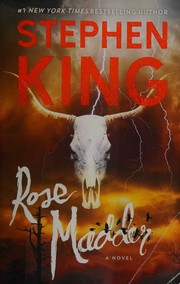
Rose Madder
After fourteen years of abuse, Rosie Daniels flees her cop husband and finds a painting that opens into a dangerous mythic world.
2,349-word summary · 10 min read
Skeleton Crew
King's 1985 collection pairs The Mist with The Jaunt, The Raft, and Survivor Type: 22 stories of Maine dread.
3,209-word summary · 14 min read
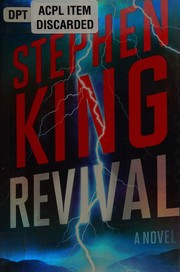
Revival
Jamie Morton shadows preacher Jacobs from boyhood healings to electric cures that open a door best left shut.
2,037-word summary · 9 min read
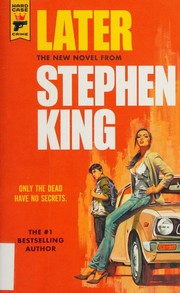
Later
Boy Jamie Conklin sees dead people who must answer truthfully, pulling him into NYPD cases and a drug crew's greed.
2,009-word summary · 9 min read
The Dark Half
A Maine novelist buries his violent pen name George Stark, then faces murders that carry his own fingerprints.
2,956-word summary · 13 min read
Desperation
Travelers on Highway 50 are hauled into empty Desperation, Nevada, where a possessed deputy serves an old thing in the mine.
2,993-word summary · 13 min read
Insomnia
Widowed Ralph stops sleeping in Derry and sees small doctors with scissors deciding who lives and dies.
3,605-word summary · 16 min read
Gerald's Game
Handcuffed to a bed after her husband dies, Jessie Burlingame faces thirst, a stray dog, and buried memories over 28 hours.
2,940-word summary · 13 min read
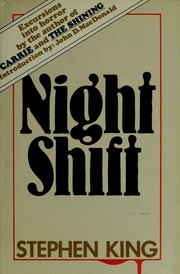
Night Shift
King's first story collection moves from haunted mills to killer cornfields, twenty early tales where ordinary places turn evil.
2,488-word summary · 11 min read

Bag of Bones
A blocked novelist returns to his Maine lake house after his wife dies and faces a custody fight and old ghosts.
2,616-word summary · 12 min read
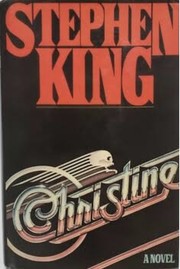
Christine
Misfit Arnie restores a wrecked 1958 Plymouth Fury that takes him over, forcing best friend Dennis and girlfriend Leigh to fight back.
2,106-word summary · 9 min read
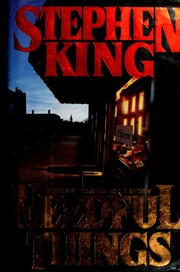
Needful Things
A smiling man sells exactly what you want for cash plus one small cruelty to a neighbor.
2,007-word summary · 9 min read
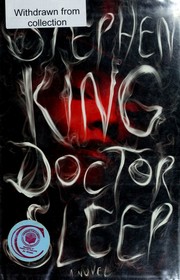
Doctor Sleep
Grown Dan Torrance gets sober in New Hampshire and helps gifted Abra Stone face the True Knot.
2,841-word summary · 13 min read
The Outsider
Coach Terry Maitland's DNA and witnesses point to an impossible murder, until Ralph Anderson and Holly Gibney trace it to El Cuco.
2,586-word summary · 11 min read
Misery
A novelist crashes in Colorado snow and wakes in the home of his self-declared number one fan, who will not let him leave.
2,744-word summary · 12 min read
Carrie
Bullied Carrie White discovers telekinetic powers that turn a cruel prom prank into a night of fire.
2,172-word summary · 10 min read
It
Seven friends in Derry face a shape shifting evil as kids in 1958 and again as adults in 1985.
2,229-word summary · 10 min read
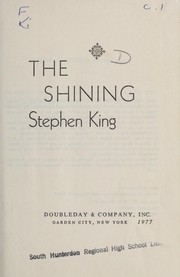
The Shining
The Shining retold: Jack winters at Overlook with Wendy and Danny, REDRUM, hedge maze chase.
2,011-word summary · 9 min read
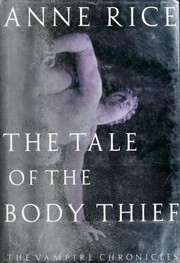
The Tale of the Body Thief
Lestat trades bodies with a psychic thief for one day of mortality and ends up trapped, sick, and hunting his own vampire body.
2,069-word summary · 9 min read
The Crying of Lot 49
A California woman named executor of her ex-lover's estate follows a muted post horn into a possible centuries-old postal conspiracy, and Pynchon refuses to…
2,003-word summary · 9 min read
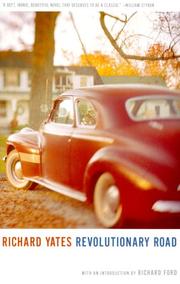
Revolutionary Road
A Connecticut couple who believe they are too good for the suburbs plan to move to Paris, and the plan slowly exposes everything they cannot say to each other.
2,085-word summary · 9 min read