
The Pilot's Wife
2,006-word summary 9 min read 293 pages in the book
- First published
- 1998
- Publisher
- Little, Brown and Company
- Pages
- 293
- ISBN
- 9780316789080
- Series
- Fortune's Rocks Quartet (#3)
Reading options
What's inside (9 sections)
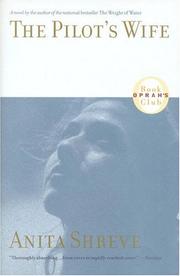
I found The Pilot's Wife in a used bookstore, and the cover made me expect a quiet domestic drama. It is quiet, for a while. Then it becomes a mystery, then a meditation on grief, and then something closer to a thriller. Anita Shreve keeps the tone steady even when the plot turns, and that steadiness is what makes the book work.
The novel was published in 1998 by Little, Brown and Company. It runs 293 pages in hardcover. It was selected for Oprah's Book Club in March 1999, which made it a bestseller and, for a while, a book that seemed to be everywhere. It is chronologically the third novel in Shreve's informal trilogy set in a large beach house on the New Hampshire coast, after Fortune's Rocks and Sea Glass. You do not need to read the others first. The house is a setting, not a puzzle box.
Kathryn Lyons is a high school teacher in Ely, New Hampshire. She lives in the old house at Fortune's Rocks with her husband, Jack, and their fifteen-year-old daughter, Mattie. Jack is an airline pilot. He is away often, and Kathryn has learned to live with the absences. She is not a woman who complains. She has built a life that works, or that seems to work. The novel begins with a knock at the door in the middle of the night.
The Knock at the Door
Robert Hart is a representative of the pilots' union. He tells Kathryn that Jack's plane has crashed over the Atlantic, off the coast of Ireland. There are no survivors. The news is delivered in the flat, procedural language of officialdom, and Kathryn's world splits in two. The before is the life she thought she had. The after is the life she has to live without him.
Mattie takes the news badly. She is a teenager, and she adored her father. Kathryn has to be strong for her, which means she does not get to fall apart. The house fills with phone calls, reporters, neighbors, and investigators. Robert stays to help. He is calm and competent, and his presence is both a comfort and an intrusion. He becomes the reader's guide through the aftermath.
The crash is not a simple accident. Investigators find evidence that a bomb was in Jack's flight bag. The possibility of suicide surfaces. Kathryn refuses to believe it. She knew her husband. He was not a man who would kill himself, and he was not a man who would kill a plane full of people. But the evidence is hard to explain, and the questions keep coming.
Shreve uses flashbacks to show the marriage. We see how Kathryn and Jack met, how they fell in love, how the relationship changed over the years. The flashbacks are not nostalgic. They are forensic. Kathryn is re-reading her own memories, looking for clues she missed. Every happy moment has a shadow now. The reader starts to do the same thing, which is the point.
The Secret Life
The first clue is a telephone number. Kathryn finds it in Jack's belongings, along with receipts and notes that do not fit the life she knew. She calls the number and a woman answers. The woman's name is Muire Boland. She lives in London. She has a baby. The baby is Jack's.
Kathryn goes to London. The scene where she meets Muire is the heart of the novel. Muire is not a femme fatale. She is a woman who has been living in the same kind of limbo as Kathryn. She knew about Kathryn. She had accepted the arrangement because she loved Jack and because she believed there was no other way. The two women are not enemies. They are survivors of the same man.
Muire explains the rest. She was a flight attendant. She smuggled money from America to Ireland for the IRA. When she became pregnant, Jack took over her route. The night before the crash, he was asked to carry something from London to America. He thought it was money. It was a bomb, planted by a rival organization that wanted to discredit the IRA. The bomb exploded when the co-pilot opened the bag.
The explanation is complicated, and it does not answer every question. Jack was not a terrorist. He was a man who made a series of choices, each one a little worse than the last, and he ended up in a situation he could not control. That is more believable than a simple villain, and it is more sad. Kathryn has to reconcile the man she loved with the man who lied to her for years.
The Public Story
The novel is also about the way tragedy becomes public property. The press descends on the house. The neighbors want details. The airline wants to manage the story. Kathryn is expected to perform grief in a way that makes people comfortable. She is not allowed to be angry, or confused, or relieved. She is the pilot's wife, and that role has a script.
Shreve is good at showing the small humiliations of being a public widow. The reporters who camp outside. The phone calls from strangers. The friends who say the wrong thing. The investigators who treat her as a suspect or a witness rather than a person. Kathryn's grief is not just for Jack. It is for the life she thought they had, and for the version of herself that believed in it.
Mattie's grief is different. She is angry. She is angry at her father, at her mother, at the world. She acts out in ways that are realistic for a fifteen-year-old. Kathryn has to parent her while she is falling apart herself. The mother-daughter relationship is one of the strongest parts of the book. It is not sentimental. They fight. They misunderstand each other. They keep trying.
Robert Hart is a complicated figure. He helps Kathryn, but he also withholds information. He knew more about Jack than he lets on. His kindness is real, and so is his deception. The book does not resolve him into a hero or a villain. He is a man doing a difficult job, and he makes mistakes. The possibility of romance between him and Kathryn is present, but Shreve does not rush it. The ending leaves it open.
The House at Fortune's Rocks
The house is almost a character. It is old, beautiful, and full of history. It used to be a convent. The chapel is still there, or the remains of it. The sea is always in the background. The house represents the life Kathryn built, and the life she may have to leave. It is a place of safety and a place of secrets. The novel's final scenes return to it, and the meaning has changed.
Shreve's prose is clean and precise. She does not use a lot of metaphors. She describes rooms, weather, and gestures. The effect is cinematic without being showy. The novel is easy to read, which makes the emotional turns more surprising. You are moving along, comfortable, and then a sentence stops you.
The pacing is uneven. The middle section, where Kathryn is investigating Jack's secret, drags a little. The IRA plot is introduced late, and it feels like a different kind of book. The domestic drama is more compelling than the geopolitical thriller. The ending is also a bit too neat. Kathryn goes to Ireland, stands by the sea, and finds a kind of peace. It is a beautiful scene, but it resolves her emotional arc faster than the earlier chapters earned.
The novel's treatment of class is interesting. Kathryn is a teacher. Jack is a pilot. They are middle class, but not wealthy. The house at Fortune's Rocks is a inheritance, not a purchase. The people around them have different amounts of money and power. The airline, the union, the press: these institutions are larger than Kathryn, and she has to navigate them. Shreve shows how grief is shaped by money and status.
What the Book Gets Right
The Pilot's Wife gets the texture of a long marriage right. It shows how two people can live together for years and still keep parts of themselves hidden. It shows how love and resentment can coexist. It shows how a person can be a good parent and a bad spouse. Jack is not a monster. He is a man who made selfish choices and then kept making them because he did not know how to stop. That is more frightening than a villain.
The book also gets the aftermath of a sudden death right. The way time behaves. The way ordinary tasks become impossible. The way people say the wrong thing. The way the world keeps going even though it should not. Kathryn's grief is not dramatic. It is practical. She has to make phone calls, answer questions, take care of Mattie, and decide what to tell people. The ordinary details are what make the loss real.
The ending is hopeful without being false. Kathryn does not get her old life back. She does not get a neat explanation for everything Jack did. She gets a way to live with the uncertainty. That is a mature resolution, and it fits the book's tone. The final image of Kathryn and Mattie fishing is quiet and earned.
The Title and the Role
The title is doing more work than it first appears. Kathryn is not just a woman married to a pilot. She is a role, a public identity, a person defined by her husband's job. When Jack dies, that identity becomes a story that other people tell about her. The press calls her the pilot's wife. The airline treats her as a representative of the family. The investigators see her as a source of information. She has to figure out who she is when the role is all that is left.
That is why the novel's quiet domestic scenes matter. Kathryn teaching, cooking, talking to Mattie, walking through the house: these are the places where she is not a symbol. They are also the places where Jack's absence is most acute. Shreve is good at showing how grief lives in ordinary objects. A jacket in the closet. A chair at the table. A phone that does not ring. The novel does not need melodrama to make loss real.
The book also asks a question that is hard to answer: can you forgive someone who is dead? Jack cannot explain himself. He cannot apologize. Kathryn has to decide what to do with her anger, and she has to do it without closure. That is the most honest part of the story. Forgiveness, in this novel, is not a single moment. It is a decision that has to be made again and again.
Who Should Read It
This is a book for readers who like domestic fiction with a mystery at its center. It is not a thriller in the usual sense. There are no car chases or shootouts. The suspense comes from the slow reveal of a marriage's secrets. If you like books about families, grief, and the gap between the life people present and the life they live, this is for you.
It is also a book for writers who want to study structure. Shreve alternates present and past skillfully. The flashbacks are not random. They are triggered by objects, conversations, and memories. Each one changes the meaning of the present. That is harder to do than it looks.
I would not recommend it to someone who wants a fast, plot-driven mystery. The IRA storyline is not fully integrated, and the ending is more contemplative than shocking. But if you are willing to sit with Kathryn and let the story unfold, it is a rewarding read. It is a book about a woman learning that the person she loved was also a stranger, and that she can survive the discovery.
FAQ
Is The Pilot's Wife based on a true story?
No. It is fiction, though Shreve drew on research about aviation and the IRA.
Is it part of a series?
It is the third book in the loosely connected Fortune's Rocks series, but it can be read on its own.
What happens at the end?
Kathryn learns the truth about Jack's double life and begins to rebuild her life with her daughter. The ending is open but hopeful.
Similar books
More from Fortune's Rocks Quartet first, then related titles.

A Spool of Blue Thread
Four generations of the Whitshank family in Baltimore, and the silences, resentments and quiet love they hand down without ever saying so.
2,408-word summary · 11 min read
Lisey's Story
Two years after her novelist husband dies, Lisey Landon follows a trail of clues into his childhood and the other world that made him a writer.
1,998-word summary · 9 min read
Every Last Secret
A wealthy wife tracks a possible affair, but dinners, therapy, and a sudden death expose buried secrets across two polished suburban marriages and force her to…
2,687-word summary · 12 min read
Bring Me Back
Finn lost Layla at a French rest stop twelve years ago. Now engaged to her sister Ellen, he faces sightings, emails and Russian dolls that reopen everything.
2,912-word summary · 13 min read
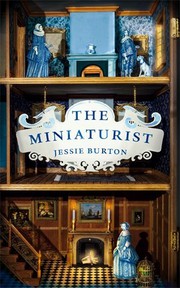
The Miniaturist
A new bride in 1686 Amsterdam gets a dollhouse replica of her home, and its tiny figures start to reveal what the Brandt family hides.
2,865-word summary · 13 min read
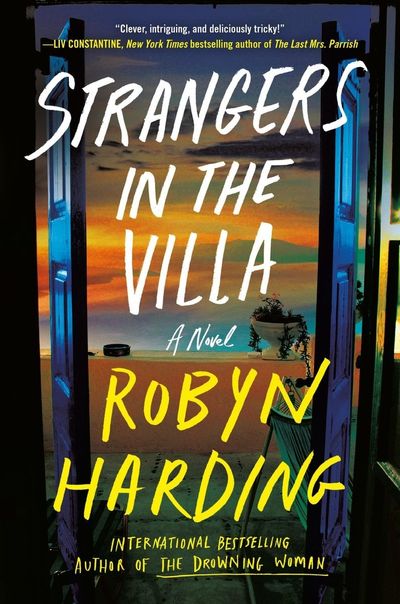
Strangers in the Villa
A strained couple in a Spanish villa takes in guests who refuse to leave.
2,208-word summary · 10 min read
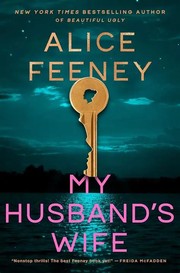
My Husband's Wife
Artist Eden Fox returns from a run to find her key fails at Spyglass and her husband claims a stranger is his wife in Hope Falls.
2,437-word summary · 11 min read
Fates and Furies
Lauren Groff tells one 24 year marriage twice, first through Lotto's bright luck, then through Mathilde's hidden past and quiet control.
2,992-word summary · 13 min read
The Crying of Lot 49
A California woman named executor of her ex-lover's estate follows a muted post horn into a possible centuries-old postal conspiracy, and Pynchon refuses to…
2,003-word summary · 9 min read

Six Years
A professor who promised to forget the woman he loved sees her husband's obituary and discovers that the wedding, the marriage, and the woman herself may never…
2,076-word summary · 9 min read
Revolutionary Road
A Connecticut couple who believe they are too good for the suburbs plan to move to Paris, and the plan slowly exposes everything they cannot say to each other.
2,085-word summary · 9 min read

Howards End
Forster's 1910 novel follows two families, a house in Hertfordshire, and a burned note, asking whether money and feeling can ever be connected.
2,187-word summary · 10 min read
Only Time Will Tell
A Bristol dockworker's son wins a scholarship, falls in love with the daughter of the family that owns the shipyard, and learns that his father's death was not…
2,082-word summary · 9 min read
Once There Were Wolves
A biologist reintroduces fourteen wolves to the Scottish Highlands while protecting her traumatized twin sister, then finds a body in the snow that could…
2,682-word summary · 12 min read

The Girls in the Garden
Clare moves her daughters to a gated London garden where the community feels safe; at the midsummer party, twelve-year-old Pip finds her sister bleeding in the…
1,973-word summary · 9 min read

We Are Okay
Marin fled San Francisco after her grandfather vanished and stopped answering anyone. When Mabel visits her college dorm, she has to say what happened.
2,253-word summary · 10 min read

Two by Two
Sparks's twentieth novel turns from first love to a marriage breaking up: Russell Green loses his wife and his job, then rebuilds his life around his…
2,192-word summary · 10 min read
On Chesil Beach
Two newlyweds spend one terrible night on Chesil Beach in 1962, and the rest of their lives is decided by it.
2,456-word summary · 11 min read

At First Sight
Jeremy and Lexie are married and expecting a baby when anonymous emails tell him the child may not be his.
2,317-word summary · 10 min read

The Best of Friends
Three lifelong friends discover their teenage sons were hiding more than anyone knew after a night that leaves one dead, one in a coma and one silent.
2,040-word summary · 9 min read
And Every Morning the Way Home Gets Longer and Longer
An elderly grandfather, his son, and his grandson share memories and fears as the old man's mind begins to fade, in a short novel about grief and love.
2,078-word summary · 9 min read
The Tiger's Wife
A young doctor in a war-scarred Balkan country chases the stories her grandfather left behind, including a deathless man and a deaf girl who loved an escaped…
2,232-word summary · 10 min read
The Survivors
Kieran Elliott returns to Evelyn Bay twelve years after a storm killed his brother, and a young woman's murder forces the town to face what it has concealed.
2,571-word summary · 11 min read
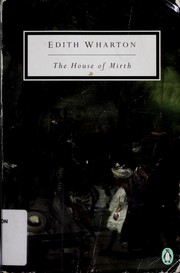
The House of Mirth
Lily Bart, beautiful and penniless at twenty-nine, navigates New York's marriage market until a Dorset yacht scandal strips her of the only currency she has.
2,468-word summary · 11 min read

Girl, Forgotten
A rookie US marshal guards a judge with a stalker and ends up reopening the 1982 prom-night murder of the judge's pregnant daughter.
2,111-word summary · 9 min read
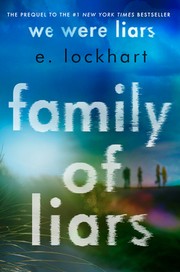
Family of Liars
The prequel to We Were Liars: Carrie Sinclair finally tells the story of the summer of 1987, the boy who died on Beechwood Island, and the lie her family built…
2,072-word summary · 9 min read
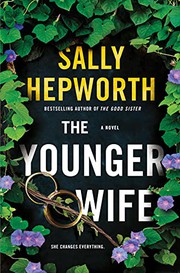
The Younger Wife
A Melbourne surgeon announces he is divorcing his wife, who has Alzheimer's, to marry a woman his daughters' age, and the family's buried violence surfaces.
2,127-word summary · 9 min read

The Woods
Twenty years after two teenagers were murdered and two vanished at summer camp, prosecutor Paul Copeland identifies a fresh corpse as one of the missing.
2,490-word summary · 11 min read
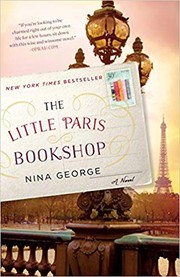
The Little Paris Bookshop
A Paris bookseller who prescribes novels as medicine finally opens a twenty one year old letter from his lost love and sails south through France to find her.
2,050-word summary · 9 min read

The Boy from the Woods
Wilde, found feral in a New Jersey forest in 1986, hunts for a missing teenager while a senator's secrets tear a wealthy town apart.
2,270-word summary · 10 min read