
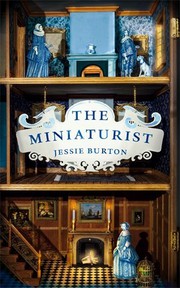
The Miniaturist
2,865-word summary 13 min read 400 pages in the book
- First published
- 2014
- Publisher
- Picador
- Pages
- 400
- ISBN
- 9781447250890
- Series
- The Miniaturist (#1)
Reading options
What's inside (8 sections)
I picked up The Miniaturist because I saw the cabinet house first. I was in Amsterdam a few years ago and I went to the Rijksmuseum mostly for the big paintings, and then I got stuck in front of Petronella Oortman's dollhouse. It is huge and fussy and perfect, every tiny chair and painting and storage jar in place. When I learned Jessie Burton had built a novel around it, I wanted to read it right away. Picador published the book in the UK in 2014, and the first hardcover runs 400 pages. It is her debut, and it reads like one in the best way, full of appetite and color, sometimes a little too eager to impress.
The setup pulled me in fast. It is October 1686. Petronella Oortman, called Nella, is eighteen and from Assendelft, a smaller town outside Amsterdam. Her father is dead and he left debts behind him. Her mother arranges a match with Johannes Brandt, a rich Amsterdam merchant in his late thirties who trades with the Dutch East India Company crowd and owns a tall house on the Herengracht. Nella has never met him for more than a brief ceremony. She arrives by barge with a cage of birds and a trunk of clothes, expecting married life to start at once. Instead she finds a house that does not seem to want her.
That first disappointment is the engine for a lot of the book. Nella thought marriage would mean safety and a clear place. She gets a grand house, fine food, good linen, and almost no affection. I liked her right away because she is prickly about it. She is young and sheltered and she says the wrong thing. She also notices a lot. She keeps trying doors, literally and otherwise, and the house keeps staying shut.
A country bride in Amsterdam
Amsterdam in 1686 is rich and watchful, and Burton spends a lot of time on how that feels. The canals smell. The warehouses crowd the water. The church bells mark the hours and the neighbors mark everything else. Wealth comes from sugar and spices and ships, and the city's rulers talk constantly about God and modesty while living among pepper and silk and silver.
Nella comes from a family that used to matter more. Her father spent too freely. Her mother, Petra, is practical and tired and wants this match to hold. Nella's older history is mostly small town parties and riding and a little freedom, and she carries that with her. She is not worldly. She thinks Amsterdam will admire her. Amsterdam mostly ignores her.
Her wedding to Johannes happened quickly back home. He came, he signed, he left the same day. The marriage was not consummated. Nella tells herself he is busy. When she finally travels to join him a month later, he is not even there to meet her at the door. A maid opens it. A severe woman looks her up and down. A Black servant carries her trunk. Nobody hugs her. Her parrot, which she brought as a piece of home, screeches in its cage.
I found those arrival pages sad in a plain way. Nella keeps waiting for someone to explain the rules. Where to sit. When to eat. Whether she should knock before entering her husband's study. She tries to be gracious and it lands wrong. She tries to be bold and it lands worse. If you have ever moved for a relationship and realized on day one that you misjudged the whole thing, you will recognize her panic.
The house on the Herengracht
The Brandt house is the second main character. It is tall and narrow the way those canal houses are, with a front hall for business callers, a great room for meals, small bedchambers, attics for servants, and a locked study where Johannes keeps his papers. Everything is polished. Nothing feels warm.
Marin Brandt runs the house. She is Johannes's sister, unmarried, sharp tongued, dressed in dark clothes that look plain until you look closer. She corrects Nella's manners. She controls the keys. She seems angry that Nella is even there. At first I read her as the classic cold sister in law. She softens and hardens by turns, and it took me a while to see how tired she is. She has kept this household together for years while her brother travels. A teenage bride showing up with opinions feels like a threat.
Cornelia, the maid, is closer to Nella in age and much livelier. She knows where everything is. She gossips and teases and then goes quiet when Marin passes. She becomes Nella's first ally, the one who will braid her hair and tell her which merchant's wife to avoid. I liked Cornelia a lot. She has a hard past and a clear eye, and she loves this house even when it treats her like furniture.
Otto is Johannes's servant and business helper, a Black man in his thirties who was bought out of slavery as a boy and raised inside the Brandt orbit. Nella has never seen a Black person up close before, and Burton does not shy away from her ignorance. Nella stares. She asks clumsy questions. Otto answers with patience that has limits. He is competent and loyal and careful, and he moves through Amsterdam knowing people see him before they see his work.
Johannes himself is rarely home. When he is home, he is kind in a distant way. He gives Nella money. He asks about her trip. He does not touch her. He sleeps elsewhere. He locks his study. At night Nella hears movement and whispers and doors closing softly. People listen at keyholes. People pocket letters. She finds an unsigned love note in Marin's room and cannot tell who wrote it or what it means.
The cabinet house
Then comes the gift that changes the story. Johannes gives Nella a cabinet house, a tall wooden replica of their own home, with tiny rooms waiting to be furnished. It is based on the real Petronella Oortman cabinet that sits in the Rijksmuseum, and in the novel it is both a rich man's apology and a kind of test. Here, he seems to say, make your own home inside my home.
Nella is thrilled. She has money for furnishing it, so she finds a craftsperson listed in a guild book and orders small pieces. The first parcel arrives well made. Little chairs. Tiny plates. A small dog to match the household pets. She shows Cornelia. Even Marin looks for a second longer than she means to.
But the next parcels are wrong in a way that made my skin prickle. The miniaturist starts sending things Nella did not order. A cradle when there is no baby. A tiny lute when no one plays. Figures of the household that match too closely, down to details Nella has not told anyone. Marin's miniature wears plain dark clothes, and when Nella looks closely the paint shows fur lining inside, a hidden luxury Cornelia whispered about. Later the Marin figure seems to thicken around the middle.
Parcels appear on the doorstep in the morning with short notes tucked inside. Sayings about fate and watching. Warnings that read like proverbs. Nella writes back asking for explanations and gets more miniatures instead. She tries to find the workshop and gets turned away or sent in circles. A messenger named Jack Philips brings some of the deliveries, a handsome English boy with an easy smile who seems to know Johannes already. Nella wonders if Jack is just a carrier. She also wonders if he reports back what he sees.
I loved this part even when I wanted to shake Nella. She becomes obsessed, as you would. She rearranges the tiny rooms for hours. She holds the little cradle up to the light. She asks herself the question that carries the book. Are these pieces echoes of what already happened, or signs of what will happen, or simply clever guesses from someone watching the house closely.
Burton plays fair with the creepiness. The miniaturist is a real woman in Amsterdam. Nella spots her at a church service and in a crowd, staring hard, then gone before Nella can reach her. Other women in town seem to know her too. A baker's wife. A friend of Cornelia's. The miniaturist helps women in small practical ways and frightens them at the same time. She never explains herself. She never takes credit. She watches and she sends her small truths, and then she steps back.
What Johannes is hiding
About a third of the way in, the secrets start to break open, and they broke my heart a little.
Nella wants to feel closer to Johannes, so she goes to his warehouse office without warning, hoping for a normal married moment. What she finds is Johannes receiving oral sex from Jack Philips. It is quick and unmistakable and terrifying for everyone involved. In 1686 Amsterdam, sodomy is a capital crime. The punishment is death by drowning. Nella runs. Jack smirks or sneers, hard to tell which. Johannes looks destroyed.
Marin knew. That is the next blow. Marin tells Nella she arranged this marriage partly as cover. A wife makes Johannes look ordinary. A wife quiets the consistory and the neighbors and the business partners who already whisper. Marin is not cruel about it exactly. She is blunt because she thinks bluntness will keep them alive. Nella feels bought and used, which she was, and she hates them both for a while.
Johannes and Nella have a painful talk after. He does not deny who he is. He says he hoped marriage could still mean friendship and shelter, even if it could not mean desire. He likes Nella. He admires her spirit. He cannot be the husband she was promised. Nella asks if he ever could love her in that way, and the answer is no, said gently, which somehow hurts more than shouting would.
Otto is tied into this too. He and Johannes share a long bond that is affectionate and unequal all at once. Johannes freed him and educated him and trusts him with money, and Otto loves the family while knowing exactly where he stands in Holland. Later it becomes clear Johannes has also been intimate with Otto at times, though the tender center of his hidden life is Jack, younger and bolder and far less careful.
Marin has her own secret, and it grows harder to hide. She is pregnant and unmarried, which in her church world is ruin. She wears loose clothes. She skips meals or picks at them. She refuses a midwife because a midwife would talk. Nella first assumes the father must be Frans Meermans, an old suitor who still circles the family with hurt pride. Frans loved Marin years ago and proposed, and Marin said no. He has always blamed Johannes for blocking it. He and his wife Agnes need Johannes now to sell a large stock of sugar for them, and Frans hates needing him.
The truth is different. The father is Otto. Marin and Otto have loved each other quietly for a long time across every line their world draws around rank and skin and faith. Marin's reserve starts to read differently once you know this. Her severity is partly self guarding. Her piety is partly fear. She pushed Nella away at first because another woman in the house made concealment harder, and because Nella's hunger for a normal marriage reminded Marin of everything she cannot have openly.
There is a violent scene while Johannes is away that shows how fast this city turns. Jack brings another parcel and picks a fight. He kills one of Johannes's little dogs in a burst of spite, stabbing the animal while everyone screams. Otto grapples with him. Jack's own dagger ends up in Jack, not deep but bloody. Otto panics about what the law will do to a Black servant caught with a knife in a white merchant's house, and he runs. He leaves the country for a time, which leaves Marin without the one person who fully knows her condition.
Sugar, accusation and trial
The last third turns on sugar. It sounds dull until you see how much money and pride sit in those barrels.
Frans and Agnes Meermans own a large quantity of sugar that needs a buyer. Johannes agrees to handle the sale through his contacts. On paper it should help both families. Johannes needs the commission because his own funds are thinner than his house suggests. The Meermans need cash and respect. In practice Johannes is distracted by fear and love and the miniaturist's warnings, and he lets the business drift.
Then Frans and Agnes go to the warehouse to check their stock and walk in on Johannes pressed against the wall with a man. The man is Jack. Jack later says he was forced, which may be self protection or revenge or some mix of both. Frans reports them to the authorities. Johannes is arrested and put on trial for sodomy.
The trial scenes are short and bleak. Character witnesses will not save him. Money will not save him. The court treats his wealth as proof of arrogance rather than a reason for mercy. Nella tries to speak. Marin tries to use old connections. Nothing bends. Johannes is condemned to death.
While he waits in prison, Marin goes into labor at home. It is early autumn 1687 by now, almost a year after Nella arrived. Marin still refuses a midwife, so Nella and Cornelia deliver the baby themselves on a bed covered with sheets and prayers. Burton writes this without looking away. The pain is long. The blood frightens Nella. Cornelia, who has seen more of life, talks Marin through pushing and breathing and holding on. Marin dies soon after from bleeding and exhaustion. Her daughter lives. The baby's skin makes the father's identity plain. She is Otto's child.
Three days later Johannes is executed. Burton does not make it grand. It is procedural and cold and final. Otto returns in secret to see his daughter before he must disappear again or risk arrest over the earlier fight. Nella, who has grown from a lost bride into the only person left standing, makes a practical choice. She sells the Meermans sugar to a confectioner whose wife knows Cornelia, salvaging some money for the household. It is not triumph. It is survival with paperwork.
What stays with me
I should say what dragged for me, because plenty did. The middle sags. There is a stretch where Nella chases the miniaturist around Amsterdam and every lead dissolves, and I started to skim. Burton also keeps Johannes at arm's length. We rarely sit inside his head, so his choices can feel plotted rather than lived. I wanted one long honest chapter from him about wanting Jack and needing Otto and marrying Nella anyway. Without it, he stays a handsome sorrow instead of a full man.
Nella herself sometimes sounds more like a modern friend than a 1686 teenager. She talks about choice and honesty in ways that fit my life better than hers. I did not mind much because her voice carries the book, but if you want strict period speech you may bristle. A few coincidences stack up near the end too. The right friend knows the right confectioner. The right letter arrives at the right hour. It all works, just a little too neatly after so much mess.
Still, a lot landed hard. The house feels real. I can still picture the tiled hall, the locked study, the cabinet glowing in Nella's room like a second hearth. Almond cakes. Spiced wine. Sugar work shaped into swans for rich tables. The dogs underfoot. Small things that make a big house feel inhabited.
The handling of faith felt true as well. These people pray and judge and fear hell, and they also lie and hunger and love where they should not. Marin reads her Bible and hides her belly. Johannes funds church charities and meets Jack in warehouses. Nella prays for guidance and then picks locks. Burton does not mock their belief. She shows how belief gives them words for guilt and very few words for mercy.
If you like historical novels with a strange pull, this one is worth your week. The BBC adaptation from 2017 with Anya Taylor Joy as Nella is decent for the look of it, but it trims the interior worry that makes the novel work.
For me the keeper is the miniaturist herself. I went in wanting a solution. Ghost, spy, angel, fraud. Burton refuses to pick. She leaves a woman who notices women, who sends cradles and warnings and tiny fur lined coats, who appears in a doorway and is gone. I closed the book unsure whether Nella was protected or mocked or simply seen. That uncertainty annoyed me for about ten pages. Then I decided I liked it. Not every watcher explains herself. Some just leave the parcel on the step and let you decide what to do with it.
FAQ
When was The Miniaturist published?
Picador published it in the UK in 2014. The first UK hardcover runs 400 pages and the ISBN is 9781447250890.
Is The Miniaturist part of a series?
Yes. It is book 1 in The Miniaturist series, followed by The House of Fortune from 2022. The first book stands alone.
Who are the main characters in The Miniaturist?
Nella Oortman, her merchant husband Johannes Brandt, his sister Marin, the maid Cornelia, the servant Otto, and the watcher called the miniaturist.
Similar books
More from The Miniaturist first, then related titles.
Only Time Will Tell
A Bristol dockworker's son wins a scholarship, falls in love with the daughter of the family that owns the shipyard, and learns that his father's death was not…
2,082-word summary · 9 min read

The Pilot's Wife
Kathryn Lyons's husband dies in a plane crash, and the investigation reveals a secret life that forces her to rethink their marriage.
2,006-word summary · 9 min read
The House at Riverton
In 1999, ninety eight year old maid Grace Bradley tapes the truth about a 1924 shooting at Riverton Manor, poet Robbie Hunter, two sisters and a lie held for…
2,433-word summary · 11 min read

Every Last Secret
A wealthy wife tracks a possible affair, but dinners, therapy, and a sudden death expose buried secrets across two polished suburban marriages and force her to…
2,687-word summary · 12 min read
Bring Me Back
Finn lost Layla at a French rest stop twelve years ago. Now engaged to her sister Ellen, he faces sightings, emails and Russian dolls that reopen everything.
2,912-word summary · 13 min read
Strangers in the Villa
A strained couple in a Spanish villa takes in guests who refuse to leave.
2,208-word summary · 10 min read

My Husband's Wife
Artist Eden Fox returns from a run to find her key fails at Spyglass and her husband claims a stranger is his wife in Hope Falls.
2,437-word summary · 11 min read
The Art Forger
A disgraced Boston painter agrees to copy a Degas stolen from the Gardner Museum, then begins to suspect the original she is copying is itself a forgery.
2,117-word summary · 9 min read

Six Years
A professor who promised to forget the woman he loved sees her husband's obituary and discovers that the wedding, the marriage, and the woman herself may never…
2,076-word summary · 9 min read

Anatomy: A Love Story
In 1817 Edinburgh, a noblewoman who wants to be a surgeon disguises herself to study anatomy and falls for the grave robber who supplies her with bodies.
2,031-word summary · 9 min read
The Boleyn Inheritance
Three women narrate Henry VIII's fourth and fifth marriages: a foreign bride who survives, a teenage queen who does not, and the widow who opens the door.
2,391-word summary · 11 min read

The Black Dahlia
James Ellroy builds a fiction around the real Black Dahlia murder, following two Los Angeles cops whose partnership and obsessions destroy them.
2,533-word summary · 11 min read

The Girls in the Garden
Clare moves her daughters to a gated London garden where the community feels safe; at the midsummer party, twelve-year-old Pip finds her sister bleeding in the…
1,973-word summary · 9 min read
Once Upon a River
A wounded man stumbles into a riverside inn carrying what appears to be a drowned child who is not quite dead, and the story braids the guesses of everyone who…
2,173-word summary · 10 min read

The Echo of Old Books
Barbara Davis's 2023 novel sends a rare-book dealer in 1984 New Hampshire hunting for the authors of two unpublished volumes that tell opposite sides of one…
2,491-word summary · 11 min read

Last Night at the Telegraph Club
The 2021 National Book Award winner follows Lily Hu, a Chinese American teenager in 1954 San Francisco, as she falls for Kath and learns what it costs to be…
2,336-word summary · 10 min read

Big Lies in a Small Town
A 22-year-old woman leaves prison to restore a 1940 mural, and Edenton, North Carolina, starts talking.
2,187-word summary · 10 min read

A Spool of Blue Thread
Four generations of the Whitshank family in Baltimore, and the silences, resentments and quiet love they hand down without ever saying so.
2,408-word summary · 11 min read
The Tuscan Child
After her father's death, Joanna follows a returned letter to Tuscany and uncovers his wartime love, a hidden painting and a village secret. A dual-timeline…
2,095-word summary · 9 min read

The Diviners
In 1920s New York, Evie O'Neill's ability to read objects pulls her into an occult investigation that awakens something far older and more dangerous.
2,045-word summary · 9 min read

The Best of Friends
Three lifelong friends discover their teenage sons were hiding more than anyone knew after a night that leaves one dead, one in a coma and one silent.
2,040-word summary · 9 min read
Loving Frank
Mamah Borthwick Cheney leaves her family for Frank Lloyd Wright, and their affair becomes a public scandal that ends in tragedy at Taliesin.
2,034-word summary · 9 min read
The Clockmaker's Daughter
A London archivist finds a Victorian satchel holding a photograph, a sketchbook and a letter, then follows them to Birchwood Manor, where a young woman died in…
2,886-word summary · 13 min read

Girl, Forgotten
A rookie US marshal guards a judge with a stalker and ends up reopening the 1982 prom-night murder of the judge's pregnant daughter.
2,111-word summary · 9 min read

Death Comes to Pemberley
P.D. James drops a murder onto the Pemberley estate and sends Wickham to trial, reading Austen's most famous marriage through the machinery of Georgian justice.
2,318-word summary · 10 min read
The Younger Wife
A Melbourne surgeon announces he is divorcing his wife, who has Alzheimer's, to marry a woman his daughters' age, and the family's buried violence surfaces.
2,127-word summary · 9 min read
The Redbreast
Harry Hole chases an ageing sniper through modern Oslo while two Norwegian volunteers on the Eastern Front carry a fifty-year-old betrayal toward a royal…
2,453-word summary · 11 min read

The Lost Girls of Paris
In 1946, a war widow finds an abandoned suitcase in Grand Central holding photographs of twelve women who vanished in the war, and follows their story back to…
2,668-word summary · 12 min read

The Boy from the Woods
Wilde, found feral in a New Jersey forest in 1986, hunts for a missing teenager while a senator's secrets tear a wealthy town apart.
2,270-word summary · 10 min read
Vanishing Acts
A search-and-rescue worker's perfect life cracks when her past and her father catch up.
2,799-word summary · 12 min read