
Reading options
What's inside (10 sections)
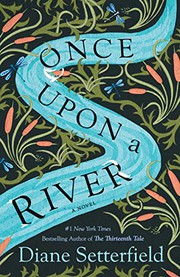
I read Setterfield's debut, The Thirteenth Tale, years ago and remembered it as a book about the pleasure and danger of stories, so when I saw that her third novel opened with a dead girl carried into a riverside pub on a winter night, I did not need much convincing. The premise is a gift. A man stumbles through the door of an inn on the River Thames, half-frozen and bleeding, holding a child who is plainly dead. And then, over the hours it takes the adults in the room to argue about what to do with her, the child stirs. She is not dead after all.
That opening is Setterfield playing to her considerable strength. She has always been interested in storytellers, people who sit around and spin tales, and here she builds an entire novel around what happens when a story walks in through your door and refuses to explain itself. It is a slow, atmospheric book, closer to folklore than to thriller, and if you come to it wanting pace you may find the middle stretches long. I did not mind the pace at all. What stayed with me was the community Setterfield draws, a Victorian riverside household that talks constantly and believes, sincerely, that a good story is one of the basic necessities of life.
The night at the Swan
The book begins on a winter solstice in 1887, which is exactly the right date to begin a story about a mystery. The inn is the Swan at Radcot, a real crossing point on the Thames in Oxfordshire, and it is run by Margot Ockwell, a woman whose legal name is Bliss because that is her husband's surname, and who answers to either without much caring. Margot has raised twelve daughters and has a son, Jonathan, who is fifteen during the events of the novel, and the house runs according to her rules, which are numerous and non-negotiable.
The man who arrives with the child is Henry Daunt, a photographer from Oxford. He is wounded, he is exhausted, and he cannot say much before the night is out. He has no connection to the girl in the sense that matters to the people gathering around her, no story about whose she is, and his arrival simply deepens the problem. He brought her out of the river. He does not know where she came from.
Setterfield based the girl's return, or says she did, on real accounts of people who appear to die after falling into cold water and then revive, the cold shock response doing its quiet work while everyone else has given up. That grounding matters, because it gives the reader a reason to accept the impossible thing the novel is built on without the book ever having to argue for it. The river tried to take her. The river gave her back. What the characters do with that fact is the story.
The household that argues for a living
The Swan is not just the setting. It is the novel's engine, and the reason is Joe Bliss, Margot's husband, who is a storyteller in the way that some men are born to do one thing and never manage anything else. Under his influence the inn has become a place where tales are told every night, where regulars arrive expecting to be entertained, and where the arrival of a real mystery is experienced, on some level, as an opportunity.
This is Setterfield's most knowing move. The people at the Swan discuss the child constantly, and every retelling of the night's events adds a detail the last one lacked. They offer versions. They embroider. The gossip runs ahead of the facts so quickly that within a day the girl has a history she did not arrive with, and the household, with its twelve daughters and its parade of neighbors, is exactly the right machine for producing that kind of multiplication.
I liked the domestic texture of these chapters more than I expected to. Margot's daughters, who are collectively treated in the book almost as a single force of nature the family calls Little Margot when they sweep back in, give the house its noise and its appetite. Food is always being made. Someone is always being shushed. The child at the center of the mystery is fed and warmed and argued over, and the practical business of keeping a body alive sits alongside the storytelling in a way that keeps the book from floating off into pure whimsy.
Three families, three losses
The plot's backbone is the question of who the girl is, and Setterfield answers it by giving you three possible homes rather than one. Each is introduced with enough evidence to be believable, and each carries its own private history of loss, which is what gives the novel its sadness.
The first claim belongs to Anthony and Helena Vaughan, a wealthy couple whose daughter Amelia was kidnapped at the age of two and had been missing for two years by the time the child turns up at the Radcot. A ransom was paid in that case and the girl never came home, so the Vaughans have been living for years inside a particular kind of hope, the kind that flares at every report of a found child. Their claim is the most dramatic, and the book is sharp about what money and grief do to a marriage.
The second belongs to a farming family, the Armstrongs. Robert Armstrong and his wife Bess want the child to be Alice, the granddaughter of the family, a girl who disappeared and whose mother, Robin's wife, is dead. This claim is quieter than the Vaughans and in some ways more painful, because what the Armstrongs want is a household made whole, a child to raise.
The third is my favorite, because it is the strangest. Lily White, who works as a housekeeper for the local parson, is convinced the girl is Ann, her younger sister, lost many years earlier. Lily's claim is the least logical and the most human. She is not reaching for a child she lost recently. She is reaching across a long stretch of adult life at a chance to have the sibling she never stopped missing.
Setterfield plays these three against each other with real patience. None is mocked. None is obviously wrong for most of the book. And the structure gives you the peculiar experience of wanting the child to be all three at once, which is of course impossible, and knowing that whoever she turns out to be, one or two families are going to be left holding an absence they had briefly stopped feeling.
Henry Daunt and the camera
The photographer is a clever inclusion, and not only because Setterfield was drawing on a real Oxford figure of the period, the photographer Henry Taunt, whose name she half-transforms for her character. Daunt gives the novel a witness, someone with a craft built around fixing reality in place, and that craft sits in interesting tension with everything else going on.
Photography in the 1880s is slow, deliberate, and unforgiving, and Daunt's instinct to record rather than to invent puts him at odds with the Swan's storytelling economy. He wants to know. The inn wants to have a good version. The two impulses coexist through the whole book, and the fact that Daunt is also the man who carried the girl out of the water gives him a standing the other observers do not have. He was there, and he still does not know.
There is a tenderness in how the book handles him that I appreciated. His role stays modest. He keeps showing up, and the novel is honest that showing up, in the face of a mystery this large, is most of what anyone actually does.
The long middle, and where it drifts
No review is honest without this part. The middle of Once Upon a River is long, and there are stretches where the three claims cycle without any of them advancing very far, where you have read four pages of village talk and learned nothing that changes your understanding of anything.
Setterfield's method is additive rather than propulsive. She builds by accumulation, one scene of gossip or weather or household business after another, and if the accumulation is working for you, if you are enjoying the company, the length feels like a feature. If you are waiting for the mystery to move, the length feels like a tax. I was mostly in the first camp and even I noticed a stretch, somewhere around the two-thirds mark, where the book could have tightened by a hundred pages without losing anything except atmosphere, and the atmosphere is the point, so perhaps that is a complaint about my own reading rather than about the book.
The other structural note is that the supernatural register is deliberately ambiguous. The girl's revival is treated as medically explicable, and yet the novel keeps one foot in the world of folk belief, of river spirits and old stories about what the water gives back. Setterfield never resolves that ambiguity, and I think that is the right call, but readers who need their fiction to declare its genre early may find the uncertainty irritating rather than delicious.
What it is actually about
Strip away the mystery and the book is about the stories a community needs to be true. That is its real subject, and it is why Setterfield gives so much space to the telling rather than to the facts.
The three claims are not only competing explanations. They are competing lifelines. The Vaughans need Amelia to be alive because the alternative means accepting that the ransom bought nothing. The Armstrongs need Alice because a grandchild gives the family a future. Lily needs Ann because loving a sister who vanished before your adult life began is a peculiar kind of unfinished grief, and finishing it would be a mercy even if the mercy hurts.
Around these, the Swan's regulars keep spinning their versions, and the book is quietly devastating on how quickly a story becomes property. People who were not there begin to report details they never witnessed. The child acquires a nickname, then a history, then a personality. By the time evidence arrives, the village has feelings about the evidence, and Setterfield shows how hard it is to hear a fact once you have an investment in a tale.
This is also a book about water itself, about a river that defines the community's edges, freezes in winter, floods in spring, carries things down from upstream, and occasionally takes someone. The Thames explains why the village sits where it does and why the mystery exists at all, and Setterfield, who grew up fascinated by rivers and pubs, writes the physical place with real affection. You can feel the cold of the towpath.
The ending, and what it leaves
I will not lay out the resolution in detail because the pleasure of the book is watching three bereaved families each believe, in turn, that they have been given back what they lost. What I will say is that Setterfield resolves the question patiently, without a single theatrical unmasking, and that the final pages land on loss as much as on answers. The book's gentleness does not mean its ending is a triumph. It means the novel has been honest about how much of adult life is about carrying on after something was taken, and about the stories that make carrying on possible.
That tone is the reason The Times made it a Book of the Month and reviewers kept calling it magical, which is a word critics apply lazily and did not apply lazily here. The magic on offer is domestic rather than spectacular: a household where people talk, eat, argue, and keep faith with someone who may not be theirs.
Who should read it
If you liked Setterfield's The Thirteenth Tale, you will recognize the same preoccupation with narrative itself, though this book is warmer and less spiky than that one, with a bigger cast and a smaller dose of gothic machinery. If you like your historical novels dusty and serious, be warned: this is a fairy-tale Victorian, a village of types and rhythms rather than a reconstruction.
It suits a particular mood, which is the mood you are in when you want to be told a story rather than shown a crime. Read it in winter if you can. Read it somewhere with a fire or at least a hot drink. The ideal reader is someone who does not mind a long walk through cold countryside as long as the destination is worth reaching, and the destination here is a question I found I cared about more than I expected to: whose child she is, what a story like hers is for, and what happens to the people who need it to end one way.
FAQ
Is Once Upon a River a fantasy or a mystery?
It sits between the two. It has a supernatural edge and folklore woven through it, but its engine is a mystery about a child who appears half-drowned and the families who want to claim her.
Is this the same Once Upon a River by Bonnie Jo Campbell?
No. That is a different book, a 2011 short story collection. This is Diane Setterfield's 2018 Gothic novel.
Do I need to have read The Thirteenth Tale first?
No. Once Upon a River is standalone and shares no characters or continuity with her debut.
Similar books

Anatomy: A Love Story
In 1817 Edinburgh, a noblewoman who wants to be a surgeon disguises herself to study anatomy and falls for the grave robber who supplies her with bodies.
2,031-word summary · 9 min read
The Water Dancer
An enslaved man with a strange power for travel fights to free himself and rescue those he loves.
2,910-word summary · 13 min read
The Prisoner of Heaven
Fermin Christmas past returns with a stranger and a prison debt.
2,388-word summary · 11 min read
Belladonna
Poison-immune orphan Signa Farrow hunts a gothic killer at Thorn Grove with Death as ally and suitor, while cousin Blythe fades and her ghost mother asks for…
2,868-word summary · 13 min read
The Lake House
Detective Sadie reopens 1933 Edevane baby vanishing tied to writer Alice.
2,055-word summary · 9 min read
Black Butler, Vol. 1
A twelve year old earl and his demon butler keep a Victorian manor running by day and handle dark work for the Queen.
2,877-word summary · 13 min read
The Angel's Game
In 1920s Barcelona, a young writer accepts a strange publisher's offer to write an impossible book and finds his life turning into a ghost story.
2,699-word summary · 12 min read
The Forgotten Garden
A Brisbane woman traces a century old abandonment from an English country house to a Cornish cove and a hidden author.
2,056-word summary · 9 min read
Jonathan Strange and Mr Norrell
Two magicians bring magic back to Napoleonic England, one by books and one by daring.
2,067-word summary · 9 min read
The Wind-Up Bird Chronicle
An unemployed Tokyo man hunts a lost cat, then his missing wife, and slips from quiet suburbs into wells and wartime memory.
3,344-word summary · 15 min read
The Historian
A daughter traces her father's search for Dracula through letters and archives across Europe.
3,237-word summary · 14 min read
Piranesi
Piranesi lives alone in an endless House of statues and tides until chalk messages hint at another visitor and a buried past.
2,992-word summary · 13 min read
Mexican Gothic
In 1950 Mexico, glamorous Noemi Taboada leaves Mexico City for High Place after a desperate letter, to rescue cousin Catalina from the chilling Doyles and…
2,523-word summary · 11 min read
The Shadow of the Wind
In postwar Barcelona, Daniel finds a cursed novel and hunts its vanished author while a burned man watches.
2,000-word summary · 9 min read
Miss Peregrine's Home for Peculiar Children
Jacob Portman finds his grandfather dead in the woods, follows a cryptic letter to a ruined orphanage in Wales, and meets children living inside a repeating…
2,331-word summary · 10 min read
The Thirteenth Tale
A dying novelist tells her true story at last to a bookseller's daughter, and the mystery of the Angelfield twins comes into the open.
2,928-word summary · 13 min read
What Moves the Dead
Alex Easton arrives at the Usher house to find Madeline dying, the tarn full of fungus, and the local hares refusing to stay dead.
2,586-word summary · 11 min read
The Tale of the Body Thief
Lestat trades bodies with a psychic thief for one day of mortality and ends up trapped, sick, and hunting his own vampire body.
2,069-word summary · 9 min read
The Art Forger
A disgraced Boston painter agrees to copy a Degas stolen from the Gardner Museum, then begins to suspect the original she is copying is itself a forgery.
2,117-word summary · 9 min read
The Once and Future Witches
Three estranged sisters bring witchcraft back to an 1893 city where magic hides in nursery rhymes and the fight for the vote is also a fight for power.
2,132-word summary · 9 min read
The Unmaking of June Farrow
A woman in a North Carolina flower-farming family walks through a red door into 1951, where she must solve her mother's disappearance and decide whether to…
2,701-word summary · 12 min read
The First Fifteen Lives of Harry August
Harry August dies and is born again into the same life, again and again, until a warning from a child tells him the world is ending faster with each pass.
2,189-word summary · 10 min read
The Black Dahlia
James Ellroy builds a fiction around the real Black Dahlia murder, following two Los Angeles cops whose partnership and obsessions destroy them.
2,533-word summary · 11 min read
Only Time Will Tell
A Bristol dockworker's son wins a scholarship, falls in love with the daughter of the family that owns the shipyard, and learns that his father's death was not…
2,082-word summary · 9 min read
Night Film
A disgraced journalist investigates the death of a reclusive horror director's daughter, following a red coat through hospitals, secret clubs, and a family…
2,690-word summary · 12 min read
The Moonstone
A cursed yellow diamond vanishes on the night of a birthday party, and eight witnesses tell what they saw.
2,603-word summary · 12 min read
The Echo of Old Books
Barbara Davis's 2023 novel sends a rare-book dealer in 1984 New Hampshire hunting for the authors of two unpublished volumes that tell opposite sides of one…
2,491-word summary · 11 min read
Last Night at the Telegraph Club
The 2021 National Book Award winner follows Lily Hu, a Chinese American teenager in 1954 San Francisco, as she falls for Kath and learns what it costs to be…
2,336-word summary · 10 min read
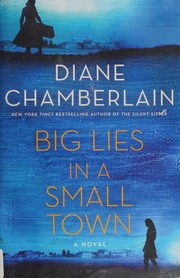
Big Lies in a Small Town
A 22-year-old woman leaves prison to restore a 1940 mural, and Edenton, North Carolina, starts talking.
2,187-word summary · 10 min read
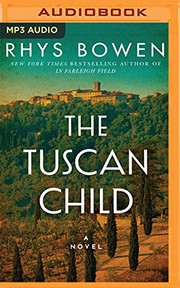
The Tuscan Child
After her father's death, Joanna follows a returned letter to Tuscany and uncovers his wartime love, a hidden painting and a village secret. A dual-timeline…
2,095-word summary · 9 min read