
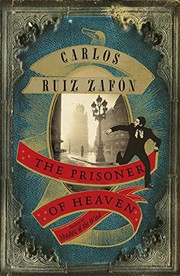
The Prisoner of Heaven
2,388-word summary 11 min read 304 pages in the book
- First published
- 2011
- Publisher
- Harper
- Pages
- 304
- ISBN
- 9780062206305
- Original title
- El prisionero del cielo
- Series
- Cemetery of Forgotten Books (#3)
Reading options
What's inside (8 sections)
I picked this one up because The Shadow of the Wind left Fermin in my head. Daniel gets the love story and the mystery, but Fermin gets the best lines and the worst past, and I always wanted to know what Franco's prisons did to him before he showed up cheerful at the Sempere shop. This is that book, short and dark and built like a bridge. The Spanish original, El prisionero del cielo, was first published in Spain in 2011, and the English translation came in 2012 from Harper, 304 pages in the edition most people buy now, ISBN 9780062206305, by Carlos Ruiz Zafon. It is the third entry in the Cemetery of Forgotten Books, after The Shadow of the Wind and The Angel's Game, and it reads best if you know those two, though Zafon gives you enough footing to stand.
The frame is Christmas in Barcelona, 1957. Daniel Sempere is married to Bea. They have a baby son named Julian. The bookshop on the old street ticks along. Fermin Romero de Torres, once a beggar living on the streets with a sharp tongue and a ruined body, is about to marry Bernarda, and he is nervous in the sweet fussy way of a man who cannot believe his luck. Then a stranger walks into the shop. He is described as gaunt and wrong, with a fixed smile and a story that does not sit right. He buys a book, leaves a note or a threat depending how you read it, and points at Fermin's past. Someone from prison remembers Fermin. Someone wants money or silence or both. Daniel watches his friend go pale and realizes the cheerful Fermin he knows is standing on top of a buried room.
What follows splits in two. In the present, Daniel and Fermin poke at the stranger's trail through cold Barcelona streets. In the past, Fermin finally tells the prison story he has kept folded small for years. The two tracks meet around a dead writer, a living politician with literary ambitions, and a book that should not exist.
Christmas 1957 and the stranger
Zafon opens with warmth on purpose. Morning light in the apartment above the shop. Bea tired and happy with the baby. Daniel's father older and softer, minding the counter. Fermin bursting in with wedding worries, asking Daniel about suits and speeches and whether Bernarda could possibly love a man with his scars. Barcelona is cold and bright. Shop bells ring. People buy books for Christmas. For fifty pages you think this might be a gentle coda, Fermin gets married, Daniel becomes a father properly, everyone eats too much.
The stranger breaks it. He comes when Fermin is out, asks odd questions, buys a copy of a book connected to David Martin, and leaves a message that names Fermin's prison years. Daniel does not like his hands or his voice. His father does not like the sale. When Fermin hears, the change is physical. The jokes stop. He sits down hard. He tells Daniel a version he has never told straight, that in the late 1940s he was locked in Montjuic prison under Franco, starved and beaten, and that a man died because of him, or he thinks so, and that a debt from those cells has found him at Christmas.
Daniel pushes, the way Daniel does. He is older now than the boy who chased Julian Carax, married, a father, but the same hunger sits in him. If someone threatens Fermin, he will pull the thread. Fermin resists at first. He wants his wedding. He wants Bernarda to have a husband without ghosts. Shame holds him too. Prison took his teeth and his weight and nearly his mind, and he built his bright talkative self on top of that ruin. Telling Daniel means lifting the floor. The stranger leaves another prod, a visit or a letter that mentions a name Daniel knows from David Martin's story, and resistance becomes impossible. They start walking the city together, Daniel and Fermin, the way they once chased Carax, but slower and more afraid.
Bernarda and Bea get good scenes here. Bernarda tells Fermin she will marry the whole man, prison included. Bea tells Daniel to help his friend but to come home alive. Zafon writes marriages in this series as ballast. Baby Julian cries and eats through discussions of murder, which keeps the dread from going purple. Almost.
Fermin in Montjuic
Fermin's prison account is the core of the book and the reason to read it. He was picked up in the hard years after the civil war, poor and loud and on the wrong side of hungry officials. Montjuic sits above the city, stone and wind and gulls, and inside it men disappear by paperwork. Fermin shares a cell or a corridor with David Martin, the writer from The Angel's Game, who is already half ghost by then, sick and strange and scribbling. Martin is kind to Fermin in a distracted way, sharing bread, talking about books as if they are food. Fermin, who loves words the way starving men love bread, clings to him.
The villains wear uniforms and smiles. Guards beat for sport and for information. One official in particular, Mauricio Valls, circles the writers. Valls fancies himself a man of letters. He is a regime climber with a locked drawer full of other people's pages. He wants Martin to write for him, or to hand over a manuscript, a book born in prison that powerful men will later pretend they wrote. Fermin watches Martin weaken. He watches deals offered and refused. He watches a kindness get punished. A beating meant for one man lands on another. A name gets written in a ledger that should not be there. Fermin survives by luck and by making himself useful and funny to men who might otherwise kill him, the same grin he still uses in the shop.
There is a specific night that haunts him. Fermin agreed to carry something or say something to protect Martin, and the price fell on someone else. He has told himself for years that he had no choice. Telling Daniel, he cries. Fermin the talker, reduced to short sentences. Daniel listens and does not offer cheap comfort.
I should note Zafon keeps the violence blunt but not loving. Beatings happen off center or in memory flashes. Hunger is described through bread and soup and teeth. What lingers is humiliation, men made to beg and inform, friendships used as levers. Fermin's body in the present, thin and scarred, makes sense after these chapters in a way it did not before. His appetite for sweets, his flinch at slammed doors, his devotion to Bernarda's cooking, all of it slots into place.
David Martin and the stolen book
Readers of The Angel's Game will feel the floor tilt here. David Martin, the young writer who took a devil's bargain from the publisher Corelli to write an impossible book, reappears as a prisoner, broken and still writing. In this telling, Martin worked on pages in Montjuic that powerful men wanted. Valls, the official with literary dreams, takes or claims a manuscript and builds a postwar career on it. By 1957 Valls is respectable, published, praised in the right newspapers, with a family and a house and a lock on his study. The stranger's visit threatens to open that lock.
Daniel knows Martin's name from his own earlier search. In The Shadow of the Wind, Martin was a shadow behind Carax. In The Angel's Game, he was the center. Here he is a link. Daniel pulls out old notes, visits the Cemetery of Forgotten Books with Fermin, talks to his father in low voices after closing. The Sempere shop becomes a war room again, maps of Barcelona in their heads, who knew whom in 1945, which guard became which clerk, where Valls lives now. Isabella's memory drifts through too. She was Daniel's mother figure and Martin's old connection, and her death still aches in the family. Zafon ties the three books tighter with each chapter. A name from book one opens a door in book three. A joke in book two turns out to be a scar.
The stolen book plot could have felt dry. It does not, because Zafon makes it about vanity and fear. Valls did not steal for money. He stole to be seen as gifted. He keeps the pages hidden but cannot destroy them. The stranger is his creature or his victim, sent to warn Fermin off or force a final trade.
One strong sequence has Daniel visiting Valls's world, all carpet and politeness, and seeing the fear under the polish. His wife and children move through the house like people used to careful silence. Evil here is not a monster with a burned face like Lain Coubert in book one. It is a bureaucrat with a fountain pen.
The search through cold streets
The middle of the present day search moves like the earlier books. Wet streets. Cafes with thick coffee. A bookseller who dealt in banned pages. A guard grown old who will talk for coins and then begs them to leave. Fermin leads because it is his past, but Daniel watches his friend fray. Bernarda finds them and scolds them into eating.
Zafon is good at pursuit without car chases. Men follow at a distance. A car idles too long outside the shop. A letter arrives with no stamp, hand delivered. The stranger reappears with a new demand tied to a date, Fermin's wedding. That cruelty is deliberate. Marry in peace if you pay with silence. Fermin considers paying, not with money he does not have but with the manuscript or with a confession that would ruin Valls and himself together. Daniel argues against any deal with men who use a wedding as a threat. His father, quiet through most of the book, says the line that steadies them, that the Sempere family has kept books through worse and will keep people first now. They decide to face Valls rather than feed him.
The Cemetery of Forgotten Books returns for a short scene that fans will love. Among the dust and high shelves they talk about why they save books at all. Because regimes burn them. Because thieves steal them. Fermin picks a volume and holds it like bread. Then the bell rings and they go back to danger.
What Valls wants and what it costs
The endgame gathers fast, as befits a 304 page novel. Valls wants the last loose ends tied. Daniel pieces together enough to threaten Valls back. Not with police, who would side with power, but with exposure among the powerful, a manuscript copy lodged where it cannot be burned quietly. There is a confrontation in a cold house, voices low, and Fermin gets a moment that reframes his whole clownish surface. He stands straight in front of the man who once watched him starve and speaks plainly. No proverbs. No grin.
The cost is real but not ruinous. No main beloved dies here. This is not that kind of entry. What breaks is Fermin's long story about himself as a man who got away clean. He tells Bernarda everything before the wedding, prison and deals and the night he has hidden, and she marries him anyway, weeping and furious and certain. What breaks for Daniel is a simpler illusion, that his happy home floats free of the past. Bea holds him that night and he understands his father's tired eyes for the first time. Happiness in 1957 Barcelona is a room with the door barred, kept by people who remember the knock.
The stranger gets an ending that fits Zafon's moral weather. He is pitiable and hateful at once, a tool who chose to be used and then found the use left marks. Zafon does not redeem him with a speech. He lets him walk off smaller than he arrived. Valls keeps his house and his name but loses sleep. Anyone who knows the final volume, The Labyrinth of the Spirits, knows Valls will fall harder later. Here the win is modest. A wedding happens. A baby grows. A shop opens the next morning. In Zafon's Barcelona, that counts as defiance.
What works and what drags
What works is Fermin. He was the comic relief with hidden depths, and here the depths get their pages without killing the comedy. His voice in the prison chapters is leaner, funnier in flashes because humor was survival, and his present day fussing about the wedding keeps the book from drowning. The bridge work also satisfies. If you read the first two, seeing Martin again and learning how Valls rose will click puzzles into place. Isabella's echo, the Cemetery, the Sempere shop, all of it hums. At 304 pages it moves. I finished it in two evenings and immediately wanted to reread Shadow's prison hints.
The criticism is fair and worth stating. This is the shortest and most dependent of the four. New readers will feel lost in places. Names pile up, Carax, Martin, Corelli, Valls, and a fresh reader may blur them. The stranger stays thin, more function than person. Anyone wanting another big standalone like Shadow will find this lean and purposeful instead.
Read it third, after Shadow and Angel's Game, in that order, even though Angel's Game is a prequel in time. You will feel the prison chapters more if Martin matters to you already. Go in expecting a winter novella in scope, a wedding shadowed by cells, and Fermin finally telling the truth. I closed it fond of Daniel, worried for Bea's safety in a way marriage plots do to me now, and completely devoted to Fermin and Bernarda. The last image of the shop opening after trouble, bell ringing, baby upstairs, books waiting, stayed with me longer than the plot twists. That is Zafon at his best. Paper holds against stone for one more day.
Facts held: Spanish original El prisionero del cielo first published in Spain in 2011, English translation published in 2012 by Harper in the United States, 304 pages in the standard modern edition, ISBN 9780062206305, author Carlos Ruiz Zafon. Summary follows that text, with full spoilers as these retellings do.
FAQ
When was The Prisoner of Heaven published?
The Spanish original El prisionero del cielo appeared in Spain in 2011, and the English translation came from Harper in 2012. The standard edition runs 304 pages with ISBN 9780062206305.
Who are the main people?
Daniel Sempere, his wife Bea and baby Julian, Fermin Romero de Torres, Bernarda, David Martin, and Mauricio Valls.
Is it part of a series?
Yes, it is book three in the Cemetery of Forgotten Books, after The Shadow of the Wind and The Angel's Game. Read those first.
Similar books
More from Cemetery of Forgotten Books first, then related titles.
The Shadow of the Wind
In postwar Barcelona, Daniel finds a cursed novel and hunts its vanished author while a burned man watches.
2,000-word summary · 9 min read
The Angel's Game
In 1920s Barcelona, a young writer accepts a strange publisher's offer to write an impossible book and finds his life turning into a ghost story.
2,699-word summary · 12 min read
The Thirteenth Tale
A dying novelist tells her true story at last to a bookseller's daughter, and the mystery of the Angelfield twins comes into the open.
2,928-word summary · 13 min read

Anatomy: A Love Story
In 1817 Edinburgh, a noblewoman who wants to be a surgeon disguises herself to study anatomy and falls for the grave robber who supplies her with bodies.
2,031-word summary · 9 min read
Once Upon a River
A wounded man stumbles into a riverside inn carrying what appears to be a drowned child who is not quite dead, and the story braids the guesses of everyone who…
2,173-word summary · 10 min read

The Echo of Old Books
Barbara Davis's 2023 novel sends a rare-book dealer in 1984 New Hampshire hunting for the authors of two unpublished volumes that tell opposite sides of one…
2,491-word summary · 11 min read
Bleak House
Jarndyce and Jarndyce grinds through Chancery while Esther finds her family.
2,480-word summary · 11 min read
The Lake House
Detective Sadie reopens 1933 Edevane baby vanishing tied to writer Alice.
2,055-word summary · 9 min read

Snow Falling on Cedars
A Japanese American fisherman stands trial for murder on a snowy island, while a reporter faces lost love and wartime prejudice.
2,224-word summary · 10 min read
The Forgotten Garden
A Brisbane woman traces a century old abandonment from an English country house to a Cornish cove and a hidden author.
2,056-word summary · 9 min read
The Wind-Up Bird Chronicle
An unemployed Tokyo man hunts a lost cat, then his missing wife, and slips from quiet suburbs into wells and wartime memory.
3,344-word summary · 15 min read

The Historian
A daughter traces her father's search for Dracula through letters and archives across Europe.
3,237-word summary · 14 min read
Mexican Gothic
In 1950 Mexico, glamorous Noemi Taboada leaves Mexico City for High Place after a desperate letter, to rescue cousin Catalina from the chilling Doyles and…
2,523-word summary · 11 min read
What Moves the Dead
Alex Easton arrives at the Usher house to find Madeline dying, the tarn full of fungus, and the local hares refusing to stay dead.
2,586-word summary · 11 min read

Violeta
A woman born in 1920 writes her life story to her grandson, from one pandemic to another, through wealth, ruin, passion, and dictatorship in South America.
2,555-word summary · 11 min read

The Crying of Lot 49
A California woman named executor of her ex-lover's estate follows a muted post horn into a possible centuries-old postal conspiracy, and Pynchon refuses to…
2,003-word summary · 9 min read
The Art Forger
A disgraced Boston painter agrees to copy a Degas stolen from the Gardner Museum, then begins to suspect the original she is copying is itself a forgery.
2,117-word summary · 9 min read

The Black Dahlia
James Ellroy builds a fiction around the real Black Dahlia murder, following two Los Angeles cops whose partnership and obsessions destroy them.
2,533-word summary · 11 min read

Sophie's Choice
A young Southern writer in 1947 Brooklyn befriends a brilliant, unstable couple and slowly learns the story of the Polish Catholic woman at the center of their…
2,798-word summary · 12 min read
Only Time Will Tell
A Bristol dockworker's son wins a scholarship, falls in love with the daughter of the family that owns the shipyard, and learns that his father's death was not…
2,082-word summary · 9 min read
Once There Were Wolves
A biologist reintroduces fourteen wolves to the Scottish Highlands while protecting her traumatized twin sister, then finds a body in the snow that could…
2,682-word summary · 12 min read

Night Film
A disgraced journalist investigates the death of a reclusive horror director's daughter, following a red coat through hospitals, secret clubs, and a family…
2,690-word summary · 12 min read

The Lowland
Two brothers grow up beside a marshy lowland in Calcutta, and the choices of the younger one draw the older into a life of duty, distance, and quiet grief that…
2,213-word summary · 10 min read
The Moonstone
A cursed yellow diamond vanishes on the night of a birthday party, and eight witnesses tell what they saw.
2,603-word summary · 12 min read
Her Fearful Symmetry
Twins Julia and Valentina inherit a London flat above Highgate Cemetery from an aunt they never met, then find a ghost in it and a family secret.
2,057-word summary · 9 min read

The Storyteller's Secret
A New York journalist goes to India to learn why her grandmother loved a British officer, and why a family servant kept the truth for forty years.
2,270-word summary · 10 min read

Stones from the River
Trudi Montag is born a dwarf in a small German river town in 1915 and grows up to keep the town's library and its secrets, from the First World War to the…
2,818-word summary · 13 min read
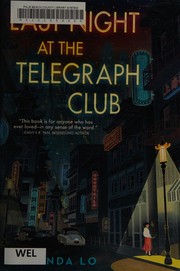
Last Night at the Telegraph Club
The 2021 National Book Award winner follows Lily Hu, a Chinese American teenager in 1954 San Francisco, as she falls for Kath and learns what it costs to be…
2,336-word summary · 10 min read

Ivanhoe
A disinherited Saxon knight, a great tournament, a besieged castle and a trial by combat. Scott's most famous novel, set in England in 1194.
2,834-word summary · 13 min read
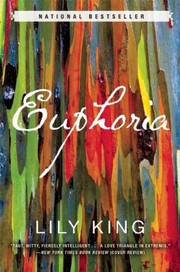
Euphoria
Three anthropologists in 1930s New Guinea turn fieldwork into a love triangle, and a real history breathes behind them.
2,048-word summary · 9 min read