
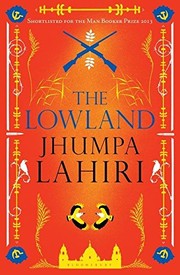
The Lowland
2,213-word summary 10 min read 339 pages in the book
- First published
- 2013
- Publisher
- A&C Black
- Pages
- 339
- ISBN
- 9781408844557
Reading options
What's inside (11 sections)
The lowland of the title is a real place, a stretch of marshy ground near Calcutta called the Bheemtala, which floods in the monsoon and recedes in the dry season, and which gives the novel its governing image. Things appear and vanish there. The water covers what it covered before. Lahiri opens the book with a description of the land and then spends the next several hundred years of narrative time, or it feels like it, showing how the same pattern repeats in a family.
I came to The Lowland knowing Lahiri only from her short stories, which are precise, quiet, and usually about a single moment of misunderstanding. This is a much larger book, a multigenerational saga moving between Bengal and Rhode Island across decades, and it takes on the weight of history in a way her earlier work mostly avoided. It is also her saddest book, and I suspect her best, though it is read less than The Namesake and less than the stories, which is a shame.
Two brothers
The novel belongs to Subhash and Udayan Bose, brothers born a few years apart in the same household beside the lowland. Udayan is the one the world notices. He is charismatic, impulsive, politically awake, and drawn from an early age into the revolutionary left. Subhash is quieter, more careful, and content to be the one who does not make trouble. Lahiri is explicit that this is not a case of the dull brother and the interesting one. It is a case of two temperaments that happen to produce very different relationships to risk.
The brothers are close in the way that only brothers raised in a small house can be, and Lahiri renders their closeness without sentimentality. They share a room, they share secrets, and they share a fascination with the swampy land behind the house where they hunt and fish as boys. That shared ground is the novel's foundation, literally and figuratively, and when it is disrupted the disruption carries.
What makes the pairing work as fiction is that neither brother is a type. Udayan's commitment to the cause is genuine and is also, in part, a young man's appetite for significance. Subhash's caution is genuine and is also, in part, a fear of what commitment would cost. Lahiri does not resolve this ambiguity, and the book is much stronger for leaving it open.
The Naxalite movement
The historical core of the novel is the Naxalite uprising, which erupted in Bengal in the late 1960s and drew in large numbers of middle-class students who had decided that parliamentary politics was a dead end and that armed struggle was the only honest response to inequality. This is the part of the book that carries the most weight for a reader who does not already know the history, and Lahiri handles it with a restraint that is characteristic.
She does not turn the movement into an abstraction, and she does not turn it into a spectacle. Instead she shows Udayan going to meetings, then going to the countryside to agitate, then doing things he cannot fully explain to his family. The reader sees the movement primarily through its effects on the household, which is an unusual and effective choice. The ideology is reported secondhand. The consequences arrive firsthand.
There is a scene, and it is the hinge of the entire novel, in which Udayan is taken by the police and brought to the place where his execution will happen, and his family is made to stand nearby. I will not describe what happens in full, because the way Lahiri stages it depends on withholding, but it is one of the most devastating passages I have read in contemporary fiction, and it achieves its effect entirely through what is not said. A less disciplined writer would have given you the horror directly. Lahiri gives you the aftermath, which is worse.
Subhash and the second life
After the catastrophe, Subhash does something that will define the rest of his life. He travels to America, to Rhode Island, and he builds a new existence there, academically and then maritally, in a way that can be read as either escape or survival. He marries Udayan's widow, Gauri, and brings her to the United States, and the marriage is an arrangement made out of duty more than out of feeling, which is the beginning of the novel's long, slow examination of what duty costs.
This second half of the book is quieter than the first and, I think, more unsettling. The violence of the movement is shocking but legible. The quiet damage done by a marriage entered into without love, and by a woman whose own ambitions are steadily foreclosed, is harder to name and harder to forgive. Lahiri is very good on this, and the sections with Gauri are among her best writing.
Gauri is the character I kept thinking about after I finished. She arrives in America as a widow carrying a grief she cannot articulate and a desire for an intellectual life that no one around her takes seriously. She studies. She reads. She finds, gradually, that the life Subhash offers her is a life in which her own interiority is a secondary concern. Lahiri does not make Subhash a villain. She makes him a decent man whose decency has a blind spot exactly the size of his wife.
Gauri, and what gets foreclosed
The novel's third movement belongs almost entirely to Gauri, and it is here that Lahiri's real subject comes into focus. Gauri becomes a scholar of political philosophy, and she finds in the thinkers she studies a freedom she does not have at home. The parallel is deliberate and slightly melancholy. She studies theories of the state and of legitimacy while living inside a domestic arrangement whose legitimacy she has never examined.
Her relationship with her daughter Bela is the novel's most painful thread, and it unfolds with the slow inevitability of a tragedy whose outline the reader can see long before the characters can. Gauri is a distant mother, and the distance is not coldness exactly but an incapacity, as though the part of her that would have to be present is the part that is elsewhere, in her work, in her regrets. Lahiri tracks this without judgment and without excusing it, which is a difficult balance to hold across hundreds of pages.
There is a moment where Bela, grown, confronts her mother, and the conversation is conducted with a politeness that makes it unbearable. Neither of them says the thing. That refusal to say the thing is the novel's method in miniature, and it is why the book leaves such a residue. Lahiri trusts the reader to hear what is not spoken.
The land, and the structure
Structurally, the novel circles. It opens in the deep past, moves forward, then doubles back, and the chronology is not always announced. This will frustrate readers who like their novels to announce their dates, and there were passages where I had to reread to place myself. But the effect is intentional. The lowland floods and recedes, and the narrative does the same, returning to the same ground from different angles and showing what has changed and what has not.
The land itself does real work. It is where the brothers played, it is where the political cell met, and it is the place to which the family eventually must return. Lahiri uses it to hold the novel's central question, which is whether the past is something you leave or something that leaves with you. The answer the novel offers is characteristically bleak and characteristically true. You can go anywhere. The past comes too.
There is a scene late in the book where an aging Subhash stands at the edge of the reclaimed lowland, now built over, and the passage is remarkable for its restraint. Nothing happens. He looks. He remembers. And the whole weight of the preceding decades is present in the looking, which is a good illustration of what Lahiri does best.
What the book is about, underneath
On its surface, The Lowland is a family saga with a political spine. Underneath, it is about the way a single decision, made by one person, for reasons that seemed adequate at the time, propagates outward through a family for generations and is inherited by people who had no say in it. That is the lowland's logic. The water rises, it covers the ground, and when it recedes everything is subtly rearranged.
Udayan's commitment is the original decision, and the novel traces its consequences with something close to forensic patience. It reaches his widow, his brother, his child, his parents. None of them chose it. All of them live inside it. Lahiri is not making a political argument about whether the Naxalite cause was just, and readers looking for that argument will be frustrated. She is making a human one about the cost of conviction to the people standing nearby.
There is also a quieter theme about inheritance that runs alongside. Bela does not know the full story of her father, and the withholding of that story is itself a form of inheritance. What we do not tell our children shapes them as surely as what we do, and Lahiri is interested in the damage done by protection.
The prose
Lahiri's sentences are, as always, clean to the point of severity. She favors short declaratives, and she rarely reaches for a metaphor when a plain statement will do. This can read as cold on a first encounter, and some readers find her withholding to a fault. But the style is doing something specific. The events in this novel are extreme, and a more expressive prose would have tipped them into melodrama. The flatness keeps them bearable, and it makes the rare lyrical passage land with real force.
There is a discipline here that reminds me, at her best, of Hemingway, though Lahiri has more warmth. She trusts the reader completely. She will give you a sequence of facts, arranged without commentary, and she assumes you will feel what is to be felt. In the passages about the family's grief after Udayan's death, this technique produces something close to unbearable tenderness, achieved through nothing more than precise observation.
The dialogue is spare and often indirect, which is accurate to the culture Lahiri is writing about and which can be difficult for a reader who expects conflict to be stated. Much of the novel's most important communication happens in the spaces between what is said, and a reader who skims the dialogue will miss the book entirely.
Where it falls short
The novel's restraint is also its limitation, and I want to name that honestly. There are stretches, particularly in the American sections, where the quietness shades into a monotone, and where the emotional stakes become difficult to track because nothing is being marked. The middle of the book sags slightly, and I found my attention wandering in a way it did not during the Bengal sections.
The historical material is also somewhat thin. A reader who comes to this novel to learn about the Naxalite movement will come away with a vivid sense of its emotional texture and a rather vague sense of its politics. This is a deliberate choice rather than a failure of research, but it is worth knowing in advance. The history is backdrop, and the family is the subject.
The characterization of some secondary figures, particularly the American acquaintances and colleagues, is thinner than the main cast deserves. They tend to function as markers of the world Subhash has entered rather than as people in their own right. This is a common weakness in novels about exile, and Lahiri does not escape it.
Reading it now
I read The Lowland a few years after it was published, and it struck me differently than it might have on arrival. The political material, a novel about radicalization and its aftermath, reads with a particular edge now, and Lahiri's insistence on the ambiguity of commitment feels more relevant than it did in 2013. She refuses to let the reader settle into either condemnation or admiration, which is exactly the posture the subject demands.
The book is best read slowly, and I suspect it is best read knowing very little about it. The plot's central catastrophe arrives without warning, and the way it rearranges the novel depends on your not expecting it. I would give the same advice about the second half, which turns out to be the true subject of the book, though nothing on the jacket suggests as much.
What I carried away was not a scene but a quality of attention. Lahiri watching a woman set a table. Lahiri watching a man stand at the edge of a place that used to be water. The novel's argument, that lives are made of small acts accumulated until they constitute a fate, is delivered through those observant passages rather than through any explicit statement. It is a quiet book that leaves a loud silence behind it, and I have found myself returning to it, and to the image of the flooding land, at unexpected moments ever since.
FAQ
What is The Lowland about?
It is a family saga centered on two brothers in Calcutta, one swept into the Naxalite uprising and the other who emigrates to America. The aftermath of a single political act reshapes a family across two countries and decades.
Is The Lowland based on a true story?
It is fiction, but it is rooted in the real Naxalite movement that erupted in Bengal in the late 1960s, when radical students took up armed struggle in the countryside and the cities.
Does The Lowland have an original title?
No. It was written and first published in English in 2013, so there is no separate original-language title.
Similar books

Violeta
A woman born in 1920 writes her life story to her grandson, from one pandemic to another, through wealth, ruin, passion, and dictatorship in South America.
2,555-word summary · 11 min read

The Stationery Shop
Two teenagers fall in love in a Tehran stationery shop in 1953, are separated by the coup and a family deception, and meet again sixty years later.
2,024-word summary · 9 min read

The Shadow Sister
Star D'Apliese steps out of her sister's shadow and follows a bookshop clue into the Edwardian life of Flora MacNichol, a woman who gave up love for duty.
2,260-word summary · 10 min read

Mrs. Everything
Two Jewish sisters in Detroit grow up, apart and together, across seven decades of American life, from the 1950s to the 2016 election.
2,362-word summary · 10 min read

Stones from the River
Trudi Montag is born a dwarf in a small German river town in 1915 and grows up to keep the town's library and its secrets, from the First World War to the…
2,818-word summary · 13 min read

A Long Petal of the Sea
A pregnant widow and her brother-in-law marry for passage on a ship of Spanish exiles bound for Chile, then spend decades building and losing homes together.
2,016-word summary · 9 min read

Brooklyn
Eilis Lacey leaves Enniscorthy for Brooklyn boarding house work, love with Tony, then a home death forces divided choice.
2,143-word summary · 10 min read

Shanghai Girls
Two Shanghai sisters flee war and face Angel Island to start over in Los Angeles.
1,914-word summary · 9 min read

The Covenant of Water
Three generations of a Kerala family face a drowning affliction from 1900 to 1977, from child bride Big Ammachi to physician Mariamma who seeks its cause.
2,955-word summary · 13 min read

Pachinko
Four generations of a Korean family in Japan, from Sunja's fall and brave marriage to pachinko parlors, discrimination, and sons who choose different ways to…
2,210-word summary · 10 min read

Unaccustomed Earth
Lahiri’s second story collection follows Bengali families in America and abroad, tracing the quiet distances between parents and children, spouses, and the…
2,333-word summary · 10 min read
Interpreter of Maladies
Nine stories follow Bengali families split between Calcutta and New England, through marriage, grief, and arrival.
2,412-word summary · 11 min read

The Namesake
Jhumpa Lahiri follows Gogol Ganguli from a hated namesake to adult loss, marriage, and family reckoning between Calcutta and Boston.
2,878-word summary · 13 min read

Little Town on the Prairie
In the spring after the Long Winter, fifteen-year-old Laura sews shirts, studies for a teaching certificate, and helps send her blind sister Mary to college.
2,071-word summary · 9 min read

The Once and Future Witches
Three estranged sisters bring witchcraft back to an 1893 city where magic hides in nursery rhymes and the fight for the vote is also a fight for power.
2,132-word summary · 9 min read

Sophie's Choice
A young Southern writer in 1947 Brooklyn befriends a brilliant, unstable couple and slowly learns the story of the Polish Catholic woman at the center of their…
2,798-word summary · 12 min read

Only Time Will Tell
A Bristol dockworker's son wins a scholarship, falls in love with the daughter of the family that owns the shipyard, and learns that his father's death was not…
2,082-word summary · 9 min read

The Storyteller's Secret
A New York journalist goes to India to learn why her grandmother loved a British officer, and why a family servant kept the truth for forty years.
2,270-word summary · 10 min read

Ivanhoe
A disinherited Saxon knight, a great tournament, a besieged castle and a trial by combat. Scott's most famous novel, set in England in 1194.
2,834-word summary · 13 min read

Euphoria
Three anthropologists in 1930s New Guinea turn fieldwork into a love triangle, and a real history breathes behind them.
2,048-word summary · 9 min read

Eligible
Austen's Bennet sisters move to modern Cincinnati, where marriage is a reality show and the house is losing its value.
2,293-word summary · 10 min read

A Spool of Blue Thread
Four generations of the Whitshank family in Baltimore, and the silences, resentments and quiet love they hand down without ever saying so.
2,408-word summary · 11 min read

Wide Sargasso Sea
Jean Rhys gives the first Mrs. Rochester a Caribbean childhood, a marriage built on money and suspicion, and a voice that Charlotte Bronte left in the attic.
2,021-word summary · 9 min read

This Is How You Lose Her
Yunior cycles through love affairs and betrayals in nine linked stories, tracing the damage he does and the family history behind it.
2,195-word summary · 10 min read

The Sisters Brothers
Two hired killers ride from Oregon to Gold Rush California to murder a prospector, and find their trade, their brotherhood, and the frontier myth coming apart.
2,095-word summary · 9 min read
The Silence of the Girls
Briseis, queen of Lyrnessus, is captured by Achilles and narrates the Trojan War from inside the Greek camp, where women are prizes and survival is its own…
2,098-word summary · 9 min read

The Birth of Venus
A Florentine merchant's daughter trains as an artist, marries a man who hides a secret, and survives Savonarola's bonfire of the vanities.
2,404-word summary · 11 min read
Mother Night
Howard W. Campbell Jr., a Nazi propagandist and American spy, tells the story of his double life from an Israeli prison cell while waiting to be tried for war…
1,988-word summary · 9 min read

Bring Up the Bodies
Thomas Cromwell sets out to destroy Anne Boleyn, building a case from rumor and revenge while Henry VIII waits to marry Jane Seymour.
2,066-word summary · 9 min read

The Storm Sister
Ally D'Aplièse loses her father and her lover within weeks, then follows a brass frog and a Norwegian biography into Anna Landvik's music and the world of…
2,376-word summary · 11 min read