
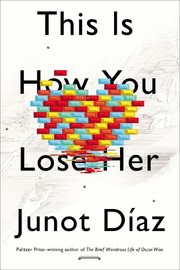
This Is How You Lose Her
2,195-word summary 10 min read 213 pages in the book
- First published
- 2012
- Publisher
- Riverhead Books
- Pages
- 213
- ISBN
- 9781594487361
Reading options
What's inside (10 sections)
I read This Is How You Lose Her on a train from New York to Boston, which turned out to be the wrong setting. The book is not long, but it is relentless. Every story puts Yunior in a room with a woman he is about to disappoint, and the reader knows it before she does. By the third story I had stopped expecting anyone to be saved. That sounds like a complaint. It is not. The collection is one of the few books I have read that treats a man's inability to love as a subject worth examining rather than a personality trait worth admiring.
Junot Díaz published the collection in 2012, five years after The Brief Wondrous Life of Oscar Wao. Riverhead Books brought out the hardcover, which runs 213 pages in the edition I used. It contains nine stories, most of which had already appeared in The New Yorker. The book was a finalist for the National Book Award and the Andrew Carnegie Medal. It is the third of Díaz's books to center on Yunior, the Dominican-American narrator who also appears in Drown and Oscar Wao. You do not need to have read either book to follow this one, though the later stories land harder if you have.
Yunior, again
Yunior is a writer, a teacher, and a serial cheater. He is also funny, self-aware, and capable of real tenderness, which is what makes him difficult to dismiss. He knows exactly what he is doing and does it anyway. The collection is built around that gap between knowledge and behavior. He can describe the mechanics of his own betrayal with the precision of a mechanic describing an engine, and then he goes out and betrays someone again.
The stories are not arranged chronologically. They move between Yunior's childhood in the Dominican Republic, his adolescence in New Jersey, and his adult life in Boston and New York. The effect is less like a novel than like a file folder of evidence. Each story adds a piece to the same case. The case is not whether Yunior is a good man. It is why he keeps choosing the version of himself that makes love impossible.
Díaz's prose does a lot of work here. He mixes Spanish and English without translation, uses footnotes in some stories, and shifts between first, second, and third person. The style could easily become a gimmick. It does not, because the switches usually mark a change in distance. When Yunior narrates in the second person, as he does in the final story, the "you" is both himself and the reader. It is an accusation dressed as a confession.
The stories that hurt most
The collection opens with "The Sun, the Moon, the Stars," in which Yunior takes his girlfriend Magdalena to Santo Domingo after she learns he has been cheating. The trip is supposed to be a repair job. It becomes a slow humiliation. Magdalena is sharp, funny, and entirely unimpressed by his performance of remorse. The story is set during a hurricane, and the weather does what weather does in good fiction: it makes the emotional situation visible without explaining it. By the end, Magdalena is gone, and Yunior is alone in a hotel room, which is where he has been all along.
"Nilda" is quieter. Nilda is Rafa's girlfriend, and Yunior becomes her friend while waiting for his brother to come home at night. She wants to open a group home for runaway kids. Yunior listens to her talk about it with the patience he cannot manage for his own girlfriends. The story is one of the few places where he is not the center of the emotional weather. He is a witness, and the role suits him.
"Alma" is the shortest story in the book and the source of its title. Yunior dates Alma for eight months. She finds his journal and learns that he has been cheating. She does not confront him immediately. She waits for him to do what he always does, which is to end things badly. The story is almost a joke about how predictable he is, except that Alma's silence has weight. She is giving him a chance to be someone else, and he cannot take it.
These early stories establish the pattern. Yunior is not a monster. He is a man who has been trained, by his family and by his culture, to see women as a series of options. The book's title is not a warning to women. It is a description of a habit. You lose her because you cannot stop looking for the next her.
The family stories
The strongest story in the collection may be "Otravida, Otravez," which is also the one that steps furthest outside Yunior's head. The narrator is a Dominican woman working in a laundromat, involved with Yunior's father, Ramon. Ramon has a wife and children back on the island. The woman knows this. She also knows that she is not the first woman he has kept in the United States, and she suspects she will not be the last. The story is told in a flat, careful voice that makes her loneliness feel ordinary, which is worse than tragic.
"Invierno" is about the family's arrival in New Jersey. Papi has been in the United States for five years. Mami, Rafa, and Yunior have been waiting in Santo Domingo. The story captures the specific disorientation of a child who has been told that America is the future and discovers that the future is a cramped apartment, a language he cannot speak, and a father who is almost a stranger. There is a scene with snow that I have thought about many times. Yunior stands outside with flakes landing on his scalp, and the cold is both a discovery and a punishment.
"The Pura Principle" returns to Rafa, who is now dying of leukemia. Pura is the woman he marries, and she is not what the family expected. She is loud, messy, and possibly taking advantage of him. Mami hates her. Yunior watches the whole thing with the helpless anger of a younger brother who cannot fix anything. The story is about how illness rearranges a family's hierarchy. Rafa, who was always the dangerous one, becomes the person everyone has to protect, and Pura becomes the person everyone needs to blame.
These stories matter because they show where Yunior's ideas about love came from. His father kept a second household. His brother treated women as conquests. The women in the family absorbed the cost. Yunior learned the lesson early and spent his adulthood repeating it. The collection is not excusing him. It is showing the machinery.
The women problem
Díaz has been criticized, fairly, for the way the women in these stories are drawn. They are vivid when they are angry or hurt, and less vivid when they are happy. They often exist to teach Yunior something about himself. The critic Virginia Vitzthum made this point in Elle, arguing that the women are mostly seen as exes crying after they have been cheated on or as new possibilities cataloged in terms of their sexual value. That is a real limitation, and it is worth naming before praising the book.
The limitation is also part of the subject. Yunior is a narrator who cannot see women clearly, and the stories are filtered through his blindness. That does not make the blindness less frustrating. A novel about a solipsist can still imagine other minds. This collection sometimes does, especially in "Otravida, Otravez" and "Nilda," and sometimes does not. The result is uneven. The best stories make Yunior's failure of imagination feel like a wound. The weaker ones make it feel like a style.
"Flaca" is an example of the weaker mode. Veronica Hardrada meets Yunior in a James Joyce class at college. They fall into a two-year relationship that neither of them planned. The story is well observed, but it follows a familiar arc: attraction, intimacy, betrayal, aftermath. It is not bad. It is simply less surprising than the stories around it.
"Miss Lora" is more uncomfortable and more memorable. Yunior is a teenager. Miss Lora is a middle-aged neighbor. They begin a sexual relationship, and later she becomes a substitute teacher at his high school. The story is about shame, appetite, and the way adults can exploit the loneliness of children without ever admitting what they are doing. It won the Sunday Times EFG Short Story Award, and it is easy to see why. It refuses to make either character a symbol.
The Cheater's Guide to Love
The final story is the one that justifies the whole collection. "The Cheater's Guide to Love" is written in the second person and spans five years. It begins with the sentence "Your girl catches you cheating." It ends with Yunior alone, older, and slightly wiser. In between, he cycles through relationships, therapy, self-help, and a friendship with an Iraq War veteran named Elvis, whose marriage becomes a mirror for Yunior's own failures.
The second person is not a trick here. It puts the reader inside the rationalizations. You feel the relief when a new woman laughs at your joke. You feel the boredom when the relationship becomes a routine. You feel the panic when she finds the messages. The story is long enough to show the full cycle, which is what the earlier stories could only suggest. By the end, Yunior has learned something, but the lesson has cost more than he can repay.
The collection's most quoted line is about the half-life of love, and the phrase has become a kind of shorthand for Díaz's view of romance. What the story actually shows is that the damage does not decay at the same rate as the relationship. Yunior's exes move on. He does not. His memories keep him in a room that the other person has already left. That is the real subject of the book, and it is why the final story feels less like a conclusion than a diagnosis.
What the book gets right
The dialogue is excellent. Díaz has an ear for the way people talk when they are trying to impress each other and when they have stopped trying. The Dominican and Dominican-American details are specific without being explanatory. Food, music, family nicknames, the geography of a New Jersey neighborhood: all of it arrives without a glossary. The reader is trusted to keep up.
The book is also honest about the cost of infidelity in a way that most fiction is not. It does not present cheating as a glamorous flaw or a tragic inevitability. It presents it as labor. Yunior has to lie, remember the lies, manage the logistics, and repair the damage. The work is exhausting, and the collection makes you feel the exhaustion.
The structure is smart. The stories can be read alone, but together they create a portrait of a man who is running out of places to hide. The movement between childhood and adulthood prevents the book from becoming a simple confession. It becomes a study of how a person is made.
Where it slips
The book's biggest weakness is repetition. Several stories cover the same emotional ground, and the reader can feel the collection circling. Yunior cheats, gets caught, feels bad, and repeats. That is the point, but a point can be made too many times. The middle section drags, and one or two stories could be cut without losing much.
The female characters also remain a problem. Even when they are given their own stories, as in "Otravida, Otravez," they are often defined by their relationship to a man. The book knows this, but knowing is not the same as solving it. A reader who wants a novel of female interiority will not find it here.
The prose can also be too pleased with itself. Díaz is a brilliant sentence writer, and he knows it. The footnotes, the code-switching, the sudden shifts in register: all of it is impressive, and some of it is unnecessary. There were moments when I wanted a plainer sentence and got a performance instead.
Who it is for
This is a book for readers who want a voice more than a plot. It is for people who liked Oscar Wao and want to spend more time with Yunior, and for people who are interested in the short story as a form. It is not a romance, and it is not a redemption narrative. It is a portrait of a man who is trying to learn how to love and failing in public.
I finished it on the train and sat with it for a while. The book does not offer comfort. It offers clarity, which is rarer. Yunior is not a hero, and he is not a villain. He is a person who has hurt people and knows it. The collection asks whether that knowledge is enough. The answer, at least in these pages, is no. It is a start, but it is not enough.
FAQ
Is This Is How You Lose Her a novel or a short story collection?
It is a collection of nine linked stories, most narrated by Yunior, that can be read as a fragmented novel.
Do I need to read Drown or Oscar Wao first?
No. The collection stands alone, though Yunior's history in the earlier books adds context.
Why is the book called This Is How You Lose Her?
The title comes from the story Alma, where Yunior's inability to be honest ends another relationship.
Similar books
Unaccustomed Earth
Lahiri’s second story collection follows Bengali families in America and abroad, tracing the quiet distances between parents and children, spouses, and the…
2,333-word summary · 10 min read
Interpreter of Maladies
Nine stories follow Bengali families split between Calcutta and New England, through marriage, grief, and arrival.
2,412-word summary · 11 min read
Americanah
Ifemelu leaves Nigeria for America on a scholarship, blogs about race and hair, while Obinze endures undocumented London until they reunite years later in…
2,527-word summary · 11 min read
Olive, Again
Elizabeth Strout returns to Crosby, Maine, as Olive Kitteridge marries Jack Kennison, confronts her son, and faces old age, grief, and small-town judgment.
2,333-word summary · 10 min read
The Accidental Tourist
Grieving Macon writes travel guides for haters of travel, then Muriel intrudes.
2,252-word summary · 10 min read

Song of Solomon
Milkman Dead leaves Michigan to hunt for family gold and finds instead the old song of his ancestor Solomon.
2,465-word summary · 11 min read
The Mothers
Nadia hides abortion from church Mothers while Luke and Aubrey circle for years.
2,078-word summary · 9 min read

Brooklyn
Eilis Lacey leaves Enniscorthy for Brooklyn boarding house work, love with Tony, then a home death forces divided choice.
2,143-word summary · 10 min read
All We Ever Wanted
A Nashville photo of a drunk boy over a passed out girl splits three families along money and race lines.
2,278-word summary · 10 min read
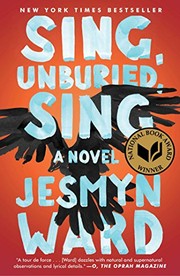
Sing, Unburied, Sing
A Mississippi family drives to Parchman prison while ghosts press close, and a dying grandmother holds the house together.
2,871-word summary · 13 min read
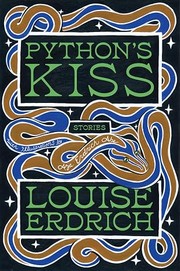
Python's Kiss
Thirteen sharp stories of stones, thieves, ghosts, and an afterlife with billing.
2,027-word summary · 9 min read
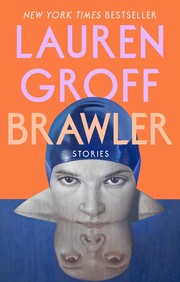
Brawler
Nine fierce stories spanning the 1950s to today, following swimmers, siblings and heirs torn between their dark and light angels.
3,103-word summary · 14 min read
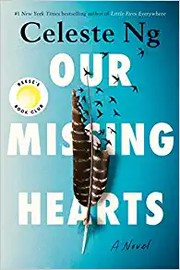
Our Missing Hearts
In a fearful future America, twelve-year-old Bird crosses the country to find the poet mother who left him.
2,434-word summary · 11 min read
The Namesake
Jhumpa Lahiri follows Gogol Ganguli from a hated namesake to adult loss, marriage, and family reckoning between Calcutta and Boston.
2,878-word summary · 13 min read
On Earth We're Briefly Gorgeous
A son writes to the mother who cannot read him: war, migration, first love, and loss in one Vietnamese American family in Hartford.
3,113-word summary · 14 min read

Tom Lake
Lara tells daughters about young love with actor Peter Duke at Tom Lake.
2,600-word summary · 12 min read
Mansfield Park
Fanny Price loves Edmund amid Crawfords theatricals at Mansfield.
2,389-word summary · 11 min read
An American Marriage
Newlywed Roy is wrongly imprisoned and Celestial loves Andre while waiting.
2,535-word summary · 11 min read
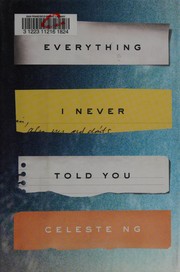
Everything I Never Told You
In 1977 Ohio, sixteen-year-old Lydia Lee is found dead in a lake, forcing her interracial family to face the secret pressures around race, school and duty that…
2,711-word summary · 12 min read
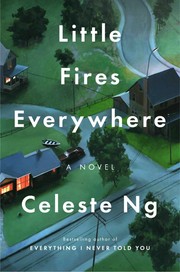
Little Fires Everywhere
In planned Shaker Heights, Elena Richardson rents to drifting artist Mia Warren, and a custody fight over baby May Ling splits friends and teens.
1,911-word summary · 8 min read

What Happened to Goodbye
Mclean has reinvented herself in four towns since her parents divorced. In Lakeview she uses her real name, and for the first time staying put becomes a choice.
2,796-word summary · 12 min read
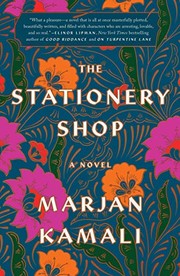
The Stationery Shop
Two teenagers fall in love in a Tehran stationery shop in 1953, are separated by the coup and a family deception, and meet again sixty years later.
2,024-word summary · 9 min read

The Japanese Lover
A Polish refugee and the son of a Japanese gardener fall in love in San Francisco in 1939, then keep the affair secret for nearly seventy years.
2,286-word summary · 10 min read
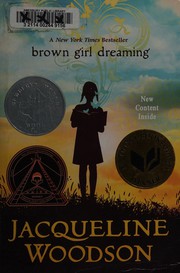
Brown Girl Dreaming
Jacqueline Woodson retells her childhood in verse, moving from Ohio to South Carolina to Brooklyn while the civil rights movement reshapes the world around her.
2,727-word summary · 12 min read
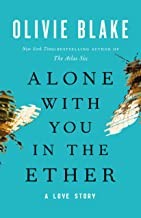
Alone With You in the Ether
Two people in Chicago agree to six conversations, and the experiment becomes a love affair that is also a study of bipolar disorder, obsession, and the shape…
2,713-word summary · 12 min read

The Shadow Sister
Star D'Apliese steps out of her sister's shadow and follows a bookshop clue into the Edwardian life of Flora MacNichol, a woman who gave up love for duty.
2,260-word summary · 10 min read

Howards End
Forster's 1910 novel follows two families, a house in Hertfordshire, and a burned note, asking whether money and feeling can ever be connected.
2,187-word summary · 10 min read
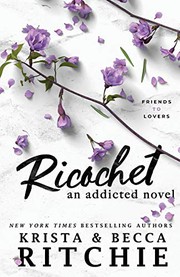
Ricochet
Lily Calloway tries to stay celibate for ninety days while Loren is in rehab, leaning on Rose, Connor, and Ryke as therapy forces her to face her childhood.
2,575-word summary · 11 min read

James
Percival Everett retells Huckleberry Finn from Jim's side, giving him a library, a hidden school, and a voice the novel lets loose.
2,211-word summary · 10 min read

Fathers and Sons
Arkady brings the nihilist Bazarov home to his father's estate, and a generational argument turns into love, a duel, and an early death.
2,192-word summary · 10 min read