
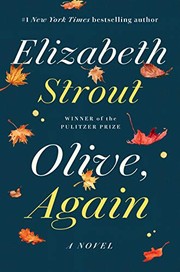
Olive, Again
2,333-word summary 10 min read 304 pages in the book
- First published
- 2019
- Publisher
- Random House
- Pages
- 304
- ISBN
- 9780812996548
- Series
- Olive Kitteridge (#2)
Reading options
What's inside (8 sections)
I came to Olive, Again through the first book, and I expected a victory lap. Olive Kitteridge had ended with its difficult heroine newly widowed and tentatively drawn to Jack Kennison, and a sequel could easily have softened her into a wise old woman dispensing lessons. That is not what Elizabeth Strout wrote. This is a colder, funnier, more patient book than that, and it keeps Olive recognizable even as it lets her see herself more clearly. Random House published it in 2019, and the edition I read runs 304 pages. It is built as thirteen linked stories rather than one continuous plot, so some chapters follow Olive closely, some put her at the edge of the frame, and a few barely include her at all. The result is less a sequel than a return to a town, with Olive as the weather that moves through it.
Spoilers follow, including the ending, because the point of this summary is to retell the whole thing.
A widower writes a letter
The book opens away from Olive, with Jack Kennison. He is seventy-four, a retired Harvard professor, a widower of seven months, and a man who has been avoiding the grocery store in Crosby because he might run into Olive there. Instead he drives almost an hour to Portland to shop. On the way back he is stopped for speeding, and the stop gives him time to think about the women in his life: his late wife, his estranged daughter, Cassie, and Olive, whom he misses more than he wants to admit. He writes her a note he is not sure he will send. It is stiff, formal, oddly boyish, and painfully sincere. Jack is not a romantic figure. He is vain, politically conservative, and used to being admired, but he is also lonely in a way that has made him honest.
"Labor" moves backward a little and gives us Olive at a baby shower she considers foolish. A pregnant guest goes into labor, and Olive, who has spent years telling people what to do, takes charge. She drives the woman toward the hospital, cannot get there in time, and delivers the baby in the back of her car. The scene is comic and tender at once. Olive's schoolteacher voice comes back, and so does her competence. It also makes her think of Christopher, her son, and of the distance between them. She calls Jack afterward. That call is the real beginning of their marriage. The book does not make the romance sweet. They marry, and what follows is not transcendence or constant tenderness. It is two difficult people who have decided to keep going with each other.
Cleaning, and a son's visit
The next story stays in Crosby but moves away from Olive. "Cleaning" is the hardest chapter to recommend casually. Kayley Callaghan is fourteen. Her father died two years ago, her mother is depressed and distracted, and Kayley cleans houses for money. Her English teacher, Mrs. Ringrose, hires her. In the empty house Kayley begins touching herself, and one day Mr. Ringrose comes home and watches. He leaves her extra money. The arrangement continues, wordlessly, for months. It is a story about neglect and exploitation, not seduction. Kayley is excited by the attention because she is starving for it, and Strout never lets us forget how young she is. When Mrs. Ringrose fires her, Kayley loses the only adult who seemed to see her. The money she hides in the piano disappears when her mother sells the instrument. Olive appears only at the end, to tell Kayley that Mr. Ringrose is losing his mind and being sent to a nursing home. The story is disturbing and morally alert, though some readers will find it too much.
Then comes "Motherless Child," the emotional center of the book and the place where Olive's self-knowledge becomes painful. Christopher is a podiatrist in New York, married to Ann, with four children. He has not visited Crosby in three years. Olive has not told him about Jack, and when he notices the car she is driving, she lies and says she bought it. The visit is careful on both sides. Ann has recently lost her mother and had a miscarriage, and Olive, who is usually so quick to judge, recognizes grief when she sees it. She is gentler with Ann than we might expect. She is also tired, and eager for the visit to go well.
On the last night Olive announces that she is marrying Jack. Christopher is furious. The announcement lands as another decision she made without him, and the old wound opens: he has spent his life feeling that his mother did not see him. The next morning Jack comes to meet the family, and Christopher is rude to him, almost childish. Ann reprimands her husband in front of everyone, and Christopher apologizes at once. Olive watches this and understands something she has been avoiding for decades. Christopher has married a woman who scolds him the way Olive used to scold Henry. She has made a son who expects to be corrected. She thinks that she has "failed on a colossal level" with Henry and Christopher, and that she has lived much of her life "as though blind." It is not a tidy apology, and Christopher does not become a devoted son overnight. But the recognition is real, and the novel keeps returning to it.
The town's other lives
"Helped" returns to the Larkin family from the first book. Suzanne comes home after her father dies in a fire at the family house. Her brother Doyle is in prison for stabbing a girl many times, and her mother is in a nursing home with dementia. Suzanne meets Bernie Green, the family lawyer, and talks about her failing marriage and her lost faith. Bernie is decent and tired, and their conversations have a careful honesty. The story is about inherited damage and the small possibility of decency. It also shows how the town's sympathy arrives too late, and how much of it is curiosity.
"Light" is my favorite story in the collection. Olive runs into Cindy Coombs, a former student who worked as a librarian and is now dying of cancer. Olive visits her at home. Cindy is angry at her husband, Tom, and Olive tells her that Tom is grieving too. The two women talk about Henry. Olive admits that she treated him badly and says she has become a little better as a person, but Henry is not alive to see it. That is the book's central ache: growth that arrives too late for the person who deserved it. The title comes from the February light at the end of the day, when the world seems cracked open above the bare trees. Strout can make that image sentimental, but she does not. The light is simply there, and the women are tired, and the moment passes.
"The Walk" follows Denny Pelletier, sixty-nine, walking at night and thinking about his children, his marriage, and Dorothy Paige, the girl he loved in high school who killed herself after years of abuse by her father. He finds a man overdosing on a bench and calls the police, saving his life. The rescue does not solve Denny's sadness, but it makes his own life feel less finished. These three stories show the town's sympathy arriving too late and its judgment arriving early. Olive is not always the center of them, but her presence changes the temperature of the room whenever she walks in.
A pedicure, exiles, and a poet
"Pedicure" catches up with the marriage. Jack is seventy-nine and Olive is seventy-eight, and they have been together for five years. Jack takes Olive for a pedicure because she can no longer reach her own toes. They take a drive through Shirley Falls and stop at a restaurant, where Elaine Croft walks in. Elaine is the woman Jack had an affair with during his first marriage, and the encounter brings back an old humiliation: she documented the affair, sued when she was denied tenure, and Jack's academic life ended in the fallout. He and Olive fight on the drive home. Later that night he wakes up disoriented, and Olive leads him back to bed. It is a small scene, but it shows what the marriage is made of. Not romance, not forgiveness, just the daily work of two people who know each other's worst parts.
"Exiles" leaves Olive mostly behind and brings in the Burgess siblings from Strout's earlier novel. Jim and Helen come from New York to visit Bob and Margaret, and the old family tensions are still there. Helen falls down the stairs and is badly hurt. Margaret confesses that she could not stand Helen and feels terrible about it. The story is about money, old guilt, and the way people keep score in families. It is also the weakest link in the book for a reader who has not read The Burgess Boys, because so much of its weight depends on prior knowledge. Olive appears briefly at an outdoor art display and gives her opinion of the work, which is exactly the kind of cameo the book does not need.
"The Poet" jumps ahead. Olive is eighty-two, and Jack has been dead for four months. They had eight years together. She runs into Andrea L'Rieux, a former student who became a United States Poet Laureate. Andrea is back in town because her father has dementia. They have breakfast, and Andrea hugs her when they part. Later a magazine arrives with a poem by Andrea, and Olive is offended by the way the poem sees her: lonely, projecting her loneliness onto a younger woman. She sits with the insult and then admits that Andrea got something right. The story is about being known badly and accurately at the same time. It is also about how much of another person we invent when we think we are paying attention.
Civil War days, the heart, and a friend
"The End of the Civil War Days" gives us Fergus and Ethel MacPherson, who have been married for forty-two years and have barely spoken for thirty-five. Their house is divided by a line of yellow duct tape. The split began after Fergus had an affair, and neither of them has been willing to repair it. Their daughter Lisa comes home with news that she is a dominatrix in a documentary. Fergus is horrified, and the argument that follows is funny and sad. He is a Civil War reenactor, and his hobby is also a performance of old battles. Lisa's work is a different kind of performance. The story knows that both are costumes. At the reenactment Fergus faints, and when he comes to, Ethel comforts him. It is not a reconciliation, but it is a truce.
"Heart" is the late crisis. Olive, eighty-three, has a heart attack in her hairdresser's driveway. Christopher comes often, arranges home care, and eventually helps her move into Maple Tree Apartments. The aides are drawn with care: Betty, who has a Trump sticker on her truck and is rude to Halima, and Halima, who is patient and proud. Olive is capable of warmth and prejudice in the same breath. Her politics are not tidy, and the book does not tidy them for her. She falls one night and has to force herself up from the floor. The scene is matter-of-fact about the humiliation of a body that will not cooperate, and about the indignity of needing help from people you have spent a lifetime judging.
In "The Friend," Olive is at Maple Tree, resistant and lonely, and she befriends Isabelle Daignault, the mother from Strout's novel Amy and Isabelle. Isabelle confesses that she cut off her daughter's hair, and that the memory still haunts her. Olive confesses that she was not a good mother either. The two women check on each other. Christopher brings Olive a typewriter and rosebushes, and she begins to type her memories. She writes a sentence close to a confession: she does not have a clue who she has been, and she does not understand a thing. The book does not end with a grand reconciliation. It ends with Olive going to fetch Isabelle for supper. Christopher's care is real, and so is the distance that remains. That balance is the most honest thing in the novel.
What the book does and does not do
The linked-story form is both the pleasure and the problem. Some chapters, like "Exiles," feel like cameos from another book. "Cleaning" is powerful but risks turning a girl's exploitation into a literary set piece. The weakest stories state the town's cruelty instead of dramatizing it, and a few end with someone looking at nature and feeling hopeful in a way that feels too easy. The strongest stories put Olive in a room with someone who will not let her be simple. Strout's prose is plain and exact, and she can make a sentence land without strain. She is also merciless about aging: the loss of mobility, the indignity of help, the way old people are discussed as if they are not present.
This is not a book for readers who want a tidy redemptive arc or a plot that moves in a straight line. It is not for anyone who needs Olive to become nice. She does not. She becomes a little more aware, and that is all. Readers who dislike linked stories, or who want a standalone novel with a clear throughline, may find the middle chapters frustrating. I would read Olive Kitteridge first, not because this book cannot stand alone, but because Henry's death and Christopher's history carry more weight if you have lived through them. The book does not answer the question of how to grow old. It just keeps someone in the room while she tries.
FAQ
Do I need to read Olive Kitteridge before Olive, Again?
It helps. The sequel assumes you know Henry's death, Christopher's history and Olive's earlier marriage, though the stories can be read on their own.
How much time passes in Olive, Again?
Olive moves from her seventies into her mid-eighties, marrying Jack, being widowed, having a heart attack at 83 and settling into Maple Tree Apartments.
Is Olive, Again a novel or a short story collection?
It is a novel built from thirteen linked stories, with Olive sometimes at the center and sometimes at the edge of other people's lives.
Similar books
More from Olive Kitteridge first, then related titles.

Olive Kitteridge
Thirteen linked stories orbit blunt Crosby teacher Olive, husband Henry and son Christopher through love, aging and Maine small-town life.
2,385-word summary · 11 min read
Unaccustomed Earth
Lahiri’s second story collection follows Bengali families in America and abroad, tracing the quiet distances between parents and children, spouses, and the…
2,333-word summary · 10 min read
This Is How You Lose Her
Yunior cycles through love affairs and betrayals in nine linked stories, tracing the damage he does and the family history behind it.
2,195-word summary · 10 min read
The Most Fun We Ever Had
Four Sorenson sisters orbit perfect parents hiding old cracks.
2,590-word summary · 12 min read
The Accidental Tourist
Grieving Macon writes travel guides for haters of travel, then Muriel intrudes.
2,252-word summary · 10 min read
Men Without Women
Seven stories about men living after women leave, die, or stay distant.
2,673-word summary · 12 min read

Kitchen
Orphan Mikage finds home in a kitchen with Yuichi and Eriko after loss.
2,597-word summary · 12 min read
The Winners
Two years on, Beartown opens a new rink, welcomes Maya and Benji home, and faces money fights and a gun at the ice.
2,366-word summary · 11 min read
Empire Falls
Grill manager Miles stays in dying Maine town for daughter while past pulls.
2,072-word summary · 9 min read
The Shipping News
At thirty-six, failed newsman Quoyle loses his cruel wife and flees to ancestral Newfoundland with his daughters, where a small-paper job slowly rebuilds him.
2,833-word summary · 13 min read
Python's Kiss
Thirteen sharp stories of stones, thieves, ghosts, and an afterlife with billing.
2,027-word summary · 9 min read
Major Pettigrew's Last Stand
A 68-year-old widower and a Pakistani shopkeeper widow fall for each other in a Sussex village that watches their every step.
2,957-word summary · 13 min read

Brawler
Nine fierce stories spanning the 1950s to today, following swimmers, siblings and heirs torn between their dark and light angels.
3,103-word summary · 14 min read
Freedom
A St. Paul couple and their grown children strain marriage, loyalty, and ideals in 2000s America.
2,678-word summary · 12 min read
The Corrections
An aging Midwestern couple tries to gather three troubled adult children for one last Christmas at home.
2,094-word summary · 9 min read
Interpreter of Maladies
Nine stories follow Bengali families split between Calcutta and New England, through marriage, grief, and arrival.
2,412-word summary · 11 min read
My Name Is Lucy Barton
Hospitalized for weeks, Lucy Barton is visited by her estranged mother, stirring memories of Amgash poverty, marriage, and becoming a writer.
2,934-word summary · 13 min read

Memories of My Melancholy Whores
A ninety-year-old journalist pays for a night with a teenage girl, cannot go through with it, and discovers love for the first time in García Márquez's late…
2,101-word summary · 9 min read

Little Earthquakes
Four Philadelphia women meet during pregnancy and discover that new motherhood is nothing like the plan, while friendship becomes the thing that holds them…
1,997-word summary · 9 min read

Howards End
Forster's 1910 novel follows two families, a house in Hertfordshire, and a burned note, asking whether money and feeling can ever be connected.
2,187-word summary · 10 min read
Once There Were Wolves
A biologist reintroduces fourteen wolves to the Scottish Highlands while protecting her traumatized twin sister, then finds a body in the snow that could…
2,682-word summary · 12 min read

Fathers and Sons
Arkady brings the nihilist Bazarov home to his father's estate, and a generational argument turns into love, a duel, and an early death.
2,192-word summary · 10 min read

The Age of Miracles
A California girl grows up while the Earth's rotation slows, and ordinary adolescence continues alongside slow catastrophe.
2,417-word summary · 11 min read

Tales from the Café
Four more visitors to a Tokyo café travel through time under strict rules, each hoping to say the thing they could not say before.
2,242-word summary · 10 min read
Summer Island
A radio advice host hides a scandal, and the estranged daughter hired to write about it agrees to care for her at the family's island house.
2,325-word summary · 10 min read

Act Your Age, Eve Brown
Eve Brown crashes into a Lake District bed and breakfast, breaks the owner's arm, and talks her way into his kitchen. A grumpy-sunshine romance about work,…
2,474-word summary · 11 min read
Peace Like a River
An asthmatic boy in the early 1960s narrates his family's search for his older brother, who is accused of two killings and has escaped custody.
1,969-word summary · 9 min read

We Are Okay
Marin fled San Francisco after her grandfather vanished and stopped answering anyone. When Mabel visits her college dorm, she has to say what happened.
2,253-word summary · 10 min read

The Chosen
A shattered pair of glasses in a 1944 Brooklyn softball game starts a friendship between a Hasidic boy and his Orthodox neighbor, and their fathers pull them…
2,443-word summary · 11 min read