

The Age of Miracles
2,417-word summary 11 min read 284 pages in the book
- First published
- 2012
- Publisher
- Random House
- Pages
- 284
- ISBN
- 9780812992977
Reading options
What's inside (8 sections)
The scene I keep returning to is ordinary and terrible at once. Julia, eleven years old, is living through an ordinary summer in a Southern California suburb when the news arrives that the Earth has begun to turn more slowly. Nobody screams. Nobody runs into the street. The sprinklers come on. That is the book in miniature, and it is why I picked it up again after years of hearing it described as a disaster novel. Karen Thompson Walker published it with Random House in 2012, a slim 284 pages, and it never behaves like the genre it is shelved near. There are no scientists racing to a launch pad, no president addressing the nation from a bunker. There is a girl with a science project and a best friend and a crush, and the planet is quietly running down behind all of it.
Julia tells the story from years afterward, looking back at the summer everything changed. She is an only child, watchful and shy, the kind of girl who notices how adults hold their mouths when they are lying. Her father, Joel, is an obstetrician, a calm man who delivers other people's babies and starts to feel like a stranger in his own house. Her mother, Helen, once an actress, is beautiful and anxious and not built for slow catastrophe. They live in a suburb where the lawns are watered on schedule and the freeway hums at night. The novel is narrated in a tone of gentle adult recollection, which gives even the smallest humiliations the weight of history.
The morning the days began to lengthen
The slowing begins without explanation. One morning the news reports that the rotation of the Earth has decelerated by a matter of milliseconds, a number so small that most people shrug. Scientists cannot say why. There is no asteroid, no announcement of a cause, and the book never supplies one. The change is imperceptible at first, then measurable, then impossible to ignore. Days stretch from twenty four hours to twenty five, then thirty two, then forty eight, and eventually to weeks. The sun hangs in the sky long past bedtime. Darkness lasts for days at a stretch. The clock and the sky stop agreeing with each other.
Walker handles the physics by keeping it at the level of a child's understanding, which is also the book's central limitation. Julia reports what she overhears: that gravity has changed, that the magnetic field is weakening, that radiation from space is no longer being turned away as it once was. Crops fail because plants cannot decide when to grow. Birds fall out of the sky in the middle of a flight, dropping onto parking lots and schoolyards. A dizziness and bone ache spreads through the population, and people start calling it the syndrome. Nobody can fully explain it either. The world is becoming uninhabitable in slow motion, and the adults keep trying to carry on with orthodontist appointments.
The most striking invention is the social split. Some people, the clock-timers, insist on keeping the old twenty four hour schedule, setting alarms and going to work in the dark, treating the sky as a inconvenience to be ignored. Others, the real-timers, sleep when it is dark and wake when it is light, which means their lives drift away from everyone else's. Schools try to hold the old schedule and fail. Children fall asleep at their desks in what used to be morning. Julia's family stays on clock time at first, out of habit and denial, and the gap between the household and the natural world becomes a quiet source of dread. It is a clever metaphor for how people respond to any slow emergency: some adapt, some refuse, and the refusal looks a lot like courage for a while.
The house, the piano teacher, the affair
The disaster is the background, and the foreground is a marriage coming apart. Joel begins working longer hours and then stops coming home on time at all. Helen, frightened and erratic, starts sleeping at odd hours, buying things, talking too fast. Julia watches from the hallway. She is at the age where children become amateur detectives of their parents, and she notices the charged silence, the phone calls ended when she enters a room. The affair is with Sylvia, Julia's piano teacher, a woman who has gone over to real time and lives by the lengthening light. Piano lessons become the cover, and Julia sits at the bench practicing scales while something else is happening in the next room.
She discovers the affair, and the discovery is not dramatic. It is a detail, an overheard phrase, a glimpse. Walker is very good at this. The betrayal lands not through confrontation but through accumulation, the way a child assembles a truth out of scraps and then cannot unsee it. Julia does not tell her mother. She carries it, and the carrying changes her. The affair also does something sly to the book's themes. The slowing of the planet and the drifting of a husband are both slow catastrophes, both made of tiny increments that people explain away, and neither can be fixed by a single brave act.
The grandfather, Gene, is another casualty of the ordinary kind. He has spent the months building a bomb shelter, stocking it with canned goods and water, convinced that the real danger is something he can prepare for with a shovel and a hardware store receipt. He is a stubborn, practical man, and the shelter is his way of refusing to be helpless. Then he falls from a ladder while working on it and dies. The death is almost offhand, a domestic accident in the middle of an apocalypse, and that is precisely the point. People still fall off ladders. The world does not pause its ordinary cruelty to make room for the large one.
School, and the cruelty of ordinary girls
Meanwhile Julia is eleven, and eleven does not care that the planet is dying. She is bullied at school, and the bullying is specific and small and recognisable. A boy exposes her chest at the bus stop, a public humiliation that becomes a story other kids tell. She is flat chested and ashamed of it, so she buys a training bra in secret, hiding the bag, hiding the receipt, hiding the fact of her own body from her mother. Walker gives this material as much space as the failing crops, and the effect is deliberate. Adolescence does not wait for the apocalypse. It arrives on schedule with its own weather.
There is a party at the house of a popular girl, and Julia goes, and it goes badly. She is not humiliated in some cinematic way. She is simply out of place, standing in the wrong room with the wrong clothes, and the reader feels the whole terrible geometry of middle school status. Later she wonders whether the slowing is affecting people's minds as well as their bodies, whether the lengthening days are stretching tempers and judgment. The book never answers. It is one of many questions left open, and here the openness works, because a child would not have the answer either.
Her friendships fall away. Hanna, her best friend, is Mormon, and her family decides to move to Salt Lake City, where the church and the community offer some structure for the end of the world. The goodbye is quick and awful, the way childhood friendships end when adults make the decision. Another friend, Gabby, is sent to Catholic school and then runs away, and the book treats her disappearance with a flat, unresolved anxiety. People leave. Some come back and some do not. Julia keeps a mental list.
Seth Moreno, and the grass and the ocean
The heart of the novel is Seth. He is a quiet boy who skateboards, whose mother has breast cancer, whose family is already living with a private deadline. He and Julia find each other in the ordinary way, through proximity and shy conversation, and their romance is tentative and tender and almost entirely without drama. They go to the beach. They lie in the grass while the sun fails to set. They talk about the future in the way children do when the future has become a rumor. He smells like sunscreen and skate wax, and she loves him with the pure, unembarrassed intensity of a first crush.
Walker writes these scenes with great care and very little irony. Seth's mother is dying in a house that smells of medicine while the planet is dying outside, and the two disasters do not compete; they rhyme. Julia's love for Seth is the one thing in the book that is not explained, diagnosed, or scheduled, and it is also the one thing that cannot be saved. His father eventually decides to move him to Mexico, where the radiation is supposedly less severe, and Seth goes. Julia never hears from him again. No letter. No call. He simply exits the narrative, the way a boy you loved at twelve exits your life, except that here the departure is also an evacuation from a dying hemisphere.
The image that stays with me is the wet cement. Julia and Seth write their names in it, or rather they write a phrase: "We were here." It is the kind of thing kids do, a small graffiti against oblivion, and Walker lets it sit there without commentary. The phrase does a lot of work at the end of the book, when Julia is older and the world has become something else and the cement has long since hardened. It is not a grand statement about legacy. It is a kid marking a place, and the fact that the place will be uninhabitable does not make the marking less true.
The ending, and the years that get skipped
The novel ends with Julia at twenty three. She lives with her parents. The days are now weeks long, the light lasting so long that the concept of a night has become strange. Her parents have settled into a quiet, repaired marriage, the affair absorbed or buried, the household running on a kind of exhausted peace. Julia is considering medical school, which is both a practical choice and a small act of faith in a future that may not arrive. The slowing has not stopped. Nobody has fixed it. The book does not pretend otherwise.
That ending is where the novel loses some readers, and I understand why. Walker jumps years in a handful of pages. The middle of the book is patient to the point of inertia, and then the final stretch rushes. We do not see how the family repaired itself. We do not see how Julia got from twelve to twenty three, what she did in the intervening years, how society reorganized around week long days. The adult Julia is sketched rather than lived. The book spends two hundred pages on one summer and then skips a decade in a paragraph, and the imbalance is felt.
The larger criticism is that the cause of the slowing is never explained. That is clearly a choice, not an oversight, and it is defensible. This is not a novel about the mechanism of catastrophe; it is a novel about the texture of living through one. But the choice has a cost. Without a cause, the disaster can feel like a premise rather than a pressure, a device for arranging the human story rather than a force with its own logic. Readers who want the science, or even a plausible stab at it, will close the book unsatisfied. Readers who want the apocalypse to escalate into something, to produce events rather than moods, will find the middle slow.
The adult characters are also limited by the child's eye. Joel and Helen are seen from the outside, their motives guessed at, their marriage a series of closed doors. Sylvia is barely a person; she is a fact in Julia's life, the woman at the piano. This is faithful to how children see adults, and it is also a limitation, because the novel's most interesting material, the affair and the mother's unraveling, is kept at arm's length. We get the shape of the betrayal but not its interior. A book told by an adult looking back could have allowed a little more retrospect, and Walker mostly withholds it.
What the book gets right
And yet the prose is precise and melancholic in a way that few novels about the end of the world manage. Walker writes short, clean sentences that accumulate. She is not showy. She notices the specific thing: the smell of a school hallway, the way a mother's hand shakes, the sound of a skateboard on concrete, the particular quality of light when the sun has been up too long. The image of the lengthening day is unforgettable, and it works because it is not explained into the ground. It is simply there, wrong, and everyone keeps adjusting.
The small domestic betrayals land harder than the apocalypse. That is the book's real achievement. A father's distraction, a mother's fear, a friend's departure, a boy's hand on your back: these are the things Julia remembers, and the novel trusts that they matter more than the dying planet. The slowing is the weather. The adolescence is the story. It is closer to a quiet literary coming of age novel than to anything with a countdown clock, and it should be read that way.
Who should skip it: readers who need answers, momentum, or a plot that tightens. Who should read it: anyone who has been a shy girl in a suburb, or who wants to see what a disaster novel looks like when the disaster is mostly a reason for everyone to keep going to school. I think the book's finest moment is not the whales or the failing crops but Julia buying that training bra in secret, the small shame of a body changing while the world changes, both of them happening without permission and without explanation. That is the novel in one purchase. It is a modest book, and it knows it, and the modesty is the point. The days get longer, and the girl gets older, and nobody saves her, and she remembers it all anyway. We were here, she writes in the cement, and the cement outlasts almost everything else.
FAQ
Is The Age of Miracles a disaster novel?
It uses a global disaster as its premise, but it focuses on a girl's adolescence and family life rather than on scientists trying to stop the slowing.
Does The Age of Miracles explain why the Earth slows down?
No. The cause is never revealed, and the novel treats the slowing as a condition its characters must live through.
What is the central relationship in The Age of Miracles?
The novel centers on Julia's coming of age, her parents' marriage, and her first love for Seth.
Similar books
Life As We Knew It
Sixteen-year-old Miranda keeps a diary while an asteroid strike on the moon brings tsunamis, blackouts, and a frozen year of hunger to her Pennsylvania town.
2,485-word summary · 11 min read
The House of the Scorpion
A clone raised in a drug lord's poppy fields learns what he was made for and chooses what to do with the life he was given.
2,527-word summary · 11 min read
Peace Like a River
An asthmatic boy in the early 1960s narrates his family's search for his older brother, who is accused of two killings and has escaped custody.
1,969-word summary · 9 min read

The Chosen
A shattered pair of glasses in a 1944 Brooklyn softball game starts a friendship between a Hasidic boy and his Orthodox neighbor, and their fathers pull them…
2,443-word summary · 11 min read
I Who Have Never Known Men
Forty women in a cage, one child who remembers nothing, and a nearly empty world above the bunker. Harpman's quiet, unexplained dystopia.
2,025-word summary · 9 min read
The Story of Edgar Sawtelle
A mute boy on a Wisconsin dog-breeding farm relives Hamlet as his uncle returns, his father dies in the barn, and the dogs inherit what is left.
2,392-word summary · 11 min read

The Memory Police
On an unnamed island, ordinary things keep vanishing from memory, and a novelist hides her editor from the police who make sure the vanished stay forgotten.
2,440-word summary · 11 min read
Foster
A girl spends a summer with relatives on a Wexford farm and is cared for properly for the first time. A spare novella about family and what children notice…
2,043-word summary · 9 min read
Severance
Candace keeps office routine as fever empties New York, then joins survivors.
2,340-word summary · 10 min read
The School for Good Mothers
A mother sent to a reform school fights to keep her daughter under cold surveillance and strict rules.
2,114-word summary · 9 min read
Summer Sisters
Vix and Caitlin share Martha's Vineyard summers from age twelve into adulthood, through first love, grief, marriage, and a disappearance that still haunts Vix.
3,633-word summary · 16 min read
Purple Hibiscus
Kambili, fifteen, watches her devout factory-owner father rule the Enugu house through fear until a Nsukka visit teaches her speech and freedom.
2,595-word summary · 12 min read
Among the Hidden
Twelve-year-old Luke, an illegal third child, befriends Jen and faces the cost of stepping out of hiding.
2,923-word summary · 13 min read
The Humans
An alien borrows Andrew Martin's life to erase a proof, then a dog, peanut butter, and a tired family win him over.
2,959-word summary · 13 min read
The Elegance of the Hedgehog
A Paris concierge hides her brilliant mind while a gifted girl plans her death, until a new tenant sees through them both.
2,248-word summary · 10 min read
The Cider House Rules
Homer Wells grows up in a Maine orphanage under Dr. Larch, who delivers babies and performs illegal abortions.
2,985-word summary · 13 min read
Our Missing Hearts
In a fearful future America, twelve-year-old Bird crosses the country to find the poet mother who left him.
2,434-word summary · 11 min read
Dear Edward
Twelve-year-old Edward Adler survives a plane crash that kills his family, then learns how to live with grief, letters, and love.
2,903-word summary · 13 min read
The Namesake
Jhumpa Lahiri follows Gogol Ganguli from a hated namesake to adult loss, marriage, and family reckoning between Calcutta and Boston.
2,878-word summary · 13 min read
The God of Small Things
Twins Rahel and Estha grow up in Kerala in 1969, where family rules and caste lines shape a loss that follows them into adulthood.
2,646-word summary · 12 min read
On Earth We're Briefly Gorgeous
A son writes to the mother who cannot read him: war, migration, first love, and loss in one Vietnamese American family in Hartford.
3,113-word summary · 14 min read
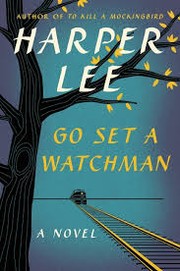
Go Set a Watchman
Jean Louise Finch returns to Maycomb and finds her father changed: Lee's contested 2015 draft about family loyalty and race in Alabama.
3,478-word summary · 15 min read
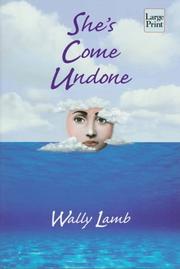
She's Come Undone
Abused as a girl, divorced and struggling with weight, Dolores Price slowly finds healing after years of trauma.
2,550-word summary · 11 min read

Klara and the Sun
Solar robot Klara loves Josie and bargains with the Sun to save her.
2,251-word summary · 10 min read

Extremely Loud and Incredibly Close
Nine year old Oskar searches New York for a lock matching his father's key after 9/11.
2,999-word summary · 13 min read

Station Eleven
After a flu empties the world, a traveling troupe plays Shakespeare for small towns linked by one dead actor.
2,480-word summary · 11 min read
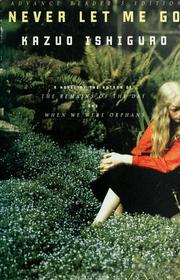
Never Let Me Go
Kathy looks back on Hailsham, the English school where she and her friends were raised for an unspoken purpose.
2,102-word summary · 9 min read
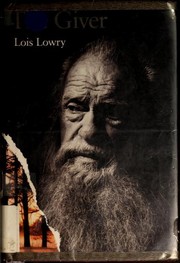
The Giver
Lois Lowry's The Giver retold: Jonas's Assignment, the memories, release, and the sled ride out.
2,510-word summary · 11 min read
The Curious Incident of the Dog in the Night-Time
Curious Incident retold: Christopher finds Wellington dead, maps primes, seeks truth in Swindon.
2,146-word summary · 10 min read