
Never Let Me Go
2,102-word summary 9 min read 304 pages in the book
- First published
- 2005
- Publisher
- Knopf
- Pages
- 304
- ISBN
- 9781400043392
Reading options
What's inside (8 sections)
I read Never Let Me Go knowing the twist, and it did not matter at all. Kazuo Ishiguro published it in 2005, with Faber and Faber in the UK and Knopf in the US, a 304 page novel that was shortlisted for the Booker and later named among the century's best. The premise, clones raised for organ donation, is science fiction. The book itself is a boarding-school memoir, a love triangle, and a meditation on how people live with fates they cannot change. Kathy H., thirty one, a carer who drives between donation centers, begins remembering Hailsham, the school where she grew up, and the remembering is the whole story.
What makes the novel extraordinary is how little it explains. Kathy narrates the way people actually remember, circling, correcting, lingering on small embarrassments while stepping lightly past horrors. Hailsham looks like an idyllic English boarding school. Kind guardians. Art classes. Sports on misty fields. The children trade and collect. They whisper about the outside. And underneath, half-understood, is the truth they all know and never discuss. They are clones, created to donate organs until they complete, the school's gentle word for dying on an operating table. Nobody rebels. Nobody runs. The horror is not that they do not know. It is that knowing changes nothing.
Ishiguro's restraint is the point and the risk. Readers who need confrontation will wait in vain. There are no escapes, no uprisings, no speeches. There is Kathy, Ruth, and Tommy, growing up and apart and together, loving badly, forgiving late, and walking toward their donations with the same bewildered grace they brought to everything. It broke my heart slowly, the way weather erodes stone.
Hailsham and the Gallery
The Hailsham chapters occupy the first third and read like the world's saddest school story. Kathy, observant and loyal, befriends Ruth, magnetic and status-hungry, and Tommy, temperamental and tender, prone to tantrums that make him a target. Their triangle forms early. Ruth claims Tommy, partly from love, partly to win him, and Kathy steps aside with the passivity that defines her. Around them, guardians enforce strange emphases. Art matters enormously. The best paintings and poems are taken for the mysterious Gallery run by the elegant Madame, who visits and seems afraid of the children. Smoking is treated as a grave sin, your body belongs to your future recipients. Sex is discussed with unusual frankness. There are no parents, no family stories, no futures to plan for beyond becoming carers and then donors.
Two scenes anchor this section. In one, a guardian named Miss Lucy tells a class plainly what they are and what will happen, no euphemisms, and is removed for it. The children absorb the information and continue as before, which is the novel's thesis in miniature. Truth without alternatives is just weather. In another, Kathy dances alone to a song called Never Let Me Go, holding an imaginary baby, and Madame watches her crying. Kathy will spend years wondering what those tears meant. The reader understands before she does. Madame saw a child rehearsing a motherhood she will never have.
Ruth's manipulations in these chapters deserve attention because they are so recognizably human. She invents a pencil case from nowhere to impress. She claims she can ride a bike. She keeps Kathy and Tommy apart with small lies about Tommy's feelings. None of it matters against their fate, and all of it matters enormously to them. Ishiguro's genius is showing that cloned children are exactly as petty, loving, and self-deceiving as any children. Their humanity is the argument the world around them refuses to make.
The Cottages and the deferral
After Hailsham closes, the three spend time at the Cottages, a half-supervised farmhouse where older students wait before training as carers. Here the novel becomes a story about young adults wasting time beautifully. They read, argue, take trips, sleep together in shifting combinations. Ruth and Tommy continue as a couple, increasingly strained. Kathy watches, desired and sidelined. Veterans at the Cottages, students from other schools, mock Hailsham's preciousness and share rumors. The most important rumor is the deferral. Couples truly in love, it is said, can get their donations postponed if they prove it with art from the Gallery. Madame's collection, in this telling, is evidence of souls.
The deferral rumor organizes the book's middle the way college organizes youth, a future everyone discusses and nobody verifies. Tommy seizes on it, drawing obsessively, building a portfolio of imaginary animals he believes will prove his feeling for Kathy. Ruth, sensing the shift, makes her own bid, claiming a guardian once hinted her art could work. Kathy, the carer-in-training, tends them both and waits. A trip to Norfolk, to find Ruth's imagined possible, the office worker she might have been modeled from, ends in deflation. The woman is not Ruth's original. Possibles are a fantasy. The rumor mill grinds on.
Ruth's late arc is the novel's most painful thread. As her donations approach, weakened and regretful, she confesses to Kathy what Kathy always suspected. She kept Tommy from Kathy deliberately, out of fear of being alone. She gives them Madame's address and urges them to seek the deferral, an act of restitution that is also a burden. Then she completes, badly, on the table, and her last conversations with Kathy carry the book's moral weight. She asks Kathy to find Tommy's kindly nature and hold it. She dies as all donors die, used up, remembered in flashes.
Madame, Miss Emily, and the end
Kathy and Tommy's visit to Madame is the novel's climax, and it inverts every expectation. They arrive with Tommy's portfolio, rehearsed speeches about love, hope dressed as certainty. Madame and the former head guardian Miss Emily receive them kindly and dismantle everything. There is no deferral program. There never was. The Gallery existed to prove to a skeptical world that clones have souls, part of a humane movement that briefly gave Hailsham its protections. That movement lost. The world decided it preferred not to know. Hailsham was an exception, now closed, and the future is battery-farm efficiency without art or pretense.
Miss Emily's speech is devastating because it is reasonable. She asks what the alternative was. Patients dying of real diseases needed organs. Society chose to look away, and Hailsham's guardians chose to give their charges the best childhoods the system allowed. Whether that was kindness or cruelty is left for the reader. Madame's tears at Kathy's dance are explained at last. She wept at a world that would take even that small happiness. The scene refuses villains. Everyone did their best inside a machine nobody would stop.
The final chapters follow Kathy and Tommy to the end of his road. They become lovers briefly, gently, knowing it changes nothing. Tommy completes after his fourth donation, raging and afraid in the way Hailsham never prepared him for, and Kathy holds his hand through it. Her narration of his death is the book's most restrained passage and its most shattering. No drama. A hand going slack. Paperwork. Driving on. The novel closes with Kathy stopping at a field in Norfolk, looking at the horizon where she once imagined lost things wash up, and allowing herself, finally, to weep for everything. The fantasy song, the baby that never was, the friends gone, the years of driving between centers. She cries, then drives on. There is always another donor to care for.
Euphemism as horror
The novel's language deserves its own study because it is the horror. Donor. Carer. Completion. Possible. Deferral. Every ugly thing arrives in a soft word, and the softness is the point. Kathy narrates in the system's vocabulary without questioning it, and the reader slowly realizes the vocabulary is doing the system's work. To call organ harvesting donation is to make it sound voluntary. To call death completion is to make it sound like graduation. Ishiguro understood that atrocities need admin, and admin needs euphemism. The clones police their own language because the language polices them.
This is also why the book's restraint divides readers so sharply. Nothing is shown. The donations happen offstage. The operating tables never appear. Ruth's suffering is reported, not rendered. Some readers experience this as cowardice, a novel flinching from its own premise. I read it as discipline. Showing the surgery would convert systemic horror into gore, something to survive rather than contemplate. By keeping the violence linguistic, Ishiguro forces attention on the real subject, which is not how clones die but how everyone, clones and guardians and readers, agrees to describe it. The horror is consensus, and consensus cannot be photographed.
Kathy's own evasions mirror the system's. She circles painful memories, corrects herself mid-sentence, buries Ruth's cruelty in affectionate asides. Her narration performs the same softening the vocabulary performs. Whether she knows she does it is the novel's central ambiguity. At times she seems fully aware, choosing gentleness as a survival strategy. At others she seems genuinely unable to face facts head-on. Either way, the effect is the same. The reader does the facing for her, which makes the reader complicit. We complete the sentences she cannot finish. That complicity is Ishiguro's signature move, perfected in The Remains of the Day and deployed here to devastating effect.
The film and the real history
The 2010 film adaptation, with Carey Mulligan, Andrew Garfield, and Keira Knightley, is faithful and worth watching after the book. Mulligan's Kathy captures the narrator's watchful passivity perfectly. The film's Hailsham is gorgeously bleak, all gray skies and handsome brick. What the movie cannot reproduce is Kathy's circling narration, the way memory arrives out of order and corrects itself. On screen the story plays straighter, sadder, simpler. The love triangle sharpens. The system blurs. It is a good film of a great novel, which is to say it shows the story while the book withholds it, and withholding was half the art.
Real history shadows the fiction more closely than comfort allows. The novel's England of forced donation echoes the actual scandals of medical history, organs taken without consent, vulnerable populations used as material, the long record of the powerful harvesting the powerless. Ishiguro sets his horrors in an alternate past rather than the future, a quiet formal choice with loud implications. This already happened, the setting says. It happens whenever need meets powerlessness. The clones are extreme, but the logic is familiar. Every reader lives inside systems that ask someone else to pay. The novel just makes the someones visible and the paying literal.
Miss Emily's defense of Hailsham is where this lands hardest. Her argument, that the world needed organs and the guardians gave the doomed the best lives available, has the shape of every institutional apology. It is not wrong on its own terms. It is wrong the way the terms are wrong. Readers who find her sympathetic and readers who find her monstrous are reading the same speech correctly. That doubleness is the book's final gift. No villains, no heroes, only people, and a question that follows you out of Norfolk's fields into your own life.
What works and what drags
What works is nearly everything. Kathy's voice, euphemistic and evasive and heartbreakingly precise, is one of modern fiction's great achievements. The boarding-school atmosphere, all mist and art sheds and coded cruelty, sustains a whole novel. The love triangle feels true rather than plotted. And the theme, how ordinary people accommodate atrocity, from the guardians to the donors themselves, resonates far beyond cloning. The book is about every system we all know is wrong and live inside anyway.
What drags, for some, will be pace and passivity. The middle Cottages chapters drift, deliberately, and readers who need momentum may stall. Kathy frustrates. She never fights, never demands, never even asks directly until the end. Her restraint is the point, and also, across 300 pages, occasionally trying. A few mysteries, the woods, the lost tapes, resolve into symbols rather than answers, which some readers experience as evasion.
Still, Never Let Me Go is a masterpiece of quiet horror, the rare dystopia with no villains and no heroes, only people. Read it slowly, the way Kathy remembers, and let the euphemisms do their awful work. Donor. Carer. Completion. By the final field in Norfolk, those gentle words will sound like what they are. Then sit with the question Ishiguro leaves. Given a fate you cannot change, what would you do with the time? Kathy loved, remembered, and drove on. It is not enough. It is everything.
FAQ
When was Never Let Me Go published?
Faber and Faber published the UK edition and Knopf the US edition in 2005. The Knopf hardcover runs 304 pages and the ISBN is 9781400043392.
Who are the main characters?
Kathy H., who narrates, and her friends Ruth and Tommy. They grow up together at Hailsham and face their fate as young adults.
Is it part of a series?
No. It stands alone, though it shares Ishiguro's themes of memory and self-deception with The Remains of the Day.
Similar books
More like Never Let Me Go →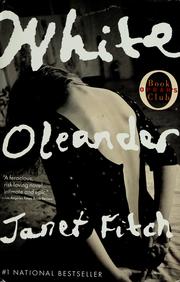
White Oleander
Astrid cycles foster homes after mother Ingrid murders boyfriend.
2,569-word summary · 11 min read

Their Eyes Were Watching God
Janie Crawford tells Pheoby about Eatonville life with Logan Killicks, Joe Starks called Jody, and Tea Cake.
2,230-word summary · 10 min read
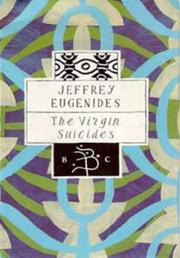
The Virgin Suicides
Five Lisbon sisters die in 1970s Grosse Pointe as boys watch.
2,559-word summary · 11 min read
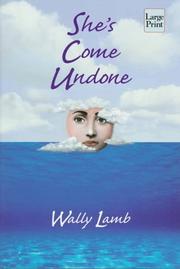
She's Come Undone
Abused as a girl, divorced and struggling with weight, Dolores Price slowly finds healing after years of trauma.
2,550-word summary · 11 min read
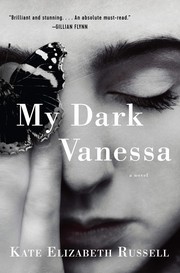
My Dark Vanessa
Vanessa recalls teacher Strane abuse as adult reckoning looms.
2,600-word summary · 12 min read

Kafka on the Shore
Fifteen year old Kafka Tamura flees Tokyo while old Nakata, who talks to cats, drifts toward the same library town in Shikoku in parallel.
2,496-word summary · 11 min read