
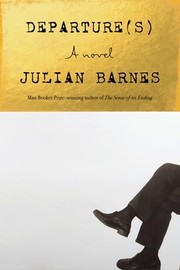
Departure(s)
2,234-word summary 10 min read 176 pages in the book
- First published
- 2026
- Publisher
- Jonathan Cape
- Pages
- 176
- ISBN
- 9781787335721
Reading options
What's inside (8 sections)
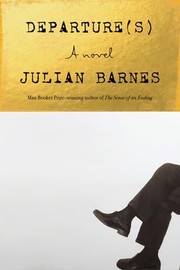
I picked this up because I had read that it was meant to be his last, and I wanted to see what a writer in his eighties says when he decides the run is over. What I found was a book that keeps changing its mind about what it is. Departure(s) arrived in bookshops on 20 January 2026, published almost at the same moment in Britain, the United States and Canada, and it is slender enough to finish in a long afternoon, 176 pages in the Jonathan Cape first edition. Barnes wrote it to mark his eightieth birthday and has called it his fifteenth novel and his last. By the end I understood why the word "novel" might be doing more work than it can carry.
The first surprise is how little the book behaves like a story. It blends fiction, memoir and essay, and Barnes leaves the seams showing rather than sanding them down. A passage of recollection gets interrupted by a thought about how memory works, which turns into a small essay on a writer he admires, which doubles back on itself. There is no flag raised when a new mode begins. Reading it feels less like following a plot than like sitting across from someone thinking out loud, not much caring whether you can tell the thinking from the telling. That is part of the design, and it is both the pleasure and the frustration of the whole experience.
A narrator who shares the author's name and troubles
The narrator is a writer called Julian, living in north London, and he is living with blood cancer. He is also looking back at the death of his wife, who died of a brain tumour. These facts are the conditions under which he thinks. Grief and illness are not things that happen to him while the real book goes on elsewhere; they are what the book is made of. Every memory he reaches for is tested against the knowledge that his own body is unreliable and that the person he most wants to recall is gone.
This is why the medical detail matters even though there is very little of it. Barnes is not writing a sickbed diary. The cancer and the bereavement set a question in motion: what can a person trust about the past when the present is this unstable? The narrator keeps circling back to earlier years, trying to find a solid fact to hold, and finding instead that memory keeps revising itself. A recollection that felt certain one page becomes questionable a few pages later. He is not being evasive. He is describing something I think most of us recognise, which is that the past changes shape depending on when we look at it.
Because the narrator shares a name and circumstances with Barnes himself, the book keeps wobbling between invention and confession. That wobble is deliberate. Julian is a version of the author, but the author is careful to leave room between them. At times the gap feels like honest self-examination. At other times it feels like a coy game, the kind of autofiction that wants the credit for honesty without the risk of it. I found both moods in here, sometimes within a few pages of each other.
The north London setting does quiet work too. It is a place of ordinary habits, of walks and rooms and the small routines that continue after a life has changed beyond recognition. Barnes lets those routines carry feeling. A man notices what is in the kitchen, what has been put away, what has not been touched. The bereavement is present in the gaps rather than in declarations. I have always thought that Barnes writes grief well because he distrusts the grand statement, and this book pushes that distrust to its limit.
The couple he introduced, and the story he might write
At the centre of the narrator's recollections is a love affair between two friends he knew at university. He is the one who originally introduced them. They were students then, and they parted ways, and then decades later they found each other again. That rekindled relationship is the closest thing the book has to a plot, and Barnes treats it as a story within a story. It is the seed of a novel the narrator says he could write, but perhaps never quite does.
I liked this more than I expected to. A lesser book would have made the rekindled affair the whole point, milking the romance and the reunion for all they were worth. Barnes uses it differently. The couple becomes an example of how a life turns into a story in the first place. The narrator watches them, remembers them, imagines the book he might make from them, and keeps asking where the living people end and the character begins. The question is not answered because the book is more interested in asking it than in solving it.
The device is elegant, and it also explains why some readers will bounce off. There is a real, aching human story sitting in the middle of this book, about two people who lose each other and then find each other again after a lifetime. Barnes keeps stepping back from it to talk about the machinery of telling. Those steps are the book's argument, but they also hold the feeling at arm's length. I wanted, once or twice, to be allowed to stay with the couple a little longer without being reminded that I was reading a construction.
What saves it is that the narrator's curiosity about the pair feels genuine. He is not using them to demonstrate a theory. He genuinely wants to know how two people can be so certain and so wrong about each other across decades, and how much of their reunion is a story they have built together. That curiosity is the warmest thing in the book, warmer by far than the passages where the author steps forward to discourse on art.
The literary guests Barnes invites in
This is a book that reads with other books open on the desk. Proust is the most obvious presence, but the narrator also calls on Virginia Woolf, Charles Baudelaire, Theophile Gautier and Gustave Flaubert. These are not names dropped for polish. They are part of the argument about memory and the self, and Barnes expects you to keep up.
The TLS critic Dinah Birch called the result "a final withdrawal from conventional categories of writing," and that seems exactly right. The book is not quite a novel, not quite autofiction, not quite a memoir, though it borrows from all three. Birch argued that what holds the disparate pieces together is Barnes's management of theme and tone rather than plot. That is fair. The unity here is a musical one. The same few ideas return in different keys: what memory can be trusted to deliver, how a self is assembled out of remembered bits, how much of our lives we actually choose.
The cost of that company is that the book can feel closed to readers who do not know the references. The literary names are not explained, and they are not decoration either, so if you do not catch why Proust is in the room, a whole layer of the argument passes you by. I know enough of these writers to follow most of it, and I still felt the book assume a shared reading history I do not fully have. There is a quiet smugness in places, the sense of a writer talking to people who have read the same shelf. It is a small price for the density, but it is a price.
Proust's presence is the heaviest, and for good reason. The question of involuntary memory, of a sensation dragging back a whole lost stretch of life, sits close to the centre of Barnes's project. But where Proust could spend pages on a madeleine, Barnes is working in a book of fewer than two hundred pages, so the references arrive compressed. That compression is part of the craft. It is also why the book can feel like it is winking at you over its shoulder at times.
What memory can and cannot deliver
The question at the heart of the book is a practical one for this narrator. He is ill, he has lost his wife, and he is trying to work out which parts of his past are real and which are stories he has told himself so often that they have hardened into fact. He tests memories the way a lawyer might test a witness, and finds they are poor witnesses. They arrive with the wrong emotional weight. They omit what matters and insist on what does not.
This is where the book connects its grand literary company to something ordinary. We all revise our own histories. We tell the same family story until the sharp edges wear off. We decide, years later, that a particular summer was happy because the photograph looks happy. Barnes takes that habit and puts it under a bright light. The narrator knows that his memories are a construction, and he cannot stop constructing them anyway. That is the bind, and it is the most moving thing in the book.
The limits of personal autonomy run through the same material. The narrator cannot choose not to be ill. He cannot choose to bring his wife back. He cannot even fully choose what he remembers. What he can do is notice the machinery, and that small freedom is the one the book keeps returning to. It is not a heroic freedom. It is the freedom of someone paying close attention while the ground shifts.
That idea could have felt cold in another writer's hands. Here it feels earned, because the narrator's attention is so steady and so unglamorous. He is not building a philosophy for the ages. He is a man in north London, unwell, going over what he can remember of people he loved, trying to be fair to them and to himself. The book is at its best when it stays on that level.
Where the slipperiness becomes a problem
I want to be honest about the parts that did not work. At 176 pages the book can feel more like a set of variations than a developed story. If you come to it expecting the tight, turning narrative of The Sense of an Ending, you may find the refusal to settle into one genre slippery. The Guardian's review was headlined around that very word, and I understood the complaint. There are moments when the book seems to dodge a payoff it has carefully set up, preferring another layer of commentary to the scene it has earned.
The autofictional game also wears thin in places. When the narrator is called Julian and has blood cancer and has lost his wife, the reader is being asked to hold two versions of a man in mind at once. Most of the time that doubling produces interesting friction. Sometimes it feels like a wink, the author nudging you to admire how cleverly he has arranged the mirrors. I found those moments a little cold, and they interrupted what was otherwise a very intimate book.
The book also asks a good deal of its reader. The references are dense and unexplained, the mode shifts without warning, and there is no patient guide to tell you which thread to pull. A reader looking for a straightforward late novel about grief and ageing will not find one here. This is a book for people who enjoy being made to work, and I suspect a fair number of Barnes's readers will feel exactly as I did, impressed by the craft and occasionally impatient with the coyness.
The value of a late, quiet book
Still, I finished it feeling that the difficulty was mostly the point. This is a deliberate piece of work about ageing, bereavement and the stories we tell to keep going. It is short, but nothing in it feels padded or thrown off. Every digression about a French poet or a Victorian novelist is there because the narrator needs that writer to think about his own life. The book knows exactly what it is doing even when it refuses to say so.
What stayed with me was not the literary name checking or the clever structure but the plain, stubborn act of attention. Here is a man who has lost his wife, who is ill, who knows his memory is unreliable, and who keeps looking anyway. He does not arrive at a grand conclusion. He arrives at a way of paying attention that lets him continue. That is a modest outcome, and the book is honest enough not to dress it up as more.
I would hand this to a reader who has loved Barnes's earlier experiments with form and who is interested in what a writer does when he knows he is at the end. I would be careful with a reader who wants a clean story or a conventional consolation. There is no tidy grief arc here and no lesson delivered from on high. There is a clever, sometimes cool, often moving book that keeps asking how a life becomes a story, and that never quite pretends the question is settled.
FAQ
Is Departure(s) a novel?
Barnes has called it his fifteenth and last novel, but it blends fiction, memoir and essay, and critic Dinah Birch described it as a final withdrawal from conventional categories of writing.
When was Departure(s) published?
It arrived in bookshops on 20 January 2026, published by Jonathan Cape in a 176-page first edition, with near simultaneous releases in Britain, the United States and Canada.
What is the love story at the centre of the book?
It concerns two university friends whom the narrator originally introduced, who part as students and find each other again decades later. Barnes treats their reunion as the seed of a novel the narrator imagines writing but never quite does.
Similar books

One Boat
A woman returns to a Greek coastal town after her father's death, and the holiday she took nine years earlier after her mother's death keeps breaking through.
2,143-word summary · 10 min read
Whistler
Ann Patchett's eleventh novel follows a New York teacher who reconnects with a former stepfather at the Met and hears the strange story of a chestnut mare.
2,697-word summary · 12 min read
What We Can Know
In McEwan's eighteenth novel, a lonely scholar in a flooded, diminished Britain chases a vanished poem that could win him the professorship he has long wanted.
2,408-word summary · 11 min read
A Grief Observed
In four raw notebooks written after his wife Joy died, C. S. Lewis records grief as fear, anger and doubt, then slowly learns to live without easy consolation.
3,692-word summary · 16 min read

And Every Morning the Way Home Gets Longer and Longer
An elderly grandfather, his son, and his grandson share memories and fears as the old man's mind begins to fade, in a short novel about grief and love.
2,078-word summary · 9 min read
A Tale for the Time Being
A diary by bullied Tokyo teen Nao washes up in Canada, pulling novelist Ruth into her family past.
2,148-word summary · 10 min read
Departure(s)
Barnes mixes memoir and invention as old writer Julian revisits Stephen and Jean, lost love, a loyal dog, and last goodbyes.
2,133-word summary · 9 min read
The Sense of an Ending
Retired Tony Webster inherits money and a diary from an old girlfriend's mother, forcing him to rethink his youth, a cruel letter, and a friend's death.
2,451-word summary · 11 min read
The True True Story of Raja the Gullible (and His Mother)
A gay philosophy teacher in Beirut revisits six decades of Lebanese history, family trauma, and his thorny bond with his mother.
2,274-word summary · 10 min read

The South
A seventeen-year-old moves to his family's failing fruit orchard in 1990s Malaysia, where a summer love affair unfolds as the household and the land around him…
2,903-word summary · 13 min read
The Sisters
Three sisters watch one another take the lives they imagined, across thirty years in Stockholm and Tunisia, in a novel that bends time like an accordion.
2,199-word summary · 10 min read
The Midnight Train
An eighty-one-year-old bookshop magnate dies and wakes young again aboard a train that carries him back through the moments that mattered most.
2,299-word summary · 10 min read
Our Souls at Night
A widow asks her widower neighbor to lie beside her at night, not for sex but for company, and two lonely people in a small Colorado town begin again.
2,582-word summary · 11 min read
Only Son
A brief, funny, melancholy debut about a boy whose father dies in 1982 Florida, and the man he becomes, still trying to read the mystery of that loss.
2,170-word summary · 10 min read

Love Forms
A Trinidadian mother sent away at sixteen returns to the loss of her daughter forty years later, in Claire Adam's quiet, longlisted novel.
2,153-word summary · 10 min read

How to Change Your Mind
Pollan blends the history of psychedelic research, his own guided trips, and current neuroscience to ask what these drugs reveal about consciousness.
2,466-word summary · 11 min read
What Is the What: The Autobiography of Valentino Achak Deng
Dave Eggers retells the life of Valentino Achak Deng, a Lost Boy of Sudan, in the refugee's own voice, from a burned village to a robbery in Atlanta.
2,840-word summary · 13 min read

The Zahir
A bestselling novelist's wife vanishes from their Paris home, sending him on a search that becomes a reckoning with his own marriage and attention.
2,433-word summary · 11 min read
The Pull of the Stars
Over three days in a Dublin maternity ward in 1918, a nurse, a suffragette doctor on the run and a young volunteer face the flu, childbirth and unexpected love.
2,578-word summary · 11 min read
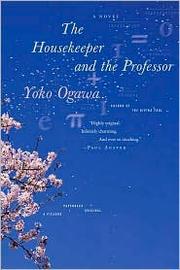
The Housekeeper and the Professor
A single mother becomes housekeeper to a mathematician who can remember nothing for more than eighty minutes, and builds a life with him around baseball and…
2,141-word summary · 10 min read
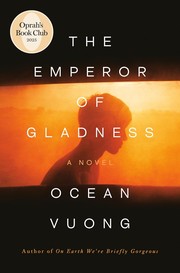
The Emperor of Gladness
Ocean Vuong's second novel follows a young addict pulled back from a bridge in a dying Connecticut mill town and into the home of an elderly immigrant woman…
2,693-word summary · 12 min read
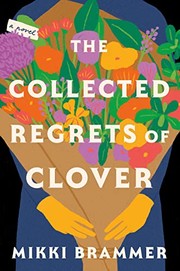
The Collected Regrets of Clover
A death doula who writes down the last words of strangers keeps her own heart locked away, until a new neighbor, a dying photojournalist and a road trip to…
3,055-word summary · 14 min read

Taste: My Life Through Food
Stanley Tucci's memoir traces his life through food, from a Calabrian family kitchen in Katonah to film sets, marriage and a cancer fight that cost him his…
2,503-word summary · 11 min read

Tara Road
After her husband admits to an affair, a Dublin woman swaps houses for the summer with a grieving American, and each begins to heal inside the other's life.
2,020-word summary · 9 min read
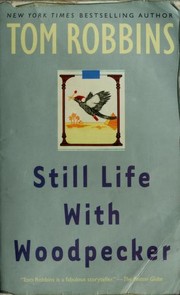
Still Life with Woodpecker
An environmentalist princess and an outlaw bomber fall in love, then argue about freedom, sacrifice, and a pack of Camel cigarettes.
2,061-word summary · 9 min read

Our Wives Under the Sea
A marine researcher returns from a deep-sea dive changed, and her wife must decide whether to hold on or let go.
2,286-word summary · 10 min read
My Friends
A dying artist sends an eighteen-year-old stranger a painting, pulling her into the story of four teenagers and one summer on an abandoned pier.
2,219-word summary · 10 min read
Migrations
A woman released on parole travels to Greenland to follow the last Arctic terns on a final migration toward Antarctica.
2,296-word summary · 10 min read
King of Ashes
A Virginia crematorium, a debt owed to the Black Baron Boys and a family secret pull Roman Carruthers back into a war where everything burns.
2,229-word summary · 10 min read

If Cats Disappeared from the World
A dying postman takes the Devil's deal: each extra day costs one thing erased from the world. As phones, films and clocks vanish, he must decide whether even…
2,354-word summary · 10 min read