
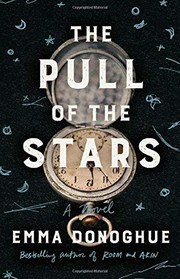
The Pull of the Stars
2,578-word summary 11 min read 304 pages in the book
- First published
- 2020
- Publisher
- Little, Brown
- Pages
- 304
- ISBN
- 9780316499019
Reading options
What's inside (10 sections)
The first thing Julia Power sees on her way to work is a notice nailed to a lamppost, longer than the ones before it. It warns the public to stay out of cafes, theatres, cinemas and public houses, to see only the people they need to see, to stop shaking hands and laughing and chatting closely together. If one must kiss, it says, do so through a handkerchief. Sprinkle sulphur in the shoes. I read that on the opening pages and thought about how strange the timing of this book is. Emma Donoghue began The Pull of the Stars in October 2018, inspired by the centenary of the 1918 flu, and delivered the final draft to her publishers in March 2020, two days before the World Health Organization declared a pandemic. No author could have planned that. The novel had been slated for a spring 2021 release and was brought forward, arriving in bookshops in July 2020, published by Little, Brown in the United States and by Picador in Britain, around 304 pages in the first edition. It was longlisted for the Giller Prize that year.
The story is set in Dublin over three days in 1918, the last year of the Great War and a year when the country was being remade. Ireland was in the middle of a political transformation, and Donoghue has said she chose her home town partly to reckon with its complicated history of carers, institutions and motherhood. What she actually gives us is far smaller and more immediate than a historical survey. Nearly all of it happens in one cramped hospital ward, seen through the eyes of a thirty-year-old nurse who is tired, opinionated and very good at her job.
Three days in Maternity/Fever
Julia works in a makeshift ward called Maternity/Fever, a supply room converted to hold pregnant women who have caught the flu, which everyone here calls grippe. There are only three cots. The hospital is short-staffed because of the war and the contagion, so Julia is working well beyond her training, doing the work of doctors because there is no one else to do it. Donoghue divides the book into four sections named for colours, Red, Brown, Blue and Black, which tells you something about the direction of travel before you read a page of it.
The three days begin on the morning of 31 October 1918, the eve of Julia's thirtieth birthday. She comes on shift to find that one of her patients, Eileen Devine, has died in the night. The two remaining women are Ita Noonan, who is becoming delirious, and Delia Garrett. There is another notice on the street, a shorter one: IF IN DOUBT, DON'T STIR OUT. Inside, supplies are rationed, disinfectant is running short, and the hospital is bedding patients on the floor. Julia will lose women to a virus no one understands well enough to fight. She will also deliver babies in a room that was never meant for births.
The public health language is one of the eeriest parts of the book now. Pastries and cinemas and handshakes, the advice about kissing through a handkerchief, the sulphur in the shoes, all of it reads as if it were written about nausea at a supermarket checkout. Yet the patients in these beds are not abstractions. They are poor women in labour during a plague, and the ward mirrors the trenches in its chaos and its triage.
Bridie arrives at the cots
Julia asks the night nurse, Sister Luke, to find her some help, and the next morning a young woman named Bridie Sweeney turns up. She is about twenty-two, unqualified and uneducated, sent as a volunteer. Julia is frustrated by her at first. Bridie does not know the routines of a ward and has to be taught how to wash her hands, sterilize equipment and fetch ice from the supply room refrigerator. What Julia soon notices is that the girl learns quickly and has a natural way with the patients, a calm presence that Julia, with all her training, cannot quite match.
Bridie's background emerges slowly. She was raised in a Catholic industrial school, an institution for orphaned and abandoned children, and she now boards at the nuns' motherhouse as a charity case. The nuns there expected the children to work, caring for infants and doing chores, with not enough food and conditions that were often brutal. The book does not spell this out all at once. It leaks out in small remarks, in the way Bridie flinches or in the way she talks about the home as if it were ordinary. That restraint is part of what makes her story hard to take lightly.
The patients arrive one after another. Groyne, an orderly, wheels in Mary O'Rahilly, seventeen and pregnant for the first time. Mary is frightened and knows almost nothing about what is happening to her body. Bridie shows her pictures in a book of a baby emerging, and Mary is shocked, because nobody has told her the mechanics of birth. It is a small, devastating moment in a book full of them. Groyne also brings gossip: the hospital has a new doctor, a woman, and she is said to be a suffragette, a socialist, an anarchist and a firebrand.
Dr Kathleen Lynn walks into the ward
Dr Kathleen Lynn is the one character who actually lived. She was a real Dublin physician, a suffragist and a republican who took part in the Easter Rising of 1916 and was deported for it. In the novel she is in hiding, wanted by the police, expected to help out at the hospital because doctors are scarce. She arrives in the middle of a delivery and immediately proves she is a skilled, hardworking physician who trusts Julia's judgement. She commends Julia for what she has done, gives her authority to prescribe medication and treats her as a colleague rather than as a pair of hands.
Julia does not trust her at first. She calls the Rising terrorism and says so repeatedly, struggling to respect a woman who took part in the deaths and destruction of that Easter weekend. Dr Lynn, who is a vicar's daughter by background, listens and pushes back. She tells Julia she once felt exactly as Julia does now, before she was radicalized. When Julia asks why she believes in violence, Lynn answers that she is not violent, but that nations are never founded any other way. Their arguments are among the best things in the book, mostly because neither woman is written as a fool. Julia's suspicion has a history behind it, and Lynn's certainty has a cost.
There is a well-known criticism of this portrayal worth stating here. Dr Lynn's real life included a decades-long lesbian relationship with Madeleine ffrench-Mullen, with whom she later founded St Ultan's Children's Hospital. The novel moves toward queerness in its own plot but gives none of it to Dr Lynn and barely hints at it. The Irish Times reviewer Barry Pierce found this a serious omission, and I think he has a point about the choice, even though the character on the page is otherwise so vivid.
The babies and the mothers
The deliveries come thick and fast, and Donoghue writes them in unflinching detail. Delia goes into premature labour and delivers a stillborn girl. When she begins haemorrhaging because the placenta is stuck, and no doctor can be found, Julia reaches in and removes it herself, saving Delia's life. Dr Lynn arrives shortly after the worst of it. Ita Noonan, who has seven children at home, has a seizure and dies along with the baby she was carrying. Julia later assists Dr Lynn with Ita's autopsy and finds the lungs congested with fluid.
Mary O'Rahilly's labour becomes obstructed, and the situation turns farcical in the way that real emergencies sometimes do. Bridie is sent to fetch Dr Lynn and returns with policemen behind her, looking to make an arrest. Bridie lies and says she could not find the doctor, and the police leave. A male doctor suggests a pubiotomy, sawing through the mother's pubic bone to free the baby. Then a message arrives from Dr Lynn recommending Walcher's position instead. Julia puts Mary into it and Mary delivers a healthy baby girl, small but alive. Dr Lynn signs the birth certificate from the office where she is hiding, and tells Julia that Dublin's infant mortality rate is fifteen percent, a figure she blames on overcrowding, dirty milk and damp housing.
Honor White is the hardest case. She is unmarried and on her second pregnancy out of wedlock, sent from a mother-and-baby home run by nuns, clutching rosary beads and praying. Her baby is positioned face-up, she haemorrhages, and Julia volunteers a direct blood transfusion that goes badly. Dr Lynn uses forceps and a boy is born with a cleft lip, otherwise healthy. Honor shows no interest in holding or kissing him. Bridie explains the local saying that a woman does not love a man unless she gives him twelve children, and Julia hears in it the whole indifference of the age to women's bodies and to the children they produce.
The night on the roof
After the second day's shift, Julia is weak from donating blood and Dr Lynn tells her to sleep in the nurses' dormitories. The dormitories have been converted into a men's ward, so Julia and Bridie end up on the hospital roof. This is the quiet centre of the novel, and it has almost no plot in it. The two women talk about the flu, about Julia's work, about Tim, Julia's younger brother, who was discharged from the army after the war and has not spoken since, a condition the doctors call war neurosis. He keeps her dinner warm and waits up for her. Bridie talks about the industrial school and the abuse she suffered there.
Then Bridie calls Julia beautiful and kisses her. They keep kissing and talking through the night, and Julia realizes she has fallen in love. The shift from ward work to this intimacy could have felt sudden in lesser hands. Donoghue earns it through the accumulation of small gestures over two days, through the way Bridie watches Julia work and the way Julia keeps looking for her when she is not in the room. The rooftop scene is tender without being soft, and it is the moment the book stops being only about surviving a shift.
Why "the pull of the stars"
The title comes from an exchange between Julia and Bridie on that roof. Julia explains that influenza got its name from an old Italian belief that the influence of the stars made people sick. Bridie replies, as if, when it's your time, your star gives you a yank. Kirkus Reviews singled out this passage as the source of the title, and it is easy to see why it lodges in the memory.
The idea runs through the book in a modest way. Julia is a woman who has built her life on rules and routines, on sterile hands and correct procedure, because order is what keeps death at bay in that ward. The pull of the stars stands for everything that arrives from outside that order: a virus, a war, a revolution, a kiss on a roof. Donoghue does not turn this into a grand philosophy. She lets it stay in the plain terms the characters would actually use, which is why the line works. At the end, when Julia has to decide what to do with a motherless baby, the stars are less relevant than the woman who is making the decision.
The last day, and Barnabas
On the final morning, Delia is well enough to go home. Honor White dies, the flu and the labour together too much for her body. Honor's baby boy still has no name, so Julia and Bridie name him Barnabas and Julia baptizes him. Then Julia notices that Bridie looks flushed. The flu has taken hold of her. Julia puts her in one of the empty cots and cares for her as the colour drains out of her, red to brown to blue to black, the same sequence the sections of the book have been tracking. Dr Lynn realizes there is fluid leaking into Bridie's tissues, says she will return, and is then arrested on the hospital stairs. When Bridie worsens, Julia goes looking for the doctor and finds she has been taken away. Bridie dies in Julia's arms.
Sister Luke comes back for the night shift and prepares to send Barnabas to the mother-and-baby home. Julia refuses. She knows what happens to children in those places, and she has just watched a young woman die after a lifetime inside them. She claims she has the chaplain's permission, gathers what she needs, wraps Barnabas in her cape and walks out into the dark streets of Dublin, planning to raise him with Tim's help. The ending has been criticized as abrupt, and it is true that the last few pages move very fast after all the careful patience before them. For me, that headlong quality suits what Julia has just decided to do. She does not stop to give a speech about it.
What works and what grates
The praise the book received was mostly deserved. Kirkus called it Donoghue's best novel since Room and described the prose as having a blunt poetry, and The Guardian's Sarah Moss made the point that a nurse is a person necessarily present at the defining moments of strangers' lives. Donoghue gets the pace of a shift right, the way there is never a minute to waste, and she writes birth and illness with a physical clarity that some readers will find hard to sit with. She also resists the easy lesson. The class point is made quietly: a middle-class patient in a movie theatre and a half-starved girl in an industrial school are equally exposed here, and the novel never suggests that money or respectability buys protection from grief.
The criticisms are real too. Barry Pierce argued in The Irish Times that the final part is abrupt and clumsily plotted, and wondered whether the rushed editing needed to bring the book forward for Covid had damaged it. There may be something to that. The last section ties up several lives very quickly, and the decision to make Dr Lynn's private life invisible feels like a missed opportunity for a writer who has written openly about desire before. Readers looking for a gentle historical novel may also be put off by the clinical detail and by the sheer density of bad things happening in three days. This is a book about a ward at the height of a plague, so the gloom is not decoration, but it is relentless.
What I keep returning to is the image of Julia walking out into the Dublin dark with a newborn wrapped in her cape, going home to a brother who cannot speak. The book does not pretend that this fixes anything. The fluorescent hope of the last page is earned by the self-interest and stubbornness that come before it, by a nurse who learned to read bodies and then decided to read a life. It leaves her walking, which is more honest than a lesson would have been.
FAQ
Is Dr Kathleen Lynn a real person?
Yes, she is the only character based on a real person, a Dublin physician and suffragist who took part in the 1916 Easter Rising. In real life she later co-founded St Ultan's Children's Hospital with her partner Madeleine ffrench-Mullen. All the other characters are fictional.
Why was the book published earlier than planned?
Donoghue began it in 2018 for the centenary of the Great Flu and finished the draft in March 2020, two days before Covid was declared a pandemic. Its timely setting led the publishers to bring the July 2020 release forward from a planned spring 2021 date.
Where does the title come from?
It comes from a rooftop conversation in which Julia explains that influenza was named for an old Italian belief that the influence of the stars made people sick. Bridie answers that when it is your time, your star gives you a yank.
Similar books
The Paying Guests
A widowed mother and her unmarried daughter take in lodgers in 1922 south London, and a secret affair between Frances and Lilian pulls them into a murder case.
2,661-word summary · 12 min read
The Kitchen God's Wife
Amy Tan's second novel pairs a San Jose speech therapist with her Chinese mother, whose account of war, an abusive husband, and a narrow escape comes out in a…
2,896-word summary · 13 min read
Good Dirt
A stoneware jar made by an enslaved potter links a prominent Black New England family across a hundred and fifty years of prosperity, grief and buried history.
2,069-word summary · 9 min read
Endling
A Ukrainian scientist breeds endangered snails from her van and funds the work by posing as a mail-order bride, until a kidnapping plot meets the outbreak of…
3,041-word summary · 14 min read

Wide Sargasso Sea
Jean Rhys gives the first Mrs. Rochester a Caribbean childhood, a marriage built on money and suspicion, and a voice that Charlotte Bronte left in the attic.
2,021-word summary · 9 min read
The Silence of the Girls
Briseis, queen of Lyrnessus, is captured by Achilles and narrates the Trojan War from inside the Greek camp, where women are prizes and survival is its own…
2,098-word summary · 9 min read
The Birth of Venus
A Florentine merchant's daughter trains as an artist, marries a man who hides a secret, and survives Savonarola's bonfire of the vanities.
2,404-word summary · 11 min read
Lincoln in the Bardo
Willie Lincoln dies in 1862 and lingers while 166 cemetery voices squabble his father toward release.
2,032-word summary · 9 min read
The Cider House Rules
Homer Wells grows up in a Maine orphanage under Dr. Larch, who delivers babies and performs illegal abortions.
2,985-word summary · 13 min read
The Covenant of Water
Three generations of a Kerala family face a drowning affliction from 1900 to 1977, from child bride Big Ammachi to physician Mariamma who seeks its cause.
2,955-word summary · 13 min read
Hamnet
Agnes Hathaway holds her Stratford family together while her husband works in London, until plague takes eleven-year-old Hamnet in 1596.
3,164-word summary · 14 min read
The Paris Express
Emma Donoghue turns the real 1895 Montparnasse rail disaster into a crowded historical thriller, following a bomb-carrying anarchist and a carriage of…
2,785-word summary · 12 min read
The Wonder
In 1850s Ireland, an English nurse is hired to watch an eleven-year-old girl who claims to live on manna, and finds a child dying in plain sight.
2,298-word summary · 10 min read
The Wilderness
Four Black women move through twenty years of friendship in Angela Flournoy's discontinuous, widely praised second novel.
2,141-word summary · 10 min read

The Land in Winter
In the West Country during the Big Freeze of 1962, two young couples are shut in together, and the cold draws out every buried want.
2,265-word summary · 10 min read
Our Souls at Night
A widow asks her widower neighbor to lie beside her at night, not for sex but for company, and two lonely people in a small Colorado town begin again.
2,582-word summary · 11 min read
Only Son
A brief, funny, melancholy debut about a boy whose father dies in 1982 Florida, and the man he becomes, still trying to read the mystery of that loss.
2,170-word summary · 10 min read

One Boat
A woman returns to a Greek coastal town after her father's death, and the holiday she took nine years earlier after her mother's death keeps breaking through.
2,143-word summary · 10 min read
Of Love and Other Demons
In colonial Cartagena, a twelve-year-old girl bitten by a rabid dog is locked in a convent, where the priest sent to exorcise her falls in love.
2,258-word summary · 10 min read
Love Forms
A Trinidadian mother sent away at sixteen returns to the loss of her daughter forty years later, in Claire Adam's quiet, longlisted novel.
2,153-word summary · 10 min read
Witchcraft for Wayward Girls
In 1970 Florida, a girl sent to a maternity home for unwed mothers finds a spellbook, and the real horror turns out to be what the adults do to her and her…
2,077-word summary · 9 min read
Whistler
Ann Patchett's eleventh novel follows a New York teacher who reconnects with a former stepfather at the Met and hears the strange story of a chestnut mare.
2,697-word summary · 12 min read
Theft
Gurnah traces three linked lives in Tanzania, where a servant's accusation of theft opens a family history of love, duty and quiet betrayal.
2,454-word summary · 11 min read
The Portrait of a Lady
A young American woman inherits a fortune, refuses two suitors, and marries a polished expatriate who makes her independence a trap. James watches her mind at…
2,903-word summary · 13 min read
The Luminaries
Eleanor Catton's Booker-winning novel drops a young prospector into an 1866 New Zealand gold town where twelve men untangle a web of hidden gold, murder and…
2,949-word summary · 13 min read
The Emperor of Gladness
Ocean Vuong's second novel follows a young addict pulled back from a bridge in a dying Connecticut mill town and into the home of an elderly immigrant woman…
2,693-word summary · 12 min read
The Dream Hotel
A Muslim American archivist lands at LAX and is detained because her sleep implant says she might kill her husband. Lalami's near-future novel follows her into…
2,687-word summary · 12 min read
The Collected Regrets of Clover
A death doula who writes down the last words of strangers keeps her own heart locked away, until a new neighbor, a dying photojournalist and a road trip to…
3,055-word summary · 14 min read
The Art of Hearing Heartbeats
When a New York lawyer vanishes, his daughter follows an old love letter to Burma, where a stranger narrates the story of the father she never knew.
2,950-word summary · 13 min read
The Antidote
In a Dust Bowl town where a woman stores her neighbors' unwanted memories inside her own body, a storm blows the bank away and leaves a tangle of debts and…
2,707-word summary · 12 min read