
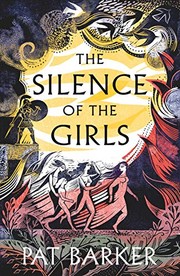
The Silence of the Girls
2,098-word summary 9 min read 325 pages in the book
- First published
- 2018
- Publisher
- Hamish Hamilton
- Pages
- 325
- ISBN
- 9780241338070
- Series
- Women of Troy (#1)
Reading options
What's inside (10 sections)
The Iliad is a poem about men. It is about rage, honor, and the price of glory, and the women in it are mostly prizes, mourners, or obstacles. Pat Barker takes that poem and turns it around. Her narrator is Briseis, the queen of Lyrnessus, who is captured by Achilles and becomes his concubine. Briseis is a minor character in Homer. In Barker's novel, she is the center of the story, and the war is seen from the laundries, the tents, and the beds where the women wait for the men to come back.
The novel opens with the sack of Lyrnessus. Briseis is inside the citadel with the other women while the Greek army breaks through the walls. She hears the fighting, then the screaming, then the silence. Her husband, King Mynes, is killed. Her brothers are killed. The men of the city are slaughtered, and the women are rounded up. Briseis sees Achilles from the roof as he kills her husband. She does not faint or scream. She watches. That image sets the tone for the whole book. Briseis is not a passive victim. She is a witness, and she is determined to remember what she sees.
The women are taken to the Greek camp on the shore near Troy. The young and beautiful ones are separated from the rest and given to the leaders as prizes. Briseis, because she is a queen and because she is beautiful, is given to Achilles. She is not asked whether she wants to go. She is not asked anything. She is property, and the novel never lets the reader forget it. The camp is a military camp, but it is also a household. There are cooks, seamstresses, laundry women, and slaves. The women keep the army alive, and they are invisible in the official story.
The compound
Achilles's compound is its own small world. There is Patroclus, his closest companion, who is kind to Briseis in a way that she does not trust at first. There are other captured women, some of whom become friends. There is Achilles himself, who is beautiful, lethal, and emotionally volatile. Briseis is his concubine, which means she is available to him whenever he wants her. The novel describes the sex without romance. It is an act of possession, and Briseis survives it by separating herself from her body. That dissociation is one of the book's most painful and convincing details.
Briseis's relationship with Patroclus is the closest thing she has to safety. He brings her wine. He talks to her. He treats her like a person, and she does not know what to do with that. She is suspicious of his kindness because she has learned that kindness is usually a prelude to a demand. Patroclus is not a saint, but he is gentle, and his gentleness makes the camp bearable. When he dies, the novel loses a source of warmth. Briseis grieves him, and she also grieves the version of Achilles that Patroclus could bring out.
Achilles is not a romantic hero in this book. He is a killer with a beautiful face and a capacity for tenderness that is always conditional. He can be gentle with Briseis, and then he can be cold. He is obsessed with his own reputation. He is also grieving, and his grief is enormous. Barker does not excuse him, but she shows why people follow him. He is a force of nature, and the people around him are drawn into his orbit whether they want to be or not.
Chryseis and the plague
The plot of the Iliad is set in motion by a quarrel over a woman. Agamemnon, the Greek commander, has taken Chryseis, the daughter of a priest of Apollo, as his prize. The priest comes to the camp with a ransom and asks for his daughter back. Agamemnon refuses and insults him. The priest prays to Apollo, and Apollo sends a plague on the Greek army. The plague kills men and animals, and the army begins to fall apart. The seer Calchas says that Chryseis must be returned. Agamemnon agrees, but he demands compensation. He takes Briseis from Achilles.
That quarrel is the engine of the story. Achilles is furious. He refuses to fight. He withdraws to his compound and sulks while the Greeks lose battle after battle. Briseis is taken to Agamemnon's compound, where she is treated as a symbol rather than a person. She is the thing that was taken from Achilles, and she is also the thing that will be returned to him. She has no say in any of it. The men talk about her as if she is not in the room. Barker makes the reader feel the humiliation of that. Briseis is a queen, and she is being passed around like a cup.
The plague sections are some of the best in the book. Barker describes the sickness, the fear, and the way the camp reacts. The women are the ones who nurse the sick, bury the dead, and keep the fires going. They are also the ones who are blamed when things go wrong. The novel shows how war creates a hierarchy of suffering. The men die in battle, and they are remembered. The women die in childbirth or from disease, and they are forgotten. The plague kills both, but only one kind of death becomes a story.
Patroclus and Hector
Patroclus goes into battle wearing Achilles's armor. Achilles has refused to fight, but he allows Patroclus to lead his men. He tells Patroclus to drive the Trojans back from the ships and then return. Patroclus does not return. He fights too far, and Hector kills him. The news devastates Achilles. He collapses. His mother, Thetis, comes from the sea to comfort him. He says that Patroclus's death is his fault, and he decides to kill Hector, even though he knows that his own death will follow.
Achilles returns to battle and kills Hector. He drags Hector's body behind his chariot, around the walls of Troy and around Patroclus's burial mound. The novel shows the horror of that from Briseis's perspective. She sees the body, and she sees what Achilles is doing to it. She also sees that the gods are protecting the corpse. Hector's body does not decay. The violence is pointless, and the pointlessness is the point. Achilles is not restoring Patroclus. He is performing his grief for an audience.
Priam, Hector's father, enters the Greek camp disguised as a poor man and begs Achilles for his son's body. Briseis recognizes him because she spent time in Troy as a child. Her sister Ianthe is married to one of Priam's sons. That connection gives the scene an extra layer. Priam is more than a king. He is a father, and Briseis is a woman who has lost her own family. She and Achilles wash and wrap Hector's body. The scene is quiet and domestic, and it is one of the few moments in the book where the war pauses.
Briseis asks Priam to take her back to Troy. He refuses. He says it would dishonor Achilles, and he will not steal a woman from his host. Briseis hides in the cart beside Hector's body, but she gets out before the cart leaves the camp. She knows that Troy will fall, and she knows that she cannot go home. The scene is heartbreaking because it is so close to freedom. She makes a choice, and the choice is to survive.
The end
Briseis discovers that she is pregnant. Achilles knows that he is going to die, and he arranges for her to marry Alcimus, one of his lieutenants. The marriage is not romantic. It is a practical arrangement to make sure that his child is cared for. Briseis is furious and grateful at the same time. She does not want to be passed to another man, but she also wants her child to live. The novel does not resolve that contradiction. It lets it sit.
Achilles dies in battle, shot in the back with an arrow. Troy falls. The Greek leaders divide the women again. Polyxena, Priam's daughter, is sacrificed at Achilles's tomb. Briseis watches. She removes the gag from Polyxena's mouth after the sacrifice, and she says goodbye to Achilles and Patroclus. Then she leaves with Alcimus and the other survivors. The ending is not a triumph. It is a departure. Briseis has survived, and she has a future, but she has lost almost everything else.
What the book does well
The voice is the strongest part. Briseis is intelligent, angry, and unsentimental. She does not forgive the men who hurt her, and she does not pretend that she is above survival. She is also honest about her own compromises. She sleeps with Achilles because she has to. She accepts help from Patroclus because she needs it. She does not claim to be a hero. She claims to be a witness, and that is enough.
Barker is very good at the details of daily life. The laundry, the food, the sleeping arrangements, the gossip, the rivalry between the women. The camp feels like a real place, not a backdrop. The novel also shows how women are divided by class and status. Briseis is a queen, and she is treated differently from the slave women. She has privileges, and she knows it. That complexity makes the book more honest than a simple story of sisterhood.
The prose is spare and direct. Barker does not use a lot of metaphor. She lets the events speak for themselves. The result is a novel that feels immediate and physical. The reader can smell the smoke, feel the heat, and hear the flies. That immediacy is what makes the violence so disturbing. It is not glamorous. It is messy and ugly and ordinary.
What the book gets wrong
The biggest criticism is that Briseis's voice sounds modern. She talks about consent, agency, and trauma in ways that feel contemporary. Some readers will find that jarring. Others will find it necessary. The novel is a retelling, not a historical document, and Barker is clearly writing for a modern audience. The question is whether the modern language breaks the spell. For me, it mostly works, because the emotions are timeless even if the vocabulary is not.
The male characters are thinner than Briseis. Achilles is a force, but he is not a fully rounded person. Agamemnon is a bully. Patroclus is kind. Hector is brave. They are seen from the outside, and that is intentional, but it also means the novel sometimes feels like a one-woman show. The ending is also rushed. The fall of Troy and the sacrifice of Polyxena happen quickly, and the reader is left wanting more.
The title
The title refers to the women who are present in the Iliad but rarely allowed to speak. Briseis is one of them. She is named, claimed, and fought over, but she is not given a voice in Homer's poem. Barker gives her one, and the novel is as much about the act of speaking as it is about the war. Briseis narrates her own story, but she also knows that her story is shaped by the men who own her. The tension between those two facts is the book's real subject. She can tell us what happened, but she cannot change what was done to her. That is the silence the title is talking about. It is not the absence of words. It is the absence of power.
Who should read it
I would recommend this book to readers who love Greek mythology, historical fiction, and stories that center women's voices. It is a good companion to the Iliad, but it also works on its own. It is not a comfortable read. It is angry, sad, and sometimes brutal. But it is also beautiful, and it gives a voice to a woman who was only a name in the original poem. That is worth the discomfort.
What stays with me is the opening image of Briseis on the roof, watching her city fall. She is a queen, and then she is a slave, and the transition happens in a few hours. The novel never lets the reader forget how quickly a life can be taken apart. It also never lets the reader forget how much strength it takes to keep living after that. Briseis is not a symbol. She is a woman who survived, and the book is her story.
FAQ
Who is Briseis?
She is the queen of Lyrnessus in the novel, captured by Achilles and made his concubine during the Trojan War.
Is The Silence of the Girls a retelling of the Iliad?
Yes. It follows the Iliad's plot but narrates it from Briseis's perspective, focusing on the women in the Greek camp.
Does Briseis return to Troy?
No. She hides in Priam's cart when he leaves with Hector's body, but she gets out before the cart reaches Troy and returns to the Greek camp.
Similar books
More from Women of Troy first, then related titles.

Ariadne
A Cretan princess helps Theseus kill the Minotaur, is abandoned on Naxos, and rebuilds her life while her sister faces tragedy in Athens.
2,350-word summary · 10 min read

Sophie's Choice
A young Southern writer in 1947 Brooklyn befriends a brilliant, unstable couple and slowly learns the story of the Polish Catholic woman at the center of their…
2,798-word summary · 12 min read

Wide Sargasso Sea
Jean Rhys gives the first Mrs. Rochester a Caribbean childhood, a marriage built on money and suspicion, and a voice that Charlotte Bronte left in the attic.
2,021-word summary · 9 min read

The Birth of Venus
A Florentine merchant's daughter trains as an artist, marries a man who hides a secret, and survives Savonarola's bonfire of the vanities.
2,404-word summary · 11 min read

The Tiger's Wife
A young doctor in a war-scarred Balkan country chases the stories her grandfather left behind, including a deathless man and a deaf girl who loved an escaped…
2,232-word summary · 10 min read

Galatea
The statue brought to life narrates her own story: a jealous sculptor, a locked hospital room, a daughter to protect, and one last plan to escape.
1,972-word summary · 9 min read
The Buried Giant
An old couple crosses a misty post Arthur Britain searching for a son.
2,593-word summary · 12 min read

The Island of Missing Trees
A talking fig links 1970s Cyprus lovers Kostas and Defne with their grieving London daughter Ada years later.
3,172-word summary · 14 min read

The Sympathizer
Double agent captain spies in Saigon fall and LA exile while confessing to commandant.
2,169-word summary · 10 min read
The English Patient
In a ruined Italian villa in 1945, a burned man, a nurse, a thief, and a sapper trade pasts shaped by desert love and war.
2,006-word summary · 9 min read

Half of a Yellow Sun
Ugwu, Olanna and Richard are pulled from Nsukka comfort into the Biafran war, where love and hunger test every loyalty.
2,973-word summary · 13 min read

Snow Falling on Cedars
A Japanese American fisherman stands trial for murder on a snowy island, while a reporter faces lost love and wartime prejudice.
2,224-word summary · 10 min read

Life After Life
Ursula Todd dies and restarts through wars, flus, and bad marriages.
2,060-word summary · 9 min read

All Quiet on the Western Front
Paul Bäumer enlists at nineteen and faces the trenches of World War I in Remarque's 1929 classic, told from the German side of the wire.
2,543-word summary · 11 min read
Circe
Exiled witch Circe masters plant magic on Aiaia, faces gods and monsters, loves Odysseus, and chooses a mortal life.
2,957-word summary · 13 min read
The Song of Achilles
Song of Achilles retold: Patroclus and Achilles from boys to Troy, love and war in Miller prose.
1,925-word summary · 9 min read

All the Light We Cannot See
Doerr's All the Light We Cannot See retold: blind Marie-Laure, Werner the radio boy, and Saint-Malo.
1,962-word summary · 9 min read
A Thousand Splendid Suns
Splendid Suns retold: Mariam and Laila share Kabul house, war, Rasheed, escape and return.
1,957-word summary · 9 min read

Violeta
A woman born in 1920 writes her life story to her grandson, from one pandemic to another, through wealth, ruin, passion, and dictatorship in South America.
2,555-word summary · 11 min read

The Orphan's Tale
A Dutch teenager rescues a Jewish baby from a death train and joins a German circus, where a Jewish aerialist teaches her to fly.
2,943-word summary · 13 min read
The Once and Future Witches
Three estranged sisters bring witchcraft back to an 1893 city where magic hides in nursery rhymes and the fight for the vote is also a fight for power.
2,132-word summary · 9 min read

James
Percival Everett retells Huckleberry Finn from Jim's side, giving him a library, a hidden school, and a voice the novel lets loose.
2,211-word summary · 10 min read

A Long Walk to Water
Two eleven-year-olds in southern Sudan, twenty-three years apart: a Dinka boy fleeing war and a Nuer girl walking hours for water, until their stories meet at…
2,217-word summary · 10 min read

The Lowland
Two brothers grow up beside a marshy lowland in Calcutta, and the choices of the younger one draw the older into a life of duty, distance, and quiet grief that…
2,213-word summary · 10 min read

The Storyteller's Secret
A New York journalist goes to India to learn why her grandmother loved a British officer, and why a family servant kept the truth for forty years.
2,270-word summary · 10 min read

Stones from the River
Trudi Montag is born a dwarf in a small German river town in 1915 and grows up to keep the town's library and its secrets, from the First World War to the…
2,818-word summary · 13 min read

Ivanhoe
A disinherited Saxon knight, a great tournament, a besieged castle and a trial by combat. Scott's most famous novel, set in England in 1194.
2,834-word summary · 13 min read

Her Body and Other Parties: Stories
Eight stories where bodies, medicine and old fairy tales get taken apart, with a green ribbon running through the whole book.
2,997-word summary · 13 min read

Euphoria
Three anthropologists in 1930s New Guinea turn fieldwork into a love triangle, and a real history breathes behind them.
2,048-word summary · 9 min read

Eligible
Austen's Bennet sisters move to modern Cincinnati, where marriage is a reality show and the house is losing its value.
2,293-word summary · 10 min read