
Reading options
What's inside (8 sections)
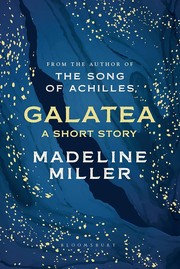
Madeline Miller has spent her career giving voices to figures the old myths left silent, and Galatea is the shortest and sharpest example. It began as commissioned short fiction, appeared as an e-book in 2013, and was reissued as a small hardcover in 2022 with an afterword by the author. The whole story runs about thirty pages, and it is narrated by the woman everyone else treats as an object. She was a statue, carved by a sculptor and brought to life by a goddess, and the story begins after the myth says happily ever after. There is no happily ever after. There is a hospital room, a paid doctor, a daughter, and a husband who will not allow his art to walk away.
The Woman Who Used to Be Stone
The first line sets the tone: "It was almost sweet the way they worried about me." Galatea is in a cliffside hospital, a private room with a view of the sea, attended by nurses and a doctor who are all on her husband's payroll. She is supposed to be ill. She is supposed to be pregnant. Neither of those things is quite true, and the way she narrates her own captivity is the engine of the story. She is not confused, and she is not naive. She has been observing her husband and the people he hires long enough to know exactly how the machine works.
Her husband is the sculptor, and Miller never gives him a name. That choice is the story's thesis. He is the man who made her, married her, and now owns her, and a name would only narrow what he represents. He is jealous in the way that collectors are jealous. She remembers a conversation about her body, back when she was first brought to life, in which he tells her that the goddess gave him his masterpiece and that his masterpiece belongs to him. When she gets close to other people, he finds reasons to remove them. The tutor who taught their daughter was dismissed when Paphos was eight. The whole household is arranged around his claim.
The daughter, Paphos, is eleven. That number is the key to the timeline, and Miller makes it do quiet work. Galatea was born into her body fully grown, so she has only been alive for eleven years, which means she has been an adult, a wife, and a mother for as long as she has been a person. She conceived her daughter moments after coming to life, which she mentions without sentiment, and the reader is left to sit with how much of her existence has been assigned rather than chosen.
The Hospital as a Cage
The bulk of the story takes place in the hospital, and Miller writes the surveillance with a light touch that makes it worse. The nurses are kind in the way that people are kind when they are being paid to make sure you do not leave. The doctor is calm. The sea outside the window is beautiful and completely unreachable. Galatea notes that if she were truly sick, she would be pitied, but her sickness is the story her husband tells people to explain why his wife cannot come to the door.
She has escaped before, or tried to. She and Paphos made it as far as the next town once, and that is where the story's most practical cruelty lives: both mother and daughter are pale as milk, unnaturally pale, because Galatea was carved from stone, and their skin draws attention everywhere. They cannot blend into a crowd. They cannot buy train tickets without being remembered. The failed escape is why she is here, and why the next attempt has to be smarter.
The pregnancy is real to everyone except her. It was faked, and the doctor is helping her husband manage it. The plan involves an abortifacient tea and a nurse sitting vigil to confirm the baby is gone, which is a sentence I had to read twice. Galatea's response is to manipulate the nurse. She invokes the goddess, she invokes the promise of a child, and she asks for one night in the garden before the pregnancy is ended. She is very good at this. She has spent eleven years learning what people want and how to hand it to them.
That skill runs through the entire story. Galatea's power is not strength. It is attention. She reads the nurse, the doctor, and her husband accurately, and she turns each of them by giving them the version of the situation they need. It is the strategy of a prisoner, and it costs her something every time. Watch how often she apologizes in her own narration, and watch how rarely she means it. Eleven years of captivity have taught her that the only reliable tool she has is other people's belief that she is harmless, and she spends it carefully, like a coin she cannot replace. That is what makes the final scene so satisfying. When she stops performing, there is nobody left to perform for, and the difference is the whole point.
What She Sees in the House
The escape, when it comes, is simple and devastating. She fakes the cramps, sends the nurse running, and climbs an olive tree into her daughter's window. She does not wake Paphos. That restraint is the saddest decision in the story, and Miller does not explain it. Galatea could have taken her, and she knows it would get them both caught. Instead she leaves a sign.
She goes to her husband's workroom, and there she sees what he has been making. There is a pot of sand on the floor, and she spills it and writes the name "Paphos" on the ground with her fingers. Then she looks at the bench and finds a new statue in progress: a girl of ten, a stone daughter, with ribbons in her hair and sandals painted gold. Her husband is carving her replacement, and not a replacement for her as a wife. A replacement for her as the daughter to raise, and eventually, the story implies, for her as the object of ownership, frozen at the age he prefers.
Galatea then goes to the husband's bedroom and watches him sleep. She thinks, "Ah, my beauty is asleep," which is the sort of line that reads differently depending on which way you are holding the knife. She runs. He wakes. He catches up on the path to the sea, grabs her ankle, and hauls her up by the throat, and the reader has been given enough of his violence in small doses to know what happens next.
Stone and Water
The ending is where Miller's mythmaking lands. Galatea does not fight. She reaches around him, wraps her arms around his ribs, and lets her body go back to what it was. She does not need to overpower him. She needs to hold on, and when they hit the water, she is stone and he is flesh, and she sinks with him. "He had no chance, really. He was only flesh." The last lines settle her on the ocean floor, soft as pillows, thinking of Paphos and of the stone daughter on her couch.
This is a murder story, and it is also a love story about a mother, and it is also a meditation on consent. Galatea was given life, but she was never asked whether she wanted it on the terms offered. She was made to be admired, then made to be a wife, then made to be shut away when admiration faded. Her one act of full agency in the entire story is to take both of them down, and she chooses it with her arms open. Some readers read the ending as tragedy. Miller gives you enough space to read it as release.
The Afterword and the Argument
The 2022 hardcover includes an afterword where Miller talks about what the myth gets wrong. The Pygmalion story has been told for millennia as a romance, the artist rewarded by the goddess for his devotion, and Miller points out how strange that is. The sculptor wants a woman who is grateful, obedient, and unable to leave. The term incel was not widely used when she wrote the story, she notes, but Pygmalion is a prototype: a man who decides that women as they exist are unacceptable and that the solution is to build one who cannot refuse him.
That argument is the difference between this story and a literary exercise. Galatea is not a diptych about art and desire. It is a story about possession, told from inside the possession, and every detail serves it, down to the unnamed husband and the fact that Galatea herself, in most versions of the myth, has no name of her own. Miller gives her a name here, but the name the myth gives her is the sculptor's brand. He made a statue of marble, and the name Galatea contains the word for milk, and she spends the whole story trying to stop being white and smooth and looked at.
What Is Missing
The story is short enough that the limitations are part of the package. The secondary characters, the nurses and the doctor and Paphos, are sketched rather than developed, and readers who want the texture of a novel will find this closer to a prose poem with a plot. The husband is a monster without much interiority, and the case could be made that a centuries-old myth deserves a more complicated villain. The ending is one scene long, and it arrives fast enough that some readers feel the punch before the weight.
The origin of the piece explains some of that. It was written for XO Orpheus, an anthology of fifty new myths edited by Kate Bernheimer, and it first reached readers as a standalone e-book in 2013. The 2022 hardcover edition adds an afterword, where Miller is explicit about the reading she intended. She points out that Pygmalion has been retold for millennia as a romance, and that the romance only works if you accept a set of ugly premises: that a woman's value is her beauty, that gratitude is the same thing as consent, and that a man who cannot tolerate women as they are deserves a reward for building one who cannot say no. The word incel was not in wide circulation when she wrote it, she notes, but Pygmalion is its ancestor, and the story is her refusal to keep telling it as a love story.
That framing is why the length works. This is not a novel that needed three hundred pages to make its point. It is a knife, and it is exactly as long as a knife.
None of that bothered me, with one exception. My complaints about the thinness of the secondary cast are real, and the Harvard Crimson review made a fair point that the nameless husband becomes more of a device than a character by the end. I would also tell readers to skip the Goodreads quote pages entirely, because the widely shared excerpts are full of transcription errors, and reading them out of order flattens the story into a series of aphorisms. Miller's prose is disciplined and clean, and the decision to narrate from inside stone gives the whole piece a cold, tactile quality that makes the sea and the skin feel equally solid. It took me about an hour to read, and I have thought about the workroom scene for days. If you loved Circe or The Song of Achilles, this is the same author working in miniature, and the miniature is precise. If you have never read her, it is a cheap and honest place to start.
FAQ
Is Galatea a novel?
No. It is a short story of roughly thirty pages, first published as an e-book in 2013 and later issued as a small hardcover with an afterword.
What myth does Galatea retell?
It retells the myth of Pygmalion, the sculptor who fell in love with his own statue, but from the statue's point of view.
Does Galatea have a happy ending?
It depends on how you read it. She dies, but she also destroys the husband who owned her and frees herself from him in the only way he left open.
Similar books
Circe
Exiled witch Circe masters plant magic on Aiaia, faces gods and monsters, loves Odysseus, and chooses a mortal life.
2,957-word summary · 13 min read
The Silence of the Girls
Briseis, queen of Lyrnessus, is captured by Achilles and narrates the Trojan War from inside the Greek camp, where women are prizes and survival is its own…
2,098-word summary · 9 min read
Ariadne
A Cretan princess helps Theseus kill the Minotaur, is abandoned on Naxos, and rebuilds her life while her sister faces tragedy in Athens.
2,350-word summary · 10 min read
Norse Mythology
Gaiman retells the Norse myths in order, from the creation of the world to Ragnarok, with Odin, Thor and Loki at the center.
4,647-word summary · 21 min read

What Moves the Dead
Alex Easton arrives at the Usher house to find Madeline dying, the tarn full of fungus, and the local hares refusing to stay dead.
2,586-word summary · 11 min read
Her Body and Other Parties: Stories
Eight stories where bodies, medicine and old fairy tales get taken apart, with a green ribbon running through the whole book.
2,997-word summary · 13 min read
Stars Above: A Lunar Chronicles Collection
Nine Lunar Chronicles stories fill in the histories of Cinder, Wolf, Thorne, Cress, Winter, and Jacin, and end with a wedding after the war.
2,230-word summary · 10 min read
Daughter of the Moon Goddess
The daughter of Chang'e hides in the Celestial Court, trains as an archer, and risks everything to free her mother from the Emperor's punishment.
2,146-word summary · 10 min read
The Exception to the Rule
A typoed Valentine's email turns into yearly notes between two strangers who wonder if they should meet.
2,226-word summary · 10 min read
Four Past Midnight
Four novellas about a plane lost in time, a writer haunted, and horrors small and large.
2,584-word summary · 11 min read

A Touch of Malice
Engaged Hades and Persephone face gods who vote on their marriage.
2,562-word summary · 11 min read
The Call of Cthulhu and Other Weird Stories
Seventeen tales from Dagon to Innsmouth, led by Cthulhu, the Colour, and the Whisperer, in S. T. Joshi careful Penguin edition with notes and corrected texts.
2,593-word summary · 12 min read
The Call of Cthulhu
A professor's papers link a sculptor's dreams, a Louisiana cult raid, and a sailor's voyage to a sleeping god under the sea.
2,530-word summary · 11 min read
Gleam
Captive Auren finds power in gold touch while Slade hunts her across kingdoms in Plated Prisoner book three.
2,073-word summary · 9 min read
Mythos: The Greek Myths Retold
Stephen Fry retells Greek myths from Chaos to Perseus with jokes, footnotes, and very human gods.
2,553-word summary · 11 min read
Glint
A gold-skinned captive of Midas falls to Fourth Kingdom troops and learns to fight with the ribbons she hid.
2,969-word summary · 13 min read
Gild
A gold-skinned woman kept as Midas favored learns her cage is a bargain, then war drags her onto the road.
2,755-word summary · 12 min read

The Mists of Avalon
Morgaine tells Arthur story from Avalon side, where goddess worship fades before priests.
1,944-word summary · 9 min read
Neon Gods
Promised to Zeus, Persephone flees to Hades and trades fake dating for real choice in Olympus.
2,002-word summary · 9 min read

The Yellow Wallpaper and Other Stories
A young mother confined for her health fixates on yellow wallpaper, plus 39 other Gilman stories on marriage and work.
2,989-word summary · 13 min read
A Touch of Darkness
Persephone bargains with Hades in New Athens nightclub deal.
2,545-word summary · 11 min read
The Song of Achilles
Song of Achilles retold: Patroclus and Achilles from boys to Troy, love and war in Miller prose.
1,925-word summary · 9 min read
The Thief
A boastful young thief is pulled from a prison to steal a legendary stone for the king's magus, and the story he tells about himself is not the whole story.
2,514-word summary · 11 min read
Six Scorched Roses
A dying scholar bargains with a reclusive vampire for blood, and six roses turn a transaction into a slow, dangerous romance.
2,663-word summary · 12 min read
Hounded
A two-thousand-year-old druid runs a bookshop in Arizona, hides from an Irish god who wants his sword back, and talks to his dog.
2,159-word summary · 10 min read
Dawnshard
Rysn sails toward forbidden Akinah to save her dying larkin and finds a Dawnshard guarded by the Sleepless.
3,229-word summary · 14 min read

This Winter
On one difficult Christmas Day, Tori, Charlie, and Oliver Spring try to hold their family together while Charlie's eating disorder makes every tradition a test.
2,034-word summary · 9 min read
The Lost Sisters
Taryn Duarte writes a letter to her twin, Jude, explaining how she fell for Locke and why she stayed silent while he used them both.
1,914-word summary · 9 min read

Memories of My Melancholy Whores
A ninety-year-old journalist pays for a night with a teenage girl, cannot go through with it, and discovers love for the first time in García Márquez's late…
2,101-word summary · 9 min read

Magic Burns
A magic flare hits Atlanta, and mercenary Kate Daniels must recover stolen maps, find a missing witch, and keep a teenage girl alive while Celtic gods try to…
2,021-word summary · 9 min read