
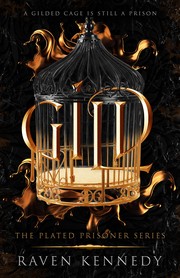
Gild
2,755-word summary 12 min read 400 pages in the book
- First published
- 2020
- Publisher
- Bloom Books
- Pages
- 400
- ISBN
- 9781464224416
- Series
- The Plated Prisoner (#1)
Reading options
What's inside (7 sections)
I came to Gild because I kept seeing the gold covers in bookstore romance rows and I wanted to know if there was a real story under the shine. A friend who reads a lot of romantasy told me the first book was slow on purpose, that it sets a trap and then springs it late. That sounded fair enough to try. Raven Kennedy first published this novel in 2020 on her own, and the edition most shops carry now is the Bloom Books paperback from March 2024 with 400 pages and ISBN 9781464224416. It is listed as book one of The Plated Prisoner, and that order matters because almost nothing here resolves in this volume alone.
The premise pulled me right away because I know the Midas story from childhood. A king wishes everything he touches would turn to gold. He gets his wish. His food hardens. His drink stops. His daughter stills in his arms. Kennedy takes that old warning and asks what it would feel like to be the woman kept as proof of that power. Not the king. The kept thing.
Auren is that woman. She has skin of real gold except for a few small places, and she lives at the top of Highbell Castle in the frozen north of Orea. She calls herself Midas favored, his precious, his loved one. She believes he pulled her from the streets when she was fifteen and gave her safety. She sits in a cage with gilded bars and tells herself the bars mean care. I found that opening hard to shake. It is pretty and wrong at the same time, and Kennedy lets you sit inside that wrongness for a long while before she lets the air in.
This is an adult fantasy romance. I will keep the physical parts non graphic here. There are scenes with Midas and his other favored women, talk of beds and bargains, jealousy and control, but the point on the page is power rather than detail. If you want clean romance with no sex in the background, this is not that book. If you want explicit step by step pages, this first book is also not that. It stays more on longing, ownership, and fear.
The girl in the birdcage
Auren has lived ten years in Highbell by the time we meet her. She was taken in as a hungry teenager after a childhood that included trafficking and street life. Midas gave her food, clothes, a warm room, and a story to tell herself. He Gold Touched her, which in this world means his magic altered her body to gold. People come to stare at her the way they stare at his castle walls. She is part treasure, part warning.
Her days have a fixed shape. She stays in her rooms near the top of the castle. She is carried or guarded when she moves. She eats what is brought. She waits for Midas to visit. She talks with a few servants and guards who are kind in small ways. Sail, an older guard, treats her like a person rather than an object. Some of the other saddles, the name used in Highbell for Midas favored women, trade gossip and sharp remarks. The queen, Malina, hates the whole arrangement and lets Auren feel it.
What struck me in these early chapters was how much Auren edits her own thoughts. She notices the lock on the cage door and calls it protection. She notices she cannot walk alone in the snow and calls it care for her health. She notices Midas visits other women and tells herself his heart stays with her. Kennedy writes this from inside Auren head, so you hear the excuses as they form. It is uncomfortable in a way that felt true. People do talk themselves into staying where they feel fed.
Auren has one secret she hides even from herself for a while. From her back grow long ribbons of living gold. She binds them flat and pretends they are dull strips of cloth. They move when she feels strong emotion. They can cut. They can hold. She thinks of them as ugly, as something to conceal so Midas will keep loving her smooth gold form. I read that as shame made physical. The one part of her that acts on its own is the part she keeps tied down.
The castle itself feels cold in every sense. Highbell sits built into snowy peaks in the Sixth Kingdom. Gold floors. Gold walls. Gold furniture. Gold clothes. The shine never warms anything. Malina comes from the family that ruled here before Midas married into power, and she knows her position is thin. Midas smiles and threatens in the same breath. You start to see that his gold magic is not only about wealth. It is how he marks people and places as his.
Midas and the bargain that built Highbell
Midas in this book is charming the way certain powerful men are charming in rooms where no one can say no. He remembers small details. He touches Auren chin and calls her his good girl. He tells her she is safe because he loves her. He also keeps her locked, lends her out for display at feasts, and refuses to let her touch snow or common folk or unapproved food. He frames every limit as love.
The history comes out in pieces. The fae left Orea long ago, or were driven out, depending on who tells it. Men with lesser magic now rule. Midas has the rare touch that makes gold, and he has used it to buy armies and favors. Highbell needs grain. It needs soldiers. It needs allies against rival kings. Midas trades gold for all three. Auren understands herself as the living proof that his touch works and lasts. She does not yet ask what happens when proof becomes payment.
War presses in from the edges. King Fulke of the Fifth Kingdom pushes. King Ravinger of the Fourth Kingdom, a feared name in tavern talk, moves his forces. Pirates called the Red Raids hunt caravans in the snow passes. Midas answers with smiles and secret deals. He tells Auren little and promises much. He says soon things will be settled and she will have a larger room, a higher place, more honor. She clings to those promises because the alternative is to admit she is stored rather than cherished.
Malina sees more than Auren does at first, though her motives are not kind. She mocks Auren gold skin. She points out that Midas married her for her bloodline and keeps her cold. She hints she knows something rotten about how Midas gained his touch. Midas answers her with quiet threats that made my stomach turn. He does not shout. He states what he could take. That stillness scared me more than any battle scene later. It showed how practiced he is at control.
I appreciated that Kennedy does not make Midas a cartoon in this first book. He is patient. He brings gifts. He remembers Auren fear of the dark from the streets. He also lies by omission, pits women against each other for his attention, and uses Auren body as currency in front of other kings without asking. The book asks you to hold both pictures and notice when the kind acts start to look like training.
The road out of the mountains
About midway the shape changes. Midas must travel to answer the war threat, and custom says his favored must be seen to prove his wealth and stability. Auren leaves her tower cage for a cage on wheels. The caravan moves down from the peaks with guards, servants, other saddles, gifts of gold, and a decoy woman painted to look like Auren from a distance. That last detail stayed with me. Midas will risk a false Auren to keep the real one hidden until display is useful.
Travel strips away Auren routines. She feels wind for the first time in years. She sees pine, mud, common villages, hungry children, soldiers with patched boots. She smells horses and smoke. She is still guarded, still veiled, still told when to show her face, but the world gets louder than Midas voice for stretches. Sail stays near her carriage. Other guards joke and complain. The saddles bicker and fear. Small kindnesses land harder out here because the cold is real and shared.
Kennedy slows down for these road chapters and I was glad. We learn how the six kingdoms sit, how Highbell trades, how ordinary folk view gold magic with a mix of hunger and hate. We see Midas perform. At a stop he Gold Touches objects for show. At another he settles a dispute by gifting gold and taking loyalty in return. Auren watches pride cross his face and mistakes it for love for a while longer. I did not blame her. When you have built ten years on one story, you do not drop it at the first crack.
The caravan politics get tense in a way I liked. Messages go missing. A messenger is found dead. Midas blames King Fulke and uses the death to justify taking Fulke throne. Auren hears the official tale and a guard mutter version and cannot fit them together. She starts to ask Sail careful questions. He answers with care, not too much, not too little, the way people do when they serve a dangerous master but want to keep a decent girl alive. Those short talks do more work than any speech about freedom. They show Auren learning to compare stories.
My one complaint about this middle stretch is pace. Some feasts and dress fittings repeat the same point. Auren is displayed. Auren is tired. Auren tells herself it means honor. Then another display. I understand why Kennedy loops it. Real control often looks boring from outside, a round of pretty events that wear you down. On the page, though, two or three of those scenes could have been cut without losing meaning. I skimmed a little around the third banquet and did not feel I missed plot, only more gowns.
Pirates, snow, and the end of safety
The attack, when it comes, is sudden and ugly. The Red Raids hit the caravan in a pass. Horses scream. Carriages tip. Guards who joked at lunch bleed in snow. Sail fights to shield Auren carriage and takes a blade meant in her direction. Auren, who has never been allowed to run or fight, must move, hide, obey shouted orders, watch people she knew die fast. Kennedy writes action plainly here, no grand speeches, which made it worse in a good way. Snow, noise, gold ribbons slipping free before Auren can bind them.
What follows is the hardest part of the book and the reason the adult tag matters even though pages stay non graphic. Auren and surviving saddles are taken by pirates led by Captain Fane. The men discover her skin is not paint. They see value and handle her accordingly. There are threats of assault, strip searches for hidden gold, bargaining over her price, rough hands, cold chains. Kennedy does not stage titillation. She stages fear, shame, and calculation. Auren tries to stay quiet to stay alive. She tries to keep her ribbons hidden. She watches other women endure worse and cannot stop it.
Sail death lands in this stretch. He defends her and is killed for it. Auren must cut his body free with her own ribbons to keep moving, a moment that joins grief and power in one motion. I found that scene painful and well done. It forces Auren to use the part of herself she was taught to hide, not in practice but to free a kind man who treated her as human. She does not feel triumphant. She feels sick and awake.
The pirates plan to sell the captives to the highest bidder. Talk turns to Commander Rip, the feared commander of the Fourth Kingdom army under King Ravinger. His name has been used to frighten children and soldiers alike. He is said to be brutal, fae blooded, unmoved. When his forces take the pirate camp and claim the prisoners, Auren expects death or worse. What she gets instead is order, medical care, questions asked in a flat tone, and a man who looks at her gold without hunger for display. The book closes on that transfer, from one cage to another set of hands, with Auren alive but owned on paper once more.
I will not spoil the last reveal about whose touch made gold, because the book plants clues and pays one of them off right at the close. I will say the final pages reframe earlier scenes. Moments where Midas avoided touching certain things read differently. Moments where Auren felt heat in her own hands read differently. It is the kind of turn that made me flip back to the tower chapters to check. Some lines hold up. Some feel stretched. Either way, it gives book two a real engine, which is what a first book in six should do.
What works and what drags
What works best here is the central image and how long Kennedy refuses to explain it away. A woman who believes a cage is love. A king who calls ownership safety. The gold itself, pretty and heavy and cold. The ribbons, strange and strong, tied flat for years. These are simple pictures that carry a lot. I also liked the side figures in small doses. Sail kindness. Malina cold fury. The tired guards. The frightened saddles who cope in different ways, some by clinging to Midas, some by drink, some by spite. Orea feels lived in without long history lessons.
The slow burn label fits, but I want to be clear what burns. This is not a romance that builds through banter and dates. It is a story about unlearning devotion to a captor while a different, rougher man watches from the edge without demanding smiles. Rip barely speaks in this book compared to later volumes, from what friends tell me. His few scenes work because he offers water, blankets, straight answers, and space. After Midas perfumed control, plain decency feels startling. That contrast is the romance engine so far, not kisses.
Fair criticism belongs here too. The first half repeats its point about gilded captivity more than needed. Auren inner monologue circles the same three thoughts about safety, love, and worth. I understand that circling shows how deep the training goes. After a hundred pages, though, I wanted her to notice faster or the plot to press her harder. The prose also leans on gold words until they dull. Gold this, gilded that, golden air, golden light. A few of those images sing. Many blur.
I also wished for more of Orea beyond courts and caravans. We hear kingdom names and rivalries but see mostly tents and halls. That is a fair choice for a book about a sheltered woman, yet it means war talk stays abstract until the ambush. Readers who want battles and magic systems mapped will find this thin. Readers who want a close study of coercion dressed as care will find plenty.
Who should pick this up. If you like Beauty and the Beast shapes but want the Beast role questioned, if you like Midas myth retold from the object view, if you do not mind a first book that sets boards rather than clears them, try it. If you need a heroine who fights back from page one, wait until later books or skip. Auren does not rebel here so much as wake in stages. That pacing frustrated me at times and moved me at others. By the close, when she stops calling her cage a bedroom and starts calling it what it is, the shift felt earned because it took so long.
I closed Gild uneasy rather than satisfied, which I think is the aim. The Bloom Books text notes the series continues with Glint, and Goodreads lists Glint as book two from 2021. I want to know what Rip intends, what Malina will do with Highbell now, and whether Auren will learn to use her ribbons without apology. More than that, I want to see if she can stand being unlooked at for a while, plain and unguarded, after ten years of being stared at as treasure. That question is worth following into the next book.
FAQ
Is Gild part of a series?
Yes. It is the first of six in The Plated Prisoner, followed by Glint from 2021. This book sets up Auren, Midas, and Rip without finishing the arc.
Is Gild for adults?
Yes. It is adult fantasy romance with threats, captivity, and non graphic sexual content around ownership and control. This summary keeps physical parts non graphic.
When was Gild first published?
Raven Kennedy first published it on her own in 2020. Most shops now carry the Bloom Books paperback from March 2024 with 400 pages and ISBN 9781464224416.
Similar books
More from The Plated Prisoner first, then related titles.
Glint
A gold-skinned captive of Midas falls to Fourth Kingdom troops and learns to fight with the ribbons she hid.
2,969-word summary · 13 min read
Gleam
Captive Auren finds power in gold touch while Slade hunts her across kingdoms in Plated Prisoner book three.
2,073-word summary · 9 min read
Daughter of the Moon Goddess
The daughter of Chang'e hides in the Celestial Court, trains as an archer, and risks everything to free her mother from the Emperor's punishment.
2,146-word summary · 10 min read

The Dark One
Winnie trades with Hook while Peter Pan turns cruel in Neverland.
2,596-word summary · 12 min read
A Touch of Malice
Engaged Hades and Persephone face gods who vote on their marriage.
2,562-word summary · 11 min read

Neon Gods
Promised to Zeus, Persephone flees to Hades and trades fake dating for real choice in Olympus.
2,002-word summary · 9 min read
A Touch of Darkness
Persephone bargains with Hades in New Athens nightclub deal.
2,545-word summary · 11 min read

The Lost Sisters
Taryn Duarte writes a letter to her twin, Jude, explaining how she fell for Locke and why she stayed silent while he used them both.
1,914-word summary · 9 min read

Magic Burns
A magic flare hits Atlanta, and mercenary Kate Daniels must recover stolen maps, find a missing witch, and keep a teenage girl alive while Celtic gods try to…
2,021-word summary · 9 min read

The Siren
Saved from a shipwreck in 1930, Kahlen becomes a siren who sings men to their deaths for the Ocean, until a boy in a college library makes her want a life she…
2,369-word summary · 11 min read
Cruel Beauty
A girl raised to kill the demon prince who rules her cursed land instead falls in love with him, in a retelling that mixes Beauty and the Beast with Bluebeard…
2,669-word summary · 12 min read

The Rose & the Dagger
Shahrzad is pulled from her Caliph husband and left in a desert camp of rebels, needing to break his curse and end a war before it ends her.
2,520-word summary · 11 min read
Stars Above: A Lunar Chronicles Collection
Nine Lunar Chronicles stories fill in the histories of Cinder, Wolf, Thorne, Cress, Winter, and Jacin, and end with a wedding after the war.
2,230-word summary · 10 min read

Lore
Lore Perseous, the last of a hunted bloodline, is pulled back into the Agon when a wounded Athena offers her revenge against the god who killed her family.
2,188-word summary · 10 min read
An Enchantment of Ravens
Isobel, a mortal artist in the fairy town of Whimsy, paints a portrait of the autumn prince and falls in love with him, breaking the laws of her craft.
2,087-word summary · 9 min read
A Fate Inked in Blood
In Norse-inspired Skaland, a fish gutter hiding a goddess's blood is claimed by a jarl, bound by oath, and guarded by the son she cannot want.
1,971-word summary · 9 min read


Dreamfever
With the walls between worlds down and Mac broken by the Fae, Dreamfever is the darkest volume of the Fever series, and the one that changes everything.
2,007-word summary · 9 min read
Deadlocked
A dead woman on Eric's lawn starts a murder investigation, a vampire queen wants Eric as her consort, and the fairies in Sookie's life close in.
2,885-word summary · 13 min read
A Deal with the Elf King
A village herbalist is exposed as the hidden Human Queen, married to a cold elf king, and given three months to save his dying kingdom or be bound to it…
2,094-word summary · 9 min read
These Hollow Vows
Brie trades with the Unseelie to save her sister and steals for a prince.
2,384-word summary · 11 min read

The Iron Queen
Meghan faces the Iron King past while Ash pays a winter price.
2,548-word summary · 11 min read

Shadowfever
Mac Lane hunts the Sinsar Dubh in Dublin as Fae walls fail and Barrons secrets surface.
3,016-word summary · 13 min read

Half-Blood
Half-blood Alex trains at the Covenant while gods stir and rules close in.
2,601-word summary · 12 min read

Fated Throne
Twins face the throne trial as heirs close in and stars shift.
2,349-word summary · 10 min read

Electric Idol
Psyche wears a camera deal to dodge Aphrodite and falls for Eros.
2,332-word summary · 10 min read

Bloodfever
Mac hunts the Sinsar Dubh in Dublin while Barrons tests her.
2,124-word summary · 9 min read

Cursed Fates
Twin heirs Tory and Darcy Vega face Lionel Acrux, brutal trials and tangled mate bonds in this fifth Zodiac Academy book, a 749-page bridge to open war and…
2,750-word summary · 12 min read
Ariadne
A Cretan princess helps Theseus kill the Minotaur, is abandoned on Naxos, and rebuilds her life while her sister faces tragedy in Athens.
2,350-word summary · 10 min read

Shadow Princess
Tory and Darcy learn they are Phoenixes with shadows inside them and face Lionel, the Heirs and a rescue that goes wrong.
2,837-word summary · 13 min read