
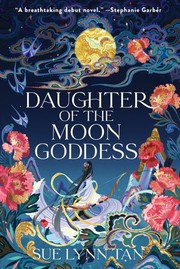
Daughter of the Moon Goddess
2,146-word summary 10 min read 512 pages in the book
- First published
- 2022
- Publisher
- Harper Voyager
- Pages
- 512
- ISBN
- 9780063031302
- Series
- Celestial Kingdom (#1)
Reading options
What's inside (12 sections)
I read Daughter of the Moon Goddess during a heat wave, which turned out to be the right conditions for a book about a girl who has spent her whole life inside a moon palace. The novel is full of cool light, silver gardens, and the ache of being far from home. It is also a fast, romantic adventure with a love triangle and a lot of archery. I expected the mythology. I did not expect the mother-daughter story to hit as hard as it did.
Sue Lynn Tan published the novel in 2022. Harper Voyager brought out the hardcover, which runs 512 pages in the edition I used and carries the ISBN 9780063031302. It is the first book in the Celestial Kingdom duology, followed by Heart of the Sun Warrior. The novel was a New York Times bestseller and won the Goodreads Choice Award for Fantasy in 2022. It is Tan's debut, and it draws on the Chinese legend of Chang'e, the moon goddess, and the Mid-Autumn Festival.
The myth behind the story
The legend of Chang'e has many versions. In the best-known one, Chang'e is the wife of Houyi, a mortal archer who shoots down nine of the ten suns and saves the earth from burning. As a reward, he is given an elixir of immortality. Chang'e drinks it, either by accident or to keep it from a thief, and flies to the moon. She lives there with a jade rabbit, and once a year, on the night of the Mid-Autumn Festival, she can see her husband from afar.
Tan takes the outlines of the myth and fills in the gaps. In her version, Chang'e is not simply a tragic figure who chose immortality over love. She is a mother, a prisoner, and a woman who made a choice that saved her daughter. The Celestial Emperor punished her by confining her to the moon and forcing her to light every lantern in the Moon Palace's gardens each night. The lanterns are the light that humans see as moonlight. If she fails, the punishment will be worse.
Xingyin is Chang'e's daughter. She has lived on the moon her entire life, hidden from the Celestial Court. She knows how to read, play the qin, and shoot a bow, but she has never seen another child her age. Her mother has taught her everything except the truth about her father and the reason they are in exile. That silence is the wound at the center of the book. Xingyin loves her mother, but she also resents her for keeping secrets.
Life on the moon
The moon palace is beautiful and lonely. Tan writes it as a place of silver trees, luminous flowers, and endless quiet. Xingyin's only companions are her mother, a maid named Ping'er, and the animals and spirits of the moon. She grows up listening to stories about the world below and dreaming of a life she cannot have.
When Xingyin's magic flares on the night she comes of age, the Celestial Court senses her. Soldiers arrive to investigate. Chang'e hides her daughter and sends her away, and Xingyin flees to the Celestial Kingdom with nothing but her bow and a false name. The separation is abrupt and painful. One moment she is a girl in a garden. The next she is an orphan in a strange city.
The flight is the novel's first great set piece. Tan is good at describing movement and light. Xingyin's fear is physical, and her determination is physical too. She does not have a plan. She has a bow, a memory of her mother's face, and a promise she makes to herself: she will find a way to free Chang'e.
The Celestial Court
Xingyin arrives in the Celestial Kingdom anonymously and takes work in the palace. She is a servant, which means she is invisible in a different way than she was on the moon. She sees the court from below: the kitchens, the corridors, the small rooms where the real business of a palace happens. She learns to keep her head down and her ears open.
Her archery changes her life. She competes in a contest, or she demonstrates her skill in a way that attracts attention. Crown Prince Liwei notices her. He is the son of the Celestial Emperor and Empress, and he is expected to marry a noblewoman from the Phoenix Kingdom. He is also lonely, bookish, and kind. He invites Xingyin to study with him and his tutor, and their friendship becomes the emotional center of the first half of the book.
The Celestial Court is a place of etiquette and intrigue. The Emperor is obsessed with power and order. The Empress is cold and ambitious. The courtiers gossip, scheme, and watch for signs of favor. Xingyin has to hide her identity while navigating all of it. Every friendly conversation is a risk. Every promotion is a threat. The tension comes from the gap between what she wants and what she can safely reveal.
Liwei and Wenzhi
Liwei is the first person Xingyin meets who treats her as an equal. He is not a prince in the fairy-tale sense. He is a young man who has been raised to rule and has not yet decided what kind of ruler he wants to be. He is gentle with Xingyin, but he is also capable of jealousy and indecision. Their romance is built on shared lessons, shared danger, and the pleasure of being understood.
Wenzhi is the other side of the triangle. He is a captain in the Celestial Army, confident, charming, and older than Xingyin. He sees her potential and pushes her to be braver than she thinks she can be. He is also secretive. His loyalty is unclear from the beginning, and the novel uses that uncertainty to create suspense. Readers who dislike love triangles will find this one familiar, but Tan gives both men distinct personalities and different kinds of appeal.
The romance is not the book's only concern. Xingyin's relationships with Liwei and Wenzhi are also about power. Liwei can offer her protection, but his protection comes with political obligations. Wenzhi can offer her freedom, but his freedom comes with danger. Xingyin has to decide what she is willing to sacrifice for love, and whether love is worth the cost.
The quests
Xingyin joins the Celestial Army and earns a place under General Jianyun, a formidable warrior who becomes a father figure to her. Her missions take her across the immortal world: to the Eastern Sea, where she encounters dragons and underwater palaces; to the Winged Kingdom, where she faces a different kind of politics; and to the demon lands, where the stakes are highest.
The quests are episodic, and they give Tan room to show off her world-building. The Eastern Sea sections are full of color and danger. The Winged Kingdom sections are stranger and more atmospheric. The demon sections are darker, and they reveal the truth about Wenzhi's identity. The novel's middle is less focused than its beginning and end, but the individual set pieces are strong enough to carry the reader through.
The action is well written. Xingyin is an archer, and Tan makes her skill feel earned. She practices, misses, adjusts, and improves. The battles test more than strength. They test judgment. Xingyin has to decide when to fight, when to negotiate, and when to run. Those decisions reveal her character more than any speech could.
The mother-daughter story
For all its romance and adventure, the novel's emotional core is Xingyin's love for her mother. Chang'e is not a distant goddess. She is a woman who has been isolated for years, who misses her husband, and who has sacrificed everything to keep her daughter safe. The scenes between mother and daughter are tender and complicated. Xingyin adores her, but she also needs to separate from her. That tension is the book's most mature theme.
The novel asks what a child owes a parent who has suffered for her. Xingyin's answer is everything. She risks her life, her identity, and her future to free Chang'e. But the book is smart enough to show that love is not the same as obedience. Xingyin makes her own choices, and some of them hurt her mother. The relationship survives because both women learn to see each other as people rather than as roles.
The father, Houyi, is present mostly as an absence. Xingyin has never known him. The novel reveals the truth about her parents' past in stages, and some of the revelations change the way she understands her own childhood. I will not spoil them here. The point is that the family story is not simple. Everyone has made mistakes, and everyone has been forced to live with them.
The ending
The final act brings Xingyin back to the Celestial Palace for a confrontation with the Emperor. She has earned a single wish through her service, and she uses it to ask for her mother's freedom. The court is not willing to let Chang'e go without a fight. The battle that follows is the biggest in the book, and Tan handles it with energy and clarity.
Xingyin succeeds, but the victory is not clean. Her relationship with Liwei is changed by the choices he makes. Her relationship with Wenzhi is changed by the choices he makes. She frees her mother, but she cannot go back to the life she had before. The ending is bittersweet rather than triumphant, which is the right choice for the story. The sequel, Heart of the Sun Warrior, picks up the consequences.
I appreciated that the novel does not pretend that a single heroic act solves everything. Freeing Chang'e is a victory, but it creates new problems. Xingyin has to decide who she is now that she is no longer just a daughter in hiding. That question is more interesting than the battle itself.
What works and what does not
The prose is lush without being purple. Tan has a gift for sensory detail: the smell of osmanthus, the cold of the moon palace, the heat of a dragon's breath, the weight of a bow. The world feels lived in. The mythology is woven in rather than explained. Readers who know the Chang'e legend will recognize the references. Readers who do not will still understand the story.
Xingyin is a strong protagonist. She is brave, stubborn, and sometimes reckless. She makes mistakes. She is not a chosen one who succeeds because destiny says so. She succeeds because she trains, plans, and refuses to give up. Her skill with a bow is one of the book's great pleasures.
The mother-daughter relationship is the best thing in the novel. It gives the fantasy stakes an intimate center. The romance is enjoyable, but the scenes between Xingyin and Chang'e are the ones I remember.
What does not work
The love triangle is conventional. Two handsome, powerful men, one gentle and one dangerous, both in love with the same woman. Tan gives them enough personality to make the story work, but the structure is familiar. Readers who are tired of this trope will find little new here.
The middle sags. The quests are fun individually, but the novel loses momentum between the Celestial Court and the final battle. Some episodes feel like side quests in a video game. The world-building is rich, but the rules of magic are vague. Xingyin's powers grow when the plot needs them to grow.
The ending is rushed. The final battle is exciting, but the emotional aftermath is compressed. I wanted more time with Xingyin after she frees her mother. The sequel provides some of that, but the first book should stand on its own.
Who it is for
This is a book for readers who love fantasy inspired by Chinese mythology, slow-burn romance, and strong heroines. It is for fans of books like The Poppy War and Six Crimson Cranes, though it is gentler than the former and more romantic than the latter. It is marketed as adult fantasy, but it reads like a crossover that will appeal to older young adult readers.
It is not a grimdark fantasy. The violence is present but not graphic. The tone is romantic and hopeful, even when the characters are suffering. If you want a book about a girl who shoots arrows, loves her mother, and fights gods, this is the book for you.
I finished it in two days and immediately ordered the sequel. The novel has flaws, but it has heart. Tan writes about love in several forms: romantic love, filial love, and the love of a home that may no longer exist. That is a lot to carry in one book, and she carries it well.
FAQ
Is Daughter of the Moon Goddess a standalone?
No. It is the first book in the Celestial Kingdom duology, followed by Heart of the Sun Warrior.
What myth is Daughter of the Moon Goddess based on?
It retells the Chinese legend of Chang'e, the moon goddess, and the Mid-Autumn Festival.
Is Daughter of the Moon Goddess young adult or adult?
It is marketed as adult fantasy, but its pacing and romance also appeal to older young adult readers.
Similar books
More from Celestial Kingdom first, then related titles.

A Touch of Malice
Engaged Hades and Persephone face gods who vote on their marriage.
2,562-word summary · 11 min read
Gleam
Captive Auren finds power in gold touch while Slade hunts her across kingdoms in Plated Prisoner book three.
2,073-word summary · 9 min read
Glint
A gold-skinned captive of Midas falls to Fourth Kingdom troops and learns to fight with the ribbons she hid.
2,969-word summary · 13 min read
Gild
A gold-skinned woman kept as Midas favored learns her cage is a bargain, then war drags her onto the road.
2,755-word summary · 12 min read

Neon Gods
Promised to Zeus, Persephone flees to Hades and trades fake dating for real choice in Olympus.
2,002-word summary · 9 min read

A Touch of Darkness
Persephone bargains with Hades in New Athens nightclub deal.
2,545-word summary · 11 min read
The Thief
A boastful young thief is pulled from a prison to steal a legendary stone for the king's magus, and the story he tells about himself is not the whole story.
2,514-word summary · 11 min read

Magic Burns
A magic flare hits Atlanta, and mercenary Kate Daniels must recover stolen maps, find a missing witch, and keep a teenage girl alive while Celtic gods try to…
2,021-word summary · 9 min read

The Siren
Saved from a shipwreck in 1930, Kahlen becomes a siren who sings men to their deaths for the Ocean, until a boy in a college library makes her want a life she…
2,369-word summary · 11 min read

Cruel Beauty
A girl raised to kill the demon prince who rules her cursed land instead falls in love with him, in a retelling that mixes Beauty and the Beast with Bluebeard…
2,669-word summary · 12 min read
The Chalice of the Gods
Percy needs three recommendation letters from three gods to apply to college, so his first quest is recovering a stolen chalice from the god of old age.
2,106-word summary · 9 min read
The Ship of the Dead
Magnus and his crew sail to the edges of the Norse worlds to stop Loki from launching Naglfar, the ship of the dead.
2,426-word summary · 11 min read

The Rose & the Dagger
Shahrzad is pulled from her Caliph husband and left in a desert camp of rebels, needing to break his curse and end a war before it ends her.
2,520-word summary · 11 min read
Stars Above: A Lunar Chronicles Collection
Nine Lunar Chronicles stories fill in the histories of Cinder, Wolf, Thorne, Cress, Winter, and Jacin, and end with a wedding after the war.
2,230-word summary · 10 min read

Lore
Lore Perseous, the last of a hunted bloodline, is pulled back into the Agon when a wounded Athena offers her revenge against the god who killed her family.
2,188-word summary · 10 min read
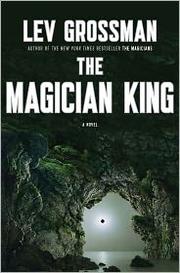
The Magician King
Quentin rules a peaceful Fillory until a golden key strands him on Earth, while Julia's brutal road from hedge witch to demigod rewrites the whole story.
2,431-word summary · 11 min read
A Fate Inked in Blood
In Norse-inspired Skaland, a fish gutter hiding a goddess's blood is claimed by a jarl, bound by oath, and guarded by the son she cannot want.
1,971-word summary · 9 min read

The Dark One
Winnie trades with Hook while Peter Pan turns cruel in Neverland.
2,596-word summary · 12 min read

Half-Blood
Half-blood Alex trains at the Covenant while gods stir and rules close in.
2,601-word summary · 12 min read

Electric Idol
Psyche wears a camera deal to dodge Aphrodite and falls for Eros.
2,332-word summary · 10 min read
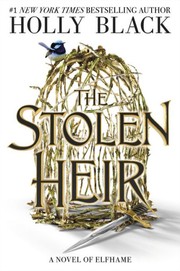
The Stolen Heir
Feral ex-queen Suren joins Prince Oak on a frozen quest to stop her mother, Lady Nore.
2,305-word summary · 10 min read

Ariadne
A Cretan princess helps Theseus kill the Minotaur, is abandoned on Naxos, and rebuilds her life while her sister faces tragedy in Athens.
2,350-word summary · 10 min read
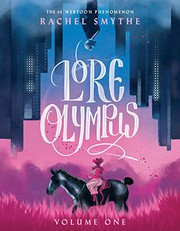
Lore Olympus: Volume One
Sheltered Persephone meets lonely Hades at an Olympus party, and gossip, old trauma, and new power test their slow bond.
2,283-word summary · 10 min read
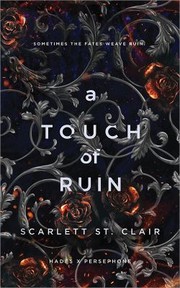
A Touch of Ruin
Persephone and Hades go public, tragedy shatters trust, and she bargains toward queenship through grief.
2,085-word summary · 9 min read
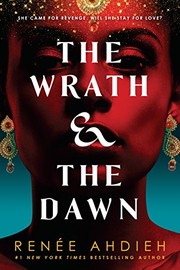
The Wrath and the Dawn
Shahrzad marries a king who executes each bride at dawn, hoping to stay alive through stories. A lush Arabian Nights retelling about grief, trust, and palace…
3,568-word summary · 16 min read
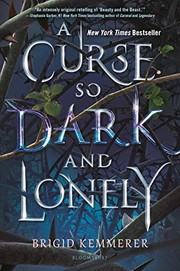
A Curse So Dark and Lonely
Pulled from Washington DC to Emberfall, Harper meets cursed Prince Rhen, who relives his eighteenth autumn until someone falls for him.
2,677-word summary · 12 min read

Heartless
Cath Pinkerton wants a bakery with Mary Ann, not a crown, until secret love for Jest and Jabberwock attacks pull her toward becoming the Queen of Hearts.
2,968-word summary · 13 min read
Wizard's First Rule
Woods guide Richard joins Kahlan and wizard Zedd to find the Boxes of Orden before Darken Rahl, learning why people believe lies.
2,220-word summary · 10 min read
Norse Mythology
Gaiman retells the Norse myths in order, from the creation of the world to Ragnarok, with Odin, Thor and Loki at the center.
4,647-word summary · 21 min read
The House of Hades
Percy and Annabeth cross Tartarus while the five close the Doors of Death before Gaea wakes.
2,910-word summary · 13 min read