
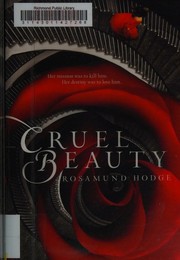
Cruel Beauty
2,669-word summary 12 min read 346 pages in the book
- First published
- 2014
- Publisher
- Balzer + Bray
- Pages
- 346
- ISBN
- 9780062224736
- Series
- Cruel Beauty Universe (#1)
Reading options
What's inside (9 sections)
Nyx Triskelion is dressed for her wedding in a red gown, and her sister gives her a knife. The knife has never cut a living thing. That is supposed to make it holy. Astraia believes an old rhyme, the Sibyl's Rhyme, that a virgin knife in a virgin's hand can kill the beast who rules the land. Nyx knows the rhyme is a lie. She takes the knife anyway. Then she says something to her sister that she will spend the rest of the book trying to take back.
I picked this up expecting a Beauty and the Beast retelling and got a book about debt. The fairy tale is there, along with Bluebeard and Cupid and Psyche and Pandora, but the engine is a girl raised to be a payment.
The girl raised to be a knife
Arcadia has been cut off from the world for nine hundred years. The sky is a parchment dome. There is no sun, only a painted brightness, and demons sometimes slip through the cracks and drive people mad. The island is ruled by the Gentle Lord, a demon prince who grants wishes and always takes more than the wisher meant to give.
Nyx's father, Leonidas, is a leader of the Resurgandi, a secret society of Hermeticists who study the old arts of sigils and correspondences. Years before Nyx was born, his wife Thisbe was desolate about her infertility. Leonidas asked the Gentle Lord for children and got twin daughters; the price was one bride and Thisbe's life. Leonidas looked at his girls and chose. Astraia resembled her mother, so she would live. Nyx would marry the monster and kill him.
He raised her for it. The Hermeticon, the Resurgandi's book of workings, taught her to read diagrams the way other children learn letters. It also taught her that the plan will probably kill her, and that her father considers this an acceptable cost. Her aunt Telomache, Thisbe's sister and now Leonidas's wife, keeps the household running and the story straight. Everyone is very polite about the sacrifice, which is one of the cruelest things in the book.
The plan: the house is a vast Hermetic working powered by four elemental hearts. If Nyx inscribes the nullifying sigil on each one, the house will collapse and the curse will break. She will be inside when it happens. The Resurgandi know this. Nyx has always known. She has a line for it, and the line tells you who she is: if one of us had to die, it ought to be the one with poison in her heart.
That is not self-pity. It is a verdict she has accepted, and the book spends a long time testing it.
The wedding and the house
The wedding is not a wedding. At the edge of the village, Nyx speaks her vows to a stone statue standing in for the absent groom. Her father drives her up the hill and leaves her at the tower. He gives her last instructions and no apology. The castle looks like a ruin from the road. Inside, it is enormous. Rooms open into other rooms; stairs go farther than the outside allows. The house is bigger than the world that contains it, which turns out to be literally true.
Ignifex is waiting for her. He is beautiful in the way a knife is beautiful, black-haired, sharp-featured, with crimson eyes and cat-slit pupils. He finds the knife strapped to her thigh and throws it out of reach. Then he explains the rules. Every night she may guess his true name; a correct guess buys her freedom, a wrong one kills her. A silver key opens the rooms she is permitted to enter. The other doors are forbidden, and he promises she will regret opening them, though not for long.
He does not touch her at first. He mocks her, feeds her, watches her, and leaves her alone. Nyx has prepared for a monster who would assault her. She has not prepared for a husband who makes her want to be clever at dinner.
The house shifts when she is not looking. A ballroom contains a still lake; a library grows ivy indoors. A mirror shows Astraia at home, laughing, and Nyx has to decide whether it is a window or a weapon. In a secret room open to the sky sits a bronze sparrow on a shrine, a Lar, a household god. Nyx leaves it bread. It is the only kindness she offers without calculating what it will buy.
The rules of the house
Every night Ignifex asks if she wants to guess, and every night she says no. She is not ready to die, and she is not ready to leave. The dinners become a ritual. They trade insults and stories, and he is funny in a way that makes her angry at herself for laughing.
He is also a killer. People come to the house with wishes, and Ignifex grants them with terrifying precision. The price always lands on someone who did not agree to it, and he delivers the bill with a smile. Nyx watches and understands that her husband is not a misunderstood softie. He is a system with a face.
Then she finds the room with the wives. Eight women are laid out on stone slabs, preserved, dressed, dead. Bluebeard's closet, but worse, because the book gives them histories. Some guessed wrong and died in the name game. Five were led into the Heart of Fire by Shade.
Shade is the other half. At night, Ignifex's shadow peels off the wall and takes a body, gray-skinned, blue-eyed, with his face and none of his malice. He cannot tell her his master's secrets, but he can show her things. He leads her to the Heart of Water, a ballroom turned into a lake with tiny lights above it, and helps her feel the pulse of the working. He kisses her. She thinks she loves him.
The love triangle is the part that divides readers, but Shade and Ignifex are two halves of one person, one with power and no memory, the other with knowledge and no power. Nyx is not choosing between two men but between two incomplete views of one man, and the book knows this before she does.
The four hearts and the lie
Nyx keeps looking for the hearts. Water is the lake. Fire is behind the shattered mirror, and Shade takes her there to show her the truth about the Sundering. The fire nearly kills her. It burns away her memories, and for one moment she knows Ignifex's true name before it slips out of her head. She wakes in his arms with no idea what she learned.
Earth is a room with a false blue sky and a field of grass. Ignifex takes her there and tells her about stars he remembers from before the Sundering. Air is a garden suspended at the apex of the parchment dome, and he flies her up to it on black wings. From that height she sees the truth: the working is a container. The model of Arcadia she found in the study is not a model. It is Arcadia. The house holds the kingdom.
The Resurgandi's plan is a bomb. If Nyx nullifies all four hearts, the house collapses, and the kingdom inside it collapses too. Her father sent her to save Arcadia by destroying it. It breaks her, but not in the direction her family expects. She does not stop loving Ignifex. She stops believing that killing him is the same thing as freeing anyone.
Ignifex gives her a gold ring shaped like a rose. It opens any door in Arcadia, including the door home. She visits her family and finds Astraia changed. Thinner. Harder. Studying Hermetic texts with the ferocity Nyx once brought to her lessons. Astraia has been trying to save her sister, and the attempt has made her bitter. She demands that Nyx keep the family's promise: kill the Gentle Lord, rescue the last prince, save the island. Nyx argues that Ignifex is a captive too, that the demons would run wild without him, that the plan is broken. Astraia dismantles every argument. Nyx swears the oath.
Readers call this the weak hinge of the plot, and I think they are partly right. Nyx sees that Astraia is using her guilt, and she agrees anyway. The scene moves faster than the psychology.
The prince in the box
The truth arrives in a vision. Wearing Ignifex's ring, Nyx lets the burning darkness into her and the Kindly Ones show her the past. Nine hundred years ago, Arcadia was a province of a great empire, with Latin names and Greek gods and a king whose heir was named Marcus Valerius Lux. Every king had to face a test: look into a box that held the Children of Typhon, the shadow demons born of Tartarus. If his heart was pure, the kingdom would be safe. If it was not, he would be trapped in the box with them.
Lux was afraid. His heart was full of hatred and fear, and he could not bear to be alone in the dark. So he made a bargain. The Kindly Ones took the evil out of his heart and made it a separate being. They took the rest and made it a shadow. They sealed Arcadia inside the box, and gave the evil half power over the house and the bargains. That is Ignifex. That is Shade. The Gentle Lord did not curse Arcadia from outside. Arcadia was cursed by a prince who could not face a test.
To undo it, the demons must strip Ignifex of his power. Shade must merge with him. The whole prince must open the box, and the box will take him instead of the kingdom. Nyx has to betray the husband she loves to save the world he helped imprison. It is a choice between two kinds of damage, and Nyx makes it with her eyes open.
The last bargain
The climax is fast. Nyx frees Shade. She releases the Children of Typhon. The shadows tear Ignifex apart while Shade dissolves at the same moment. Their hands meet. The prince is whole again, blue-eyed and human, and he holds the box. He kisses Nyx and opens it.
Time comes apart. The Sundering never happened. Nyx wakes under a blue sky, in a world where the Gentle Lord is a story. She remembers nothing at first, only a grief she cannot name. It is the Day of the Dead, and the village is holding its festival. Nyx is chosen to play the mock bride of Tom-a-Lone, the hedge god allowed to see his love Nanny-Anna one night each year. Someone puts the gold rose ring into her hand. The counting song ends, one is one and all alone, and the memories return.
She runs to the castle. Lux is there, escorted by the Kindly Ones, released for one night before he has to return to the darkness. Nyx offers her eyes, her life, her service. Nothing is enough. Then she stops bargaining. She says she will stay with him in the dark forever, sharing his punishment, asking for nothing in return.
That is the answer to the riddle. The whole book has been about exchanges, prices, and the arithmetic of who pays. Nyx offers a gift with no price, and the system cannot process it. The bronze sparrow appears on her wrist and tells the Kindly Ones that this is the answer. They vanish. The ground gives way. Nyx and Lux fall through the darkness, are stripped of everything, and wake in the morning sun. He is whole, human, scarred. She takes his hand. She says they will be foolish and vicious and cruel, never safe with each other, but they will pretend to know how to love, and someday they will learn.
The loop is structural as well as magical. The book opens with a wedding and closes with a mock one. The first is a transaction between families; the second is a choice between two people. Nyx is the only one who remembers the house, the wives, the false sky, and the Ignifex who mocked her at dinner. She walks back into the story anyway. The bargain comes around again, and this time she answers with herself, not a price.
What the book gets right, and where it stumbles
The anger is the best thing in it. Nyx is not a plucky heroine with a sword. She is resentful, sharp-tongued, and sometimes actively cruel. The scene where she tells Astraia that their mother died because of her is awful, and the book does not soften it with a quick apology. It lets Nyx be the kind of girl who has been hurt and has learned to hurt back.
The book is also honest about complicity. Nyx is a victim of her father's bargain, but she still wounds her sister. Ignifex is a prisoner of the Kindly Ones, but he still grants the bargains that ruin people. Shade is the gentle half, but he led five women into a fire. Nobody here is clean, and the novel is more interested in what people do with their guilt than in assigning blame.
The worldbuilding is where it loses me. Hodge throws in Hermeticism, Roman names, household gods, the Kindly Ones, the Children of Typhon, and a hedge-god festival. The house is a fantastic invention, and the parchment sky stays with you, but the magic is explained in bursts just before it needs to do something. The Hermeticon is more of a prop than a book, and the four hearts are a checklist until they become the novel's best metaphor.
The middle sags. Nyx explores a room, dines with Ignifex, visits Shade, explores another room. Shade gets too little page time to earn the ache Nyx feels for him, and the switch from distrust to kisses happens quickly. Nyx's competence is more told than shown. She is supposed to be a trained killer and a skilled Hermeticist, but she spends a lot of the book being rescued and instructed. Some of that is the point, but the gap between premise and action is real.
The ending is rushed. The final confrontation is over in a handful of pages, and the rules shift when you want them stable. The reset can feel like a cheat because it erases the eight wives, the Sundering, and the version of Ignifex we spent the whole book with. I do not think it is a cheat, since the cost survives in Nyx's memory, but I understand the frustration. The prose strains for the aphoristic; some lines land, and some sound like they are trying to be quotable.
The side characters are thin. Astraia is a plot function for most of the book. Leonidas never has to answer for choosing one daughter to die. Telomache is a scold.
None of that ruined it for me. The romance has a genuine intellectual charge because Ignifex loves Nyx for being clear-eyed about her own cruelty, not for being good. The final choice is earned even when the mechanics are not. And the book understands something most Beauty and the Beast retellings skate past: the beast is not the only one who needs saving, and the girl is not the only one who has been turned into a thing.
This is not for readers who want a clean magic system, a straightforward fairy tale, or a heroine who is easy to like. It is for readers who can tolerate a messy book with a sharp voice, a house full of dead wives, and a theology of bargains that is more interesting than the plot that carries it. I finished it in two nights, annoyed at the middle and still thinking about the last twenty pages.
FAQ
Is Cruel Beauty a standalone?
Yes. It is set in the Cruel Beauty Universe and has companion books, but Nyx and Ignifex's story is complete in this volume.
What fairy tales does Cruel Beauty retell?
It draws mainly on Beauty and the Beast and Bluebeard, with elements of Cupid and Psyche, Pandora, and Greek and Roman mythology.
Does Cruel Beauty have a happy ending?
Yes, but at a cost. Nyx and Lux are reunited in a remade world, while Nyx keeps the memories of the life and husband she lost.
Similar books
More from Cruel Beauty Universe first, then related titles.
A Curse So Dark and Lonely
Pulled from Washington DC to Emberfall, Harper meets cursed Prince Rhen, who relives his eighteenth autumn until someone falls for him.
2,677-word summary · 12 min read
Heartless
Cath Pinkerton wants a bakery with Mary Ann, not a crown, until secret love for Jest and Jabberwock attacks pull her toward becoming the Queen of Hearts.
2,968-word summary · 13 min read

The Rose & the Dagger
Shahrzad is pulled from her Caliph husband and left in a desert camp of rebels, needing to break his curse and end a war before it ends her.
2,520-word summary · 11 min read
Stars Above: A Lunar Chronicles Collection
Nine Lunar Chronicles stories fill in the histories of Cinder, Wolf, Thorne, Cress, Winter, and Jacin, and end with a wedding after the war.
2,230-word summary · 10 min read
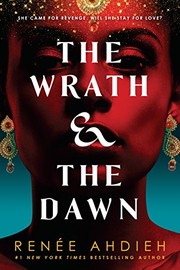
The Wrath and the Dawn
Shahrzad marries a king who executes each bride at dawn, hoping to stay alive through stories. A lush Arabian Nights retelling about grief, trust, and palace…
3,568-word summary · 16 min read
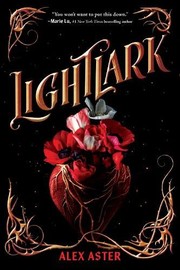
Lightlark
Isla Crown risks everything in the Centennial trials on Lightlark isle to break her people's curse, torn between Grim and King Oro. Secrets pile up toward a…
3,093-word summary · 14 min read
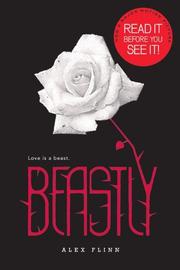
Beastly
Cursed by witch Kendra, cruel rich teen Kyle must find true love within two years while exiled in Brooklyn with Lindy and tutor Will.
2,967-word summary · 13 min read

Vow of Thieves
Kazi and Jase return to Tor's Watch to find it occupied, and their marriage is tested by captivity, betrayal, and a war for the town of Hell's Mouth.
2,059-word summary · 9 min read
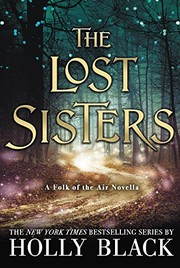
The Lost Sisters
Taryn Duarte writes a letter to her twin, Jude, explaining how she fell for Locke and why she stayed silent while he used them both.
1,914-word summary · 9 min read

Archenemies
Nova steals for the Anarchists while Adrian hides his Sentinel identity, and a serum that erases prodigy powers puts them both at risk.
2,485-word summary · 11 min read

The Siren
Saved from a shipwreck in 1930, Kahlen becomes a siren who sings men to their deaths for the Ocean, until a boy in a college library makes her want a life she…
2,369-word summary · 11 min read
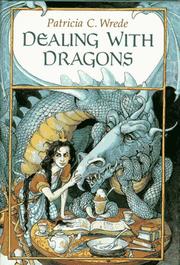
Dealing with Dragons
A princess who hates embroidery runs away to become the cook and librarian for a dragon, then has to outthink wizards, knights, and a plot against the dragon…
2,563-word summary · 11 min read
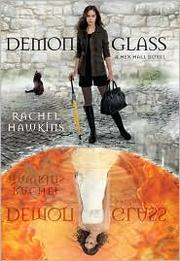
Demonglass
Sophie Mercer spends the summer at the Council's English estate, where two new demons, a suspicious host, and Archer's return complicate her plan to remove her…
2,771-word summary · 12 min read

Born at Midnight
Kylie Galen is sent to a camp for troubled teens and discovers it is a haven for vampires, werewolves, and witches, and that she may be something stranger…
2,310-word summary · 10 min read

We Hunt the Flame
In a fractured Arabia-inspired world, a disguised huntress and a prince-assassin race to find a magic-restoring book and confront an ancient evil.
2,195-word summary · 10 min read

Lore
Lore Perseous, the last of a hunted bloodline, is pulled back into the Agon when a wounded Athena offers her revenge against the god who killed her family.
2,188-word summary · 10 min read
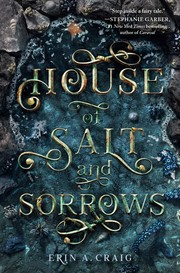
House of Salt and Sorrows
Annaleigh Thaumas investigates her sister's death in a cursed island manor where the balls are illusions and the sea god is always listening.
2,025-word summary · 9 min read
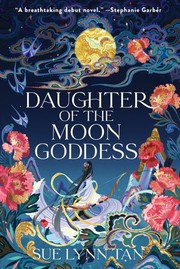
Daughter of the Moon Goddess
The daughter of Chang'e hides in the Celestial Court, trains as an archer, and risks everything to free her mother from the Emperor's punishment.
2,146-word summary · 10 min read
Cemetery Boys
A trans brujo in East Los Angeles summons the ghost of a boy who refuses to move on, and together they uncover a murder hidden beneath Día de los Muertos.
1,997-word summary · 9 min read
Blue Moon
Ever Bloom tries to save her immortal boyfriend, Damen, from a mysterious illness while a new student named Roman quietly takes control of her school and her…
1,998-word summary · 9 min read
An Enchantment of Ravens
Isobel, a mortal artist in the fairy town of Whimsy, paints a portrait of the autumn prince and falls in love with him, breaking the laws of her craft.
2,087-word summary · 9 min read
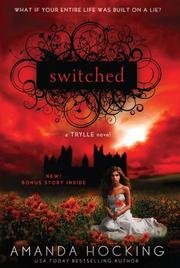
Switched
A Minnesota teenager who can make people obey her discovers she is a changeling troll princess, and the hidden kingdom she came from wants her back.
2,131-word summary · 9 min read
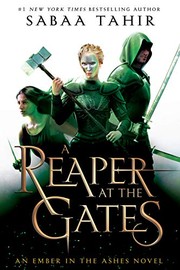
A Reaper at the Gates
The Martial capital falls to an army of ghosts, Elias becomes the Soul Catcher, and Laia and Helene pay brutal prices as the Nightbringer moves to free the…
1,991-word summary · 9 min read
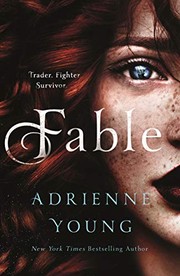
Fable
Abandoned on a lawless island at fourteen, Fable spends four years diving for gems to buy passage off it, straight into the cutthroat trade of the Narrows.
2,320-word summary · 10 min read
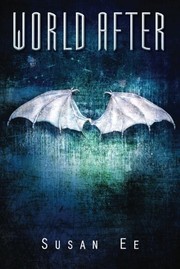
World After
Penryn wakes from near-death to find her altered sister Paige hunted as a monster, and follows her into the angels' scorpion factory and Uriel's coup.
2,213-word summary · 10 min read
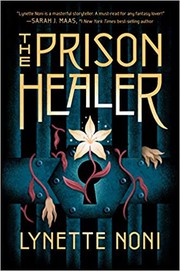
The Prison Healer
Kiva, a teenage healer in a death prison, volunteers to face four elemental trials for a dying rebel queen, and the truths she uncovers change everything.
2,062-word summary · 9 min read

The Indigo Spell
Sydney Sage hunts an aging witch, learns forbidden magic, and finally admits she loves Adrian, while the Alchemist tattoo on her cheek may be controlling her.
2,604-word summary · 12 min read
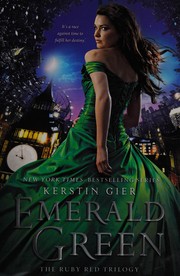
Emerald Green
Gwyneth must close the blood circle that will crown an immortal tyrant, and the prophecy says her death is the final lock.
2,044-word summary · 9 min read
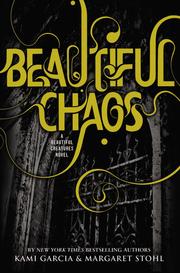
Beautiful Chaos
Ethan Wate is losing himself piece by piece as the broken Order of Things demands a sacrifice, and the answer may be the last person anyone expected.
2,068-word summary · 9 min read