
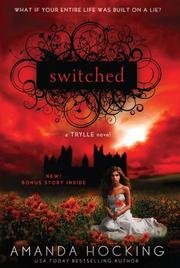
Switched
2,131-word summary 9 min read 318 pages in the book
- First published
- 2010
- Publisher
- St. Martin's Griffin
- Pages
- 318
- ISBN
- 9781250006318
- Series
- Trylle Trilogy (#1)
Reading options
What's inside (10 sections)
This is the book that made self-publishing into a headline. Amanda Hocking put Switched up as an e-book in 2010, sold a handful of copies in the first month, and then watched her nine books turn into a million copies and roughly two million dollars by early 2011. St. Martin's Press signed her to a four-book, two-million-dollar deal, and the trilogy got a hardcover reissue with a new bonus story. All of that commercial noise can make the actual novel hard to see, so here is the useful question: if this had come out from a traditional publisher with no story attached, would it hold up? Mostly, yes, in the way that a well-made candy bar holds up. It is fast, it is sweet, it knows what it wants to be, and it does not pretend to be a meal.
The Birthday and the Knife
The prologue does more work than the first fifty pages that follow. Wendy Everly is six years old, angry about porcelain dolls and a chocolate cake at her birthday party, and she throws the kind of tantrum that six-year-olds throw. Her mother Kim picks up a large kitchen knife and comes at her, screaming that she is not her daughter, and Wendy's older brother Matt pulls her away and calls for help. Kim spends the next eleven years in institutions. It is a terrifying opening, and it plants the mystery the entire trilogy grows from: what did Kim see in her daughter that made a loving mother try to kill her?
Wendy is seventeen when the main story starts. She lives with Matt, who gave up most of his own life to raise her, and their aunt Maggie. She has been expelled from school after school for fighting, usually in defense of somebody smaller, and she is on her last chance at a new high school in a new Minnesota town. She is short, pale, and strange-looking, with dark eyes that unsettle people, and she has a power she has never told anyone about. If she looks someone in the eye and tells them to do something, they do it. She calls it persuasion, and she uses it rarely, because it frightens her.
Finn Holmes and the Dance
The first school day brings Finn Holmes, a new student who stares at Wendy across the hallway with a focus that is close to rude. He is tall, dark-eyed, and dressed like a boy from another era, and he asks her to the fall dance in a way that sounds less like an invitation and more like a decision. The dance goes badly. Finn ignores her, then lectures her, and Wendy, frustrated and embarrassed, persuades a boy at the next table to take her home. That is the mistake that changes everything.
Finn appears at her bedroom window that night, which is not a thing that happens in ordinary Minnesota life, and tells her the truth. She is a changeling. When she was born, she was swapped with a human baby, and she is a Trylle, a troll, of the hidden kingdom of Forening. Tracking down changelings and bringing them home is what Finn does; he is a tracker, and Wendy is his assignment. The persuasion is Trylle magic. The mother who tried to kill her was not crazy, at least not about this.
Wendy does what a reasonable person does and refuses to believe him, until she visits Kim. Her mother, calmer now, tells her what the doctors had told her all those years ago: she was pregnant with a boy. The girl in her crib was not the child she gave birth to. Wendy starts to believe, and then the Vittra try to kidnap her.
The Other Trolls
The attack comes while Wendy is out walking. Two Vittra trackers, led by a man named Jen, try to take her, and Finn fights them off, badly hurt. The Vittra are a rival band of trolls, and they want Wendy for reasons the first book only hints at. Finn decides she is not safe anywhere in the human world, and takes her to Forening, the hidden Trylle community in the Minnesota woods.
Forening is the most interesting thing in the novel and it gets the least development. It is a gated town in the middle of nowhere, full of beautiful, cold people who live off money sent home by changelings placed with rich human families. The society runs on bloodlines and class. At the top are the Queen and the Marksinna, the noblewomen. In the middle are ordinary Trylle. At the bottom, treated as servants and worse, are trackers and mänsklig, the latter being the human children who were taken back from their changeling placements, like Rhys, the boy exchanged for Wendy.
Wendy's mother is Queen Elora, who is exactly as warm as her position suggests. Elora is beautiful, precise, and disappointed. She wants Wendy to be a princess, which means learning decorum, sitting in council, and eventually taking a place she never asked for. There is a wonderful, uncomfortable dinner scene where Wendy accidentally calls a council member a name under her breath and Elora punishes her with a look. The queen never apologizes for anything, and the book never makes her into a secret softie, which is a real strength. She is a politician first, and Wendy is an asset.
Rhys and the Human Trade
Wendy and Rhys become friends, and Rhys is the best supporting character in the book. He is cheerful and kind and works in the kitchens. He also knows exactly what his existence means. He is the son Kim gave birth to, and the same system that gave Wendy a rich human childhood traded Rhys into a life of labor so that a Trylle family could place their child with the Everlys. Rhys is not angry at Wendy for it, but the book does not let the exchange off the hook. When Wendy points out that the practice is monstrous, everyone around her calls it tradition.
That is the novel's real theme, and it is handled more smartly than the romance. Forening is a society that treats people as investments. Changelings are placed with human families for their money, and returns are expected around age eighteen when the inheritances have matured. The lower classes are expected to be grateful. Wendy's "persuasion" turns out to be a rare and valuable power, which makes her a useful tool for Elora, and the book is honest about that: the queen loves her, maybe, but she needs her more.
Training, Romance, and a Locked Room
Finn becomes Wendy's tutor, and the tutoring sessions are the best scenes in the book. He explains Trylle history and etiquette with the stiff formality of a soldier reading a manual, and Wendy teases him until the formality cracks. Their relationship is built on the oldest version of the forbidden love plot, the princess and the tracker, but it works because Wendy is genuinely lonely and Finn is genuinely conflicted. He tells her he was sent to watch her for years before he introduced himself. She asks why he was staring at her at school. He says he was looking at her because he could not look away, and she tells him that this is a little creepy, and he promises to work on being less creepy. It is one of the few exchanges that reads as real teenagers rather than characters.
There is also a locked room with paintings in it, which is the closest the book gets to horror. Elora's Trylle gift is precognition, and it only comes out through painting, so the locked room is full of canvases showing futures she has glimpsed. Wendy finds a painting of herself, which is a fine gothic touch in a book that otherwise stays sunny.
Willa, a noble girl, becomes Wendy's friend, and Tove, a young Markis with psychokinesis, becomes the most useful possible ally. Tove is also the character the book treats most casually. He is withdrawn, powerful, and quietly controlled by the same system that is controlling Wendy, and the trilogy's deeper politics live largely in his subplot, waiting to be used.
The Kingdom Nobody Examines
Forening is the most interesting thing in the novel and it gets the least development, which is worth unpacking. The town runs on changelings placed with wealthy human families, and the money those children send home pays for the gated houses and the beautiful clothes and the whole calm economy of the place. Every noble family in Forening is living on a child they gave away. The mänsklig, the human children who came back in the trade, work in the kitchens. Rhys works in the kitchens. Nobody thinks this is strange except Wendy, and when she says so out loud, the adults around her explain that this is simply how things are done. It is the sharpest political idea Hocking has, and the book keeps bumping into it without ever stopping to stare.
The skills system has the same half-finished quality. Persuasion, psychokinesis, precognition through painting: each power is attached to a bloodline, and the bloodlines are the class system. Tove is a Markis whose power makes him valuable and isolated at the same time, and Willa is a friend who is also a future political actor. Nothing in Forening is casual, and the trilogy spends its later volumes making that clear. In this book, the reader gets just enough to feel the cold.
The Ball and the Vittra
The book ends with an introduction ball, where Wendy is supposed to meet Forening society as Princess Wendy. Instead, the Vittra crash the party. Jen fights Wendy directly, Rhys gets knocked unconscious trying to protect her, and Finn, who has been dismissed from his position, comes back and nearly dies defending her. Tove saves Finn's life with his power and drives the Vittra off, and the ball turns into a hospital scene.
The aftermath is where the book earns its ending. Elora tells Wendy that Finn has been reassigned, because a tracker can never be with a princess, and the rules of Forening do not bend for anyone. Wendy, who has spent eleven years being dragged around by other people's decisions, does the only thing she has left. She finds Rhys, persuades him to drive her out of Forening, and leaves.
That is the whole first book. She goes home to Matt and Maggie, and the reader knows the Vittra will not wait patiently and that the questions about her own father, which the trilogy answers later, have only been delayed.
What Holds Up and What Does Not
Switched is a fast read with a clean hook, and Hocking's pacing instincts are excellent. The prologue is genuinely disturbing, the troll mythology is a fresh house built on a familiar foundation, and the class politics of Forening are more interesting than the love story. Wendy is likable. Matt, the brother who sacrificed his twenties, is more affecting than Finn, and the book deserves credit for making family the emotional center instead of the romance.
The criticisms are just as real. The prose is plain to the point of flatness in places, with sentences that repeat information the reader already has. The romance moves fast because the plot needs it to, not because the characters have earned it. Forening is full of ideas that the book never slows down to examine: the changeling economy, the tracking of children, the treatment of the mänsklig. Kirkus warned vampire and werewolf fans to expect something different, and reviewers at the time called the book candy, which it is. It is candy with a knife in the first chapter. The New York Times Magazine's portrait of Hocking called her writing a mash-up of creativity and commerce, and this book is the clearest example of what that phrase means. It is not trying to be literature. It is trying to keep you up past your bedtime, and it does.
One practical note for readers picking up the paperback: the 2012 St. Martin's edition adds a short bonus story called "The Vittra Attacks," which fills in some of the attack on the Everly house from the perspective of the Vittra themselves, and it changes how the opening chapters read on a second pass. The trilogy was also optioned for film years before any of the current fantasy boom, with a screenplay commissioned in 2011, and the rights eventually returned to Hocking without a movie ever being made. At this point the books are their own monument, independent of any adaptation, and Switched remains the one that changed the economics of self-publishing for everyone who followed.
FAQ
What is a Trylle?
The Trylle are Hocking's version of trolls, a hidden and beautiful people with powers like persuasion and psychokinesis who live in the community of Forening.
Is Switched the first book in the series?
Yes. It is book one of the Trylle Trilogy, followed by Torn and Ascend.
Was Switched self-published?
Yes. Hocking self-published it as an e-book in 2010 before St. Martin's Press bought the trilogy and reissued it in paperback in 2012.
Similar books
More from Trylle Trilogy first, then related titles.
Demonglass
Sophie Mercer spends the summer at the Council's English estate, where two new demons, a suspicious host, and Archer's return complicate her plan to remove her…
2,771-word summary · 12 min read
Born at Midnight
Kylie Galen is sent to a camp for troubled teens and discovers it is a haven for vampires, werewolves, and witches, and that she may be something stranger…
2,310-word summary · 10 min read
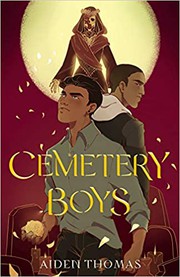
Cemetery Boys
A trans brujo in East Los Angeles summons the ghost of a boy who refuses to move on, and together they uncover a murder hidden beneath Día de los Muertos.
1,997-word summary · 9 min read

The Indigo Spell
Sydney Sage hunts an aging witch, learns forbidden magic, and finally admits she loves Adrian, while the Alchemist tattoo on her cheek may be controlling her.
2,604-word summary · 12 min read
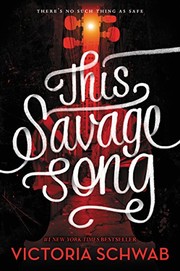
This Savage Song
Monster hunter Kate meets August, a monster who plays violin.
2,574-word summary · 11 min read
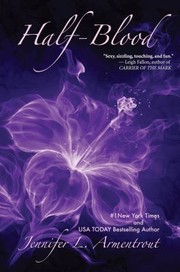
Half-Blood
Half-blood Alex trains at the Covenant while gods stir and rules close in.
2,601-word summary · 12 min read
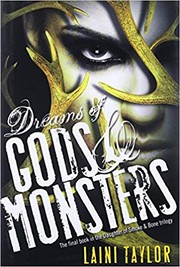
Dreams of Gods & Monsters
Karou and Akiva unite chimera and seraphim against empires invading Earth.
2,179-word summary · 10 min read
The Golden Lily
Sydney Sage guards Jill at Amberwood Prep in Palm Springs, studies forbidden magic, favors Adrian over Brayden, and faces Alchemist custody in this second…
2,988-word summary · 13 min read
Unearthly
Part-angel Clara moves to Wyoming to fulfill a vision of a boy and a forest fire.
2,241-word summary · 10 min read
Forever
Grace turns wolf, Sam scrambles for a cure, and Mercy Falls votes to hunt the pack in trilogy end.
2,217-word summary · 10 min read

Hex Hall
A witch who ruins prom with a love spell is sent to Hex Hall, where a vampire roommate and old family secrets wait.
2,991-word summary · 13 min read
Finale
Nora Grey must lead the Nephilim while her bond with Patch is tested by old vows and looming war over Coldwater. Hank's shadow still drives hate from beyond…
2,898-word summary · 13 min read
Every Day
A wakes in a new teen body daily until falling for Rhiannon breaks rules.
2,215-word summary · 10 min read
Midnight Sun
Twilight retold by Edward Cullen: a silent mind, singer blood in Forks, and restraint tested to the edge.
3,824-word summary · 17 min read
Evermore
Ever Bloom survives the crash that kills her family and meets Damen, whose touch quiets the psychic noise in her head.
3,604-word summary · 16 min read
Shiver
Grace Brisbane loves yellow eyed wolf Sam, human in summer, as winter cold threatens to take him back for good in small town Mercy Falls.
2,408-word summary · 11 min read
Clockwork Princess
Tessa chooses between Jem and Will as Mortmain's clockwork army closes on the London Institute.
3,289-word summary · 15 min read
Twilight
Stephenie Meyer's Twilight in full: Bella and Edward's romance in Forks, the Cullens' rules and the nomad vampires, and what the novel's restraint does to its…
2,494-word summary · 11 min read

Vow of Thieves
Kazi and Jase return to Tor's Watch to find it occupied, and their marriage is tested by captivity, betrayal, and a war for the town of Hell's Mouth.
2,059-word summary · 9 min read
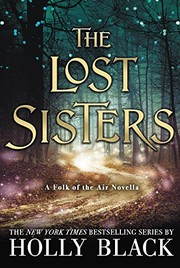
The Lost Sisters
Taryn Duarte writes a letter to her twin, Jude, explaining how she fell for Locke and why she stayed silent while he used them both.
1,914-word summary · 9 min read

Magic Burns
A magic flare hits Atlanta, and mercenary Kate Daniels must recover stolen maps, find a missing witch, and keep a teenage girl alive while Celtic gods try to…
2,021-word summary · 9 min read
Masquerade
After Cordelia's death, Schuyler flies to Venice to find her exiled grandfather, then returns to the Blue Bloods as they prepare for a masked ball and a hidden…
2,543-word summary · 11 min read
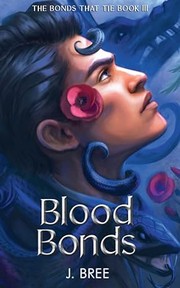
Blood Bonds
Oleander is chained in a Resistance camp, and her five Bonds have to find her before Silas Davies finishes what he started in this third Bonds that Tie book.
2,018-word summary · 9 min read

Archenemies
Nova steals for the Anarchists while Adrian hides his Sentinel identity, and a serum that erases prodigy powers puts them both at risk.
2,485-word summary · 11 min read

The Siren
Saved from a shipwreck in 1930, Kahlen becomes a siren who sings men to their deaths for the Ocean, until a boy in a college library makes her want a life she…
2,369-word summary · 11 min read
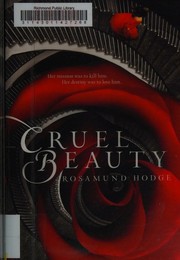
Cruel Beauty
A girl raised to kill the demon prince who rules her cursed land instead falls in love with him, in a retelling that mixes Beauty and the Beast with Bluebeard…
2,669-word summary · 12 min read

The Rose & the Dagger
Shahrzad is pulled from her Caliph husband and left in a desert camp of rebels, needing to break his curse and end a war before it ends her.
2,520-word summary · 11 min read