

Strange Sally Diamond
2,411-word summary 11 min read 320 pages in the book
- First published
- 2023
- Publisher
- Gallery/Scout Press
- Pages
- 320
- ISBN
- 9781501189715
Reading options
What's inside (8 sections)
The first thing I heard about this novel was the incinerator. A woman in her forties takes her dying father's joke literally, tries to burn his body with the trash, and becomes a national headline. It sounds like the setup for a black comedy. Liz Nugent's 2023 novel is funny in places, but it is not a comedy. The edition I read is the Gallery/Scout Press hardcover, 320 pages, ISBN 9781501189715. It is set partly in the small Irish village of Carricksheedy and partly in New Zealand, and the distance between those two places is where the book does its real damage.
Sally Diamond is 43. She lives in the family house outside Carricksheedy with her father, Thomas Diamond, a retired psychiatrist. Her mother, Jean, is dead. Sally is reclusive, literal-minded, and socially awkward in ways the village reads as strange. She keeps routines. She does not pick up on jokes. She has spent most of her life inside the house, and the novel lets us feel how comfortable that house has become, and how much it has cost her.
Thomas is terminally ill. Near the end, he tells Sally that when he dies she should put him out with the trash. It is a tired man's black humor, the kind of thing people say when they are exhausted by dying. Sally takes it as an instruction. After he dies, she tries to incinerate his body in the trash incinerator. The scene is horrifying and absurd at once. Smoke, smell, neighbors, police. The village is scandalized. The media descends. Sally does not understand why everyone is upset. She was doing what her father asked.
That opening could have been a stunt. Nugent uses it as a door. The town's horror gets Sally a lawyer, and family friend Angela and her aunt Christine step in. The charges are dropped, but the attention does not stop. Sally's face is in the papers. Her privacy is gone. The novel is interested in what happens to a person who has been kept away from the world when the world suddenly arrives with cameras.
The book moves between Sally's first-person account and a separate narrative following Peter, and the reader does not know at first how the two are connected. That structure is part of the suspense. The New Zealand sections feel like a separate book until the bear arrives, and then the two stories snap together. Nugent withholds just enough to keep the pages turning without making the reader feel tricked.
The woman at the end of the lane
Sally's voice is the reason the book works. She narrates in short, declarative sentences. She notices details other people ignore and misses cues other people take for granted. She is not stupid. She is precise in a way that makes the rest of the village look careless. When people use metaphors, she asks what they mean. When they tell her to be normal, she wants a list of instructions. Nugent never gives her a neat diagnosis. The novel is more interested in how Sally moves through a world that has no patience for her than in labeling her.
The house is part of the problem. It sits away from the village, surrounded by land, and Thomas kept it that way. Sally's routines are tied to the building: the same chair, the same meals, the same route to the shops. After the incinerator, the house becomes a tourist attraction for gossip. Reporters camp outside. Neighbors who never visited suddenly have opinions. Sally's aunt Christine and Angela try to shield her, but the story is bigger than they are.
The incinerator sequence also shows how quickly a private life becomes public property. The police are not cruel. The lawyer is competent. The system works, more or less, and still Sally is exposed. The media wants a monster or a victim, and Sally does not fit either role. She is a woman who did something shocking because she trusted her father. That is harder to sell than a headline, so the coverage flattens her.
Angela is the practical one. She finds the lawyer, answers the door, and tries to keep Sally from reading the comments online. Christine is more distant, but she shows up when it matters. The village itself is a mix of kindness and nosiness. Some people bring food. Others slow down outside the gate to see if the incinerator is still smoking.
The letters
After the funeral, Sally finds letters from Thomas. They are the novel's first big reveal. Sally was born Mary Norton. Her mother was Denise Norton, who was kidnapped at age 11 by Conor Geary and held captive for years. Denise was raped and abused. Mary was born in captivity. When Sally was about seven, Denise and Mary were found and freed. Conor escaped and was never caught. Thomas treated them in his psychiatric ward. He separated mother and child because he believed it would help Denise recover. Denise later died by suicide. Thomas and Jean adopted Mary and renamed her Sally.
This is a lot to take in, and Nugent parcels it out through the letters rather than dumping it. The effect is queasy. Thomas is not a cartoon monster. He is a doctor who thought he was doing the right thing, and the novel lets Sally reckon with the fact that the man who raised her also helped erase her first life. The separation of mother and daughter is the wound at the center of the book. Denise is a person, not a backstory, and she was failed by the system long before she was failed by Thomas.
The letters also change the reader's understanding of Sally's childhood. The routines that looked like eccentricity are survival habits. The house that looked safe was a place built on a secret. Thomas and Jean gave Sally a new name, a new family, and a new story, and they never told her the old one. Their love was real. So was the lie. Nugent holds both facts without letting either one cancel the other.
The rescue is described in fragments. Denise and Mary were found, but the world they returned to had no place for them. Denise had been a child when she was taken and a mother by the time she was freed. The press treated her as a story. Thomas treated her as a patient. Sally, who was small enough to be renamed, became the child everyone could save by pretending the past had not happened. That is the novel's cruelest idea: adoption as erasure, love as a fresh coat of paint over a locked room.
Toby
A worn teddy bear named Toby arrives from New Zealand. It is signed with the letter S. Sally remembers the bear. The memory is fragmentary, more physical than visual, the way early childhood often is. The package was sent by Peter Geary, Sally's biological brother. Police and Interpol begin searching for Conor Geary. The bear becomes evidence, and it also becomes a door into the part of Sally's life she was never allowed to keep.
The package is one of the novel's best plot devices. It is small, ordinary, and impossible to ignore. A teddy bear should be comforting. This one arrives like a threat. Sally's reaction is not sentimental. She wants to know who sent it and why. The police want to know where Conor is. The media wants another chapter. Everyone is using the bear for something, and Sally is the only one who remembers it as a toy.
The police investigation moves slowly. Conor Geary is a ghost from another country, and the paperwork is complicated. Sally is asked to remember things she cannot. The bear sits in her cottage and watches her. Nugent uses it to show that an object can carry a whole childhood, and that a childhood can be returned without being explained.
Building a life
Sally begins to build a life. She befriends two children, Abebi and Maduka, and their mother Martha. The friendship is ordinary and specific: snacks, school runs, small favors. Sally is good with the children because she takes their questions seriously. She sees therapist Tina, who helps her name what has happened without turning Sally into a case study. She sells the isolated family house and renovates a cottage. The cottage is smaller, closer to people, and full of decisions Sally makes for herself.
She also starts a relationship with Mark. He is kind, patient, and interested in her. He seems like the first person who sees her without flinching. Later we learn that Mark is Mark Norton, Denise's brother and Sally's biological uncle. The reveal is horrible, and Nugent plays it quietly. Mark's kindness was real, which makes the betrayal worse. Sally has been starved of affection, and the first man who offers it is family in the most forbidden sense. The novel does not exploit the shock for cheap thrills. It asks what Sally is owed and what she can survive.
The village watches all of this. Some people are generous. Others are curious in a way that feels like hunger. Sally's new life is not a clean escape from the old one. The past keeps arriving in envelopes, in memories, and in people who know more than they say.
Martha is one of the few people who treats Sally as a neighbor rather than a phenomenon. The children ask blunt questions, and Sally answers them. Tina's therapy sessions are not miracle cures. They are rooms where Sally can practice saying what she means. The cottage renovations take time, and the novel gives those small tasks real weight. Choosing a color, buying a kettle, learning to live alone: these are victories, and Nugent does not rush them.
Peter's story
The parallel narrative is set in New Zealand. Peter was raised by Conor under the names Steven and James Armstrong. Conor kept him isolated, taught him racist ideas, and told him a lie that his skin would kill anyone who touched him. Peter believed it. His only friend, Rangi, a Māori boy, drowns while Peter does nothing because of the lie. That death is the first crack in Peter's world. It is also the moment the novel shows how cruelty passes from one person to another.
Conor later kidnaps a 14-year-old girl, Lindy, and imprisons and abuses her. Peter befriends Lindy. He brings her food, talks to her, and eventually learns that the disease is a lie. He confronts Conor. The confrontation ends in a car crash that kills Conor. For a moment it looks like Peter will free Lindy and become something other than his father's son. Instead he keeps her captive for decades. Lindy and Peter have a daughter, Amanda, whom Peter leaves at a church. Lindy dies of appendicitis.
This is where the novel piles horror on horror. Some readers will find it too much. The New Zealand sections are compelling, but they are relentless. Peter is a victim who becomes a perpetrator. Nugent is careful not to excuse him. He had a chance to free Lindy, and he chose to keep her. That choice is the moral center of his story. The car crash that kills Conor is not a clean victory. It is the moment Peter could have become free, and instead he rebuilds the prison.
Lindy's section is the hardest to read. She is a girl who was taken, and the novel does not soften what happens to her. Amanda's existence is another layer of horror, because she is both a child of captivity and a person with her own life. Peter leaves her at a church, which is presented as mercy and abandonment at once. When Amanda grows up to be a pianist, the novel allows her a future without pretending the past is resolved.
The million euro
Peter comes to Ireland. He proves through DNA that he and Sally are siblings. Sally gives him one million euro of her inheritance. He claims he will travel around Ireland. Instead he buys false documents and flees to America, where he builds a barn for his next victim. Sally is devastated by the betrayal. Amanda, now a concert pianist, receives a teddy bear from America.
The ending is chilling because it refuses to close the story. Sally has survived her father's lies, the media, and the revelation of her first family. She has made a home and a few real relationships. Then Peter arrives, and her generosity becomes another door for the past to walk through. The million euro is Sally's attempt to buy a brother, to make the family she never had. Peter takes it and leaves.
The American barn is another image of repetition. Peter does not need to explain what it is for. The reader has already seen the pattern, and the novel trusts that recognition to do the work. Sally's response is not revenge. She is heartbroken, but she keeps living. That restraint is one of Nugent's strengths. She does not give Sally a tidy catharsis, and she does not give Peter a redemption.
Nugent's themes are all here: inherited trauma, captivity, adoption, neurodivergence, isolation, media exploitation, motherhood, and the difficulty of escaping family patterns. The novel is strongest when it stays close to Sally's voice. Her blunt observations make the horror bearable. Her dark humor is not a coping mechanism imposed by the author. It comes from the way she sees the world, and it makes her one of the most distinctive narrators in recent Irish crime fiction.
The weaknesses are real. The book piles on horrors until the reader goes numb. Some twists depend on coincidence, and the New Zealand timeline occasionally feels like a separate novel bolted onto the Irish one. Secondary characters can be thin, especially the men who are not Peter or Thomas. But Sally's voice carries the book. The moral seriousness underneath the sensational plot is what keeps it from becoming mere shock. Nugent wants us to think about what happens to children who are raised inside a lie, and what they owe the people who made them.
The last image belongs to Amanda. She is at the piano, successful and composed, and a teddy bear arrives from America. She does not know what it means. The reader does. That gap between knowledge and innocence is the novel's final chord, and it lingers longer than the plot's coincidences.
FAQ
What happens at the start of Strange Sally Diamond?
Sally takes her father's joke about putting him out with the trash literally and tries to incinerate his body, which brings the police and media into her life.
Who is Sally Diamond?
She is a reclusive 43-year-old Irish woman who was born Mary Norton in captivity and adopted by Thomas and Jean Diamond.
Is Strange Sally Diamond based on a true story?
No. It is a 2023 novel by Liz Nugent published by Gallery/Scout Press.
Similar books
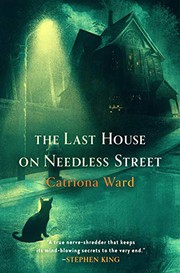
The Last House on Needless Street
A lonely man, a cat and a mysterious neighbor pull you into a house full of buried trauma.
2,627-word summary · 12 min read

What She Knew
Rachel lets her eight-year-old son run ahead in a Bristol park, and the nine-day search turns her into a suspect in the public eye.
2,952-word summary · 13 min read

The Beach House
A young valet is beaten to death at a Hamptons party, and his law-student brother spends a year building a case against the family that covered it up.
2,049-word summary · 9 min read

The Trespasser
A Dublin Murder Squad detective investigates a staged dinner-party killing and finds a cover-up that reaches into her own department.
2,051-word summary · 9 min read

Still Missing
A realtor is abducted at a Vancouver Island open house and held for more than a year. Told through therapy sessions, the novel follows her escape and the hunt…
2,466-word summary · 11 min read

The End of Her
A sleep-deprived mother of twins faces a stranger's accusation that her husband murdered his first wife in Shari Lapena's domestic suspense novel.
2,383-word summary · 11 min read

The Woods
Twenty years after two teenagers were murdered and two vanished at summer camp, prosecutor Paul Copeland identifies a fresh corpse as one of the missing.
2,490-word summary · 11 min read

Broken Harbor
A family is found slaughtered in a half-built Dublin estate where no one broke in, and star detective Scorcher Kennedy must explain the holes in the walls.
2,308-word summary · 10 min read

The Widow
A widow of a suspected criminal faces reporters and police while hiding what her marriage really cost.
2,599-word summary · 12 min read

The Therapist
A couple moves to a gated street where the previous therapist was murdered in their house.
2,437-word summary · 11 min read

The Night Swim
A true crime podcaster covers a rape trial while probing an old drowning in a small town.
2,260-word summary · 10 min read

The Heiress
A missing heiress returns to claim a mansion full of letters and lies.
2,362-word summary · 10 min read
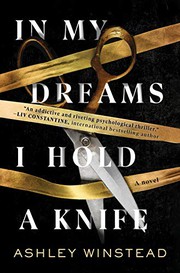
In My Dreams I Hold a Knife
College friends reunite ten years after a murder with a trap set.
2,252-word summary · 10 min read
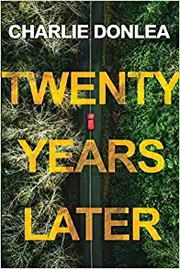
Twenty Years Later
A TV host reinvestigates a 20-year-old murder after a 9/11 victim ID names the accused, and the case pulls her own hidden past into view.
2,726-word summary · 12 min read
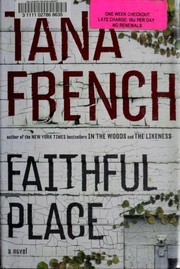
Faithful Place
Undercover Frank Mackey returns to Faithful Place when lost love Rosie suitcase is found.
2,161-word summary · 10 min read
The Good Lie
A psychiatrist and a grieving lawyer reopen a closed serial killer case in California and find the profile points somewhere painful.
2,964-word summary · 13 min read
The Likeness
A detective poses as her murdered double and moves in with four graduate students to find the killer.
2,751-word summary · 12 min read
The Death of Mrs. Westaway
Broke tarot reader Hal claims a Cornish inheritance and finds attic locks and lies.
3,313-word summary · 15 min read
I Am Watching You
A florist watches two schoolgirls chat with ex cons on a train and stays silent. A year later one girl is still missing and someone starts watching her.
2,939-word summary · 13 min read
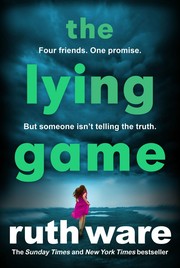
The Lying Game
Isa returns to Salten with her baby when bones surface in the marsh and force four school friends to face what they buried.
2,277-word summary · 10 min read

One by One
Shareholders snowed into a French chalet for a buyout vote start dying, and two outsiders piece together the truth.
2,173-word summary · 10 min read
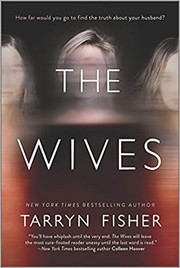
The Wives
A woman who sees her husband only on Thursdays tracks down his other wives and learns her marriage is not what she believed.
2,454-word summary · 11 min read
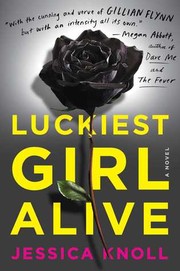
Luckiest Girl Alive
Ani FaNelli reinvents herself as a glossy New Yorker, but a documentary about her Bradley past threatens to expose everything.
2,222-word summary · 10 min read
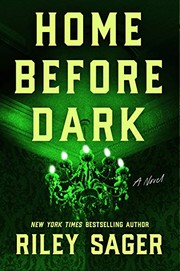
Home Before Dark
Maggie renovates haunted Baneberry Hall her father made famous.
2,017-word summary · 9 min read
The Turn of the Key
A nanny writes from prison about a smart Highland house, four girls, and the night one child died.
3,207-word summary · 14 min read
Before I Go to Sleep
Christine wakes each day with no memory, and her secret journal reveals her husband lies.
2,577-word summary · 11 min read

Into the Water
A drowning pool, eleven narrators, and sisters divided in Hawkins's murky second thriller.
2,598-word summary · 12 min read
In the Woods
A detective investigates a girl's murder in the woods where his own friends vanished twenty years earlier.
2,773-word summary · 12 min read
The Woman in Cabin 10
Journalist Lo sees a body thrown from a luxury cabin, then learns no passenger is missing.
2,002-word summary · 9 min read
Verity
Colleen Hoover's Verity explained: Lowen, injured Verity Crawford, the hidden autobiography, and the letter that flips everything.
2,593-word summary · 12 min read