
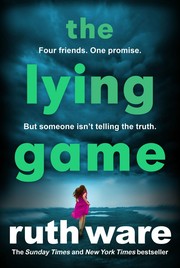
The Lying Game
2,277-word summary 10 min read 384 pages in the book
- First published
- 2017
- Publisher
- Scout Press
- Pages
- 384
- ISBN
- 9781501156007
Reading options
What's inside (8 sections)
I came to The Lying Game after reading Ware's first two thrillers back to back, and I expected another locked room puzzle. This is a different animal. Published by Scout Press in 2017 at 384 pages, it is a standalone novel about four women who buried a secret as teenagers and have to dig it up as adults. The narrator is Isa Wilde, a lawyer in London and a new mother to a six-month-old baby girl named Freya. When the book opens, Isa gets a text from Kate Atwood, the friend she has not properly seen in years. It says only that Kate needs her. Isa knows instantly what it means. Something has surfaced, literally, in the marsh near the village where they grew up.
What kept me reading was not the mystery mechanics, though those work, but the friendship. These four women love each other in the fierce, damaged way of people who survived adolescence together and never quite told anyone else the truth. The book alternates between the present crisis and Isa's memories of boarding school, and the past sections are the stronger half. By the time I reached the fire at the end, I believed these women would lie for each other, and had, and would again.
The Text That Drags Isa Back
The present-day story starts on the Reach, the tidal estuary near the fictional village of Salten on the southern English coast. A woman walking her dog watches the animal charge into the water and come back with something that first looks like a stick. It is a human bone. The next morning, three women in London receive the same message from Kate: she needs them. Isa, married to Owen and on maternity leave with Freya, drops everything. She packs the baby and takes the train down to Salten, telling Owen only part of the truth.
Kate still lives at the Tide Mill, the crumbling family home on the marsh where the girls spent their school weekends. It is half sinking into the landscape, damp and black-timbered, exactly as Isa remembers. Thea arrives, sharp-tongued and restless, now working as an actress and drinking more than she should. Fatima comes too, a doctor, steady and observant, the one who holds the group together when it frays. The reunion scenes are beautifully awkward. They fall into old jokes and old roles within minutes, and Isa keeps noticing how little they have changed and how much they are all performing.
Kate's news is what they feared. Human remains have been found on the shore, and everyone in the village is talking. The police are involved. The women agree, without quite saying it, to find out what is happening and to protect each other if the bones turn out to be who they think. Then small hostile things start happening around the Mill. A dead sheep appears at the door. Isa finds a threatening note suggesting someone knows the secret. The marsh itself feels like a character, all fog and sucking mud and tides that cover and uncover the ground. Ware writes landscape the way other writers write villains. Salten is loosely based on Romney Marsh country, and you feel the isolation on every page.
Salten House and the Rules of the Game
To understand the present, Isa's memories take us back to Salten House, a second-rate boarding school near the cliffs of the English Channel. Isa arrives as an outsider and is adopted by three girls who run the place socially: Kate, magnetic and secretive; Thea, bold and funny, the inventor of their games; and Fatima, clever and watchful. The four become inseparable, sleeping in each other's rooms, sharing everything, and playing the Lying Game. The game has strict rules. Never lie to each other. Drop a lie the moment it looks like being caught. Score points for convincing teachers and classmates of outrageous stories. What starts as mischief curdles into something meaner, and the school learns to steer clear of them.
Weekends belong to the Tide Mill. Kate's father Ambrose, the school's art teacher and a former heroin addict, keeps a chaotic, bohemian household. He is charming to the girls in the way that makes adult readers uneasy and teenage girls feel special. Also living there is Luc, the son of Ambrose's French former partner, sent to escape a troubled home life in France. Luc is older, damaged, good-looking, and the girls orbit him with varying degrees of crush. Kate and Luc, raised almost as siblings, share something closer and stranger than either admits.
Ware is good on the texture of this world: the dorm politics, the smoking behind the sports hall, the long bus rides, the art room where Ambrose holds court. She is also honest about how cruel teenage girls can be, including to each other. One of the best passages follows a lie Isa tells about a local boy on a bus, a throwaway fib that snowballs into real consequences for an innocent person. It shows the game's cost before the story raises the stakes to life and death. I believed in this friendship completely, which made what happens next hurt the way it should.
The Night They Buried the Truth
The past strand builds to the night everything broke. The girls arrive at the Mill to find Ambrose dead of an apparent heroin overdose, holding a note addressed to Kate. Kate is fifteen, nearly sixteen. Her mother is gone. If the authorities get involved, she will go into foster care and lose the Mill, the only home she has. So she sends the text, the first version of the message, and the other three come running. Together they carry Ambrose's body to the shore and hide it in the marsh, telling themselves Kate will report him missing once she turns sixteen and can stay alone.
It is the kind of decision that only makes sense at seventeen, and Ware lets it sit without excusing it. The girls are terrified. Fatima, the most sensible, goes along. Thea, the boldest, takes charge of details. Isa follows, asking fewer questions than she should. They swear to each other and go back to school pretending nothing happened.
Then the drawings surface. The headmistress confronts them with intimate sketches Ambrose made of the girls, some of them nude. Kate claims the drawings are her own work, a lie within the rules of their game, but it does not save them. All four are expelled in their final year. Kate waits, then reports her father's disappearance. Luc, still fifteen, is sent back to France and further abuse. The friends scatter to universities and jobs and separate lives, and the secret settles under seventeen years of silence. Reading this section, I kept thinking about how young they were and how permanent what they did turned out to be. That is the book's real subject, and Ware never lets you forget it.
Bones in the Marsh
Back in the present, the remains force everything open. The police investigation moves slowly, all polite questions and meaningful pauses. Isa, jumpy from broken sleep and the return to Salten, starts seeing threats everywhere. She clashes with Mary Wren, a formidable village matriarch who runs the post office and the local opinion alike, and who clearly suspects the women's sudden reunion is no coincidence. Mary is one of the book's best creations, polite as cake frosting over pure steel.
Then Luc reappears. He has come back to Salten as an adult, angry in a way that frightens Isa. He suspects, or half knows, what the girls did with Ambrose, and his resentment toward Kate burns off him. Isa's own feelings about Luc are tangled. There is history there, a teenage crush that never fully died, and Ware writes Isa's confusion with uncomfortable honesty. Owen, left in London with his suspicions growing, becomes a distant pressure on every page. When flowers from Luc arrive, Owen's jealousy flares, and Isa's marriage starts to look as fragile as everything else.
The middle of the book piles on incidents. Copies of Ambrose's intimate drawings get posted to the women. Someone has apparently been blackmailing Kate with the drawings for years. The friends realize the school only learned about the drawings after Ambrose died, which breaks the story they always told themselves about why he killed himself. If the drawings did not drive him to it, what did. Isa returns to London, then comes back to Salten with Freya when the death becomes a formal investigation. There is a scene between Isa and Luc at the Mill, interrupted by Kate at the worst possible moment, that I found genuinely painful to read. Nobody behaves well. Everyone behaves believably.
I will admit the middle sags in places. Isa withholds things from the reader as well as from Owen, and after the third or fourth strategic omission I started to feel managed rather than surprised. The plot also leans on coincidence: people overhear exactly the right conversations, turn up at exactly the wrong houses. Readers who demand fair-play clueing will grumble. I forgave it because the atmosphere and the friendship carry the slow patches, but the book is a good fifty pages longer than its story strictly needs.
What Really Happened to Ambrose
The last third replays the past with new knowledge, and it is worth the wait. Talking to Mary, Isa learns that the postmortem showed Ambrose's overdose was taken orally, not injected. That detail cracks everything. A recovering addict does not swallow heroin by accident. Then comes the second revelation: Kate and Luc were romantically involved as teenagers, unknown to the others. When Ambrose discovered the relationship between his daughter and his stepson, he decided the two had to be separated and arranged to send Luc away.
Luc, terrified of being returned to the abuse he had escaped in France, poisoned a bottle of Ambrose's wine with a lethal dose of heroin. It was a slow death, and Ambrose understood what was happening before the end. In that time he wrote the note to Kate, the supposed suicide letter, designed to protect both Kate and Luc from police suspicion and to guide Kate toward shielding the boy. Kate, who adored her father, obeyed the letter and hated Luc for making it necessary. She even sent her father's drawings to the school herself, creating a false reason for his death that would point away from murder.
The confrontation scenes land hard. The three friends accuse Kate of killing Ambrose to protect Luc, reading the note as a mother's logic, and Kate confesses to exactly that, covering for the boy she loved and resented in equal measure. But eavesdropping on Kate and Luc that night, Isa realizes the confession itself was a lie within the old rules. Kate was covering for Luc, who did the poisoning and sent the drawings, and Ambrose's last act was to beg Kate to protect a damaged fifteen-year-old from what would follow. The tragedy compounds: Kate sacrificed her father, her brother in all but blood, and her own peace to honor a dying man's wish, and Luc grew up believing she abandoned him.
It ends in fire. Luc comes to the Mill that night. He and Kate fight while Isa listens, and a lamp breaks in the struggle. The old timber house goes up fast. Luc carries baby Freya out of the burning building, saving the child at the cost of his own escape, and Kate goes back inside after him. The Mill collapses with both of them in it. Isa is left with a final ugly suspicion that Mary Wren was behind the threats and the long blackmail of Kate, though Ware leaves that thread deliberately unproven. The remaining three women travel to Scotland to visit Isa's father, and the book closes on Isa resolving to stay with Owen, for Freya's sake as much as her own.
After the Fire
The climax will divide readers, and I should be honest about that. A burning-house finale after three hundred pages of marsh fog feels melodramatic, and Kate's decision to walk back into the fire reads as the book choosing symbolism over sense. Luc's last-minute heroism with Freya also softens him a beat too neatly for a character who poisoned a man. I finished the final chapters admiring the construction while feeling the seams.
But here is what I kept thinking about afterward, which is the test that matters. The book's title promises a game, and the game turns out to be the friendship itself: four girls who swore never to lie to each other, and spent seventeen years doing exactly that for love. Isa's closing choice, to stay and to tell Owen some version of the truth, feels earned rather than tidy. Ware does not pretend the women are healed. She only shows them still standing, still bound, carrying the marsh with them.
Read it if you like slow-burn psychological thrillers where place matters as much as plot, and where the monster is the past rather than a person. Skip it if you need a fast puzzle or characters you can fully admire. As the third of Ware's early thrillers, it sits between the locked-room tension of her debut and the breakneck pace of her later work, and it remains her best study of female friendship. I closed it thinking less about who poisoned whom and more about what I would have done at fifteen, with a text on my phone and a friend begging for help. That question lingered longer than any twist.
FAQ
Is The Lying Game part of a series?
Yes. The Lying Game is a standalone novel from Scout Press (2017, 384 pages), with no sequel and no ties to Ware's other books.
Should I avoid spoilers before reading?
Start with the premise and stop there. The fun is watching Isa revise her own memories, so knowing the marsh secret in advance spoils the effect.
Is it like The Woman in Cabin 10?
Yes, in the sense that matters: four friends, a marsh, a buried secret, and a slow-burn reveal. Readers who liked her first two books will feel at home.
Similar books
One by One
Shareholders snowed into a French chalet for a buyout vote start dying, and two outsiders piece together the truth.
2,173-word summary · 10 min read
The Turn of the Key
A nanny writes from prison about a smart Highland house, four girls, and the night one child died.
3,207-word summary · 14 min read
In a Dark, Dark Wood
Writer Nora joins hen party Clare in glass house where a murder happens.
2,253-word summary · 10 min read
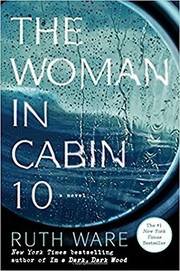
The Woman in Cabin 10
Journalist Lo sees a body thrown from a luxury cabin, then learns no passenger is missing.
2,002-word summary · 9 min read

What She Knew
Rachel lets her eight-year-old son run ahead in a Bristol park, and the nine-day search turns her into a suspect in the public eye.
2,952-word summary · 13 min read

Ace of Spades
Two Black seniors at an elite academy are celebrated by day and hunted by an anonymous texter in this YA thriller about institutional racism.
2,066-word summary · 9 min read

Still Missing
A realtor is abducted at a Vancouver Island open house and held for more than a year. Told through therapy sessions, the novel follows her escape and the hunt…
2,466-word summary · 11 min read
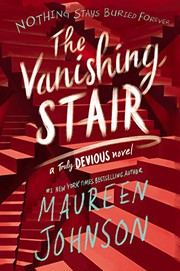
The Vanishing Stair
Stevie Bell returns to Ellingham Academy under a secret bargain, chasing the truth about a 1936 kidnapping while a new death makes the school feel smaller and…
2,026-word summary · 9 min read
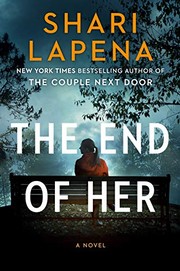
The End of Her
A sleep-deprived mother of twins faces a stranger's accusation that her husband murdered his first wife in Shari Lapena's domestic suspense novel.
2,383-word summary · 11 min read
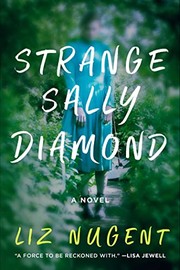
Strange Sally Diamond
Sally Diamond takes her dying father's joke literally and burns his body, then learns her whole childhood was built on a kidnapping and a lie.
2,411-word summary · 11 min read

One of Us Is Dead
In Buckhead, Atlanta, five women narrate a murder among manicures, fundraisers, and social warfare. Jeneva Rose's 2022 thriller is a gossipy revenge fantasy…
2,471-word summary · 11 min read

The Widow
A widow of a suspected criminal faces reporters and police while hiding what her marriage really cost.
2,599-word summary · 12 min read
The Therapist
A couple moves to a gated street where the previous therapist was murdered in their house.
2,437-word summary · 11 min read
The Night Swim
A true crime podcaster covers a rape trial while probing an old drowning in a small town.
2,260-word summary · 10 min read
The Last House on Needless Street
A lonely man, a cat and a mysterious neighbor pull you into a house full of buried trauma.
2,627-word summary · 12 min read
In My Dreams I Hold a Knife
College friends reunite ten years after a murder with a trap set.
2,252-word summary · 10 min read

We Were Never Here
Best friends Emily and Kristen hide a backpacker death in Chile, then face another in Vietnam with trust cracking.
2,076-word summary · 9 min read
Twenty Years Later
A TV host reinvestigates a 20-year-old murder after a 9/11 victim ID names the accused, and the case pulls her own hidden past into view.
2,726-word summary · 12 min read
What Lies in the Woods
Naomi returns after Olivia vanishes to face what happened in the woods at eleven.
2,213-word summary · 10 min read
The Last House Guest
A year after her best friend dies in Littleport, Maine, a local woman finds a hidden phone that reopens the case.
2,596-word summary · 12 min read
The Good Lie
A psychiatrist and a grieving lawyer reopen a closed serial killer case in California and find the profile points somewhere painful.
2,964-word summary · 13 min read
Reckless Girls
Six young travelers chase paradise on remote Meroe Island, where old lies, smashed radios and hidden cash turn sun and sand deadly.
2,703-word summary · 12 min read
Truly Devious
True crime buff Stevie Bell arrives at Ellingham to solve its 1936 kidnapping as present murder strikes.
2,072-word summary · 9 min read
The House in the Pines
Maya's best friend died at seventeen; seven years later a video of Frank with another dead girl pulls her home.
2,081-word summary · 9 min read
I'd Tell You I Love You, But Then I'd Have to Kill You
Cammie Morgan trains at a secret spy school and falls for a town boy she can never tell the truth.
2,179-word summary · 10 min read
The Wives
A woman who sees her husband only on Thursdays tracks down his other wives and learns her marriage is not what she believed.
2,454-word summary · 11 min read
Pretty Little Liars
Four girls get texts from dead Alison a year after she vanished, and secrets start leaking.
1,922-word summary · 9 min read
If We Were Villains
Seven Shakespeare students at a cutthroat conservatory close ranks after a death by the lake, and one serves ten years for it.
2,715-word summary · 12 min read
Before I Go to Sleep
Christine wakes each day with no memory, and her secret journal reveals her husband lies.
2,577-word summary · 11 min read
Into the Water
A drowning pool, eleven narrators, and sisters divided in Hawkins's murky second thriller.
2,598-word summary · 12 min read