
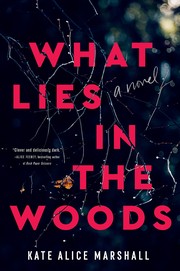
What Lies in the Woods
2,213-word summary 10 min read 336 pages in the book
- First published
- 2023
- Publisher
- Flatiron Books
- Pages
- 336
- ISBN
- 9781250859884
Reading options
What's inside (8 sections)
I came to this one on a friend's insistence, the kind where she kept bringing it up every time thrillers came into the conversation until I finally caved. She said it was about three girls and a lie that lasted twenty years, and that was enough for me. I read the 2023 Flatiron Books edition, 336 pages, over three nights, and the first night I stayed up later than I meant to because the opening chapters have this pull to them. Marshall writes about girlhood friendships with an attention that feels lived in, and then she drops you straight into the worst day of Naomi Shaw's life. What hooked me was not the stabbing itself but the fame around it. The idea of growing up as a local legend for the worst thing that ever happened to you, with books written and strangers invested, felt sick and sharply observed. I knew within fifty pages I would read to the end.
Naomi was eleven when she was stabbed seventeen times in the woods outside Chester, Washington, left for dead among the trees where she and her two best friends used to play. She lived. The girls' testimony sent a serial killer named Alan Stahl to prison, and the three of them grew up famous for surviving. Heroes, in the town's eyes. But the opening pages make one thing clear fast: they were lying about something, and Naomi herself can barely remember what actually happened that day.
There is a wilderness in little girls.
That is the book's first line, and it hangs over everything that follows.
The Goddess Game
When Naomi, Cassidy, and Olivia were eleven, they spent their summer in the woods playing something they called the Goddess Game. Naomi was Artemis. Cassidy was Hecate. Olivia was Athena. They built altars out of sticks and stones, spoke vows, left offerings for each other. Marshall writes these scenes with real warmth, and I found myself smiling at the seriousness of it, the way kids that age commit completely to a shared invention. For three girls with complicated home lives, the game was a refuge. It gave them ranks and rituals and a story where they mattered. Naomi's mother drank and drifted through men, Cassidy's parents managed the family image like a campaign, and Olivia floated between them, hungry to belong somewhere solid. The woods asked nothing of any of them. Out there they were priestesses instead of problems, and Marshall lets you feel how heady that promotion was before any blood entered the picture.
Then the game turned strange. Out in the woods, under a boulder, the girls found human bones. A skeleton, small, with a bracelet of plastic beads spelling out a name: Persephone. They named her and folded her into their mythology instead of telling anyone. Kids convince themselves of remarkable things when telling the truth feels harder, and Marshall captures that logic without talking down to it. They told no parents. They told no police. They just kept visiting her.
Around the same time, a man named Alan Stahl was in the area, later convicted of murdering six women. When Naomi was attacked that summer and barely survived, Cassidy and Olivia said Stahl did it. Naomi, who remembered almost nothing of the violence itself, backed them up on the stand. Stahl went to prison. Books were written. Cassidy's family, the Greens, did well out of the attention. And three girls grew into women carrying a secret about bones in the forest that nobody else knew.
Twenty-two years later
Adult Naomi lives in Seattle and works as a photographer. Her face is scarred, and strangers stare, and she has built a life around managing that stare with a kind of practiced steadiness. She is engaged. Her fiance loves her and worries about her in equal measure. She does not go back to Chester. She does not talk about the woods. The arrangement holds until two things happen close together.
First, Alan Stahl dies in prison. You would think that might bring relief, some closing of a door. For Naomi it does the opposite. His death loosens everything. Reporters call. People online rehash the case. And Olivia, the most fragile of the three, the artistic one who never quite steadied herself the way the others did, starts coming apart.
Olivia calls Naomi and says she wants to tell the whole story. Not part of it. All of it. Naomi tries to calm her down, tries to say they should think, they should meet, they should be careful. Then Olivia vanishes. Her car turns up. She does not. And Naomi gets in her own car and drives back to the town she swore she was done with, because whatever Liv was about to say, somebody may have wanted it unsaid.
I thought this stretch was the strongest part of the book. Naomi's dread about returning feels physical. Marshall writes small-town reentry well, the way everyone knows your worst thing before you open your mouth, the way your childhood bedroom can make you eleven again in the worst sense.
A pond, a note, and Ethan's microphone
Chester has not been idle while Naomi was gone. A true-crime podcaster named Ethan Schreiber has been circling the case, asking questions with a microphone and a patient smile. He has his own family connection to that summer, and Naomi cannot decide whether he is an ally or a vulture. Their scenes together crackle. He keeps finding the exact question she does not want to answer, and she keeps answering a different one.
Then Olivia is found dead in a pond near the woods. The death looks like suicide. There is a note, and the note talks about being tired of lying and wanting to be with Persephone. The town exhales. Case closed, grief counseling, poor Liv, she was always troubled. Naomi does not buy it for a second.
This is where the book shifts from grief into investigation, and Marshall handles the turn well. Naomi starts pulling at threads. Why would Liv go back to that pond. Who saw her last. What did the note really mean. Cassidy, meanwhile, is now a polished local success, protective of her business and her reputation, and she keeps steering Naomi toward acceptance. Let it rest. Liv was ill. We survived worse. Every conversation between the two old friends has this undertow, affection mixed with warning, and I kept turning pages to figure out which one of them was more afraid.
The police are little help. Small towns protect their own stories. And Ethan keeps recording. There is a strong scene where Naomi realizes Ethan was barely more than a kid himself that summer, fifteen and silent about something his own family needed hidden. It complicates him nicely. He is after more than downloads. He is trying to settle a debt he inherited, and Naomi recognizes the shape of that burden because she carries one herself.
My one complaint about this section is the one the reviews all mention, so I will just say it plainly: the podcaster device feels familiar. A cold case, a returning survivor, a microphone in every scene. You have seen this furniture before. Marshall writes Ethan better than most versions of this character, gives him real stakes and a real reason to be there, but a few scenes still play like episodes, cliffhanger beats spaced a little too evenly.
Persephone
The bones are the heart of the book, stranger and sadder than the stabbing in some ways. Before she died, Olivia told Naomi she had found Persephone, meaning she had worked out who those remains belonged to. Naomi becomes fixed on identifying the dead girl the three of them kept hidden for two decades. It is the one promise she feels she can still keep. Somebody's daughter went into those woods and never came out, and her friends built a game on top of her.
Naomi's search takes her through missing-persons records and town gossip and the memories of people who were teenagers that summer. Marshall is good at showing how a small town files things away, who remembers what, who changed their story, who left. A few of these chapters are quiet, just Naomi at a kitchen table or in a library, and I liked them more than some of the chase scenes. The guilt sits on her visibly. She testified against a man while hiding a body. Whatever else is true, that part is true, and she knows it.
What she learns about Persephone reframes the whole summer. The dead girl had a name and a family and a history with Chester that connects to people Naomi thought she knew. I will not spoil the identification here beyond saying it lands, hard, and it makes the girls' silence look worse and more understandable at the same time. They were eleven. They were also old enough to know better. Both things sit there, unreconciled, which feels honest. I found myself thinking about the bracelet for days afterward, those plastic beads spelling a name in a child's craft. Somebody threaded those letters one by one. Somebody's mother bought them. The detail is small and it does more work than any speech about guilt.
What really happened that summer
Here is where I have to be careful, because the last third of this book is twist stacked on twist, and these are summaries, so I will lay out the shape of it while leaving you the experience of the actual reveals.
The story Naomi told on the stand was not what happened. What happened in the woods that day involved the girls themselves, and the person who hurt Naomi was not the convicted killer. Olivia, pushed and steered by Cassidy, was the one holding the knife. The motive was as small and as huge as childhood itself. Cassidy did not want to share Olivia. She wanted Olivia entirely, and she knew how to shape Liv's fears into action. Seventeen wounds. Then the three of them, bleeding and panicking, agreed on Stahl, and the town and the courts did the rest.
Stahl was guilty of plenty. That is the detail that makes the lie survivable for the characters and queasy for the reader. He had killed women. Putting him away for one more crime felt, to two terrified girls and one girl with no memory, like something close to justice. Marshall does not let that comfort stand. An innocent man of this charge went to prison. Ethan's digging keeps circling this exact wound, and one of the book's best scenes is a quiet conversation about whether a false conviction can ever be excused by the rest of a man's record. Nobody in the scene likes their own answer.
And Olivia's death was not suicide. The person who killed her did it to protect a second secret, a more recent death, and the final confrontation back in the woods pulls Naomi, Cassidy, and Cassidy's brother Cody into one terrible scene among the same trees. Cody has been violent before, and Cassidy has been covering for him, and more than that, Cassidy has spent years quietly blackmailing half of Chester, collecting sins and using them. The golden girl turns out to be the book's coldest operator. I saw part of this coming and none of the specifics, which is about the right ratio for a thriller.
The ending, and my gripes
Naomi survives the woods a second time. Persephone's bones come out of the forest and get a name and the beginnings of justice. Some people face consequences and some slip sideways out of them, in the way of small towns. The last scene leaves Naomi with Ethan's offer to help tell the story properly, and she does not answer right away. I liked that Marshall lets the moment hang instead of wrapping it with a bow.
So, frank talk. The finale piles on a lot. There are reversals in the last fifty pages that had me flipping back to check whether they were earned, and one or two of them wobble. The middle also sags slightly when the investigation circles the same interviews twice. But the core of it, three girls and a goddess game and a lie that fed on itself for twenty-two years, is strong enough to carry the weaker stretches. Naomi is a sturdy narrator to spend time with, angry and scarred and trying, and the friendship at the center feels true even at its ugliest. Cassidy, for all her chill, is written with enough old warmth leaking through that her choices sting rather than merely shock. And Liv, who gets the fewest pages alive, haunts the rest of the book exactly as she haunts Naomi, bright and breakable and gone too soon to explain herself.
Read it if you like thrillers built on character rather than procedure, or if Gillian Flynn's small-town dread is your speed. Skip it if twist pileups annoy you, or if you need every thread tied off. For me, the image that remains is not the stabbing. It is three eleven-year-olds making vows over sticks and beads, already practicing the loyalty that would ruin them.
FAQ
Is Chester a real town?
No. Chester is fictional, though Marshall sets it in Washington state and fills it with logging-town detail. The spine of the plot, three friends and a buried lie, is invented.
What did the three friends lie about?
Olivia was pushed into stabbing Naomi by Cassidy, and the girls blamed Alan Stahl. Naomi backed the story on the stand because she remembered almost nothing of the attack itself.
Is this book only for thriller fans?
Yes, if you like thrillers built on friendship and guilt rather than police procedure. Readers who dislike stacked twists may find the last fifty pages excessive.
Similar books
The Last House Guest
A year after her best friend dies in Littleport, Maine, a local woman finds a hidden phone that reopens the case.
2,596-word summary · 12 min read
The Other Mrs.
A Chicago family inherits a house on a Maine island, then a neighbor is found murdered. Kubica's 2020 thriller builds to a final reframe.
2,267-word summary · 10 min read
Such a Clever Girl
Fifteen years after the Tanners vanished, Aubrey returns at 30 as a new disappearance forces three women to face old secrets.
2,203-word summary · 10 min read
Pretty Little Liars
Four girls get texts from dead Alison a year after she vanished, and secrets start leaking.
1,922-word summary · 9 min read
All the Missing Girls
Told backwards over fifteen days, a woman probes two disappearances ten years apart in her hometown.
2,064-word summary · 9 min read

Six Years
A professor who promised to forget the woman he loved sees her husband's obituary and discovers that the wedding, the marriage, and the woman herself may never…
2,076-word summary · 9 min read

Worth Dying For
Reacher stops for one night in rural Nebraska and finds a family that runs the county, a missing girl and a shipment worth killing for.
2,021-word summary · 9 min read

The Best of Friends
Three lifelong friends discover their teenage sons were hiding more than anyone knew after a night that leaves one dead, one in a coma and one silent.
2,040-word summary · 9 min read

Say You're Sorry
A widowed prosecutor defends the teenager accused of killing her babysitter, uncovering a small town's secrets and a killer hiding in plain sight.
2,116-word summary · 9 min read
The Survivors
Kieran Elliott returns to Evelyn Bay twelve years after a storm killed his brother, and a young woman's murder forces the town to face what it has concealed.
2,571-word summary · 11 min read

One of Us Is Dead
In Buckhead, Atlanta, five women narrate a murder among manicures, fundraisers, and social warfare. Jeneva Rose's 2022 thriller is a gossipy revenge fantasy…
2,471-word summary · 11 min read

Girl, Forgotten
A rookie US marshal guards a judge with a stalker and ends up reopening the 1982 prom-night murder of the judge's pregnant daughter.
2,111-word summary · 9 min read

The Boy from the Woods
Wilde, found feral in a New Jersey forest in 1986, hunts for a missing teenager while a senator's secrets tear a wealthy town apart.
2,270-word summary · 10 min read
The Affair
In 1997, Reacher goes undercover in a Mississippi town where a murder near an army base collides with a senator's power. The case that ends his military career.
2,039-word summary · 9 min read
Blindsighted
Sara and Jeffrey hunt a killer staging women in small-town Georgia.
2,400-word summary · 11 min read
Keep It in the Family
Mia and Finn renovate a long empty house and find seven children hidden in the attic.
2,270-word summary · 10 min read
Every Last Secret
A wealthy wife tracks a possible affair, but dinners, therapy, and a sudden death expose buried secrets across two polished suburban marriages and force her to…
2,687-word summary · 12 min read
Bring Me Back
Finn lost Layla at a French rest stop twelve years ago. Now engaged to her sister Ellen, he faces sightings, emails and Russian dolls that reopen everything.
2,912-word summary · 13 min read
We Were Never Here
Best friends Emily and Kristen hide a backpacker death in Chile, then face another in Vietnam with trust cracking.
2,076-word summary · 9 min read
The Cousins
Three cousins work at their rich grandmother island resort while digging into why their parents were cut off.
2,565-word summary · 11 min read
Reconstructing Amelia
A grieving lawyer mother reopens her teen daughter's alleged suicide at an elite Brooklyn school, uncovering bullying and secrets.
2,032-word summary · 9 min read
Pieces of Her
After her mother kills a mall shooter with shocking skill, Andy Oliver uncovers a hidden 1980s past of radicals and wealth.
2,791-word summary · 12 min read
The Storm
A struggling innkeeper, a returning murder suspect, and a true crime writer collide as another hurricane bears down on the Alabama coast.
2,349-word summary · 10 min read
The First Time I Saw Him
Five years after Owen vanished, Hannah and Bailey have rebuilt in California until Owen walks into her exhibition and danger returns.
2,407-word summary · 11 min read
Strangers in the Villa
A strained couple in a Spanish villa takes in guests who refuse to leave.
2,208-word summary · 10 min read
Someone We Know
A teen burglar, two unsigned apology letters, and a murdered neighbor wife turn a quiet suburb paranoid.
2,743-word summary · 12 min read
Reckless Girls
Six young travelers chase paradise on remote Meroe Island, where old lies, smashed radios and hidden cash turn sun and sand deadly.
2,703-word summary · 12 min read

My Husband's Wife
Artist Eden Fox returns from a run to find her key fails at Spyglass and her husband claims a stranger is his wife in Hope Falls.
2,437-word summary · 11 min read
Anatomy of an Alibi
Two Louisiana women swap lives for twelve hours to spy on a husband, then he turns up murdered and only one of them has an alibi.
2,278-word summary · 10 min read
All the Little Houses
In 1980s Longview, Texas, social queen Charleigh and daughter Nellie guard mean-mom secrets when a new family threatens their empire.
2,206-word summary · 10 min read