
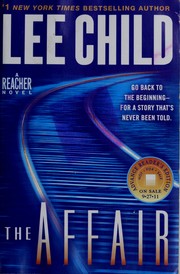
The Affair
2,039-word summary 9 min read 416 pages in the book
- First published
- 2011
- Publisher
- Delacorte Press
- Pages
- 416
- ISBN
- 9780385344326
- Series
- Jack Reacher (#16)
Reading options
What's inside (9 sections)
The Affair is the Jack Reacher book where Reacher still has a rank, a desk, and a future, and where he throws all three away. It came out in 2011 from Delacorte Press, runs 416 pages in the first hardcover, and sits at number sixteen in the series even though it happens first. The whole thing is set in March 1997, six months before Killing Floor, when Reacher is thirty-six years old and still fits in a uniform.
That inversion is the fun of it. You spend the book watching a man you know as a drifter do his best impression of a soldier, and you already know how the impression ends.
The setup
Reacher is summoned by Colonel Leon Garber, his old commanding officer, and briefed on a murder in Carter's Crossing, a small town in Mississippi. A woman has been found with her throat cut behind a bar in what looks like a sexual killing. Not far away is Fort Kelham, an Army Ranger training base, and one of the men stationed there is a suspect. A captain named Reed Riley.
Here is the complication, and it arrives within minutes: Reed Riley's father is Senator Carlton Riley, who chairs the Senate Armed Services Committee. The Army does not want the investigation to embarrass the family, because the Army always has budgets to protect. Reacher is sent undercover, officially to observe, unofficially to make sure the fingerprints of the institution stay off the case. A Pentagon liaison named Colonel John James Frazer makes the stakes plain. Whatever Reacher finds, the Army's image comes first.
So he goes to Mississippi and pretends to be nobody. Takes a room. Sits in bars. Watches.
The sheriff
The best decision the book makes is Elizabeth Deveraux. She is the local sheriff, a former Marine MP, and she clocks Reacher as a fake almost immediately. She does not arrest him. She lets him hang around, and the two of them circle each other with the wary respect of two people who used to wear the same insignia and now work opposite sides of a county line.
Deveraux is competent, guarded, and running from something in her own record. Reacher's old colleague Frances Neagley, who turns up long enough to deliver a warning, tells him Deveraux was discharged over an incident with a fellow Marine and that he should keep his distance. He does not keep his distance. One of the women he is investigating was killed, and another has a story that overlaps with the base's rotation schedule, and Deveraux is the only person in the county willing to work the pattern instead of the politics.
I like how Child handles her. She is not a damsel, she is not a macho mirror, and she gets to be right about things Reacher is wrong about. The romance that develops is quick and a little inevitable, two isolated professionals in a hot town with nothing else to do. It also does thematic duty: the book is called The Affair for several reasons, and the senator's past is one of them, but Reacher's own entanglement is the one he will not walk away from clean.
Undercover in a hot town
The undercover stretch is the part that lingers, and it lingers because Child is good at heat and boredom. Carter's Crossing feels like a place where the main industries are gossip and discount cigarettes. Reacher drinks in a bar he does not like, drives a borrowed car, and listens to people talk about the Army base the way you talk about weather, as something permanent and not quite yours.
He is also, quietly, doing math the whole time. He times how long it takes Deveraux to drive from the station to the bar. He checks the base rotation against the dates. He notices which locals defend the soldiers and which ones cross the street when a uniform walks by. Reacher's method has always been arithmetic plus patience, and the prequel setting makes the arithmetic feel fresh. There is no satellite phone, no email, no database he can charm. He has payphones, a notebook, and his own memory, and that is the toolkit for a case that will eventually reach the Pentagon.
The town also plants its own kind of witness in the story: the base is the biggest employer around, and the people who talk are the people with the least to lose, which is a short list. The dead women from the poorer side of town are mourned by mothers who have already been through this once. That is where the case gets its moral spine, before Reacher has any proof at all, and it is worth noticing that the book never lets the senator's family become the tragedy it is most interested in.
The women
The victim the case is built on is Janice Chapman, twenty-seven, found behind the bar. The investigation soon surfaces two earlier deaths, young women from the poorer, largely Black side of town, killed in the same manner. That is the detail that changes the temperature. Three women is a pattern, and a pattern does not care about committee hearings.
The Army's preferred theory, gently floated: some local troublemaker, nothing to do with the base. The real theory, once Reacher starts pulling threads: someone at Fort Kelham killed before, is killing now, and the kill zone is widening. When a journalist starts asking the same questions, and a man named Bruce Lindsay, the brother of one of the dead women, gets involved, both end up shot dead. Then a grieving mother named Emmeline McClatchy walks in front of a train, and the death count attached to this case stops looking like an accident of statistics and starts looking like a machine.
Reacher confirms something worse than obstruction. Someone inside his own chain of command has hired a militia crew from Tennessee to destroy evidence around the murders, not to protect the Army's reputation but to protect the Rileys specifically. The cover-up has a name, and the name is political.
The colonel with the hammer
Reacher confronts Frazer at the Pentagon and the meeting goes to hell. Frazer comes at him with a hammer, and Reacher kills him. I will not pretend the scene reads as anything but what it is, a thriller answer to a thriller problem, but it matters because of what happens next.
Garber calls him in and hands him a file that paints Deveraux as a sociopath, a person with a pattern of violence against men in her orbit. It is a dishonest document, assembled to be shown to Reacher at exactly the moment he needs a reason to let the case go. Along with it comes the offer: drop it, and your career survives. Reacher takes the file, keeps the file, and does not drop anything.
The Deveraux file turns out to be forged, part of a pressure campaign run by the Rileys' allies inside the institution. That is the moment the book stops being about a murder and starts being about what an institution will build to protect a powerful family. Not a lie here or there. A fabricated psychological case file, planted to discredit a sheriff, complete with the machinery to make it stick.
The party
Reed Riley is formally cleared at an event in town, and the relief in the room is thick. Reacher, still digging, puts one more piece in place: Janice Chapman was not who she seemed. Her real name was Audrey Shaw, and she had been a Senate intern, paid to leave Washington after an affair with Senator Carlton Riley. The murdered woman was connected to the family by exactly the kind of secret that money usually buries.
Reacher and Major Duncan Munro, the MP assigned to the base, get the two Rileys alone. At gunpoint the senator confesses that the Deveraux file was forged, and the son admits the rest: he killed the first two women, young women nobody powerful would ever avenge, and he killed Audrey Shaw for the simple reason that he could, for the fun of it. The confession is not extracted for a courtroom. Reacher does not believe in the courtroom available to him here, which is a politics-shaped instrument, and he decides the case ends in this room.
He breaks both men's necks, puts the bodies in a car, arranges for a train to solve the rest, and invents a story about an accident at a crossing. Then he goes back to his life and lets the Army put him on permanent desk duty, which is the institution's way of thanking him for cleaning up something it could not touch. He resigns, signs the discharge papers, and hitchhikes for the first time.
That final sequence is why the book exists. The Reacher of Killing Floor, the man with no address and no last name worth offering, is born here, in a small Mississippi town where the system leaned on the wrong side and a military police major decided he would rather be nobody than be part of it.
Where it stands
Child writes lean, short chapters, clipped dialogue, and a poker face about violence, and the prequel format gives him a new tension to work with: knowing the ending while watching the origin. Publishers Weekly called it compelling, with solid action, wry humor and smart dialogue, while warning that readers hoping for a deep excavation of Reacher's psyche would be disappointed. That is fair. The book is a case file with a goodbye attached, not a psychological novel, and Reacher's interior life remains as furnished as a motel room.
The cover-up mechanics stretch credulity in places. A Pentagon liaison personally swinging a hammer at an MP major is a big gear to turn, and the third-act pileup of journalist deaths, a suicide, and a militia conspiracy asks you to accept that the Deep South of 1997 has room for all of it at once. If you want a Reacher book with the procedural restraint knob turned up, this is not the one.
But as an origin story it does what prequels rarely do: it makes the later books sadder. Everything Reacher becomes, the road, the toothbrush, the borrowed clothes, is downstream of this week in Mississippi. He traded a career for three dead women a system would have erased, and the ledger of the series is written with that trade in it. I came to The Affair for the mystery and left thinking about what it means that the only way Reacher could do the right thing was to stop being someone the system could name.
The title is doing more than one job, which I did not fully appreciate until the end. There is Reacher's affair with the sheriff, which is real and short and drags both of them through the wringer. There is the senator's affair with an intern, the original sin that the whole cover-up is built to hide, the one where the woman was paid off and then murdered when the payments stopped being enough. And there is the older, stranger sense of the word, an affair as an episode, something that happens to a person once and is closed. Mississippi is Reacher's closed affair with the institution. He walks into it as Major Jack Reacher, someone with a rank and a pension and a place in the machine, and he walks out as a man with a signature on a form and a thumb out on a highway. The book is careful to make that exit feel less like a decision than a diagnosis.
If you have read a dozen Reacher novels, this one reorganizes them. If you have read none, it works as a stripped-down murder case with a cavalry charge of an ending. Either way, the last page is the one you will remember: a man standing at a roadside in 1997, thirty-six years old, with everything behind him and nothing ahead, and for the first time in his life, no one expecting him anywhere. Child wrote a lot of books about that man. This is the one where he is born.
FAQ
Where does The Affair fit in the Jack Reacher series?
It is book 16 in publication order but a prequel set in March 1997, six months before Killing Floor, when Reacher is still an Army MP major.
Does Reacher leave the army in The Affair?
Yes. After the cover-up ends with the deaths of the Rileys and Colonel Frazer, the army sidelines him and he resigns, which sets up his life as a drifter.
Is The Affair a good starting point for the series?
It works as an origin story, but it gives away Reacher's exit from the army. Most readers start with Killing Floor and come back to this one.
Similar books
More from Jack Reacher first, then related titles.

Killing Floor
Ex-military policeman Jack Reacher is arrested for murder in Margrave, Georgia, then learns the victim was his brother.
2,872-word summary · 13 min read
Tripwire
In Key West, Jack Reacher follows a murdered detective's trail to New York, an old mentor's files, and a loan shark stealing a dead soldier's name.
2,688-word summary · 12 min read
Running Blind
Jack Reacher must catch a killer who murders women with no forced entry and no trace.
2,008-word summary · 9 min read

Echo Burning
Reacher hitches a ride with a Texas woman who wants her abusive husband killed, then has to prove she did not murder him when he comes home.
2,209-word summary · 10 min read
Without Fail
Reacher is asked to test vice presidential security by planning to kill.
2,084-word summary · 9 min read
Persuader
Reacher goes undercover in a Maine crime family to find a missing DEA agent and the man he once failed to kill, and Lee Child keeps the whole thing tight,…
2,278-word summary · 10 min read

The Enemy
In January 1990, MP major Jack Reacher investigates a dead general, a stolen briefcase, and three murders tied to an Army power struggle.
2,123-word summary · 9 min read

One Shot
Six shots, five dead in Indiana, and James Barr asks for Jack Reacher. Reacher leaves Miami to test the proof in this 2005 Delacorte Press thriller, 376 pages,…
2,972-word summary · 13 min read

Bad Luck and Trouble
A deposit of $1,030 summons Jack Reacher back to his old army unit, which is being picked off one name at a time.
2,366-word summary · 11 min read
Gone Tomorrow
Reacher stops a suicide bomber on the subway, then hunts her handlers.
2,308-word summary · 10 min read

61 Hours
A bus crash strands Jack Reacher in a snowbound South Dakota town where a drug gang, a corrupt police force, and a single witness are on a collision course.
2,227-word summary · 10 min read

Worth Dying For
Reacher stops for one night in rural Nebraska and finds a family that runs the county, a missing girl and a shipment worth killing for.
2,021-word summary · 9 min read
American Assassin
Before he became the CIA's most feared counterterrorist, Mitch Rapp was a Syracuse student mourning his girlfriend, killed on Pan Am Flight 103. Then came…
2,114-word summary · 9 min read

Say You're Sorry
A widowed prosecutor defends the teenager accused of killing her babysitter, uncovering a small town's secrets and a killer hiding in plain sight.
2,116-word summary · 9 min read
Killers of a Certain Age
Four sixty-year-old assassins discover their retirement cruise is a trap and turn their skills on the agency that trained them.
2,014-word summary · 9 min read
The Survivors
Kieran Elliott returns to Evelyn Bay twelve years after a storm killed his brother, and a young woman's murder forces the town to face what it has concealed.
2,571-word summary · 11 min read
Blindsighted
Sara and Jeffrey hunt a killer staging women in small-town Georgia.
2,400-word summary · 11 min read
The Other Mrs.
A Chicago family inherits a house on a Maine island, then a neighbor is found murdered. Kubica's 2020 thriller builds to a final reframe.
2,267-word summary · 10 min read

What Lies in the Woods
Naomi returns after Olivia vanishes to face what happened in the woods at eleven.
2,213-word summary · 10 min read
The Last House Guest
A year after her best friend dies in Littleport, Maine, a local woman finds a hidden phone that reopens the case.
2,596-word summary · 12 min read

Such a Clever Girl
Fifteen years after the Tanners vanished, Aubrey returns at 30 as a new disappearance forces three women to face old secrets.
2,203-word summary · 10 min read
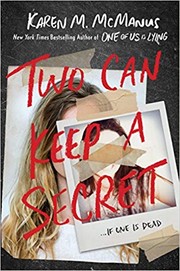
Two Can Keep a Secret
Twins new to Echo Ridge dig into aunt's murder as homecoming threats return.
2,078-word summary · 9 min read
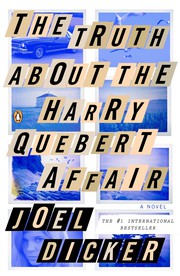
The Truth About the Harry Quebert Affair
A blocked writer tries to clear his mentor Harry Quebert after a girl missing since 1975 is found buried with his famous manuscript.
2,192-word summary · 10 min read
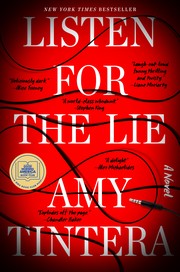
Listen for the Lie
Lucy Chase cannot remember the night her best friend Savvy died in Plumpton, Texas, until a true crime podcast pulls her back.
2,160-word summary · 10 min read

All the Missing Girls
Told backwards over fifteen days, a woman probes two disappearances ten years apart in her hometown.
2,064-word summary · 9 min read

All Good People Here
A journalist returns home to care for her uncle and reopens a 20 year old child murder tied to a new abduction.
2,006-word summary · 9 min read

Odd Thomas
A twenty year old fry cook who sees the dead tries to stop a mass shooting in his desert town.
3,797-word summary · 17 min read
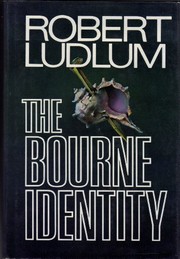
The Bourne Identity
An amnesiac pulled from the sea hunts his identity as Jason Bourne while assassins and the CIA close in.
2,994-word summary · 13 min read

Sharp Objects
Reporter Camille Preaker returns to Wind Gap to cover two murdered girls, facing her cold mother Adora, wild sister Amma, and scars that spell her past. Full…
2,434-word summary · 11 min read

What She Knew
Rachel lets her eight-year-old son run ahead in a Bristol park, and the nine-day search turns her into a suspect in the public eye.
2,952-word summary · 13 min read