
Reading options
What's inside (7 sections)
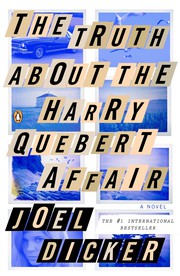
I came to this one knowing it was huge in Europe before it ever reached the United States. First published in French in 2012 as La Vérité sur l'affaire Harry Quebert by Éditions de Fallois, then in English in 2014 from Penguin Books at 656 pages in the US paperback, it sold millions and won major French prizes. I wanted to see how a Swiss writer in his twenties handled a very American setting. The answer is a big, twisty book about writers that is easy to race through and hard to fully defend.
The setup hooks fast. Marcus Goldman is twenty eight and famous. His first novel sold two million copies. He parties in New York, dates an actress, dodges his publisher, and then cannot write a second book at all. Warnings from his agent turn into threats of a lawsuit. In March 2008 he drives to Somerset, New Hampshire, a coastal town called Aurora in the original French, to stay with Harry Quebert. Harry was his professor at Burrows College. Harry is also the author of The Origin of Evil, a beloved American novel from the seventies that made him a star at thirty four.
Then gardeners digging at Harry's house find human bones with a manuscript buried beside them. The bones belong to Nola Kellergan, fifteen when she vanished on August 30, 1975. Harry admits he loved her that summer. Police arrest him for kidnapping and murder. Marcus decides to investigate and turn the case into his next book.
A writer who cannot write
The early chapters move between 2008 and Marcus remembering college. Harry taught him how to build a chapter, how to handle fame, how to survive reviews. Their talks are printed as writing lessons at the start of many chapters. Write every day. Do not chase praise. Love your characters even when they fail. Some of those lessons feel warm. Some feel stiff, like posters in a classroom.
Marcus in New York reads as both lucky and lost. He counts fan mail. He counts days until his deadline. His publisher, Roy Barnaski, smells opportunity in the arrest. If Marcus cannot deliver a novel, he can deliver a true account of the Harry Quebert affair. Barnaski offers money and pressure in equal parts. Marcus refuses to exploit Harry at first, then realizes investigating might be the only way to save him.
Somerset in 2008 is wary and tired. Reporters crowd the sidewalks. Old friends of Harry lock their doors. The state police lead, Travis Dawn is now a local officer with history in the case, and everyone remembers Nola as the reverend's daughter who ran through the woods one Saturday and never came home. Marcus rents a room, borrows a car, and starts asking questions that make people angry.
What I liked here is pace. Dicker keeps chapters short. He ends many with a small reveal. A letter. A photo. A name mentioned twice. You tell yourself one more chapter and then read forty pages. The writing in Sam Taylor's translation is plain, sometimes flat, but it moves.
Somerset in 1975 and a girl who vanished
The summer of 1975 takes up much of the book. Harry is thirty four and stuck. He has talent and little to show for it. He rents a house by the water to write. Nola Kellergan is fifteen, daughter of Reverend David Kellergan, bright and strange and watched too closely at home. She works odd jobs, walks alone, talks about birds and books and running away. Harry meets her at the diner and then on the beach. He falls hard. She falls harder.
Dicker does not hide the age gap. He makes it the moral weight of the whole novel. Harry knows it is wrong. He tries to end it by dating Jenny Quinn, twenty four, a waitress at Clark's, the diner owned by her mother Tamara. Jenny loves Harry openly and misses every sign that his mind is elsewhere. Tamara loves her daughter and hates seeing her used. Travis Dawn, then a young officer, loves Jenny and hates Harry for taking her attention. That square of want sets half the town simmering.
Nola's home life is grim. Her mother is dead by 2008, but in 1975 her mother abuses her while her father looks away. Later Marcus learns the mother died in 1969 in a fire Nola herself set, and a psychologist suggests Nola lived with a split in her mind after years of harm. The book presents that diagnosis through reports and interviews rather than showing it cleanly on the page. I found those passages uncomfortable. They explain a lot while excusing little, and they arrive late enough to feel like a lever for the plot.
Nola also moves between other men. Elijah Stern, a rich businessman from Concord, pays attention to her. His driver, Luther Caleb, badly disfigured and gentle, picks her up and drives her to Stern's house. Luther wants to be a writer and a painter. People mock his face and miss his mind. Harry likes him and talks books with him. Stern likes owning people more than helping them. Then police chief Gareth Pratt watches Nola too. Pratt has power and no shame about using it.
Harry writes all summer. At the table in his rented house he finishes the manuscript that will become The Origin of Evil. In his mind the book is for Nola and about loving someone the world says you cannot love. He plans to elope with her. She plans to leave her parents and the church and the whispers. August 30 comes with heat and a town fair and too many cars on small roads.
Harry on the page and Harry in person
One pleasure of the novel is how it treats fame. Harry in 1975 is hungry and kind and selfish by turns. Harry in 2008 is polite, guarded, and tired of being a symbol. Marcus loves him and keeps finding cracks. Why did Harry keep Nola's letters. Why did he bury the manuscript with her, or say he did not. Why did he let the world think his famous novel came from pure imagination.
The Origin of Evil inside the story is a hit about impossible love. Readers in the novel quote it the way real readers quoted this very book in France. Dicker enjoys that mirror. A book about a writer writing a book about a writer. Reviews inside the story praise Harry's style. Talk shows inside the story ask if art excuses life. Marcus, who wants a second hit of his own, has to decide if he believes his hero.
Jenny Quinn stayed with me more than Harry. She is twenty four, competent, funny at work, blind at home. She feeds the town at Clark's and waits for a man who will never choose her. Her mother Tamara sees it and tries to force Harry out by threatening his lease and his reputation. Travis sees it and tries to win Jenny by being steady. None of it works, because Harry has aimed his whole summer at Nola.
Luther Caleb stayed with me too. He carries groceries, opens doors, absorbs insults, and writes in secret. Stern treats him as staff and property. Kids stare. Adults look away. Yet Luther sees Nola clearly and does not want anything from her except company. Their rides to Concord become one of the few gentle threads in 1975. When Stern later says Luther died in a car crash a month after Nola vanished, Marcus writes it down and circles it. Too neat. Too useful.
The investigation widens
Marcus makes progress by being an outsider who writes things down. He finds Deborah Cooper, who saw Nola running in the woods that Saturday. He finds motel records, diner receipts, and library cards. He learns Pratt had sexual relations with Nola and gets him arrested. The court releases Harry for lack of evidence. Marcus writes fast and Barnaski publishes fast. The book inside the book becomes a bestseller. For a stretch it looks finished.
Then the floor drops. Nola's mother did not die when Marcus thought. The fire date changes the story he told. His bestseller rests on a mistake. Pratt gets out on bail and is found murdered in his motel room. Someone is still cleaning the past.
Travis Dawn finally talks. What he tells Marcus reframes everything. On that August afternoon Nola ran from home to meet Harry and leave town. Luther gave her a ride partway. Travis spotted them and chased. They fled into the woods. Deborah Cooper saw them run and called the police. Pratt and Travis caught Luther and beat him to death. Nola watched from hiding. She ran to Mrs. Cooper's house for help. Pratt shot Mrs. Cooper. Travis struck Nola on the head with his nightstick and killed her. To hide it they staged a car chase, then returned that night to bury Nola at Harry's house with the manuscript to point blame at Harry if the grave was ever found.
I read those pages twice. They are brutal and direct after hundreds of pages of hints. No poetry. Two officers panicking, then choosing themselves over two girls and a quiet man. The town's silence after makes sense in a sick way. Who would accuse the chief. Who would believe Luther mattered.
There is more. Harry did not write The Origin of Evil. Luther did. Luther gave Harry the pages to read that summer. After Luther died, Harry typed it as his own and published it. The novel Harry truly wrote that summer was a different book about Somerset gulls and shore life. Marcus arranges for that real book to appear under Luther Caleb's name. He understands at last that forbidden love started the chain, but vanity and fear kept it going.
What the trial clears and what it misses
The legal ending is less satisfying than the moral one, which feels honest. Harry leaves jail. Pratt dies before full justice. Travis confesses when guilt and age corner him. The town does not heal in a parade. Some people apologize. Some double down. Reverend Kellergan, who failed his daughter for years, has to live with what looking away cost. Tamara has to live with using her power to protect Jenny while missing Nola. Stern keeps his money and loses his story.
Marcus gets a second bestseller, but Dicker does not let him enjoy it cleanly. The first version of his book was wrong. The second version profits from other people's pain. Barnaski is thrilled either way. Readers are thrilled either way. Marcus wonders if telling the truth late is still telling the truth. I liked that unease. It fits a novel about publishing as much as about murder.
The book also asks who gets to be a victim in public. Nola at fifteen is sexualized by men and then judged by women who should know better. Jenny at twenty four is pitied and then forgotten. Lucy figures in other thrillers get podcasts. Nola gets a grave with a manuscript. Dicker does not preach about it. He lets the pattern sit there until you notice how often older men describe Nola as mature for her age.
What strains belief is volume. There are so many late reveals that some cancel each other. A secret mother. A secret fire. A secret author. A secret shooting. A secret burial. Each twist is clear on its own, but stacked they make Somerset feel like a stage where everyone waited off cue for thirty three years. The prose does not help in the slow spots. Conversations repeat information. Harry's writing lessons repeat advice. At 656 pages in the Penguin paperback, I felt the middle sag before the last hundred pages pulled me back.
The age gap remains the hardest part. Dicker writes Harry and Nola's love as tender and fated, with long walks and shared sentences. Some readers will accept that as the tragedy engine. I could not. Nola is fifteen. Harry is thirty four. The book knows this and still asks for sympathy for Harry's longing. It gives Nola spirit and strangeness, but the romance framing softens what should stay hard. The later facts about abuse and mental illness do not fix that framing. They complicate Nola without changing Harry's choice.
Who should read it. Readers who enjoy long mysteries with many turns will find plenty to chew on. Readers who like books about books, drafts, editors, and bestseller pressure will enjoy the publishing satire. Readers who want lean prose or a clear moral line around the central affair should probably pass. It pairs oddly well with true crime podcasts and small town novels, though it is more old fashioned than either label suggests.
I finished feeling wrung out and alert. The image that stays is not the courtroom or the grave. It is Luther driving Nola to Concord while she talks about leaving, two people the town refused to see, and a manuscript passing between cars and houses until the wrong name sits on the cover for decades.
FAQ
Who killed Nola Kellergan?
No. Travis Dawn and ex-chief Gareth Pratt beat Luther Caleb to death, then killed Nola and Deborah Cooper to hide it and buried Nola at Harry's house.
Did Harry really write The Origin of Evil?
No. The famous novel was written by Luther Caleb, Stern's disfigured driver. Harry published it as his own after Luther died, then wrote a different book that summer.
When was the book first published?
It first appeared in French in 2012 as La Vérité sur l'affaire Harry Quebert from Éditions de Fallois. The English translation by Sam Taylor came in 2014 from Penguin Books, 656 pages.
Similar books

Worth Dying For
Reacher stops for one night in rural Nebraska and finds a family that runs the county, a missing girl and a shipment worth killing for.
2,021-word summary · 9 min read

Say You're Sorry
A widowed prosecutor defends the teenager accused of killing her babysitter, uncovering a small town's secrets and a killer hiding in plain sight.
2,116-word summary · 9 min read

The Survivors
Kieran Elliott returns to Evelyn Bay twelve years after a storm killed his brother, and a young woman's murder forces the town to face what it has concealed.
2,571-word summary · 11 min read
Notes on an Execution
Ansel waits on death row while three women carry what he broke.
2,527-word summary · 11 min read
Blindsighted
Sara and Jeffrey hunt a killer staging women in small-town Georgia.
2,400-word summary · 11 min read

All Good People Here
A journalist returns home to care for her uncle and reopens a 20 year old child murder tied to a new abduction.
2,006-word summary · 9 min read

What She Knew
Rachel lets her eight-year-old son run ahead in a Bristol park, and the nine-day search turns her into a suspect in the public eye.
2,952-word summary · 13 min read

The Beach House
A young valet is beaten to death at a Hamptons party, and his law-student brother spends a year building a case against the family that covered it up.
2,049-word summary · 9 min read

Six Years
A professor who promised to forget the woman he loved sees her husband's obituary and discovers that the wedding, the marriage, and the woman herself may never…
2,076-word summary · 9 min read

How the Light Gets In
Gamache investigates the murder of the last Ouellet quintuplet while the Sûreté he served is dismantled from inside by the man who took his protégé.
2,279-word summary · 10 min read
Bury Your Dead
Recovering from a failed raid that killed his officers, Gamache investigates a murder in a Quebec City library while Beauvoir reopens a case in Three Pines.
2,022-word summary · 9 min read

The Trespasser
A Dublin Murder Squad detective investigates a staged dinner-party killing and finds a cover-up that reaches into her own department.
2,051-word summary · 9 min read

Rules of Prey
Minneapolis detective Lucas Davenport hunts a killer who leaves a new rule at every scene and treats murder as a game of wits.
1,914-word summary · 9 min read

The Late Show
Exiled to the LAPD night shift after accusing her supervisor, Renée Ballard keeps two cases that were meant to be handed off at dawn: a brutal assault and a…
2,563-word summary · 11 min read
Once There Were Wolves
A biologist reintroduces fourteen wolves to the Scottish Highlands while protecting her traumatized twin sister, then finds a body in the snow that could…
2,682-word summary · 12 min read

4th of July
Lindsay Boxer shoots two armed teenagers in self-defense, faces a wrongful-death trial, and spends her leave chasing a string of throat-slashing murders in…
2,192-word summary · 10 min read
The Camel Club
Four Washington misfits witness a murder on Roosevelt Island and stumble into a conspiracy that reaches the Oval Office, with a hostage president and a nuclear…
2,354-word summary · 10 min read

61 Hours
A bus crash strands Jack Reacher in a snowbound South Dakota town where a drug gang, a corrupt police force, and a single witness are on a collision course.
2,227-word summary · 10 min read
The Last Mile
Melvin Mars is hours from execution for his parents' murder when another man confesses, and FBI cold case detective Amos Decker goes looking for the trap.
2,746-word summary · 12 min read

Still Missing
A realtor is abducted at a Vancouver Island open house and held for more than a year. Told through therapy sessions, the novel follows her escape and the hunt…
2,466-word summary · 11 min read

Bad Luck and Trouble
A deposit of $1,030 summons Jack Reacher back to his old army unit, which is being picked off one name at a time.
2,366-word summary · 11 min read

3rd Degree
The third Women's Murder Club novel follows a San Francisco terror cell and a three-day killing schedule, and it costs the club a member.
2,685-word summary · 12 min read
Finlay Donovan Knocks 'Em Dead
Someone has put a contract on Finlay Donovan's ex-husband, and the novelist and her nanny have to find the hitman before the school pickup.
1,990-word summary · 9 min read

Echo Burning
Reacher hitches a ride with a Texas woman who wants her abusive husband killed, then has to prove she did not murder him when he comes home.
2,209-word summary · 10 min read
A Rule Against Murder
Gamache's anniversary at a remote lodge turns into a closed-circle murder when the family statue kills Julia, and everyone at the Manoir had a reason.
2,201-word summary · 10 min read

Girl, Forgotten
A rookie US marshal guards a judge with a stalker and ends up reopening the 1982 prom-night murder of the judge's pregnant daughter.
2,111-word summary · 9 min read

The Woods
Twenty years after two teenagers were murdered and two vanished at summer camp, prosecutor Paul Copeland identifies a fresh corpse as one of the missing.
2,490-word summary · 11 min read

The Redbreast
Harry Hole chases an ageing sniper through modern Oslo while two Norwegian volunteers on the Eastern Front carry a fifty-year-old betrayal toward a royal…
2,453-word summary · 11 min read

The Poet
A crime reporter investigates his twin brother's apparent suicide and uncovers a killer who leaves Edgar Allan Poe quotes behind, in the novel that took…
2,020-word summary · 9 min read

The Boy from the Woods
Wilde, found feral in a New Jersey forest in 1986, hunts for a missing teenager while a senator's secrets tear a wealthy town apart.
2,270-word summary · 10 min read