
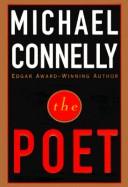
The Poet
2,020-word summary 9 min read 434 pages in the book
- First published
- 1996
- Publisher
- Little, Brown and Company
- Pages
- 434
- ISBN
- 9780316153980
- Series
- Jack McEvoy (#1)
Reading options
What's inside (7 sections)
By 1996, Michael Connelly had four Harry Bosch novels behind him and a reputation as one of the sharpest new voices in American crime fiction. Then he stepped away from his detective and wrote The Poet, and the book does not read like a vacation. It reads like a writer cashing in every piece of reporting instinct he had, and it won both the Anthony Award and the Dilys Award the following year. It is also the book that introduces Rachel Walling, one of the most important recurring characters in his entire body of work.
The premise is a reporter's nightmare. Jack McEvoy covers crime for the Rocky Mountain News in Denver, and his identical twin brother, Sean, is a homicide detective for the city. When Sean is found dead in his car with a gunshot wound and a one-sentence suicide note, everyone accepts the obvious explanation. Everyone except Jack, who knew his brother well enough to know that the depression story does not fit. The Poet is the story of what happens when a man refuses the easy answer, and how much it costs him to be right.
The death of Sean McEvoy
The opening chapters do the work of making Jack's disbelief feel earned rather than sentimental. He and Sean were identical twins, close in the way that only twins are, and Jack cannot square the brother he knew with the man the evidence describes. He goes back through Sean's last case, the murder of a college student named Theresa Lofton, and starts pulling on threads that do not belong together.
What he finds is a pattern, and the pattern is the hook of the novel. Three other detectives in other cities have died in what were ruled suicides, and each one left a suicide note that quotes Edgar Allan Poe. The notes are not farewells. They are literary references, one line each, dropped like calling cards. Jack brings the cases together and gives the story to his newspaper, and the FBI, which had been quietly working the same set of killings, suddenly has a leak and a problem.
The Bureau's nickname for the killer is the Poet, and Connelly uses the Poe connection as something more than decoration. The quotations are how the killer speaks when he is not speaking, and they are also the clue that eventually matters most. The book alternates Jack's first-person narration with sections from the killer's point of view, written under the name Eidolon, and those sections are where Connelly shows his control. Eidolon is smug, precise, and endlessly pleased with himself, and the reader learns early to dread his calm.
The psychological hook is that Jack cannot grieve normally, because to accept the suicide would mean accepting that he never really knew his brother, and reporters are professionally unable to leave that kind of question alone. His search for the truth is also a search for Sean, and Connelly keeps the twins' bond present through details rather than flashbacks: shared mannerisms, a remembered argument, the way grief ambushes him in public. The procedural machinery gives the book its momentum, but the dead twin at the center gives it its heat.
Trading information for a seat at the table
The middle section of the novel is a procedural about access. The FBI does not want a newspaper reporter inside its investigation, and Jack does not want to hand over what he knows for nothing. He trades his material for a place on the task force, and the arrangement puts him in daily contact with two agents who matter enormously to the rest of his fictional life. Robert Backus is the agent in charge, a veteran with a steady manner, and Rachel Walling is the agent assigned to babysit Jack and keep him from damaging the case.
Rachel is the best thing in the book. She is competent, guarded, and carrying a family history that Connelly lets out slowly. She and Jack become involved, and the relationship develops with the friction of two people who are both working the same terrible case and neither of whom is fully sure the other can be trusted. That ambiguity is deliberate. Connelly plants it early and lets it grow.
The investigation itself keeps pointing in a direction that feels too convenient. The trail runs into an online paedophile network, one of the first in fiction to be treated with this much procedural seriousness, and one participant in particular attracts the Bureau's attention. His name is William Gladden, and the case against him builds with suspicious smoothness. Jack is allowed to ride along on the arrest operation, and the night goes wrong in the worst possible way. Gladden kills an FBI agent, Gordon Thorson, who happens to be Rachel's ex-husband, and then takes Jack hostage. Jack kills Gladden and survives.
The case is closed, and Connelly lets the reader feel the relief for about a chapter. Then he takes it away. Gladden said things before he died, small, ambiguous things that do not fit the profile of the Poet, and Jack cannot let them go. The man the FBI killed was a monster and a criminal, but the evidence is starting to suggest he was not the man who killed Sean.
The fax and the suspicion
The third act turns on a detail of office logistics, which is the sort of thing Connelly does better than almost anyone. Jack traces a boasting fax that the Poet sent to a location with a connection to the FBI field office, and the timing points at someone inside the Bureau. The logic of the moment lands on Rachel. Jack remembers that she was the one who sent Gordon Thorson on an errand at the exact time the fax went out, and he discovers that she posted to the paedophile network under the name Eidolon, the same name the killer uses.
It is a superb piece of misdirection, and it works because every fact Jack assembles is real. Rachel's screen name is genuine. Her father was a police officer who was suspected of molesting her when she was a teenager and who killed himself when she was young, a history that makes her both a plausible suspect and a person destroyed by suspicion.
This is the point where the novel's structure pays its biggest dividend, because the reader has been with Jack for every step and can see exactly why he believes it. Every alternative explanation requires information he does not have. His logic is airtight and his conclusion is wrong, which is one of the hardest things to pull off in a mystery and the reason the book still gets recommended as a lesson in how to build a misdirection that respects the audience.
Jack takes his theory to the one man he trusts to handle it carefully, the agent in charge.
That decision is the trap closing. Backus listens to Jack, agrees to meet him away from the office, and drugs him. The reveal is one of the most effective in Connelly's career because the reader has spent a whole novel watching Backus be steady and reasonable and helpful. Backus is Eidolon. Backus is the Poet. He has been running the investigation as cover, using the Bureau's resources to watch his own pursuit, and he framed Gladden to close the case.
The climax is violent and ugly, as it should be. Backus has Jack helpless and is about to kill him when Rachel arrives and puts him through a window and down a long hill. A body is found in a culvert below, and the novel deliberately leaves the identification ambiguous. Readers who go on to The Narrows will learn exactly how ambiguous, because the Poet comes back, but The Poet ends on that note of doubt, which is a braver choice than a clean confirmation would have been.
The ending, and what the book is really about
The final chapters are about wreckage. Rachel's judgment is questioned because of her relationship with Jack and her professional history with Backus, and she does the most believable thing possible. She ends things with Jack and leaves the country. Jack takes a leave from the newspaper to write a book about the case, and Rachel tells him plainly what that book will do. It will taint the Bureau forever, because the man who committed the crimes wore the badge the whole time.
That exchange is where the novel shows its real subject. The Poet is not just a chase. It is a book about institutions protecting themselves, about the difference between the story a reporter can prove and the story he knows, and about the way a good man's refusal to accept a comfortable lie can end with the comfortable lie winning anyway. Connelly wrote it while he was still a working crime reporter in Los Angeles, and the newsroom scenes have the texture of someone who has filed the same stories and had the same fights with editors.
What works and what does not
The central switcheroo is the novel's crown jewel. Making the lead investigator the killer is not new, but Connelly earns it by making Backus useful and likeable for four hundred pages and by letting Jack's suspicion of Rachel feel completely rational. The Poe quotations knit the plot together without becoming a gimmick, and the alternating Eidolon sections maintain menace without giving away the store. The book also deserves credit for its portrayal of early internet crime, which has aged better than most mid-nineties tech thrillers. The paedophile network material is handled with restraint, and it serves the plot rather than wallowing in it.
It also reads as a snapshot of a newsroom at its last moment of real power. Jack's paper matters, his byline matters, and the scene where he trades a deadline against federal stonewalling could not be written the same way about a daily paper today. Connelly had left the Los Angeles Times about a decade before he wrote this, and the book is affectionate and unromantic about the trade at once. Journalism in The Poet is not a noble calling or a dying one. It is a tool, and it is as capable of vanity as the FBI is of corruption.
The weaknesses are those of a writer stretching. Jack is less vivid than Bosch, and some of his reporter's monologues about the trade run long. The novel is also structured like two books fused together, a serial killer procedural in the first half and a conspiracy thriller in the second, and the seam shows. Rachel's exit is emotionally right and structurally abrupt, and readers who wanted more of her have to wait for later books, where she gets a much fuller life. There is also the fact that the ending's ambiguity, so effective in 1996, later became a franchise move, though that is hindsight rather than a flaw in the novel itself.
There is one more small adjustment a modern reader has to make. The technology of the investigation, from fax machines to early online message boards, now plays as a period piece, and a certain amount of the tension depends on information moving slower than it does today. That is the nature of crime fiction, which is always dating itself, and The Poet wears its decade about as well as any book of its era does.
The Poet remains the best introduction to Connelly that is not a Bosch book, and for many readers it is simply the best thing he wrote before the 2000s. It is a twin-brother story about the impossibility of letting go, wrapped in a police procedural that turns its own machinery against the reader, and it announced that Connelly could carry a series on a voice that was not Bosch's. The newspaper world it depicts is gone, and the FBI it indicts has its own fictional history now, but the dread holds up, and so does that last, cold image of a body in a culvert and a reporter who will never get a clean answer.
FAQ
Is The Poet a Harry Bosch novel?
No. It was Michael Connelly's first novel without Harry Bosch and the first to feature reporter Jack McEvoy. It also contains the first appearance of FBI agent Rachel Walling, who recurs throughout his later books.
Do I need to read Connelly's earlier books before The Poet?
No. It is a stand-alone story and a fine entry point to his work. The sequels The Scarecrow (2009) and Fair Warning (2020) continue Jack McEvoy's story.
When was The Poet published?
Little, Brown and Company published it on January 28, 1996. The hardcover runs 434 pages with ISBN 9780316153980, and a 2004 paperback reissue included an introduction by Stephen King.
Similar books
More from Jack McEvoy first, then related titles.

Rules of Prey
Minneapolis detective Lucas Davenport hunts a killer who leaves a new rule at every scene and treats murder as a game of wits.
1,914-word summary · 9 min read

3rd Degree
The third Women's Murder Club novel follows a San Francisco terror cell and a three-day killing schedule, and it costs the club a member.
2,685-word summary · 12 min read
Triptych
A GBI agent with dyslexia hunts a rapist while two Atlanta cops hide pasts.
2,576-word summary · 11 min read
Blindsighted
Sara and Jeffrey hunt a killer staging women in small-town Georgia.
2,400-word summary · 11 min read
The Snowman
After the first snow, a mother vanishes and Harry Hole links her pink scarf to eleven missing women.
2,750-word summary · 12 min read

The Late Show
Exiled to the LAPD night shift after accusing her supervisor, Renée Ballard keeps two cases that were meant to be handed off at dawn: a brutal assault and a…
2,563-word summary · 11 min read

What She Knew
Rachel lets her eight-year-old son run ahead in a Bristol park, and the nine-day search turns her into a suspect in the public eye.
2,952-word summary · 13 min read

The Beach House
A young valet is beaten to death at a Hamptons party, and his law-student brother spends a year building a case against the family that covered it up.
2,049-word summary · 9 min read

Six Years
A professor who promised to forget the woman he loved sees her husband's obituary and discovers that the wedding, the marriage, and the woman herself may never…
2,076-word summary · 9 min read

The Trespasser
A Dublin Murder Squad detective investigates a staged dinner-party killing and finds a cover-up that reaches into her own department.
2,051-word summary · 9 min read
Night Film
A disgraced journalist investigates the death of a reclusive horror director's daughter, following a red coat through hospitals, secret clubs, and a family…
2,690-word summary · 12 min read

4th of July
Lindsay Boxer shoots two armed teenagers in self-defense, faces a wrongful-death trial, and spends her leave chasing a string of throat-slashing murders in…
2,192-word summary · 10 min read

The Camel Club
Four Washington misfits witness a murder on Roosevelt Island and stumble into a conspiracy that reaches the Oval Office, with a hostage president and a nuclear…
2,354-word summary · 10 min read

61 Hours
A bus crash strands Jack Reacher in a snowbound South Dakota town where a drug gang, a corrupt police force, and a single witness are on a collision course.
2,227-word summary · 10 min read
The Last Mile
Melvin Mars is hours from execution for his parents' murder when another man confesses, and FBI cold case detective Amos Decker goes looking for the trap.
2,746-word summary · 12 min read

Still Missing
A realtor is abducted at a Vancouver Island open house and held for more than a year. Told through therapy sessions, the novel follows her escape and the hunt…
2,466-word summary · 11 min read

Bad Luck and Trouble
A deposit of $1,030 summons Jack Reacher back to his old army unit, which is being picked off one name at a time.
2,366-word summary · 11 min read

Worth Dying For
Reacher stops for one night in rural Nebraska and finds a family that runs the county, a missing girl and a shipment worth killing for.
2,021-word summary · 9 min read

Say You're Sorry
A widowed prosecutor defends the teenager accused of killing her babysitter, uncovering a small town's secrets and a killer hiding in plain sight.
2,116-word summary · 9 min read
Finlay Donovan Knocks 'Em Dead
Someone has put a contract on Finlay Donovan's ex-husband, and the novelist and her nanny have to find the hitman before the school pickup.
1,990-word summary · 9 min read

Echo Burning
Reacher hitches a ride with a Texas woman who wants her abusive husband killed, then has to prove she did not murder him when he comes home.
2,209-word summary · 10 min read
The Survivors
Kieran Elliott returns to Evelyn Bay twelve years after a storm killed his brother, and a young woman's murder forces the town to face what it has concealed.
2,571-word summary · 11 min read

Girl, Forgotten
A rookie US marshal guards a judge with a stalker and ends up reopening the 1982 prom-night murder of the judge's pregnant daughter.
2,111-word summary · 9 min read

The Woods
Twenty years after two teenagers were murdered and two vanished at summer camp, prosecutor Paul Copeland identifies a fresh corpse as one of the missing.
2,490-word summary · 11 min read
The Stranger Beside Me
Ann Rule's classic memoir of her friendship with Ted Bundy, written by the true-crime author who knew him long before the world learned what he had done.
2,481-word summary · 11 min read

The Redbreast
Harry Hole chases an ageing sniper through modern Oslo while two Norwegian volunteers on the Eastern Front carry a fifty-year-old betrayal toward a royal…
2,453-word summary · 11 min read

The Boy from the Woods
Wilde, found feral in a New Jersey forest in 1986, hunts for a missing teenager while a senator's secrets tear a wealthy town apart.
2,270-word summary · 10 min read
Razorblade Tears
Two ex-con fathers, one Black and one white, hunt their murdered sons' killers in a Richmond that never gave the boys a fair shake.
2,880-word summary · 13 min read
Broken Harbor
A family is found slaughtered in a half-built Dublin estate where no one broke in, and star detective Scorcher Kennedy must explain the holes in the walls.
2,308-word summary · 10 min read

Without Fail
Reacher is asked to test vice presidential security by planning to kill.
2,084-word summary · 9 min read