
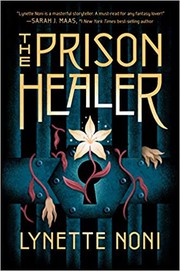
The Prison Healer
2,062-word summary 9 min read 416 pages in the book
- First published
- 2021
- Publisher
- Clarion Books
- Pages
- 416
- ISBN
- 9780358434559
- Series
- The Prison Healer (#1)
Reading options
What's inside (9 sections)
I picked up The Prison Healer because of the title. A healer inside a prison is already a better premise than a healer inside a palace, because mercy is not supposed to have a home in a place built to keep people miserable, and I wanted to see what Lynette Noni would do with the contradiction. What she does is put a seventeen-year-old with a secret on a collision course with a talent show from hell, and somehow make the whole thing about family.
Noni published it in 2021 with Clarion Books, an imprint of Houghton Mifflin Harcourt. It runs 416 pages and opens a trilogy, followed by The Gilded Cage and The Blood Traitor. It is a young adult fantasy with a death prison, four elemental trials, a slow romance, and a final hundred pages that renegotiates everything you thought the book was about.
Zalindov
The prison is the first character. Zalindov sits in the kingdom of Evalon, and it is not a temporary holding pen or a misunderstood institution. It is a work camp that consumes people. Prisoners are branded with the prison's Z when they arrive, they are set to labor under guards who are allowed to be worse than the rules, and the infirmary is a room where the sick are sorted into those worth mending and those worth forgetting.
Kiva Meridan has been inside for ten years. She arrived as a child with her father, Faran, who served as the prison healer until his death, and she inherited the job and its small corrupt privileges. She knows the ledgers, the poisons, the guards' names, and exactly how much of her soul each piece of survival has cost. Her only real friend is a young boy called Tipp, who assists in the infirmary and who is the one thing she is openly soft about. There is also Mot, a fellow prisoner with a talent for schemes, and Raz, the stablemaster, who carries coded messages in and out on behalf of Kiva's family on the outside.
The coding is one of the book's quiet engines. Kiva gets instructions from relatives whose faces she has half-forgotten, delivered through a route that could collapse at any moment, and the instructions have been the same for years: stay alive, we are coming. Ten years of staying alive is its own kind of sentence.
The Warden's bargain
Warden Rooke is not a sadist in the theatrical sense. He is worse: a manager. He keeps prisoners alive exactly as long as their labor is worth feeding, and he has a side business in information. Kiva feeds him details about the prison's underground rebels in exchange for safety, a deal that keeps her and Tipp breathing and makes her a traitor in the eyes of the people she betrays. The rebel leader, Cresta, makes sure Kiva knows it. The book is honest about the deal being ugly even though the reader understands why she took it.
Then Rooke goes further than anyone suspects. He has a prison-wide sickness running through the population, and the sickness is not an outbreak, it is policy. A substance handed out as an immunity booster is poison, distributed through a prisoner named Olisha, and it thins the overcrowded prison the way a cull thins a herd. One of the trail of bodies it leaves is Kiva's father, which turns her years of survival arithmetic into something closer to a war.
The new inmate
Into this ecosystem comes a wounded prisoner named Jaren. He is gentle, curious, and very bad at being anonymous, and he is watched over by a guard named Naari, who has a prosthetic hand and an interest in Jaren that does not fit any pattern Kiva knows. She and Tipp patch him up. The romance, when it starts, is the slow kind built out of shared shifts and small kindnesses, and it works because the book lets Kiva be prickly and exhausted and not instantly charmed.
Then the Rebel Queen arrives. Tilda Corentine is brought to Zalindov blind and dying and sentenced to death by the Trial by Ordeal, four elemental challenges of air, fire, water, and earth, assigned to the most dangerous prisoners and survived by precisely no one. If she survives, the rules of Zalindov say she walks free. Kiva's family orders her to keep the queen alive, the rebels threaten Tipp if she fails, and Kiva, who has spent a decade learning that invisibility is survival, volunteers to take the trials on the queen's behalf. One healer, four elements, every incentive in the world, no visible way to live.
The people who keep her alive
Kiva's survival has a support structure, and the book is smart about making the support cost something. Tipp is the reason she cannot simply optimize for herself. Every bargain she strikes is measured against the chance that Tipp will pay the difference, and the warden and the rebels both know it, which makes the boy a lever in every negotiation in the book. Mot is the comic relief with a body count, a schemer whose loyalty is real and whose plans get people killed. Raz is the quiet infrastructure of hope, the stablemaster who moves messages in and out of a prison that is supposed to have no doors, and his quiet presence in the background is one of the reasons the ending feels possible rather than convenient.
And then there is Naari, the guard with the prosthetic hand, who is the book's best sleight of hand. She reads as an antagonist for a hundred pages, a watcher assigned to a prisoner with no explanation, and the reveal that she is a bodyguard changes the moral shape of everything before it. Rereading the early chapters knowing who Naari serves is one of the book's better second-read pleasures, because every cold stare she gives Kiva turns into a professional judgment about a person she cannot yet trust. The book plants its biggest reveal in plain sight, in the form of a woman standing at a door, and then lets you feel silly for not asking why she was always at that door.
The trials
This is the part of the book that turns pages fastest. The Trial by Air takes her to the top of the watchtowers, leaping and falling, and she is caught in a way she does not understand at the time. The Trial by Fire is survived with a fire amulet and the help of Mot's protective salve, while Kiva is also unraveling the truth about the poison, because she is a healer before she is anything else and the mystery of the sickness will not leave her alone. The Trial by Water ties her to a boulder and holds her under for fifteen minutes, an absolute impossibility she walks out of, and by then the book has told you enough to guess that someone with forbidden magic is cheating for her without her knowledge or consent.
Naari turns out to be that someone's bodyguard. Jaren is Crown Prince Deverick of Evalon, an elementalist who commands all four elements, and he entered Zalindov to learn what was happening to the rebels and the prison, which means the boy Kiva has been slowly falling for is the heir to the kingdom that murdered her family. The political and the personal collide in the dungeon's Abyss, where Rooke suspects sabotage and makes an example of them, and where Naari finally tells Kiva the truth about the warden's poison, including who it killed. The Trial by Earth becomes a crawl through tunnels that require the two of them to trust each other completely, which is exactly the thing they can no longer do.
The book handles the collapse well. A prison revolt, a fire that spreads through the compound, the warden's guards fighting the rebels and each other, and at the center of it all Kiva finding Tilda Corentine dead and Tipp bleeding out. She uses her secret healing magic in the open for the first time to hold the boy together, and the last act is an escape on Raz's carriage with Mot buying the group time with a vial that turns into an inferno.
The reveal
Here is the thing the whole book has been silently building. Tilda Corentine was Kiva's mother. Not a stranger, not a patron, not a plot device. Kiva Meridan is Kiva Corentine, the lost Rebel Princess, hidden in Zalindov for a decade in plain sight, and the coded messages she has been obeying since childhood came from her own family all along. The final card is not even that revelation. It is what Kiva does with it: she sends a coded message of her own, telling her people that the queen is dead and she is coming to reclaim the kingdom, and she keeps all of it from Jaren, the prince she loves, because loving someone is not the same as trusting them with a war.
The last page sets up a very different sequel than the first chapter promised: less survival drama, more political intrigue, with a lead who has stopped being a survivor and started being a claimant.
One structural note for readers who like to know what they are signing up for. The novel runs on a ticking clock that is never shown to the reader directly, which is why the middle chapters can afford to breathe. Kiva does not know she is in a countdown; she knows she is in a schedule of trials with fixed dates, and the book lets her be a person between the set pieces, doing her infirmary rounds, arguing with Tipp, noticing how Jaren says her name. That steadiness under pressure is the thing that makes the ending land. When the floor goes out from under the plot, the reader has spent three hundred pages trusting Kiva's read of every room, which is exactly the trust the final reveal has to violate and then rebuild.
Where it stands
Publishers Weekly called it a high-stakes trilogy opener, and that is the right scale. The book is not interested in the economics of the prison or in interrogating the fantasy kingdom's politics deeply, and readers who want their grim settings to stay grim may find the found-family warmth a little too palliative. The final twist is the kind you either gasp at or see coming, and there is a school of reader who will point out that the same information could have been revealed half an act earlier. But the trials are genuinely tense, the poison plot pays off a thread that was planted early, and Kiva's competence is the book's best feature. Every skill she uses to survive, the scalpel, the inventory, the lying by omission, she learned by needing it.
The worldbuilding elsewhere is sketched rather than carved. Evalon is one of eight kingdoms on a continent called Wenderall, it is the richest and largest, and the Vallentis family sits on its throne, which is about as much as the first book tells you. The magic system, elemental affinities plus rare healing gifts, is introduced through Jaren's royal training and Kiva's secret practice rather than through lectures, and the politics of the rebellion get their exposition late. Readers who like their fantasy maps fully furnished will spend the first half waiting for details that never arrive. That is a deliberate trade. Noni spends her pages on the prison, and the prison is worth it. Zalindov feels like a place with weather, bureaucracy, and a smell, and the book's tension comes from its walls, not from its dynasties.
As young adult fantasy goes, this one has a harder heart than its cover suggests. The prison is brutal, the warden is bureaucratic evil, and the heroine's arc is not about discovering her power but about deciding what to do with a power that has been sitting under her hands the entire time. The million-plus copies sold across the trilogy and the Sarah J. Maas blurb tell you the market found it. What kept me reading was simpler: a girl who has every reason to look out only for herself, repeatedly doing the opposite, in a place that punishes exactly that, and getting away with it by a hair's breadth every single time.
FAQ
What are the trials in The Prison Healer?
The Trial by Ordeal consists of four elemental challenges of air, fire, water, and earth, which no prisoner had ever survived before Kiva took them.
Is The Prison Healer part of a series?
Yes, it is the first book of a trilogy, followed by The Gilded Cage and The Blood Traitor.
Does The Prison Healer end with a cliffhanger?
It resolves the prison storyline and the trials, then delivers identity reveals that set up the political conflict of the sequels.
Similar books
More from The Prison Healer first, then related titles.
Powerful
Adena survives alone in the Loot and falls for a stranger while Paedyn faces the Trials.
2,229-word summary · 10 min read

Lightlark
Isla Crown risks everything in the Centennial trials on Lightlark isle to break her people's curse, torn between Grim and King Oro. Secrets pile up toward a…
3,093-word summary · 14 min read
Reckless
Paedyn and Kai flee the scorched city into trials where every ally charges a price in blood.
2,007-word summary · 9 min read
Powerless
Ordinary Paedyn hides in Ilya, saves Kai, and enters the Purging Trials while pretending an ability.
3,079-word summary · 14 min read

Vow of Thieves
Kazi and Jase return to Tor's Watch to find it occupied, and their marriage is tested by captivity, betrayal, and a war for the town of Hell's Mouth.
2,059-word summary · 9 min read
The Lost Sisters
Taryn Duarte writes a letter to her twin, Jude, explaining how she fell for Locke and why she stayed silent while he used them both.
1,914-word summary · 9 min read

Archenemies
Nova steals for the Anarchists while Adrian hides his Sentinel identity, and a serum that erases prodigy powers puts them both at risk.
2,485-word summary · 11 min read

The Siren
Saved from a shipwreck in 1930, Kahlen becomes a siren who sings men to their deaths for the Ocean, until a boy in a college library makes her want a life she…
2,369-word summary · 11 min read
Cruel Beauty
A girl raised to kill the demon prince who rules her cursed land instead falls in love with him, in a retelling that mixes Beauty and the Beast with Bluebeard…
2,669-word summary · 12 min read
Demonglass
Sophie Mercer spends the summer at the Council's English estate, where two new demons, a suspicious host, and Archer's return complicate her plan to remove her…
2,771-word summary · 12 min read

Born at Midnight
Kylie Galen is sent to a camp for troubled teens and discovers it is a haven for vampires, werewolves, and witches, and that she may be something stranger…
2,310-word summary · 10 min read

The Rose & the Dagger
Shahrzad is pulled from her Caliph husband and left in a desert camp of rebels, needing to break his curse and end a war before it ends her.
2,520-word summary · 11 min read

We Hunt the Flame
In a fractured Arabia-inspired world, a disguised huntress and a prince-assassin race to find a magic-restoring book and confront an ancient evil.
2,195-word summary · 10 min read
Stars Above: A Lunar Chronicles Collection
Nine Lunar Chronicles stories fill in the histories of Cinder, Wolf, Thorne, Cress, Winter, and Jacin, and end with a wedding after the war.
2,230-word summary · 10 min read
Lore
Lore Perseous, the last of a hunted bloodline, is pulled back into the Agon when a wounded Athena offers her revenge against the god who killed her family.
2,188-word summary · 10 min read
House of Salt and Sorrows
Annaleigh Thaumas investigates her sister's death in a cursed island manor where the balls are illusions and the sea god is always listening.
2,025-word summary · 9 min read
Cemetery Boys
A trans brujo in East Los Angeles summons the ghost of a boy who refuses to move on, and together they uncover a murder hidden beneath Día de los Muertos.
1,997-word summary · 9 min read

Blue Moon
Ever Bloom tries to save her immortal boyfriend, Damen, from a mysterious illness while a new student named Roman quietly takes control of her school and her…
1,998-word summary · 9 min read
An Enchantment of Ravens
Isobel, a mortal artist in the fairy town of Whimsy, paints a portrait of the autumn prince and falls in love with him, breaking the laws of her craft.
2,087-word summary · 9 min read
Switched
A Minnesota teenager who can make people obey her discovers she is a changeling troll princess, and the hidden kingdom she came from wants her back.
2,131-word summary · 9 min read
A Reaper at the Gates
The Martial capital falls to an army of ghosts, Elias becomes the Soul Catcher, and Laia and Helene pay brutal prices as the Nightbringer moves to free the…
1,991-word summary · 9 min read
Fable
Abandoned on a lawless island at fourteen, Fable spends four years diving for gems to buy passage off it, straight into the cutthroat trade of the Narrows.
2,320-word summary · 10 min read
World After
Penryn wakes from near-death to find her altered sister Paige hunted as a monster, and follows her into the angels' scorpion factory and Uriel's coup.
2,213-word summary · 10 min read

The Indigo Spell
Sydney Sage hunts an aging witch, learns forbidden magic, and finally admits she loves Adrian, while the Alchemist tattoo on her cheek may be controlling her.
2,604-word summary · 12 min read

Emerald Green
Gwyneth must close the blood circle that will crown an immortal tyrant, and the prophecy says her death is the final lock.
2,044-word summary · 9 min read
Beautiful Chaos
Ethan Wate is losing himself piece by piece as the broken Order of Things demands a sacrifice, and the answer may be the last person anyone expected.
2,068-word summary · 9 min read

Wayward Son
Simon and Baz road trip America after the war to decide what normal means.
2,505-word summary · 11 min read
This Savage Song
Monster hunter Kate meets August, a monster who plays violin.
2,574-word summary · 11 min read
These Hollow Vows
Brie trades with the Unseelie to save her sister and steals for a prince.
2,384-word summary · 11 min read