
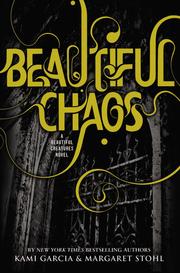
Beautiful Chaos
2,068-word summary 9 min read 528 pages in the book
- First published
- 2011
- Publisher
- Little, Brown Books for Young Readers
- Pages
- 528
- ISBN
- 9780316123525
- Series
- Caster Chronicles (#3)
Reading options
What's inside (9 sections)
Beautiful Chaos is the tricky book in the Caster Chronicles, the one that sits third in a four-book run and has to pay off two novels of escalating supernatural damage while also setting up a finale. I went into it expecting a bridge, the kind of sequel that moves pieces around the board and saves the real fireworks for the end. What I got instead is the darkest and most emotionally direct of the first three books, largely because this is the point where the series stops protecting Ethan Wate.
The first two books established the rules of Gatlin, South Carolina, the small town where nothing changes and everything is buried. Beautiful Creatures introduced Ethan and Lena Duchannes and the Caster world hiding in plain sight. Beautiful Darkness took Lena to the edge and back. Beautiful Chaos opens with the two of them together again, which sounds like a relief until you notice what her survival actually cost.
The Claiming and its aftermath
Lena claimed both Light and Dark at the end of the previous book, a thing that should be impossible, and the universe has noticed. The novel calls this disruption to the Order of Things by its proper name and then shows it in action. Gatlin is becoming unstable in ways that feel almost biblical. Strange weather, dying crops, animals behaving wrong. The town that spent two books policing its teenagers is now being policed by something much older and less forgiving.
Ethan, meanwhile, is falling apart in a quieter and more personal way. He cannot eat his favorite foods without getting sick. He hears voices that do not belong to anyone. He wakes from dreams that leave writing behind, symbols and words he does not remember learning. Worst of all, his memories start slipping, small things at first, and he keeps catching glimpses of a stranger in mirrors. Amma, the housekeeper who has been the closest thing to a parent in his life, reacts to that last detail with a fear that is worse than any explanation she could have given him.
That is the engine of the book. Ethan is the narrator of this series, our steady voice through the Casters and the tunnels and the Ravenwood family drama, and Beautiful Chaos takes that voice apart in front of us. There is a scene where he cannot taste his favorite dish and the wrongness of it lands harder than most of the supernatural set pieces in the first two books, because it is about a boy losing himself one small piece at a time.
That slow dismantling is also where the book finds its connection to real grief. Ethan's losses are supernatural in cause, but their shape is familiar. The favorite food that no longer tastes right, the memory that will not stay put, the mirror face that is almost his: these are the small betrayals that families of the sick know well, and the novel treats them with a gravity the first two books never quite reached. It helps that the writing keeps the disasters intimate. The town is dying and the Order is cracking, and the scene you remember is a boy at a dinner table, chewing food that tastes like nothing.
Amma and the bargain
The plot properly starts when Ethan and Link follow Amma to a visit with a male Seer. Interestingly, Link gets to tag along for once, and his comic relief is doing more work than usual because the tone around him keeps turning grim. The Seer delivers the diagnosis. When Ethan was brought back in Beautiful Creatures, his soul came back too fast, and it cracked. Part of it is stuck in the underworld, and unless the pieces are reunited, the changes he has been feeling will finish the job and take him completely.
Then comes the detail that changes how you read the entire series up to this point. The Seer mentions that he and Amma made a deal and refuses to say more. Amma has been managing Ethan's fate since before he was born, and the book begins the slow reveal that her devotion to him has a price attached that she has already agreed to pay. It is a great use of a character who could have stayed a colorful background figure. Every scene with her in this book is heavier than it was before, and the novel is better for it.
The One Who Is Two
The other half of the plot is the search for what the Seer and the older Casters call the One Who Is Two. The Order of Things is broken, and the only way to restore it is a sacrifice. The whole cast spends a chunk of the middle of the novel trying to figure out who the phrase refers to, and the answers they land on keep being wrong.
Lena is the first guess, because she claimed both Light and Dark and is now the most literal possible candidate for the title. Then the group realizes she cannot be the sacrifice because she is the one destined to bind the new Order once the sacrifice is made. The relief on the page is short-lived and the tension it creates is real. Watching Ethan and Lena try to cling to each other while the universe sorts out which of them is going to die is the emotional core of the novel, and it is the part that works best.
The wrong sacrifice
The group briefly settles on John Breed, the half-incubus hybrid from the previous book, and this produces the strangest sequence in Beautiful Chaos. They take John up the town water tower so he can throw himself off, because the belief is that the sacrifice has to be voluntary. John and Liv, the Keeper girl who has been quietly falling for him across the series, get a final moment together that is genuinely tender, and then he jumps.
He does not die. A voice in Ethan's head states plainly that John is not the sacrifice, and the Seer teleports everyone back to Ethan's room. The whole episode is a fake-out, and I have mixed feelings about it. As a set piece it is memorable, and it forces the book to confront the ethics of a group of teenagers deciding who gets to die for the greater good. As a plot turn it is pure misdirection, and it saps some momentum from the middle stretch. Still, it exists to set up the real answer, which is devastating.
The answer is Ethan. He is the One Who Is Two, the boy who died and came back, the narrator who has been losing the pieces of himself since the first chapter. By the time he works it out, the reader has known for a while, and the book handles it with unusual restraint. There is no big speech. He just realizes it, and then he has to decide what to do with the knowledge.
Ethan's last day
The last day of Ethan's life is the best-written stretch in the novel. He spends his remaining hours with the people he loves, and the book lets the scenes breathe instead of rushing toward the climax. He goes to Lena and they exchange gifts, his map of all the places he planned to travel to and her memory necklace, and he makes her swear to bind the new Order after he is gone. She does not take it well, which is the correct reaction and a necessary one. This is a series that has always taken Lena's anger seriously, and it deserves credit for not turning her into a serene martyr's girlfriend.
Ethan also says goodbye to his house and to his father, whose recovery from grief has been one of the quieter arcs of the whole series, and then he confronts Amma about how much she has known and for how long. The scene with Amma might be the best in the book. It reframes all her fussing and superstition and fierce protection across three novels as something deliberate and sacrificial, and it makes their relationship the true heart of the series rather than just a comforting detail of Southern life.
The water tower
The climax takes place at the same water tower where John jumped, and it is a mess in the best sense. Amma arrives with the power of her ancestors behind her, declaring that she was there for Ethan's birth and will be there for his death, though she insists this is not that day. She tries to use her magic to save him. Macon Ravenwood shows up. The rope gets tangled between generations, and the Greats, the ancestral spirits Amma draws on, turn their backs on her. It is an ugly, chaotic scene, and the book does not pretend the adults have it under control.
Ethan climbs the tower anyway. He is stopped by the other half of himself, the piece of his soul that has been waiting on the other side, and the two of them fight. The fight ends with both of them falling off the side of the tower and hitting the ground.
That is where the book ends. Not with a resolution, not with an epilogue, but with the narrator dying at the base of a water tower. It is one of the boldest third-act choices in the young adult fantasy of its era, and it works because the novel has spent three hundred pages earning it. Reactions at the time were exactly what you would expect. TeenReads called the ending mind-boggling, RT Book Reviews gave the book four and a half stars, and VOYA described the novel as multilayered but sometimes inconsistent. All three assessments are fair.
What works and what does not
The strengths of Beautiful Chaos are its atmosphere, its seriousness, and its willingness to hurt its main character. The Southern gothic texture that made the first book distinctive is at its most oppressive here, all dead gardens and whispering relatives and heat that feels like a warning. The cast has fully grown into itself, and the book gives good material to characters who were decorative before, especially Amma, John, and Liv. The romance between Ethan and Lena, which could easily have calcified into a repeated cycle of separations, gets a genuine crisis that neither magic nor stubbornness can fix.
The weaknesses are also real. The middle section spins its wheels more than it should, and the misdirect about the identity of the One Who Is Two is satisfying only in retrospect. The plagues afflicting Gatlin are vivid but never explained in much depth, and readers who want the Caster mythology to cohere will find a few threads the series never quite ties. The book is also relentlessly dark in a way that can wear you down, and there is very little of the humor that balanced the earlier novels. And of course, it is not a complete story. It ends on a cliffhanger that exists to sell the fourth book, and if you resent that device, this is a book that will annoy you.
One more thing worth crediting: this is a genuine ensemble in a way the earlier entries only promised. Link's slow slide from wisecracking sidekick to a boy carrying his own supernatural weight gets more room, and the Gatlin regulars, including Lena's family and Ethan's father, all get a scene that reminds you why this town has been worth four novels. The series has been criticized for uneven characterization across its run, and Beautiful Chaos is the volume where that criticism stops being fair.
Still, as the third act of a series that keeps getting bigger and stranger, Beautiful Chaos does the hard thing well. It makes the stakes personal, it pays off pieces of setup that readers had forgotten about, and it ends on an image that lodges in your head. I picked this up as filler between bigger books and finished it in two sittings, which is the most honest recommendation I can give a middle-of-a-series novel. If you have read the first two, do not skip this one. The finale will not make sense without it, and the goodbye at the center of it is the moment the whole series turns out to have been about.
FAQ
Is Beautiful Chaos part of a series?
Yes. It is the third book in the Caster Chronicles, after Beautiful Creatures and Beautiful Darkness, and the story continues in Beautiful Redemption. It does not work as a standalone.
How does Beautiful Chaos end?
It ends on a cliffhanger at the Gatlin water tower, where Ethan confronts the missing piece of his soul and falls. The aftermath is resolved in Beautiful Redemption.
When was Beautiful Chaos published?
Little, Brown Books for Young Readers published it on October 18, 2011. The book runs 528 pages with ISBN 9780316123525.
Similar books
More from Caster Chronicles first, then related titles.

Beautiful Creatures
A mortal boy loves a Caster girl whose sixteenth birthday will claim her for Light or Dark.
2,012-word summary · 9 min read
Beautiful Darkness
After Macon's death, Lena pulls away and Ethan follows her into the Tunnels toward a dangerous choice.
2,647-word summary · 12 min read
Born at Midnight
Kylie Galen is sent to a camp for troubled teens and discovers it is a haven for vampires, werewolves, and witches, and that she may be something stranger…
2,310-word summary · 10 min read

Vow of Thieves
Kazi and Jase return to Tor's Watch to find it occupied, and their marriage is tested by captivity, betrayal, and a war for the town of Hell's Mouth.
2,059-word summary · 9 min read
The Lost Sisters
Taryn Duarte writes a letter to her twin, Jude, explaining how she fell for Locke and why she stayed silent while he used them both.
1,914-word summary · 9 min read
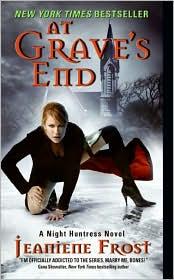
At Grave's End
Cat and Bones face Max, a zombie-raising ancient vampire, and a prophecy that ties their marriage to Patra's death in the third Night Huntress novel.
2,061-word summary · 9 min read

Archenemies
Nova steals for the Anarchists while Adrian hides his Sentinel identity, and a serum that erases prodigy powers puts them both at risk.
2,485-word summary · 11 min read

The Siren
Saved from a shipwreck in 1930, Kahlen becomes a siren who sings men to their deaths for the Ocean, until a boy in a college library makes her want a life she…
2,369-word summary · 11 min read
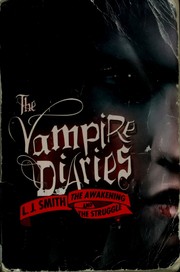
The Awakening / The Struggle
A popular high school girl falls for a vampire, then discovers that his dangerous brother wants her too, in the first two books of the Vampire Diaries series.
2,660-word summary · 12 min read
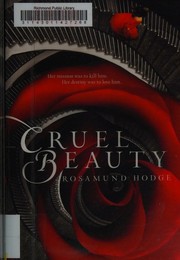
Cruel Beauty
A girl raised to kill the demon prince who rules her cursed land instead falls in love with him, in a retelling that mixes Beauty and the Beast with Bluebeard…
2,669-word summary · 12 min read
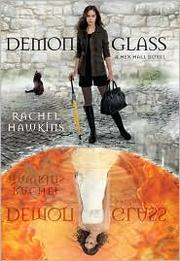
Demonglass
Sophie Mercer spends the summer at the Council's English estate, where two new demons, a suspicious host, and Archer's return complicate her plan to remove her…
2,771-word summary · 12 min read
Lover Unleashed
Paralyzed vampire warrior Payne and surgeon Manny Manello collide in an adult paranormal romance, as Xcor's Band of Bastards arrives in Caldwell for revenge.
2,374-word summary · 11 min read

The Rose & the Dagger
Shahrzad is pulled from her Caliph husband and left in a desert camp of rebels, needing to break his curse and end a war before it ends her.
2,520-word summary · 11 min read
Origins
Stefan's diary of 1864 and 1888: how he and Damon fell for Katherine, became vampires, and went looking for a killer in London.
2,056-word summary · 9 min read

We Hunt the Flame
In a fractured Arabia-inspired world, a disguised huntress and a prince-assassin race to find a magic-restoring book and confront an ancient evil.
2,195-word summary · 10 min read
Stars Above: A Lunar Chronicles Collection
Nine Lunar Chronicles stories fill in the histories of Cinder, Wolf, Thorne, Cress, Winter, and Jacin, and end with a wedding after the war.
2,230-word summary · 10 min read
Paranormalcy
A teenage agent who can see through glamour falls for a shape-shifter and learns the agency she works for is hiding her true nature.
2,041-word summary · 9 min read

Lore
Lore Perseous, the last of a hunted bloodline, is pulled back into the Agon when a wounded Athena offers her revenge against the god who killed her family.
2,188-word summary · 10 min read
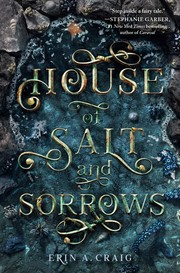
House of Salt and Sorrows
Annaleigh Thaumas investigates her sister's death in a cursed island manor where the balls are illusions and the sea god is always listening.
2,025-word summary · 9 min read
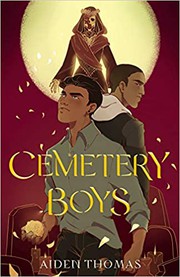
Cemetery Boys
A trans brujo in East Los Angeles summons the ghost of a boy who refuses to move on, and together they uncover a murder hidden beneath Día de los Muertos.
1,997-word summary · 9 min read

Blue Moon
Ever Bloom tries to save her immortal boyfriend, Damen, from a mysterious illness while a new student named Roman quietly takes control of her school and her…
1,998-word summary · 9 min read
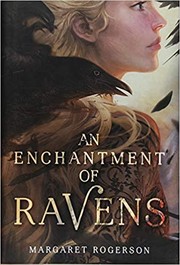
An Enchantment of Ravens
Isobel, a mortal artist in the fairy town of Whimsy, paints a portrait of the autumn prince and falls in love with him, breaking the laws of her craft.
2,087-word summary · 9 min read
The Evolution of Mara Dyer
Back in Miami after the asylum collapse, Mara Dyer is treated at Horizons while Jude, who should be dead, stalks her. Noah stays close as the experiments…
2,577-word summary · 11 min read
Switched
A Minnesota teenager who can make people obey her discovers she is a changeling troll princess, and the hidden kingdom she came from wants her back.
2,131-word summary · 9 min read
A Reaper at the Gates
The Martial capital falls to an army of ghosts, Elias becomes the Soul Catcher, and Laia and Helene pay brutal prices as the Nightbringer moves to free the…
1,991-word summary · 9 min read
Glass Houses
Claire Danvers moves off campus to escape a bully and lands in a house where the roommates know Morganville's real secret: the town belongs to vampires.
2,345-word summary · 10 min read
Fable
Abandoned on a lawless island at fourteen, Fable spends four years diving for gems to buy passage off it, straight into the cutthroat trade of the Narrows.
2,320-word summary · 10 min read
World After
Penryn wakes from near-death to find her altered sister Paige hunted as a monster, and follows her into the angels' scorpion factory and Uriel's coup.
2,213-word summary · 10 min read
The Prison Healer
Kiva, a teenage healer in a death prison, volunteers to face four elemental trials for a dying rebel queen, and the truths she uncovers change everything.
2,062-word summary · 9 min read