
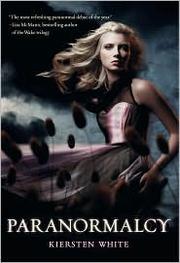
Paranormalcy
2,041-word summary 9 min read 352 pages in the book
- First published
- 2010
- Publisher
- HarperTeen
- Pages
- 352
- ISBN
- 9780061985843
- Series
- Paranormalcy (#1)
Reading options
What's inside (10 sections)
I read Paranormalcy in high school, during the stretch when every young adult novel had a love triangle and a supernatural boyfriend. I was tired of both. What made this one different was the voice. Evie is funny. Not in a quippy, trying-too-hard way, but in the way of a girl who has been alone with adults for too long and has developed a defense mechanism made of sarcasm and pop culture.
Kiersten White published the novel in 2010 through HarperTeen. The hardcover runs 352 pages, and it is the first in a trilogy. It is set in a world where paranormal creatures are real, regulated, and mostly hidden from ordinary people. The premise is a cross between Buffy the Vampire Slayer and Men in Black, with a teenage girl at the center. That comparison is accurate, but it undersells the book's best quality: Evie's desire for a normal life is treated as a real longing, not a plot obstacle.
The job
Evie works for the International Paranormal Containment Agency, or IPCA. She is sixteen. She has been with the agency since she was eight, when she was found wandering and no one came to claim her. Her job is to track down paranormal creatures, stun them with a pink taser, and tag them with a tracking bracelet. The bracelet monitors their temperature and location. If they try to remove it, or if they fail to report to a center within twelve hours, it kills them.
Evie's special ability is that she can see through glamour. Most humans cannot tell a vampire from a banker. Evie can. She sees the corpse under the handsome face, the hag under the old woman, the werewolf under the security guard. This makes her valuable to the IPCA. It also makes her a prisoner. She lives in the agency's underground headquarters. She has a mermaid best friend, Alisha, who talks to her through a video screen. She has a vampire janitor who hates her. She has a boss, Raquel, who cares about her but will not let her leave.
Evie wants to go to high school. She wants a locker, a driver's license, and a prom dress. The agency tells her that she cannot, because her ability is too important. The book is honest about how condescending that is. Evie is not a soldier. She is a child who has been given a job and told that it is for her own good.
Alisha, the mermaid, is Evie's only real friend at the beginning. She is funny, gossipy, and completely at home in the IPCA's underground world. She is also the person who encourages Evie to ask questions. When Evie discovers that she is classified as a paranormal in the agency's database, Alisha is the one who helps her look. The friendship matters because it gives Evie a model of someone who has made a life inside the system without being broken by it. Alisha's death later in the book is the moment when the stakes become personal.
Raquel is more complicated. She is Evie's boss and, in some ways, her mother figure. She is protective, but she is also complicit in the agency's control of Evie. The book does not resolve that contradiction. Raquel genuinely cares about Evie, and she also keeps her imprisoned. Both things are true.
Lend
The plot begins when a shape-shifter breaks into the IPCA headquarters. He is looking for information about his past. He is captured, and Evie is sent to tag him. He shifts into her form, but he cannot get her eye color right. She tells him the phrase "eyes of melting snow," which she remembers from a dream, and he stops. His name is Lend. He is seventeen. He is the first person her age she has met in years.
Lend is the best character in the book. He is funny, kind, and a little sad. He has spent his life moving between forms, never sure which one is his real self. His father, David, is a former IPCA employee who now runs a restaurant that serves paranormals. His mother, Cresseda, is a water creature who lives in a pond. Lend's family is unconventional, but it is a family. Evie is drawn to that.
The romance between Evie and Lend is sweet and relatively low-conflict. They bond over their shared weirdness. They talk about what it would be like to be normal. They go to prom. The book does not pretend that their relationship is the answer to all of Evie's problems, but it does give her something to want.
Reth
Reth is the other love interest, and he is the reason the book has a love triangle. He is a faerie, beautiful and manipulative. He calls Evie his "daughter," which is not a term of endearment. He wants her heart, literally. He wants her soul. He has been trying to claim her since she was a child.
Reth is not a charming bad boy with a heart of gold. He is dangerous. He hurts Evie. He kills a werewolf who hurt her, and the violence is not romantic. It is terrifying. Evie's history with him is one of the reasons she is so drawn to Lend. Lend is safe. Reth is not.
The faerie mythology is one of the book's strengths. The faeries are not just evil. They are political. There are Seelie and Unseelie courts, and they have been using humans and paranormals as pawns for centuries. Reth's interest in Evie is not just personal. It is part of a larger game. The book does not explain all of the rules, which is frustrating and also appropriate. Faerie stories are supposed to feel like they are older and larger than the characters who stumble into them.
The IPCA is also more interesting than a generic secret agency. It has a budget, a chain of command, and a public relations problem. It classifies paranormals, tracks them, and sometimes kills them. The book does not argue that the IPCA is entirely wrong. Some of the creatures it contains are dangerous. The argument is that the IPCA has too much power and too little accountability, and that Evie is one of the people who pays for that.
The murders
The central mystery is that paranormals are being killed. Evie discovers the body of a hag with a golden handprint on it. The handprint matches a burn Reth left on her wrist. Other paranormals die. Alisha is killed. The IPCA suspects Reth, but he has an alibi.
Alisha's death is the turning point. Until then, the murders are a puzzle. After Alisha, they are personal. Evie has lost the one friend who made the agency feel like home. The scene where she finds Alisha's aquarium destroyed is short and brutal. White does not linger, which makes it worse. Evie has to keep moving, because the killer is still inside the center.
The killer is Vivian, a girl made of fire. She is an Empty One, a being created by the Unseelie court to take souls. She is connected to Evie through Reth's magic. She appears in Evie's dreams. She is jealous, lonely, and dangerous. Vivian is not a satisfying villain, because the book withholds most of her interiority until the end. She is a mirror for Evie, and mirrors are more interesting when they are cracked.
The mystery is not hard to solve. The book is more interested in Evie's reaction than in the puzzle. When she learns that Vivian is like her, she has to confront the possibility that she is not human. She has to confront the possibility that the IPCA has been lying to her. She has to decide what she is willing to do to protect the people she loves.
What Evie is
The revelation is that Evie is an Empty One. She was created by Reth to rival Vivian. She has no soul of her own. She can take souls from paranormals. The IPCA classified her as a Level 7 paranormal, which is a polite way of saying that they did not know what she was and were afraid of her.
This is a lot of plot for a 352-page book, and some of it is rushed. The explanation of the Empty Ones arrives late, and the rules of soul-taking are not entirely clear. But the emotional logic works. Evie has spent her whole life trying to be normal. She has spent her whole life being told that she is special. The truth is that she is neither. She is a weapon that was designed to be used, and she has to decide what to do with that.
The climax takes place at prom. Reth takes Evie to the faerie world. Vivian attacks. Evie tries to take Vivian's soul, but it does not work. Instead, she takes the souls Vivian was holding and releases them. She almost takes Lend's soul, but she stops. She wakes up in the hospital. Vivian is in a coma. Lend is immortal. Evie is free.
The cost is not fully explored. Evie has killed people, or at least allowed them to die. She has lost Alisha. She has learned that her entire life has been a lie. The book ends on a hopeful note, but it does not pretend that the damage is repaired. That is the right choice. A lesser book would have given Evie a clean victory. This one gives her a future, which is more complicated.
What works
The voice is the main reason to read the book. Evie is funny, angry, and vulnerable. She talks like a real teenager, or at least a teenager who has watched a lot of television. The book is written in first person, and White commits to the voice. Some of the jokes are dated, but the personality holds up.
The worldbuilding is also good. The IPCA is a bureaucracy, not a secret society. It has forms, procedures, and budget concerns. The paranormals are not all monsters. Some of them are just people trying to live. The book is more interesting when it is about the mundane details of a supernatural agency than when it is about the fate of the world.
Where it creaks
The love triangle is unnecessary. Reth is a threat, not a viable romantic option, and the book knows it. The tension between him and Lend is more about power than about affection. The romance with Lend is sweet, but it develops quickly.
The plot is thin. The mystery is solved by exposition. The villain's plan is not entirely coherent. The book is clearly the first in a series, and it spends a lot of time setting up things that will pay off later. Readers who want a standalone story may be frustrated.
The book is also a product of its time. The paranormal romance boom of the late 2000s and early 2010s produced a lot of books like this. Some of the tropes have aged poorly. The possessive faerie, the chosen one, the secret agency: they are all familiar.
Why it holds up
Paranormalcy holds up because Evie is not a passive heroine. She makes decisions. She breaks rules. She demands answers. She is not waiting for a boy to save her. She is trying to save herself and her friends.
The book is also surprisingly sad. Evie's loneliness is real. The IPCA is the only family she has ever known, and it has been using her. Lend's family is warm, but it is not hers. The ending is hopeful, but it is not a fairy tale. Evie has a lot of work to do.
The trilogy continues that work. Supernaturally and Endlessly deal with the fallout of the first book, including Evie's attempt to live a normal life and the return of the faerie courts. The first book stands on its own, but it is clearly the opening act. Readers who want a complete story should know that going in.
I recommend it to readers who want a fast, funny urban fantasy with a heroine who talks back. It is not a masterpiece. It is a good time, and sometimes that is enough.
FAQ
Is Paranormalcy the first book in a series?
Yes. It is the first book in the Paranormalcy trilogy, followed by Supernaturally and Endlessly.
What is Evie's power?
She can see through paranormal glamour, which makes her valuable to the IPCA.
Is it a romance?
It has a central romance between Evie and Lend, but the plot is mainly about Evie's identity and the IPCA.
Similar books
More from Paranormalcy first, then related titles.
The Evolution of Mara Dyer
Back in Miami after the asylum collapse, Mara Dyer is treated at Horizons while Jude, who should be dead, stalks her. Noah stays close as the experiments…
2,577-word summary · 11 min read
First Grave on the Right
Charley Davidson is a private investigator in Albuquerque and the grim reaper. When three murdered lawyers come back as ghosts, her two jobs collide.
2,770-word summary · 12 min read

Masquerade
After Cordelia's death, Schuyler flies to Venice to find her exiled grandfather, then returns to the Blue Bloods as they prepare for a masked ball and a hidden…
2,543-word summary · 11 min read
Born at Midnight
Kylie Galen is sent to a camp for troubled teens and discovers it is a haven for vampires, werewolves, and witches, and that she may be something stranger…
2,310-word summary · 10 min read
The Diviners
In 1920s New York, Evie O'Neill's ability to read objects pulls her into an occult investigation that awakens something far older and more dangerous.
2,045-word summary · 9 min read
Glass Houses
Claire Danvers moves off campus to escape a bully and lands in a house where the roommates know Morganville's real secret: the town belongs to vampires.
2,345-word summary · 10 min read
The Reckoning
Necromancer Chloe Saunders and her gifted friends raid Edison labs in the Darkest Powers finale, chasing rescue and freedom together as hidden powers break…
2,955-word summary · 13 min read
The Unbecoming of Mara Dyer
Sole survivor of a collapse that killed her friends, Mara Dyer moves to Miami, where visions that come true suggest her grief hides something darker.
2,152-word summary · 10 min read
Silence
Nora wakes in a cemetery with five months missing and a stranger called Jev who feels familiar.
3,615-word summary · 16 min read
Crescendo
Nora and Patch survived book one, but distance, Marcie Millar, and a letter about her father's killer pull them apart.
2,980-word summary · 13 min read
Hush, Hush
Nora Grey's new biology partner Patch is gorgeous, infuriating, and hiding wings he was never meant to keep.
2,137-word summary · 9 min read
Anatomy: A Love Story
In 1817 Edinburgh, a noblewoman who wants to be a surgeon disguises herself to study anatomy and falls for the grave robber who supplies her with bodies.
2,031-word summary · 9 min read
River Marked
Mercy and Adam's honeymoon on the Columbia River turns into a fight with an ancient river devil, and Mercy finally learns the truth about her father.
2,008-word summary · 9 min read

Magic Burns
A magic flare hits Atlanta, and mercenary Kate Daniels must recover stolen maps, find a missing witch, and keep a teenage girl alive while Celtic gods try to…
2,021-word summary · 9 min read
At Grave's End
Cat and Bones face Max, a zombie-raising ancient vampire, and a prophecy that ties their marriage to Patra's death in the third Night Huntress novel.
2,061-word summary · 9 min read
The Awakening / The Struggle
A popular high school girl falls for a vampire, then discovers that his dangerous brother wants her too, in the first two books of the Vampire Diaries series.
2,660-word summary · 12 min read
Cross My Heart and Hope to Spy
Cammie Morgan returns to Gallagher Academy for a second year of spy training, only to fall for a boy from a rival spy school and hunt a mole in her own school.
2,567-word summary · 11 min read

I Kissed Shara Wheeler
Shara Wheeler kisses her rival Chloe Green at prom and disappears, leaving a scavenger hunt that forces Chloe to rethink everything she knew about her.
2,083-word summary · 9 min read
Demonglass
Sophie Mercer spends the summer at the Council's English estate, where two new demons, a suspicious host, and Archer's return complicate her plan to remove her…
2,771-word summary · 12 min read
Angels' Blood
Nalini Singh's 2009 Guild Hunter opener sends vampire hunter Elena Deveraux after a murderous archangel in New York, while its most powerful ruler watches.
2,367-word summary · 11 min read
Origins
Stefan's diary of 1864 and 1888: how he and Damon fell for Katherine, became vampires, and went looking for a killer in London.
2,056-word summary · 9 min read
Last Night at the Telegraph Club
The 2021 National Book Award winner follows Lily Hu, a Chinese American teenager in 1954 San Francisco, as she falls for Kath and learns what it costs to be…
2,336-word summary · 10 min read
Circus of the Damned
A rogue master vampire arrives in St. Louis and Anita Blake is caught in an undead turf war, with a science teacher in the crossfire.
2,757-word summary · 12 min read

Lore
Lore Perseous, the last of a hunted bloodline, is pulled back into the Agon when a wounded Athena offers her revenge against the god who killed her family.
2,188-word summary · 10 min read
House of Salt and Sorrows
Annaleigh Thaumas investigates her sister's death in a cursed island manor where the balls are illusions and the sea god is always listening.
2,025-word summary · 9 min read
Cemetery Boys
A trans brujo in East Los Angeles summons the ghost of a boy who refuses to move on, and together they uncover a murder hidden beneath Día de los Muertos.
1,997-word summary · 9 min read
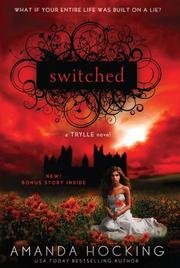
Switched
A Minnesota teenager who can make people obey her discovers she is a changeling troll princess, and the hidden kingdom she came from wants her back.
2,131-word summary · 9 min read

The Indigo Spell
Sydney Sage hunts an aging witch, learns forbidden magic, and finally admits she loves Adrian, while the Alchemist tattoo on her cheek may be controlling her.
2,604-word summary · 12 min read
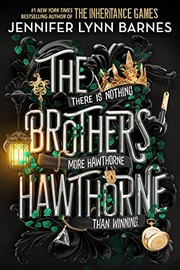
The Brothers Hawthorne
Jameson infiltrates an underground London gambling club for the father he never knew while Grayson protects his half-sisters in Phoenix from a dead man's…
2,019-word summary · 9 min read