
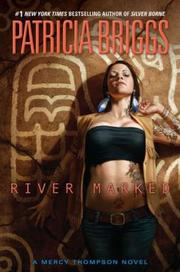
River Marked
2,008-word summary 9 min read 324 pages in the book
- First published
- 2011
- Publisher
- Ace
- Pages
- 324
- ISBN
- 9780441019731
- Series
- Mercy Thompson (#6)
Reading options
What's inside (9 sections)
Every long-running series has a book that splits the fan base, and River Marked is that book for Mercy Thompson. It takes the heroine out of her usual city, separates her from most of the supporting cast, and spends a lot of time on Native American mythology and a camping honeymoon. Some readers love it for exactly those reasons. Others miss the garage, the pack politics, and the familiar rhythm of a Tri-Cities mystery. I land somewhere in the middle, but I understand both sides.
This is the sixth Mercy Thompson novel, published in 2011. Mercy and Adam Hauptman finally get married, and then they go camping on the Columbia River. Within a few days, Mercy is seeing the ghost of the father she never met, a fisherman has lost a foot, and something ancient is eating people in the water. It is not a relaxing honeymoon.
The Wedding
The book opens with a wedding that Mercy did not plan. She and Adam have been engaged for a while, and Mercy's mother has been turning the ceremony into a production. Mercy proposes that they just get married now, quietly, before the doves and the balloons get out of hand. Adam agrees. What she does not know is that Jesse, her stepdaughter, and the pack have already organized a surprise wedding.
The ceremony is crowded and warm. Friends, family, fae, and werewolves fill the church. Mercy is moved, and also annoyed that everyone kept a secret from her. The wedding is a good way to open the book because it establishes the central relationship. Mercy and Adam are married now, and the novel is interested in what that means. They are partners, but they are also two stubborn people who have to negotiate everything.
The honeymoon trailer is a gift from fae connections, which should be a warning. Mercy and Adam argue about it, make up, and go for a run together. It is a small, domestic sequence that shows how they handle conflict. They fight, they listen, they move on. That rhythm will matter later, when the stakes are much higher.
The campground is remote and beautiful. Mercy and Adam swim, rest, and enjoy being away from the pack. Then Mercy sees a ghost. He is dressed in traditional hunting leathers, with two braids and a face she recognizes from the one photograph she has of her father. Joe Old Coyote died before she was born. He has never visited her before.
The ghost is the first sign that the river is not ordinary. Mercy is a walker, a coyote shapeshifter who can see ghosts, and the dead usually leave her alone. Her father's appearance means something is wrong. It also means something personal. Mercy has spent her whole life not knowing her father. Now he is standing in front of her, and he cannot tell her what he needs.
The second sign is Benny Jamison. Mercy and Adam find him in a boat, badly injured, with one foot severed. He is delirious and terrified. He talks about something in the water. Adam goes for help, and Mercy stays with Benny. The local Native American community arrives, and Mercy meets Gordon Seeker, an elder who gives her a salve and tells her she has been marked.
The River Mark
The mark is on Mercy's leg. It looks like a bite, or a brand, and it does not heal normally. Gordon calls her "river marked." The phrase sounds like a diagnosis and a destiny at the same time. Mercy does not like either.
Gordon is one of the book's best characters. He is cryptic, funny, and not impressed by werewolves. He knows more than he says, and he says just enough to keep Mercy moving. His grandson Calvin is younger, more open, and caught between the modern world and the traditions of his family. Calvin becomes Mercy's guide to the local stories, and his presence keeps the book from turning the Native American characters into a collective of wise elders.
The mythology is specific. The river devil is an ancient creature, a serpent with hypnotic powers that has been sleeping in the Columbia for a long time. It has killed before, and it is killing again. The local stories say that Coyote defeated it once. That story matters because Coyote is not just a legend to Mercy. He is family.
Petroglyphs, Otterkin, and the River Devil
Mercy and Adam visit the Maryhill Museum, where they see Native American baskets, petroglyphs, and a woman who seems to be watching them. The museum is a strange, liminal place, and the book uses it well. The artifacts are not just decoration. They are clues.
Calvin takes them to Horsethief Lake to see the petroglyphs. The images include a creature that looks like the thing in Mercy's dreams. Calvin tells the story of Coyote and the river monster, and the story maps onto the present. The past is not past. The monster is back, and the old solution may be the only one.
Mercy's dreams are another thread. She sees green eyes, tentacles, and water. The dreams are not subtle, but they are effective. They give the book a sense of dread that the daytime scenes do not. Briggs is good at writing the feeling of being watched by something you cannot see.
The first suspects are the otterkin, minor fae creatures who live near the river. They are troublemakers, but they are not powerful enough to do what has been done. The investigation clears them and points to something older. The river devil is not a fae. It is a god, or close enough.
The river devil's power is mental. It calls people into the water. It makes them see what it wants them to see. Mercy is vulnerable because she is a walker, and walkers are sensitive to the spirit world. But she also has an advantage. Coyote defeated the river devil once, and that victory gives Mercy a kind of immunity. She can hear the call without obeying it.
That immunity is why Coyote needs her. He has a plan to defeat the river devil, and the plan requires a mortal who can stand in the right place at the right time. The plan also requires sacrifice. Coyote and several spirit allies will give up their essence to overwhelm the creature, and Mercy will deliver the final blow with a stone knife.
The Bargain and the Battle
The river devil does not want to fight. It wants to bargain. It offers Mercy her life in exchange for the lives of two children. It is a classic monster offer, and it is also a test. Mercy refuses. She knows that her life is not worth more than theirs, and she knows that the plan will fail if she takes the deal.
The refusal is the moral center of the book. Mercy is not a saint. She is scared, and she wants to live. She has just married Adam, and she has a future she wants to protect. But she does not trade children for her own survival. That choice is what makes her a hero in the sense the series needs.
The bargain also reveals the river devil's weakness. It needs to be invited, or it needs a willing sacrifice. Mercy's refusal denies it the clean victory it wants. The final battle becomes a contest of wills, not just strength.
The battle happens at night, at the river. Coyote and his allies gather and take their true forms. Thunderbird is there. The walking stick, an old fae artifact that has attached itself to Mercy, is there too. Mercy carries obsidian knives, which are the only weapons that can hurt the river devil.
The fight is chaotic. Mercy is dragged underwater and nearly drowns. She cuts herself free and keeps fighting. Thunderbird helps her escape. The spirit allies pour themselves into the river devil, and Mercy strikes the final blow. The creature dies. The cost is enormous.
Coyote and several of the spirit allies sacrifice themselves, and for a while it seems they will not return. Mercy is left with the knowledge that her father, or the being who wore her father's face, gave himself up for her and for the people of the river. The ending is bittersweet. The monster is gone, but the victory is not clean. Coyote does come back, changed and quieter, and the reunion is not a celebration. It is a conversation between two people who have lost something and are trying to decide what is left.
The walking stick deserves its own paragraph. It is an old fae artifact that has been following Mercy since an earlier book, and in River Marked it becomes an ally. It moves on its own, chooses its keeper, and seems to understand more than anyone admits. The stick gives the book a touch of folkloric comedy, which it needs. Without it, the mythology would be too solemn.
The Father Question
The book's emotional plot is about Mercy's father. Joe Old Coyote was a real man, a rodeo rider and a walker, and he died before Mercy was born. Coyote is the archetype, the trickster spirit who created Joe and lived in him. They shared a face and a body, but they were not the same person. The ghost Mercy sees is Joe. The being who plans the battle is Coyote. Both of them are, in some sense, her father.
That is a complicated idea, and the book handles it with more care than I expected. Mercy does not get a simple reunion. She gets an explanation, and the explanation does not give her the childhood she missed. She has to make peace with a father who was many things, some of them not human. The ending suggests that she does, or at least that she stops needing him to be one thing.
What the Book Gets Wrong
River Marked is slow. The first third is wedding and campground and dreams, and the mystery takes a while to cohere. Readers who are used to the faster pace of the earlier books may find it frustrating. The isolation from the pack also removes some of the series' best supporting characters. Warren, Kyle, Stefan, and the rest are mostly absent.
The mythology is also dense. Briggs explains it, but there is a lot of it, and the book sometimes feels like a lecture on Columbia River folklore. The villain is powerful but not very personality-driven. The river devil is a force more than a character, and its bargain is the only time it becomes interesting.
The "chosen one" element is another issue. Mercy is special because of her father, her blood, and her immunity. The series has always been about a woman who survives by being smart and stubborn, and this book leans harder on destiny than usual. It mostly earns the shift, but it is a shift.
Why It Works
And yet, River Marked has some of the best emotional writing in the series. The wedding is joyful. The marriage is portrayed as a real partnership, with arguments and repairs. The father story is sad and strange and not easily resolved. The battle is exciting. The ending leaves Mercy changed.
It is also a book about place. The Columbia River is not just a setting. It is a character with a history, a mythology, and a hunger. Briggs clearly did her research, and the landscape gives the novel a weight that the Tri-Cities books do not have. If you have been to the gorge, you will recognize it. If you have not, you will want to go, and then you will think better of swimming.
I would not start the series here. I would not skip it either. It is a bridge book, a honeymoon book, and a book about a daughter learning who her father was. It is uneven, and it is memorable. That is more than most series installments can claim.
FAQ
Do I need to read the earlier Mercy Thompson books before River Marked?
Yes. River Marked is the sixth book in the series, and it depends on Mercy's relationships with Adam, the pack, and the fae.
Who is Mercy's father in River Marked?
Her father was Joe Old Coyote, a walker whose body was inhabited by the Coyote archetype. The novel reveals that Joe and Coyote shared a face but were not the same being.
Is River Marked the last Mercy Thompson book?
No. The series continues after River Marked, and later books deal with the consequences of the honeymoon and Mercy's growing power.
Similar books
More from Mercy Thompson first, then related titles.

Moon Called
A coyote mechanic in wolf country gets pulled into pack fights and fae bargains when a lost teen shows up.
1,943-word summary · 9 min read
Blood Bound
Coyote mechanic Mercy Thompson stands with vampire friend Stefan against a demon driven rival while pack ties strain.
2,636-word summary · 12 min read
Iron Kissed
Mercy repays Zee by hunting a fae killer, clears his name, and finally chooses between Adam and Samuel.
2,944-word summary · 13 min read

Bone Crossed
Mercy faces vampire queen Marsilia after killing a vampire to save friends.
2,261-word summary · 10 min read
Silver Borne
Mercy hides a Fae book while Samuel slips and the fae close in.
2,571-word summary · 11 min read

Cry Wolf
Omega Anna joins Charles to hunt a rogue werewolf in Montana.
2,463-word summary · 11 min read

Magic Burns
A magic flare hits Atlanta, and mercenary Kate Daniels must recover stolen maps, find a missing witch, and keep a teenage girl alive while Celtic gods try to…
2,021-word summary · 9 min read

Bitten
Elena Michaels is the world's only female werewolf, and keeping that world away from her human life in Toronto works fine until the Pack calls in a favor.
2,039-word summary · 9 min read

First Grave on the Right
Charley Davidson is a private investigator in Albuquerque and the grim reaper. When three murdered lawyers come back as ghosts, her two jobs collide.
2,770-word summary · 12 min read

Masquerade
After Cordelia's death, Schuyler flies to Venice to find her exiled grandfather, then returns to the Blue Bloods as they prepare for a masked ball and a hidden…
2,543-word summary · 11 min read
Blood Bonds
Oleander is chained in a Resistance camp, and her five Bonds have to find her before Silas Davies finishes what he started in this third Bonds that Tie book.
2,018-word summary · 9 min read
Paranormalcy
A teenage agent who can see through glamour falls for a shape-shifter and learns the agency she works for is hiding her true nature.
2,041-word summary · 9 min read
Savage Bonds
Oli's deadly gift is out in the open, her Bond runs the show, and the Resistance is closer than ever in the second Bonds that Tie novel.
2,431-word summary · 11 min read

The Indigo Spell
Sydney Sage hunts an aging witch, learns forbidden magic, and finally admits she loves Adrian, while the Alchemist tattoo on her cheek may be controlling her.
2,604-word summary · 12 min read
Dreamfever
With the walls between worlds down and Mac broken by the Fae, Dreamfever is the darkest volume of the Fever series, and the one that changes everything.
2,007-word summary · 9 min read
Shadowfever
Mac Lane hunts the Sinsar Dubh in Dublin as Fae walls fail and Barrons secrets surface.
3,016-word summary · 13 min read
One Foot in the Grave
Cat hunts vampires with Bones while her Sire plots from the grave.
2,200-word summary · 10 min read

Bloodfever
Mac hunts the Sinsar Dubh in Dublin while Barrons tests her.
2,124-word summary · 9 min read
Broken Bonds
Oleander returns after five years on the run to face the five men she is bonded to, in J. Bree's 2021 opener of resentment, training, and slow trust.
2,582-word summary · 11 min read
A Light in the Flame
Held by Nyktos in the Shadowlands, Sera faces trials, Kolis and the Rot while broken trust is tested.
2,577-word summary · 11 min read

The Golden Lily
Sydney Sage guards Jill at Amberwood Prep in Palm Springs, studies forbidden magic, favors Adrian over Brayden, and faces Alchemist custody in this second…
2,988-word summary · 13 min read
Magic Bites
A broke Atlanta mercenary takes her murdered guardian's last case and walks into a war between vampires and shapeshifters.
2,272-word summary · 10 min read
Forever
Grace turns wolf, Sam scrambles for a cure, and Mercy Falls votes to hunt the pack in trilogy end.
2,217-word summary · 10 min read
Dead Witch Walking
Witch and runner Rachel Morgan quits the agency with a death mark on her head and hunts an untouchable crime lord.
2,709-word summary · 12 min read
Halfway to the Grave
Half vampire Cat hunts rogues to atone until Bones captures her and pulls her into vampire politics and love.
2,995-word summary · 13 min read
Shiver
Grace Brisbane loves yellow eyed wolf Sam, human in summer, as winter cold threatens to take him back for good in small town Mercy Falls.
2,408-word summary · 11 min read
Bride
Vampire Misery enters an arranged marriage with Alpha Lowe to protect her friend.
2,933-word summary · 13 min read
House of Earth and Blood
Bryce Quinlan hunts a killer in Crescent City with fallen angel Hunt Athalar.
2,496-word summary · 11 min read
Hounded
A two-thousand-year-old druid runs a bookshop in Arizona, hides from an Irish god who wants his sword back, and talks to his dog.
2,159-word summary · 10 min read