
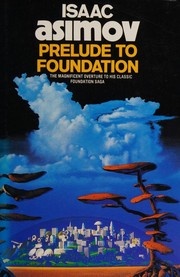
Prelude to Foundation
2,013-word summary 9 min read 403 pages in the book
- First published
- 1988
- Publisher
- Doubleday
- Pages
- 403
- ISBN
- 9780385245852
- Series
- Foundation (#6)
Reading options
What's inside (10 sections)
Prequels are a strange form of storytelling. You already know how the story ends, so the pleasure has to come from watching the pieces fall into place. Prelude to Foundation, published in 1988, is Isaac Asimov going back to the beginning of his most famous series to explain how Hari Seldon got the idea for psychohistory. It is a book about a man having an idea, and it is also a tour of the capital of a galactic empire that is already starting to rot.
I read the Foundation trilogy first, which is the right order for most people. Then I came back to this one and found that it changed how I saw the original books. The trilogy treats psychohistory as a finished science, a machine that can predict the future of trillions of people. Prelude shows the machine being built, badly, by a young mathematician who is not sure it can work at all. That is a more interesting story than the finished product.
The Paper
Hari Seldon is a mathematician from the planet Helicon. He comes to Trantor, the capital of the Galactic Empire, for a convention, and he presents a paper on psychohistory. The paper is theoretical. It suggests that it might be possible, in principle, to predict the behavior of large populations using mathematics. Seldon is careful to say that he has not actually done it. He has only shown that the door might be unlocked.
The Emperor, Cleon I, hears about the paper and summons Seldon to the palace. Cleon is not a stupid man, but he is a frightened one. The Empire is enormous and old, and there are signs of decay everywhere. A science that could predict the future would be a weapon. Cleon wants to know whether Seldon can tell him what is going to happen, and whether he can use that knowledge to keep his throne.
Seldon tells him the truth: psychohistory is not ready, and it may never be ready. Cleon is not convinced. He is used to people telling him what he wants to hear, and he suspects Seldon of holding back. That suspicion is enough to put Seldon in danger. In an empire, a useful idea is a dangerous thing to have.
The Escape
Seldon meets a journalist named Chetter Hummin, who warns him that Eto Demerzel, the First Minister, is planning to arrest him. Hummin says the only way to survive is to disappear into Trantor and work on psychohistory in secret. Seldon does not trust him entirely, but he trusts the palace less.
Trantor is one of Asimov's best inventions. It is a planet covered by a single city, with a population in the tens of billions, and it has no weather except the weather that is manufactured. The upper levels are wealthy and bright. The lower levels are dark, crowded, and full of people who have never seen the sky. The Empire runs on this place, and the place is running down.
The decay is not dramatic. There are no burning buildings or invading armies. There are delays, shortages, and officials who are more interested in procedure than in results. Asimov is good at this kind of decline. He shows you a system that has forgotten why it exists, and he lets you draw the conclusion.
The escape is the engine of the plot. Trantor is a city that covers an entire planet, with hundreds of sectors, each with its own culture, economy, and rules. Seldon cannot simply hide in a hotel. He has to move through a society that is layered and suspicious, and he has to rely on people he does not know.
Hummin arranges for him to stay at Streeling University, one of the most prestigious sectors. There Seldon meets Dors Venabili, a history professor who is assigned to protect him. Dors is competent, impatient, and physically dangerous in a way that surprises him. She becomes his companion for the rest of the book, and their relationship is one of the few warm things in it.
At Streeling, Seldon starts to think seriously about how psychohistory could work. The problem is scale. You cannot predict the actions of one person, but you might be able to predict the actions of a large group. The Empire is too large and too complex for a first attempt. He needs a smaller sample, a place with enough diversity to model the whole. The obvious candidate is the original human planet, Earth, but nobody knows where it is.
Mycogen
The first place he tries is Mycogen, a sector that has preserved a kind of ritualized memory of the past. The Mycogenians worship their ancestors and claim to have records that go back to the earliest human worlds. Seldon thinks their archives might contain the location of Earth.
Mycogen is a theocracy with a rigid caste system. The people are polite, controlled, and deeply suspicious of outsiders. Seldon and Dors are welcomed by Sunmaster Fourteen, the leader, but they are watched constantly. They are assigned two "Sisters," Raindrop Forty-three and Raindrop Forty-five, who manage their daily lives and report on them.
The visit gives Seldon one useful clue. The Mycogenians' sacred book mentions Aurora, a world they consider their ancestral home, and it mentions robots. In the Empire, robots are a myth. In Mycogen, they are a memory. Seldon becomes convinced that the answer to his problem lies in the past, and that the past has been deliberately hidden.
His attempt to investigate the Sacratorium, the Mycogenian temple, is a disaster. He and Dors enter in disguise, hoping to see a robot that is supposedly kept there. They are caught almost immediately. Hummin has to intervene to save them from execution. The episode is funny in retrospect and terrifying in the moment. It also shows Seldon's weakness: he is brilliant about systems and careless about people.
Dahl
The next stop is Dahl, a working-class sector full of heat sinks, factories, and people who do not have time for academics. Seldon and Dors rent rooms from the Tisalver family, who are ordinary and kind. Seldon meets Yugo Amaryl, a heat sink worker who dreams of being a mathematician. He also meets Raych, a street kid from Billibotton who becomes his guide.
Yugo Amaryl is the character who makes the class argument concrete. He is smart enough to understand Seldon's math, and he has spent his life in a job that does not use his mind. When Seldon offers him a way out, Yugo does not become grateful in a simple way. He becomes hungry. He wants the work, and he wants to be seen. His story is a reminder that the Empire wastes most of its talent before anyone notices.
Dahl is where the book becomes a story about class. The people here are not stupid. They are excluded. They have their own economy, their own loyalties, and their own stories about the Empire. Seldon learns more from a few days in Dahl than he did from the palace. He also learns that psychohistory cannot ignore people like Yugo and Raych. A science that only models the powerful is not a science of society.
An old woman named Mother Rittah gives Seldon another piece of the puzzle. She tells him about Earth, and about "Da-Nee" and "Ba-Lee," names that are garbled versions of R. Daneel Olivaw and the Baley family from Asimov's robot novels. It is a fan-service moment, and it is also a clue. The history Seldon is looking for is the history of the robots.
Wye and the Coup
The last sector is Wye, a wealthy and powerful region at Trantor's south pole. Seldon, Dors, and Raych are kidnapped and taken to Rashelle, the mayor of Wye. Rashelle and her father have been planning to overthrow the Emperor for years. They see Seldon's psychohistory as a way to legitimize their rule.
Rashelle is a good villain because she is not crazy. She is ambitious, intelligent, and convinced that she would be a better ruler than Cleon. She offers Seldon a place in her new order. He refuses, not out of loyalty to the Emperor, but because he does not want his science used as a prop.
The coup is launched and collapses almost immediately. Demerzel has already subverted Wye's forces. The episode is a lesson in power: Rashelle has money, soldiers, and a plan, and she loses because she does not understand the system she is trying to take over. Seldon, who has spent the book running from power, ends up watching it work.
The Reveal
The ending is the part everyone remembers. Hummin is Demerzel. Demerzel is not a man. He is R. Daneel Olivaw, a robot who has been guiding human history for thousands of years. He wants psychohistory to succeed because it will help him protect humanity, and he is willing to manipulate Seldon to make that happen.
Seldon takes the news better than most people would. He is angry, but he is also fascinated. He realizes that Dors might be a robot too, and the book leaves that question open. The revelation reframes the entire series. The Foundation is not just a human project. It is a project with a hidden guardian, and the guardian has been playing a long game.
The robot reveal is also a problem. It comes late, it is explained quickly, and it depends on the reader knowing the robot novels. If you have not read them, the emotional weight is different. You understand that it is a big deal, but you do not feel the history behind it. That is the cost of writing a prequel that is also a crossover.
What the Book Gets Wrong
Prelude to Foundation is talky. Most of the book is people explaining things to each other in rooms. The chase is not very chase-like. Seldon and Dors move from sector to sector, and each sector has a guide who explains the local customs. It is a tour, not a thriller.
The women are thin. Dors is the best of them, but she is defined mostly by her protection of Seldon. Rashelle is a villain with a plan, and the Sisters in Mycogen are a collective. Asimov was never good at writing women, and this book does not change that.
The exposition is relentless. Every sector comes with a guide who explains the local customs, the local politics, and the local history. Seldon asks questions, and the guide answers. It is efficient, and it is also exhausting. After a while you can feel the author moving his pieces around the board.
The structure is also predictable. You know Seldon is going to survive, because he has to found the Foundation. You know the coup is going to fail. The pleasure is in the details, not the suspense. That is fine for a prequel, but it means the book works better as a companion than as a standalone novel.
Why It Matters
Prelude to Foundation matters because it makes psychohistory feel like an idea rather than a magic trick. Seldon is not a prophet. He is a mathematician who is not sure his math works. He is arrogant, curious, and sometimes foolish. He needs other people to keep him alive. That is a more human portrait than the trilogy gives us.
It also matters because it shows Asimov's universe as a connected whole. The robots, the Empire, the Foundation, and Earth are all part of the same history. The book is a bridge, and bridges are useful even when they are a little rickety.
I would not start here. Start with Foundation, then come back. If you have already read the trilogy and the robot novels, this is a rewarding return visit. If you have not, it is a decent adventure with a lot of exposition and one very good twist. Either way, it is a book about the difficulty of seeing the future, which is a subject that never gets old.
FAQ
Do I need to read the Foundation trilogy before Prelude to Foundation?
It is not strictly required, but it is the better order. The book is a prequel, and its biggest reveal depends on knowing the original series and the robot novels.
Can Prelude to Foundation be read as a standalone?
Yes, it has a complete plot, but it works best as a companion to Foundation and the Robot stories rather than as an introduction to the universe.
Who is Dors Venabili?
Dors is a history professor at Streeling University who is assigned to protect Hari Seldon. She becomes his companion, and the novel hints that she may also be a robot.
Similar books
More from Foundation first, then related titles.
Foundation
Seldon predicts the Empire will fall and seeds Terminus to cut the dark age to a thousand years.
2,706-word summary · 12 min read
Foundation and Empire
The Foundation faces a dying Empire and a mutant conqueror called the Mule who can bend minds.
2,026-word summary · 9 min read
Second Foundation
The Mule hunts the hidden Second Foundation, then a girl carries the secret that shapes the Plan.
2,060-word summary · 9 min read
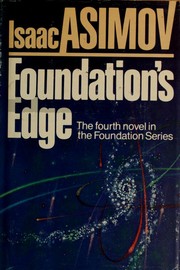
Foundation's Edge
Exiled councilman Golan Trevize hunts for the Second Foundation and the lost world of Earth, and finds a planet with one mind waiting to change the galaxy.
2,335-word summary · 10 min read
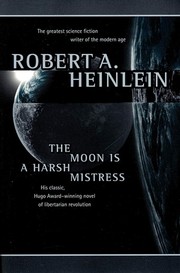
The Moon Is a Harsh Mistress
In 2076 Lunar colonists led by Mannie, Wyoh, Prof, and computer Mike revolt against Earth with rocks and rhetoric.
2,003-word summary · 9 min read
Caliban's War
Ganymede burns, Bobbie survives it, Avasarala curses through politics, and Prax hunts daughter Mei.
2,080-word summary · 9 min read
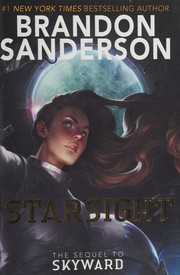
Starsight
Spensa Nightshade goes undercover aboard the Superiority space station Starsight to steal a hyperdrive, and finds a frightened bureaucracy where she expected…
2,568-word summary · 11 min read
Network Effect
Murderbot's contract job turns into a rescue mission when a hijacked research ship and a colony of corrupted colonists appear.
2,256-word summary · 10 min read
Out of the Silent Planet
A Cambridge philologist is kidnapped and taken to Mars, where the natives are civilized and the humans are the dangerous invaders.
2,612-word summary · 12 min read
We Are Legion (We Are Bob)
A dead software engineer wakes up as a self-replicating space probe, clones himself into a squabbling fleet of Bobs, and tries to keep a ruined Earth alive.
2,357-word summary · 10 min read
Nemesis Games
The Rocinante crew scatters across the solar system just as Marco Inaros and the Free Navy bombard Earth. The Expanse reaches its turning point.
2,506-word summary · 11 min read
Children of the Mind
Ender's children split across worlds as Jane faces shutdown and Lusitania flees.
2,532-word summary · 11 min read
Ancillary Justice
A ship mind trapped in one human body hunts the emperor who betrayed her across frozen worlds.
2,595-word summary · 12 min read
Saga, Volume 2
Alana and Marko flee with baby Hazel while exes, princes, and ghosts close the net.
2,028-word summary · 9 min read
Exit Strategy
Murderbot returns to help its humans as corporate hunters close in and old friends risk all.
2,088-word summary · 9 min read
Cibola Burn
Settlers and a company fight over a new world while Holden tries to stop a war.
2,011-word summary · 9 min read
Seveneves
Stephenson 880-page William Morrow epic, May 2015: the Moon shatters, the Cloud Ark fails, seven women restart humanity, and heirs meet survivors on Earth.
2,389-word summary · 11 min read
The Fall of Hyperion
Keats persona Severn dreams pilgrims to the Time Tombs as Hegemony falls and TechnoCore war breaks the farcasters.
2,115-word summary · 9 min read
Rogue Protocol
Murderbot hunts GrayCris evidence on a dead colony world and befriends a trusting pet robot in this third Murderbot Diaries novella.
2,213-word summary · 10 min read
Ringworld
Bored Louis Wu joins alien crew to explore a vast ring habitat around a star.
2,370-word summary · 11 min read
Hell's Heart
Queer whalers hunt god-monsters over Jupiter in this bloody Moby Dick riff.
2,200-word summary · 10 min read
Abaddon's Gate
A dead detective guides Holden, an assassin hunts him, and a pastor walks unarmed into a mutiny as the Ring opens new worlds.
2,672-word summary · 12 min read
All Systems Red
A self aware security robot just wants soap operas, but its survey team keeps walking into corporate murder.
2,119-word summary · 9 min read
Leviathan Wakes
A destroyed ice hauler, a missing heiress, and an alien growth pull a crew and a tired detective toward war across the solar system.
3,653-word summary · 16 min read
2001: A Space Odyssey
A black slab nudges apes to tools, calls Floyd to the Moon, and pulls Bowman past HAL toward Saturn and a strange rebirth.
2,982-word summary · 13 min read

Heretics of Dune
Fifteen centuries after Leto II, the Bene Gesserit raise a new Duncan Idaho while the Honored Matres return and Rakis burns.
2,673-word summary · 12 min read

Archenemies
Nova steals for the Anarchists while Adrian hides his Sentinel identity, and a serum that erases prodigy powers puts them both at risk.
2,485-word summary · 11 min read
Carve the Mark
On a planet divided between conquered and conqueror, the tyrant's sister and a kidnapped oracle's son discover that their gifts make them useful to everyone…
2,340-word summary · 10 min read
Leviathan
In an alternate 1914, a prince on the run and a girl disguised as a soldier meet aboard a living airship.
2,406-word summary · 11 min read
Consider Phlebas
The first Culture novel follows a spy for the opposing side, a man hired to hunt a fugitive through a war between an anarchist post-scarcity utopia and a…
2,350-word summary · 10 min read