
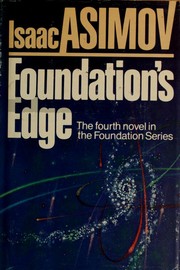
Foundation's Edge
2,335-word summary 10 min read 366 pages in the book
- First published
- 1982
- Publisher
- Doubleday
- Pages
- 366
- ISBN
- 9780385177252
- Series
- Foundation (#4)
Reading options
What's inside (8 sections)
I read the first three Foundation books in a single stretch one winter, the way you eat a bag of oranges, and then I stopped. Not because I was tired of them. Because the trilogy ends in a place that feels finished, and I did not trust a fourth book written thirty years later to leave it alone. Foundation's Edge sat on my shelf for two years. When I finally opened it I found something less like a reunion tour and more like a long argument in a locked room, with a detective story bolted to the front of it.
Asimov published it in 1982, from Doubleday, roughly three decades after the trilogy was collected. It won the 1983 Hugo Award for Best Novel. That fact surprised me less after I finished it than the reason it works: it is not nostalgic. It takes the old machinery apart in front of you.
The man who calls the Plan a sham
The book opens on Terminus, five hundred years into Hari Seldon's thousand-year plan, at a ceremony where Seldon's simulacrum has just confirmed the outcome of the latest crisis. The Mayor, Harla Branno, is at the height of her power. Everyone is pleased. Golan Trevize, a young councilman and former navy officer, stands on the steps of Seldon Hall and tells his friend Munn Li Compor that the whole thing is theater.
His argument is not that the Plan failed. It is that the Plan is working too well. Seldon's predictions have been matching events with a precision that no statistical model should manage, and Trevize takes that as evidence that someone is inside the machine, adjusting it. He says this loudly, in the wrong room, and Branno has him arrested for treason.
That night she comes to his house alone. This is the best scene in the first hundred pages. Branno is not a fool and she is not a villain. She also suspects the Second Foundation survived, and she cannot say so publicly without making herself look weak. So she turns Trevize into a probe: he will leave Terminus in a new ship, officially to search for Earth, and the Second Foundation will notice him and follow. She calls him a lightning rod. He has no real choice, and both of them know it.
The cover story requires a historian. Janov Pelorat is a professor who has spent his life collecting myths about the planet where humanity began. He has never left Terminus. He is thrilled to be going. Trevize is furious to be saddled with him.
A historian, a ship, and a cover story
The ship is called the Far Star, and it is the best toy in the book. It is small, gravitic, and almost entirely computer-run. Trevize puts his hands on a desk and the machine reads his intentions through his palms, opening the ship's senses to him until he can feel the hull and the space around it. Asimov spends pages on this. If you like engineering-as-magic, you will not mind.
Pelorat's quest is the engine of the plot. Earth, he explains, should have a day of about twenty-four standard hours, a year of about three hundred sixty-five days, and a large moon. No catalogued planet matches. Plenty of worlds claim to be the origin world, and every claim falls apart under inspection. Then Pelorat mentions a listing in the Sayshell Sector for a planet called Gaia, a name that in some ancient language meant Earth. The entry has a question mark next to it. That is enough for Trevize. They turn the ship away from Trantor, where Branno wanted them to go, and head for Sayshell instead.
Compor follows in a second ship. Trevize knows he is being trailed. What he does not know, and what the reader learns in the Trantor chapters, is that Compor is an Observer for the Second Foundation, recruited as a child and reporting on both sides.
The structure is worth noticing. Asimov runs three strands: Trevize and Pelorat bumbling outward, Gendibal and the Speakers arguing inward, and Branno's fleet moving behind both of them. The reader is always a little ahead of every character, which is why the book feels less like a mystery than like watching three people walk toward the same trap from different directions. That is a pleasure, but it also drains suspense. By the time Trevize reaches Gaia I was fairly sure what he would find. The fun was in watching him catch up.
This middle section has a rhythm that will either carry you or lose you. Trevize and Pelorat talk. Then they talk more. Pelorat is delighted by everything and Trevize is sardonic about everything, and Asimov uses the pair to explain the galaxy to a man who has never seen it. Some of it is charming. Some of it is a lecture with dialogue tags.
The other Foundation has the same problem
On Trantor, the Second Foundation is having its own crisis. Stor Gendibal is the youngest Speaker at the table, and he has noticed the same thing Trevize has, from the opposite direction. The Plan is too clean. Something is nudging it, and that something is more powerful than the Second Foundation. The First Speaker, Quindor Shandess, gives the unknown force a name: the Anti-Mules. It has the Mule's kind of power but is using it to preserve the Plan instead of wrecking it.
Gendibal is arrogant, brilliant, and easy to dislike. His rival at the table, Delora Delarmi, wants him gone, and most of the other Speakers think he is a nuisance. What saves his argument is Sura Novi, a farmwoman from the Hamish communities that work Trantor's soil. Gendibal examines her mind and finds a small adjustment that the Second Foundation could not have made. Novi is calm, polite, and apparently simple. She agrees to travel with him as a kind of living alarm system. He talks down to her for hundreds of pages.
The table politics are the driest part of the novel and also the most believable. Gendibal has the math but not the votes. He is young, he has no patience for the older Speakers, and he keeps winning arguments in a way that makes enemies. Delarmi does not beat him by refuting him. She lets him prove his case, then maneuvers him into taking Novi along on the dangerous mission, and Shandess names him successor before he leaves. It is a small, nasty piece of institutional behavior, and it lands better than most of the space battles.
The Trantor chapters also contain the book's coldest idea. Gendibal goes looking for Earth in the Galactic Library and finds nothing. Not a myth, not a footnote, not a cross-reference. Somebody has removed every trace of the human origin world from the largest archive in the galaxy, and it was not the Second Foundation. That empty shelf is the hook the novel hangs its ending on.
Sayshell, and a word that means Earth
Sayshell is a small, proud union that has stayed independent mostly because the Foundation has not decided to swallow it yet. Trevize and Pelorat pass through customs, where the official is startled that their ship is waved through so quickly, and then land in a city observing a holiday called the Day of Meditation. Everyone is indoors. The streets are empty. Trevize treats it as local color. Later he learns the day was staged, or at least shaped, for his benefit.
Compor turns up again and tries to warn Trevize off. He says Earth is dead, radioactive, gone, and suggests a different planet entirely. Trevize listens, thanks him, and concludes that Compor is a Second Foundation agent. The scene is a nice piece of spycraft in a book that otherwise prefers seminars.
The real prize is Professor Quintesetz, a Sayshellian historian who knows more about Gaia than he wants to admit. He talks around the subject. His wife leaves the room when the name comes up. He finally gives Trevize the coordinates: Gaia circles a dim star at the center of a cluster called the Five Sisters. He also says that expeditions have gone there and not come back, and that the Mule, during the negotiations over Sayshell's neutrality, said he would not approach Gaia again. The word "again" does a lot of work.
Gaia
Gaia is not a planet in the ordinary sense. It is a single organism with a single mind, and everything on it participates: the people, the animals, the trees, the soil, the rocks. Individuals still exist. They can think and want and argue. But they are also cells in something larger, and they know it.
The welcoming committee is Bliss, a young woman who boards the Far Star, steps out of her suit in translucent clothing, and announces that men have died for this body. I winced. I winced again a few pages later. Bliss is the weakest thing in the novel, and I will come back to her.
The exposition is handled by an elder called Dom, whose full name runs to a couple hundred syllables and who speaks for the oldest and largest share of the planetary mind. Through him Trevize learns that Gaia has been quietly keeping the Seldon Plan on course. The Mule was born on Gaia, a freak, an aberration that the planetary mind could not absorb. Gaia has been cleaning up after him ever since. It also has a plan of its own: Galaxia, the expansion of its group consciousness until the whole galaxy is one living thing. It will take thousands of years. It cannot force the choice, because its inheritance from the robots that founded it includes something like the Three Laws, generalized to protect life rather than individual humans. So it needs an outsider to decide.
That is where the three-way standoff comes in. Branno arrives with a First Foundation warship carrying a mentalic shield. Gendibal arrives in pursuit. Novi drops her farmwoman act and reveals herself as a Gaian component. The three of them lock into a stalemate, and Trevize, sitting in the Far Star with the computer's decision interface in front of him, is told he can break it.
He chooses Gaia.
Not because he is sure. He chooses Gaia because it is the only option that can be undone. A First Foundation empire would be built fast and would be hard to stop. A Second Foundation empire would be quieter and just as permanent. Galaxia is slow. If he is wrong, there may be time to change course. That is the most human moment in the book, and Asimov does not ruin it with a speech.
Then Gaia adjusts Branno and Gendibal so that each believes she or he won something small, and sends them home. Trevize is left with a question he cannot answer. Who erased Earth from the Library? Gaia says it did not. So he turns the ship toward the origin world, and the book ends on the edge of the next one.
What drags, and who should skip it
The talky middle is real. Asimov loves a two-hander in which one character resists an idea for eight pages and then concedes. There are at least four of those here, and two of them are about the same point. The Trantor sections are worse than the Terminus ones because the stakes are abstract and the characters are mostly voices at a table. If you read for action, this book will feel like a committee meeting with a spaceship parked outside.
The women are a problem. Branno is the exception, and she is genuinely formidable: sixty-two, patient, willing to use a man's life as a measuring instrument. But Bliss is a male fantasy with a planet attached, and Novi spends most of the novel being patronized by Gendibal before her reveal turns her into a plot device. Trevize notices women's bodies constantly. It is not a small flaw, and it is not fixable by saying the book is from 1982.
The ending is also a little too clean for what comes before it. Gaia solves the problem by adjusting two proud, dangerous people until they believe they won a minor victory and go home. It is clever, and it is consistent with what Gaia is, but it lets Asimov avoid the harder scene where Branno or Gendibal has to lose in public. The book's central idea is that a single intuition can decide the fate of a galaxy, and it never quite earns that idea with evidence. Trevize is right because the plot says so. I went along with it, but I noticed.
Compared with the trilogy, this is a different kind of book. The original stories jump across decades and dispose of characters in a paragraph. They are lean and a little cold. Foundation's Edge is a single continuous narrative with a small cast, and it wants you to sit with its people. That is a real gain in intimacy and a real loss in momentum. It also retcons. Robots, Gaia, the Mule's origin, the Eternals: Asimov is stitching his separate universes together here, and some readers will feel the seams.
If you have not read the trilogy, do not start here. If you want the Foundation books for their clean puzzle-box plots, this one will test your patience. If you like science fiction where the big idea is an argument about how to govern a galaxy, and you can tolerate a lot of dialogue, it is worth the time.
What stayed with me is not the choice itself but the reason for it. Trevize picks the future he can take back. I have thought about that more than I expected to. Most stories about saving the galaxy give you a hero who knows. This one gives you a man who guesses, admits it, and keeps looking for the evidence he missed.
FAQ
Do I need to read the original Foundation trilogy first?
Yes. Foundation's Edge is the fourth book and assumes you know the Seldon Plan, the First Foundation on Terminus and the Second Foundation on Trantor. It also gives away the trilogy's ending.
Did Foundation's Edge win any awards?
It won the 1983 Hugo Award for Best Novel and the 1983 Locus Award for Best Science Fiction Novel, and was nominated for the 1982 Nebula Award. It was Asimov's first novel to reach the New York Times bestseller list.
Does Foundation's Edge end the Foundation series?
No. It resolves the standoff among the First Foundation, the Second Foundation and Gaia, but leaves Trevize searching for Earth, which continues in Foundation and Earth (1986).
Similar books
More from Foundation first, then related titles.
Foundation
Seldon predicts the Empire will fall and seeds Terminus to cut the dark age to a thousand years.
2,706-word summary · 12 min read
Foundation and Empire
The Foundation faces a dying Empire and a mutant conqueror called the Mule who can bend minds.
2,026-word summary · 9 min read
Second Foundation
The Mule hunts the hidden Second Foundation, then a girl carries the secret that shapes the Plan.
2,060-word summary · 9 min read
Prelude to Foundation
A young Hari Seldon arrives on Trantor with a theory he cannot yet prove, and a hunt through the planet-city forces him to turn psychohistory into a real…
2,013-word summary · 9 min read
God Emperor of Dune
Worm god Leto II rules 3500 years to force humanity free through his Golden Path.
2,006-word summary · 9 min read

Heretics of Dune
Fifteen centuries after Leto II, the Bene Gesserit raise a new Duncan Idaho while the Honored Matres return and Rakis burns.
2,673-word summary · 12 min read
Consider Phlebas
The first Culture novel follows a spy for the opposing side, a man hired to hunt a fugitive through a war between an anarchist post-scarcity utopia and a…
2,350-word summary · 10 min read
Nemesis Games
The Rocinante crew scatters across the solar system just as Marco Inaros and the Free Navy bombard Earth. The Expanse reaches its turning point.
2,506-word summary · 11 min read
The Fall of Hyperion
Keats persona Severn dreams pilgrims to the Time Tombs as Hegemony falls and TechnoCore war breaks the farcasters.
2,115-word summary · 9 min read
The Dispossessed: An Ambiguous Utopia
Physicist Shevek leaves anarchist Anarres for capitalist Urras to share time theory, finding walls both places.
2,288-word summary · 10 min read
Abaddon's Gate
A dead detective guides Holden, an assassin hunts him, and a pastor walks unarmed into a mutiny as the Ring opens new worlds.
2,672-word summary · 12 min read
Hyperion
Seven pilgrims cross Hyperion telling tales of faith, war, and time while the Shrike waits at the Tombs.
1,996-word summary · 9 min read
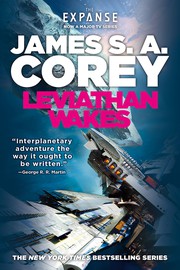
Leviathan Wakes
A destroyed ice hauler, a missing heiress, and an alien growth pull a crew and a tired detective toward war across the solar system.
3,653-word summary · 16 min read

Fathers and Sons
Arkady brings the nihilist Bazarov home to his father's estate, and a generational argument turns into love, a duel, and an early death.
2,192-word summary · 10 min read

Carve the Mark
On a planet divided between conquered and conqueror, the tyrant's sister and a kidnapped oracle's son discover that their gifts make them useful to everyone…
2,340-word summary · 10 min read
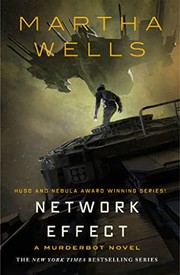
Network Effect
Murderbot's contract job turns into a rescue mission when a hijacked research ship and a colony of corrupted colonists appear.
2,256-word summary · 10 min read
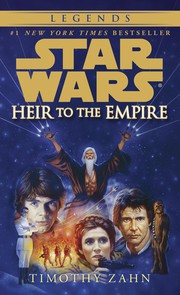
Heir to the Empire
Grand Admiral Thrawn returns from the Unknown Regions and outmaneuvers the New Republic while Luke, Leia, Han and smuggler Talon Karrde race him toward…
2,323-word summary · 10 min read
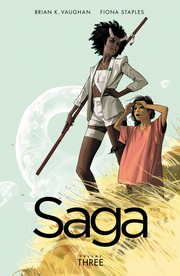
Saga, Volume 3
Marko, Alana, and Hazel hide on the planet Quietus with the reclusive author who inspired their romance, while assassins and a prince close in.
1,989-word summary · 9 min read
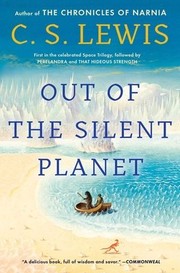
Out of the Silent Planet
A Cambridge philologist is kidnapped and taken to Mars, where the natives are civilized and the humans are the dangerous invaders.
2,612-word summary · 12 min read
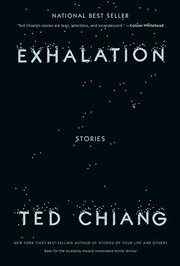
Exhalation
Ted Chiang's second collection contains nine stories about time, memory, free will, and artificial minds, told with clarity and moral seriousness.
2,075-word summary · 9 min read
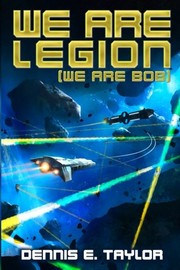
We Are Legion (We Are Bob)
A dead software engineer wakes up as a self-replicating space probe, clones himself into a squabbling fleet of Bobs, and tries to keep a ruined Earth alive.
2,357-word summary · 10 min read

Ubik
A psychic agency crew dies in a blast and reality decays unless a spray called Ubik saves them.
2,674-word summary · 12 min read

Stories of Your Life and Others
Eight stories about language, time and choice, including the tale behind Arrival.
2,402-word summary · 11 min read
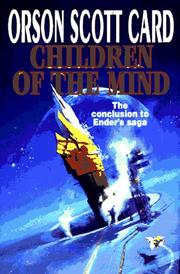
Children of the Mind
Ender's children split across worlds as Jane faces shutdown and Lusitania flees.
2,532-word summary · 11 min read
Ancillary Justice
A ship mind trapped in one human body hunts the emperor who betrayed her across frozen worlds.
2,595-word summary · 12 min read

A Canticle for Leibowitz
After nuclear war, monks save books across centuries while the world rebuilds and falls again.
2,381-word summary · 11 min read

Solaris
Kelvin reaches a silent station above Solaris and finds grief made solid when the ocean returns his dead wife Rheya, testing memory, science, and the limits of…
2,548-word summary · 11 min read
Iron Gold
Ten years after victory, Darrow and new rebels face peace that feels like another war.
2,158-word summary · 10 min read
Cibola Burn
Settlers and a company fight over a new world while Holden tries to stop a war.
2,011-word summary · 9 min read
The Moon Is a Harsh Mistress
In 2076 Lunar colonists led by Mannie, Wyoh, Prof, and computer Mike revolt against Earth with rocks and rhetoric.
2,003-word summary · 9 min read