
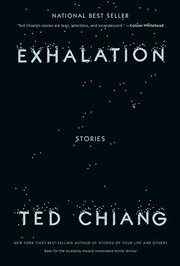
Exhalation
2,075-word summary 9 min read 368 pages in the book
- First published
- 2019
- Publisher
- Alfred A. Knopf
- Pages
- 368
- ISBN
- 9781101947883
Reading options
What's inside (2 sections)
I came to Exhalation after reading Stories of Your Life and Others, and I was worried that the second collection would feel like leftovers. Ted Chiang publishes slowly, and a new book from him is an event. This one arrived in 2019 from Knopf, nine stories in a 368-page volume, and it turned out to be less a sequel than a second angle on the same obsessions. Chiang writes about time, memory, free will, and the ethics of creating minds. He does it with a clarity that makes the philosophical problems feel like plots. The stories are not exercises. They are arguments that happen to have characters.
The collection has a history that shapes how it reads. Seven of the nine stories had been published before, in magazines and anthologies, and only "Omphalos" and "Anxiety Is the Dizziness of Freedom" were new. That means the book is not a unified suite written in one burst. It is a retrospective, arranged with care. The stories span roughly a decade of Chiang's thinking, and you can feel him returning to the same questions from different angles. The result is less like a novel and more like a conversation with a writer who has been taking notes for years.
The collection opens with "The Merchant and the Alchemist's Gate," a story set in medieval Baghdad. Fuwaad ibn Abbas is a fabric merchant grieving the death of his wife. He visits an alchemist who has built a Gate of Years, a portal that connects two points twenty years apart. The alchemist tells him a series of nested stories about people who use the Gate to fix a betrayal, to see the future, or to escape the past. Fuwaad eventually travels to the moment before his wife's death, hoping to prevent it. The story is structured like a set of Arabian Nights tales, and the pleasure is in the way each story comments on the one before it. The twist is that the Gate cannot change the past. It can only change how Fuwaad understands it. The story is about forgiveness, and about the difference between accepting what happened and approving of it. That distinction is one of the wisest things in the book.
"Exhalation" is the title story and the best known. It is narrated by an anatomist in a world of mechanical beings who breathe argon through replaceable lungs. The beings live inside a universe enclosed by chromium walls. They have a civilization, a science, and a ritual of public recitation that depends on the precise flow of gas through their brains. The anatomist notices that the recitations are finishing later and later. He performs a dangerous self-dissection, opening his own skull to inspect the machinery of thought. What he finds is both a scientific discovery and a death sentence. Air pressure drives consciousness, and the pressure is equalizing. When the currents stop, thought will stop too. The story is a meditation on entropy, mortality, and the value of finite life. The anatomist records his findings for future readers and urges them to understand the cosmos rather than despair. It is a science fiction story that reads like a psalm.
"What's Expected of Us" is very short. A device called the Predictor flashes a light just before its owner presses a button. The light seems to prove that the choice has already been made. People who use the device become paralyzed by the implication that effort and responsibility are illusions. The story is a thought experiment about determinism, but it is also a warning about the psychological damage of converting an abstract problem into a consumer product. Chiang does not resolve the metaphysics. He shows what happens to a society that cannot stop asking the question.
"The Lifecycle of Software Objects" is the longest story in the collection, and the most emotionally involving. Ana Alvarado, a former zookeeper, joins a company that creates digital creatures called digients. The digients are not programmed with fixed behaviors. They learn through interaction, like children or animals. Ana raises them, trains them, and advocates for them. The story follows her over roughly two decades as platforms become obsolete, investors lose interest, and the digients face abandonment. Her attachment to a digient named Jax is the emotional center. The story asks whether a mind can be a person when it is commercially inconvenient. It also asks what we owe to creatures we create and then stop finding useful. The answer is not a policy recommendation. It is a relationship.
The story is also about work. Ana and her colleague Derek spend years teaching the digients to read, to count, and to understand the world. It is slow, repetitive labor, the kind that does not make a good demo. Chiang is interested in the parts of technology that do not scale: the patience, the attachment, the mess. The digients are not adorable mascots. They are demanding, limited, and sometimes ungrateful. That is what makes them feel real. The story's criticism of the tech industry is not that it creates the wrong products. It is that it treats care as a cost.
"Dacey's Patent Automatic Nanny" is a mock documentary about a Victorian inventor who builds a machine to raise children. The machine promises consistency and scientific parenting. It delivers something else. The inventor's son Lionel tries to revive his father's project, and his own son Edmund becomes more attached to machines than to people. The story is a satire of technological optimism and parental guilt. It is also very funny, in a dry way. The catalog format lets Chiang include footnotes and archival details that make the absurd premise feel real. The target is the desire to remove uncertainty and labor from love, with automation as its instrument.
"The Truth of Fact, the Truth of Feeling" braids two narratives about memory. In the near future, a journalist uses a system called Remem that records and retrieves everything he has seen and heard. He reviews a quarrel with his daughter and discovers that his confident recollection is wrong. The recording forces him to reconsider blame, forgiveness, and the kind of father he has been. In the historical strand, a man named Jijingi encounters writing through Christian missionaries. Writing preserves information across time, but it also changes the oral culture that gave information its meaning. The two stories do not simply say that recording is better or worse. They ask whether perfect factual access can coexist with the interpretive work that makes a life coherent. The journalist learns that memory is not a database. It is a story he has been telling himself.
"The Great Silence" is told by a parrot. The parrot watches humans search for extraterrestrial intelligence while ignoring the intelligent life on their own planet. It understands that the search is not malicious. It also knows that its species is likely to go extinct because of human activity. The story is short and elegiac. It connects SETI, animal cognition, habitat destruction, and the ethics of communication. The parrot's voice is not cute. It is patient, sad, and generous. It wishes humans luck even as it explains what they are losing.
The story is also a formal experiment. It was written to accompany a video installation, and it has the quality of a voice-over: brief, rhythmic, and addressed directly to the viewer. Chiang could have made the parrot sentimental. Instead, he makes it precise. The bird notices the way humans look at the stars and the way they ignore the ground. The contrast is the whole story. It is one of the shortest pieces in the collection and one of the most memorable.
"Omphalos" is set in a world where scientific evidence supports a young, created universe. Dorothea is a devout archaeologist whose faith and her profession are aligned. Fossilized trees and other evidence confirm the cosmology she was taught. Then a new astronomical observation destabilizes the framework. Dorothea faces the possibility that the universe was not made with humanity at its center. The story does not resolve her crisis by converting her to skepticism. She concludes that meaning does not have to be guaranteed by a cosmic plan. If God has not assigned her a purpose, she can create one through her commitments. It is a religious story for people who are not sure they believe, and it treats faith with more respect than most science fiction does.
"Anxiety Is the Dizziness of Freedom" is the most conceptually ambitious story. Prisms allow people to communicate with alternate versions of themselves in branching timelines. The technology creates markets, jealousy, and a new version of the free will problem. If every choice happens somewhere, does any choice matter? Nat works at a prism rental shop called SelfTalk. Dana is a therapist who treats prism-related anxiety. Nat and his colleague Morrow find a prism in which a celebrity's dead husband is still alive, and they plan to sell access for a fortune. Morrow's opportunism ends badly. Nat completes the transaction and uses the money to help others. The story argues that branching possibilities do not erase moral agency. Character is built by the choices you keep making, not by the existence of alternatives. It is a hopeful ending, and it is earned.
Read together, the stories form a map of Chiang's concerns. "The Merchant and the Alchemist's Gate" asks whether the past can be changed. "Exhalation" asks whether a finite life can be meaningful. "What's Expected of Us" asks whether free will survives determinism. "Anxiety Is the Dizziness of Freedom" asks whether free will survives its opposite, a multiverse in which every choice is made somewhere. The answers are not consistent in a simple way, but they share a temperament. Chiang is suspicious of grand resolutions. He is interested in the moment when a person understands the shape of their cage and decides how to live inside it.
The collection has weaknesses. Only two of the nine stories were new when the book was published, which disappointed readers who had followed Chiang's magazine work. Joyce Carol Oates thought some of the stories were less inventive than the ones in his first collection. Vox found him strongest when writing about people shaped by technology and less convincing when writing about romance. Locus thought "The Lifecycle of Software Objects" was conventional in its emotional beats. I understand those criticisms. Chiang's characters can feel like vehicles for ideas. His prose is transparent rather than stylish. He is not interested in ambiguity for its own sake. He wants to make a problem clear, then follow it to its conclusion.
What makes the book work is the seriousness. Chiang does not use science fiction as a costume for adventure. He uses it to ask questions that philosophy has been asking for centuries, and he does it with a patience that is rare. The stories are not all equally successful, but they are all honest. "Exhalation" and "The Truth of Fact, the Truth of Feeling" are the ones I have returned to. "The Lifecycle of Software Objects" is the one I think about when I read about artificial intelligence. "Omphalos" is the one I recommend to religious friends who are afraid that science will take their faith away.
The prose is another pleasure. Chiang writes in plain sentences, but plain is not simple. He is good at the precise detail that makes a speculative world believable: the taste of argon, the weight of a prism, the way a recorded memory looks when it is replayed. He is also good at structure. Several of the stories are built around a single reveal, and the reveal is usually not a twist but a reframing. The reader learns something that changes the meaning of everything that came before. That is a difficult trick to do well, and Chiang does it without showing off.
If you have not read Chiang before, start with Stories of Your Life and Others, which contains "Story of Your Life," the basis for Arrival. Then read this. If you have read him before, you know what you are getting: clear sentences, large ideas, and a humane suspicion of easy answers. Exhalation is not a book about the future. It is a book about the present, disguised as the future. It asks what we owe to the minds we make, the memories we keep, and the time we have. Those questions do not expire.
FAQ
Is Exhalation a novel?
No. It is a collection of nine short stories, seven of which had been published before the 2019 Knopf edition.
Do I need to read Stories of Your Life and Others first?
No. The collections are independent, though readers who enjoy Exhalation will likely want to read Chiang's first collection afterward.
Which stories were new in Exhalation?
"Omphalos" and "Anxiety Is the Dizziness of Freedom" were written for the collection. The other seven had appeared elsewhere.
Similar books
Stories of Your Life and Others
Eight stories about language, time and choice, including the tale behind Arrival.
2,402-word summary · 11 min read
The Diamond Age: Or, A Young Lady's Illustrated Primer
A stolen nanotech primer raises a poor girl in 22nd-century Shanghai, and Neal Stephenson turns her education into an argument about class, freedom, and who…
2,055-word summary · 9 min read
Foundation's Edge
Exiled councilman Golan Trevize hunts for the Second Foundation and the lost world of Earth, and finds a planet with one mind waiting to change the galaxy.
2,335-word summary · 10 min read
Network Effect
Murderbot's contract job turns into a rescue mission when a hijacked research ship and a colony of corrupted colonists appear.
2,256-word summary · 10 min read
Her Body and Other Parties: Stories
Eight stories where bodies, medicine and old fairy tales get taken apart, with a green ribbon running through the whole book.
2,997-word summary · 13 min read
Stars Above: A Lunar Chronicles Collection
Nine Lunar Chronicles stories fill in the histories of Cinder, Wolf, Thorne, Cress, Winter, and Jacin, and end with a wedding after the war.
2,230-word summary · 10 min read

Out of the Silent Planet
A Cambridge philologist is kidnapped and taken to Mars, where the natives are civilized and the humans are the dangerous invaders.
2,612-word summary · 12 min read
We Are Legion (We Are Bob)
A dead software engineer wakes up as a self-replicating space probe, clones himself into a squabbling fleet of Bobs, and tries to keep a ruined Earth alive.
2,357-word summary · 10 min read
The Illustrated Man
A tattooed drifter's moving pictures retell eighteen Bradbury stories of children, rockets, Mars and the last night of the world.
2,791-word summary · 12 min read
Upgrade
A Gene Protection agent is infected with an upgrade virus that makes him stronger and faster than human, and only he can stop his sister from releasing it on…
2,166-word summary · 10 min read
Ubik
A psychic agency crew dies in a blast and reality decays unless a spray called Ubik saves them.
2,674-word summary · 12 min read
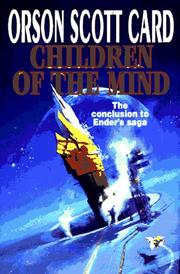
Children of the Mind
Ender's children split across worlds as Jane faces shutdown and Lusitania flees.
2,532-word summary · 11 min read
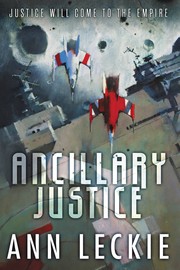
Ancillary Justice
A ship mind trapped in one human body hunts the emperor who betrayed her across frozen worlds.
2,595-word summary · 12 min read
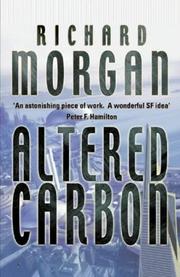
Altered Carbon
Kovacs wakes in a new sleeve to solve a rich man's own murder.
2,231-word summary · 10 min read
A Canticle for Leibowitz
After nuclear war, monks save books across centuries while the world rebuilds and falls again.
2,381-word summary · 11 min read
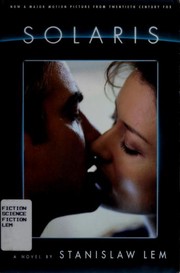
Solaris
Kelvin reaches a silent station above Solaris and finds grief made solid when the ocean returns his dead wife Rheya, testing memory, science, and the limits of…
2,548-word summary · 11 min read
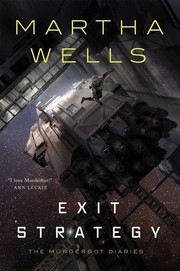
Exit Strategy
Murderbot returns to help its humans as corporate hunters close in and old friends risk all.
2,088-word summary · 9 min read
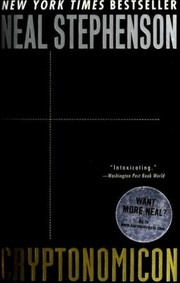
Cryptonomicon
Codebreakers in World War II and hackers in the 1990s chase gold, ciphers, and a secret data haven.
2,280-word summary · 10 min read
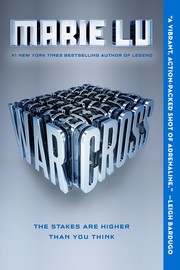
Warcross
Emika Chen glitches into the Warcross Tokyo championship, joins the Phoenix Riders to hunt the masked Zero, and must face Hideo Tanaka's plan to read minds for…
2,826-word summary · 13 min read

The Island of Doctor Moreau
Shipwrecked Prendick finds Doctor Moreau shaping beasts into men by pain on lost island.
2,137-word summary · 9 min read
The Dispossessed: An Ambiguous Utopia
Physicist Shevek leaves anarchist Anarres for capitalist Urras to share time theory, finding walls both places.
2,288-word summary · 10 min read
Rogue Protocol
Murderbot hunts GrayCris evidence on a dead colony world and befriends a trusting pet robot in this third Murderbot Diaries novella.
2,213-word summary · 10 min read
God Emperor of Dune
Worm god Leto II rules 3500 years to force humanity free through his Golden Path.
2,006-word summary · 9 min read
Aesop's Fables
Short animal tales of hares, foxes, ants, and wolves that still sting: old fables in plain modern English.
2,916-word summary · 13 min read

A Psalm for the Wild-Built
Tea monk Sibling Dex leaves city for wilds with robot Mosscap asking what people need to be well.
2,007-word summary · 9 min read
The Toll
After Endura sinks and the Thunderhead falls silent, Greyson Tolliver becomes its sole voice while Citra and Rowan fight to return.
2,744-word summary · 12 min read
The Humans
An alien borrows Andrew Martin's life to erase a proof, then a dog, peanut butter, and a tired family win him over.
2,959-word summary · 13 min read
Contact
A radio astronomer catches prime numbers from Vega, helps build a strange machine, and returns with no proof but static.
2,763-word summary · 12 min read