
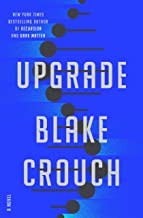
Upgrade
2,166-word summary 10 min read 352 pages in the book
- First published
- 2022
- Publisher
- Ballantine Books
- Pages
- 352
- ISBN
- 9780593157534
Reading options
What's inside (10 sections)
Blake Crouch has spent three novels teaching readers to distrust the technology that promises to fix us, and Upgrade is the one where he finally lets the fix almost work. I read it the week it came out, after Dark Matter and Recursion had turned me into someone who buys his books on day one, and what struck me first was how personal this one feels. The action is there, the countdown is there, but underneath is a quieter question about whether empathy is a biological inheritance or a choice.
The novel opens with an arrest. Logan Ramsay is a field agent for the Gene Protection Agency, a government body that hunts illegal gene editing in a world still grieving the Great Starvation, a famine that killed hundreds of millions after edited crops collapsed. Logan and his partner Nadine find Henrik Soren at a wine bar in a Denver airport terminal and threaten him with extradition to China to get a lab address. Logan is good at the job for reasons he hates. His mother, Miriam Ramsay, was the brilliant geneticist whose work triggered the famine, and he has spent years paying for her name.
The backstory arrives in fragments between raids. Logan served prison time for his peripheral role in his mother's work, and the years since have been an exercise in atonement that has cost him everything soft in his life. His wife Beth and daughter Ava live apart from the worst of his job, and the marriage has the careful distance of two people who have decided to keep going and stopped expecting it to feel good. The world around him has hardened too. Gene editing is a crime enforced with raids and informants, the way drug policy once worked, and the GPA's methods have all the moral clarity of a war on a problem that will not stay underground. Miriam's name follows Logan into every room. He is the son of the woman who starved the planet, and the agency that hunts her imitators keeps him employed as both a weapon and a penance.
The lab and the symptoms
The raid goes wrong. An explosion in the dark gene lab injures Logan and exposes him to something no one has catalogued. He wakes up feeling like he has the flu, and then the flu becomes something else. He reads a novel in an hour and remembers all of it. He notices patterns in traffic and in faces. He beats his daughter Ava at chess without trying, and Ava is good. He sleeps two hours and wakes up ready. His bones are denser. His body is being rewritten from the inside by the same kind of science his agency exists to stop.
The GPA does what agencies do. They quarantine him, run tests they do not share, and tell his wife Beth and daughter Ava that he died in the line of duty. Logan spends weeks in a holding cell while his family grieves a death that never happened, and that stretch is where Crouch shows how much of this story is about grief rather than genes. Everything that follows is powered by a man who has already lost his family once and is not going to lose them again.
Kara
His sister Kara breaks him out. She is also upgraded, engineered years earlier by their mother, who faked her own death and spent her remaining years preparing a viral gene drive meant to lift the whole species. Miriam believed extinction was coming, from climate, from war, from something, and she decided that the only way to save humanity was to upgrade it whether it liked it or not. Kara inherited the mission. She is a true believer with a plan and a body count tolerance that Logan cannot match. When she talks about the deaths the upgrade will cause, the numbers are cold and specific, and she has done the math and found it acceptable.
What I liked most about Kara as an antagonist is that Crouch lets her make sense. Her logic is the logic of every utilitarian argument about the greater good, and Logan cannot beat it with a better spreadsheet. He has to beat it with something his upgraded mind did not optimize for.
Their argument happens twice, and the second time is worse. Kara breaks Logan out of GPA custody, tells him about their mother's last years, and offers him a place in the plan. When he refuses, she does not argue harder. She tries to kill him, because in her arithmetic a brother who will not help is a variable to eliminate. He escapes, and a year passes while he lives under a new identity and grows further from the person he used to be. When they meet again at their mother's former hideout in Colorado, Kara has taken a second upgrade and is no longer entirely human in the way he recognizes, and she overpowers him without much effort. He survives that meeting the way he survives most of the book, by being a problem she cannot afford to finish, and the chase leads to the Midwest and finally to New York.
What the upgrade does
The middle of the book is the best part, and it is also the part reviewers complained about, so your mileage will vary. Logan, now the most dangerous man in America and on the run, has to live with being a different species. He notices he has stopped noticing ordinary life the way he used to. His emotional range narrows while his effectiveness widens. His mother's journal, recovered from her hideout, explains the design and the disappointment. Miriam wanted a better human, and what she built first was a more efficient one.
The outbreak sequence in Glasgow, Montana is the set piece that stuck with me. Logan investigates a disease spreading through a small town and realizes it is Kara's upgrade, and that the upgrade is not uniform. Some people change. Some people sicken and die as their mutated biology turns on itself. The scene gives the book its stakes without any speeches. Kara has weaponized evolution, and evolution does not care who it kills on the way to the next version.
The choice
To stop her, Logan does the thing he has spent the whole book refusing to do. He takes the upgrade a second time, deliberately, in a way even his mother never designed, to become something that can stand against his sister. The final act moves through a manhunt and a turncoat, his partner Nadine, who decides the future belongs to the upgraded and tries to sell him to it. In New York, Logan finds Kara at the center of a plan to deliver the gene drive worldwide, and he kills her. It is not a triumph. She is his sister, and she believed she was saving everyone, and he killed her with the enhancements she helped give him.
Then comes the ending I keep thinking about. Instead of releasing his own version of the upgrade as a weapon or a cure, Logan builds it around empathy, the trait the efficient version had squeezed out. He does not fix humanity. He offers it an option and then removes himself from the board, letting the world decide. He goes into exile and leaves behind a letter for his family. The man who could have ruled the species chooses to be a footnote in it, which is either the most mature ending Crouch has written or a sentimental one, and I have gone back and forth.
The science underneath
Crouch did his homework in public. In interviews around the book's release he pointed at CRISPR and said the tools to rewrite what being human means are a few breakthroughs away, and the novel takes that sentence literally. The upgrade virus is not magic. It is a gene drive, a technology that exists in the real world, deployed at a scale that only a convinced utopian like Miriam would attempt. The Great Starvation is a classic precautionary tale about a solution that got out of its laboratory, and the Gene Protection Agency is the kind of enforcement body governments build after a catastrophe, half police force and half public penance.
What the book gets right is the banality of the slippery slope. Nobody in Upgrade decides to destroy the species. Miriam wants to save it. Kara wants to finish her mother's work. The GPA wants to prevent the next famine. Logan wants to protect his family. Every catastrophe in the novel is built from reasonable people choosing a slightly wrong thing for the right reason, which is why the book works better as a caution than as a prophecy. It does not claim this future is coming next year. It claims that if it comes, it will come this way, in increments, defended by people who mean well. The one soft spot in the science is the speed of it, because real biology does not upgrade a man in weeks, but Crouch flags his own compression by keeping Logan's changes gradual and giving the reader time to notice each one.
What works and what strains
What works is propulsion and ideas. Crouch writes action like a screenwriter and explains genetics in clean sentences that never feel like homework. The book asks a real question, whether intelligence without empathy scales to wisdom, and it asks it with a man rather than a lecture. The first hundred pages, from the airport arrest to the lab explosion to the impossible chess game, are as good as anything in the Crouch canon.
What strains is character. Beth and Ava exist as loss objects, and the middle stretch spends a lot of time inside Logan's shrinking emotions without giving the people around him interiors of their own. Some of the exposition about the Great Starvation is repetitive, and an NPR reviewer called the book pedantic in places, which is fair in the chapters where Crouch stops to explain the science for the third time. Several readers found this less surprising than Dark Matter and less ambitious in structure than Recursion. It is a straighter, more conventional thriller than either, and I think that is deliberate, but I also think it is why it went down smooth and left a smaller mark.
The reception
Publishers Weekly gave it a starred review and called it the best yet from Crouch. The New York Times praised it as sleek and propulsive with unexpectedly beautiful passages, while noting that Logan as a son and father is more interesting than Logan as an augmented warrior, and I agree with that split. Kirkus recommended it even for reluctant science fiction readers and singled out its surprisingly emotional ending. Locus called it an action thriller with the soul of a philosophical narrative, a sentence that captures the book's two halves better than anything I could write. The reviewer at NPR landed on bloody, grim and occasionally pedantic, but still fun, and I have not found a more honest one line verdict anywhere. It debuted at number six on the Times hardcover fiction list in its first week, made TIME's hundred must-read books of 2022, and Steven Spielberg's Amblin Partners bought the film rights before publication after a competitive auction, with Crouch writing the screenplay. He has said in interviews that he wants to direct eventually, and this is the book where you can see why the material suits him: it is cinematic on every page, and its best scenes are almost storyboarded already, from the airport wine bar to the dark gene lab to a man standing in a Montana street watching his neighbors cough.
The criticisms that stuck were about the people rather than the ideas. A common complaint in reader reviews was that Beth and Ava never get to be characters, only stakes, and that Kara's believers are sketched as a cult rather than a movement. Others found the middle's biology lectures slowing the pace exactly when the chase should tighten. For my part, the book works best if you accept it as a rocket: it burns hot, it is over quickly, and you should not poke at the fuel lines while it flies.
Who it is for
Read it if you liked Dark Matter and want a book that swaps parallel lives for biology, or if you have ever argued about CRISPR at a dinner party and wondered where the argument actually leads. Do not read it expecting a family novel or a slow burn. Content notes: a justified but violent opening arrest, mass death in backstory and on the page, biological horror described at a distance, and a parent's death rendered through documents rather than scenes. It keeps its momentum nearly all the way, with two or three places where it stops to look at itself, which is roughly the deal you make with a Crouch novel, and I keep happily making it.
FAQ
Is Upgrade part of a series?
No. It is a stand-alone novel published by Ballantine Books in 2022, though it shares themes and pacing with Crouch's Dark Matter and Recursion.
What is the Great Starvation in Upgrade?
It is the famine in the novel's backstory, caused when Miriam Ramsay's edited crops failed and killed hundreds of millions, leading to a worldwide ban on gene editing enforced by the Gene Protection Agency.
Will Upgrade be made into a movie?
Amblin Partners bought the film rights in 2022 and Blake Crouch is writing the screenplay, but no release date has been announced.
Similar books
Prey
Jack Forman takes a contract job at a Nevada lab in Michael Crichton's 2002 thriller Prey, where self replicating nanoparticle swarms have started hunting on…
2,959-word summary · 13 min read
Pines
A Secret Service agent wakes hurt in Wayward Pines, Idaho, hunting two missing agents, and finds a town that will not let him leave.
2,452-word summary · 11 min read
Dark Matter
Abducted from his Chicago family, Jason Dessen wakes in a life he never chose and fights through worlds to return.
2,707-word summary · 12 min read
Altered Carbon
Kovacs wakes in a new sleeve to solve a rich man's own murder.
2,231-word summary · 10 min read
Watchers
A lonely veteran and a shy woman shelter a genius dog while a lab-made killer hunts them.
2,823-word summary · 13 min read
Congo
In Crichton's 1980 jungle thriller, Karen Ross leads a Congo expedition to find lost Zinj and its diamonds, bringing Amy, a signing gorilla, into grey gorilla…
3,013-word summary · 13 min read
The One
A DNA test promises perfect love, but five Matches face lies, murder and a hacked database.
2,856-word summary · 13 min read
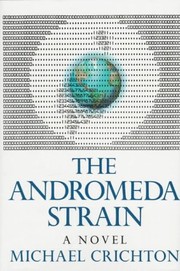
The Andromeda Strain
A town dies in seconds, and a sealed lab team races a germ that learns to eat seals.
2,013-word summary · 9 min read
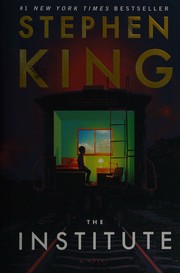
The Institute
A kidnapped prodigy wakes in a Maine facility where gifted kids earn tokens in Front Half and vanish from Back Half.
3,814-word summary · 17 min read
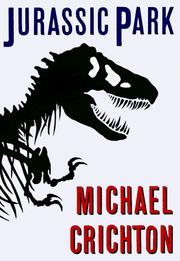
Jurassic Park
Hammond clones dinosaurs on Isla Nublar and invites Grant, Sattler and Malcolm to certify safety before opening.
2,388-word summary · 11 min read
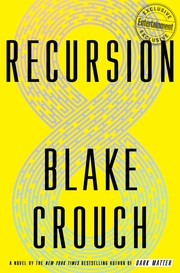
Recursion
False pasts feel truer than true ones as a memory chair lets the grieving rewrite deaths.
1,995-word summary · 9 min read

What She Knew
Rachel lets her eight-year-old son run ahead in a Bristol park, and the nine-day search turns her into a suspect in the public eye.
2,952-word summary · 13 min read

The Beach House
A young valet is beaten to death at a Hamptons party, and his law-student brother spends a year building a case against the family that covered it up.
2,049-word summary · 9 min read

Six Years
A professor who promised to forget the woman he loved sees her husband's obituary and discovers that the wedding, the marriage, and the woman herself may never…
2,076-word summary · 9 min read

Rules of Prey
Minneapolis detective Lucas Davenport hunts a killer who leaves a new rule at every scene and treats murder as a game of wits.
1,914-word summary · 9 min read
The Diamond Age: Or, A Young Lady's Illustrated Primer
A stolen nanotech primer raises a poor girl in 22nd-century Shanghai, and Neal Stephenson turns her education into an argument about class, freedom, and who…
2,055-word summary · 9 min read

4th of July
Lindsay Boxer shoots two armed teenagers in self-defense, faces a wrongful-death trial, and spends her leave chasing a string of throat-slashing murders in…
2,192-word summary · 10 min read
Sleeping Giants
A girl falls into a field and lands in a giant metal hand. Years later a secret team assembles the rest of the machine, and it chooses its own pilots.
2,466-word summary · 11 min read
Persuader
Reacher goes undercover in a Maine crime family to find a missing DEA agent and the man he once failed to kill, and Lee Child keeps the whole thing tight,…
2,278-word summary · 10 min read

61 Hours
A bus crash strands Jack Reacher in a snowbound South Dakota town where a drug gang, a corrupt police force, and a single witness are on a collision course.
2,227-word summary · 10 min read
The Rooster Bar
Three law students buried in debt discover their for-profit law school is a scam, and decide the only way out is to con their way into practicing law before…
2,837-word summary · 13 min read
The Troop
A Boy Scout troop on a Canadian island takes in a stranger who cannot stop eating, and the worm inside him turns a camping trip into a war.
2,457-word summary · 11 min read
The Chemist
A former government interrogator on the run takes one last job, then learns the case she was handed was built to pit her against him.
2,249-word summary · 10 min read

Still Missing
A realtor is abducted at a Vancouver Island open house and held for more than a year. Told through therapy sessions, the novel follows her escape and the hunt…
2,466-word summary · 11 min read

Saving Noah
A seventeen-year-old swimmer confesses to molesting two girls he coached, and his mother must decide what unconditional love is worth.
2,976-word summary · 13 min read

Bad Luck and Trouble
A deposit of $1,030 summons Jack Reacher back to his old army unit, which is being picked off one name at a time.
2,366-word summary · 11 min read

3rd Degree
The third Women's Murder Club novel follows a San Francisco terror cell and a three-day killing schedule, and it costs the club a member.
2,685-word summary · 12 min read

Worth Dying For
Reacher stops for one night in rural Nebraska and finds a family that runs the county, a missing girl and a shipment worth killing for.
2,021-word summary · 9 min read

Tinker, Tailor, Soldier, Spy
Retired spymaster George Smiley is brought back to find a Soviet mole inside British intelligence, and the trail leads through old friends, old betrayals, and…
2,092-word summary · 9 min read

The Ex
Cassie thinks her new boyfriend's ex is the woman harassing her, but Freida McFadden's thriller keeps rearranging who the ex actually is.
2,103-word summary · 9 min read